

A concussion injury after a crash can have serious effects on your physical health, mental clarity, and daily life. Many people don’t realize they have a concussion until symptoms appear hours or even days later.
At Schaar & Silva LLP, we help accident victims understand their injuries and fight for fair compensation. This guide walks you through recognizing concussion symptoms, getting proper medical care, and protecting your legal rights.
Recognizing Concussion Symptoms Right After Your Crash
How Concussions Happen in Car Accidents
A concussion occurs when your brain moves rapidly inside your skull due to impact force. Car accidents cause this injury even at speeds as low as 10 miles per hour, according to research from the Journal of Athletic Training. Most people assume they need to lose consciousness to have a concussion, but that’s incorrect. Most concussions happen without any loss of consciousness at all.
Immediate Physical Signs
Headache appears in about 90% of concussion cases within the first few hours, though many victims mistake it for stress or shock from the accident. Dizziness, nausea, and sensitivity to light or sound are equally common. Some people experience balance problems or feel confused about what just happened.
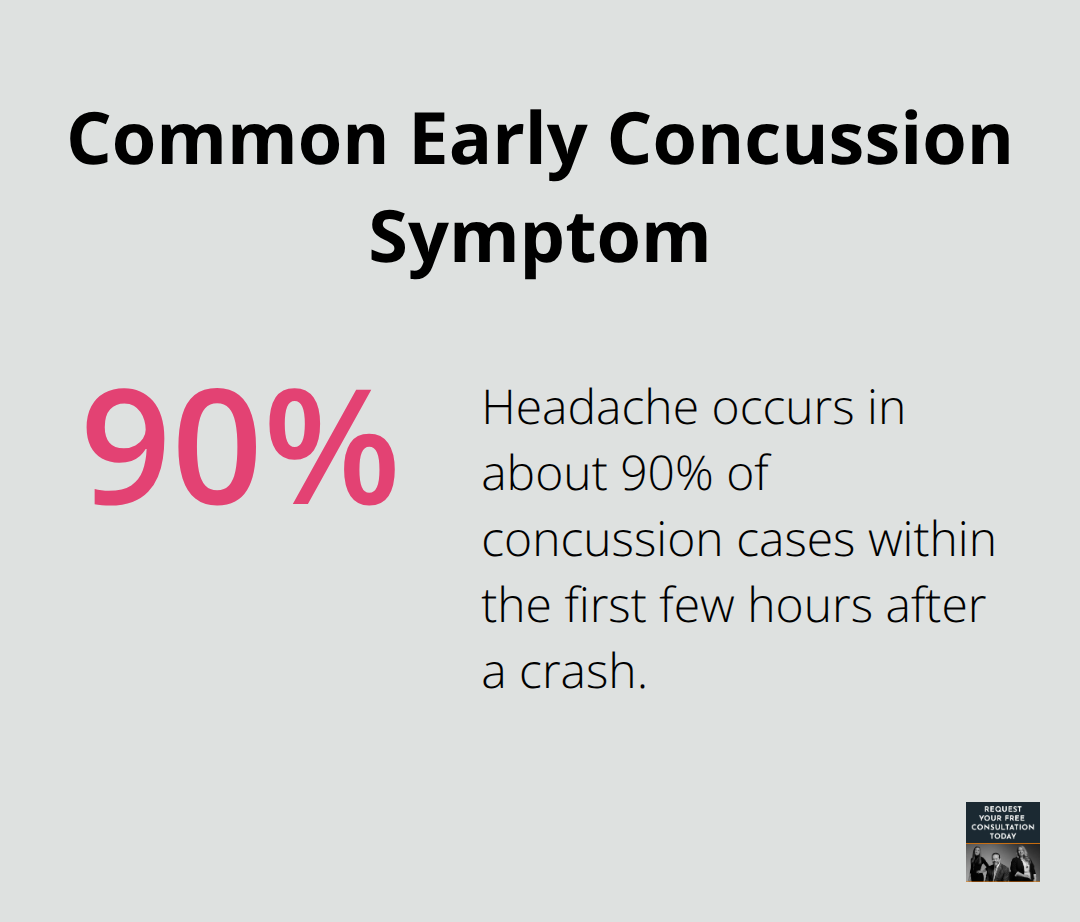
If you hit your head during the crash or your head whipped forward and backward, watch yourself closely for the next 24 to 48 hours-this is when most symptoms surface.
Cognitive and Emotional Changes
Confusion about the accident itself, difficulty concentrating, or mental fog act as red flags. You might struggle to remember crash details or have trouble following conversations. Some people become unusually irritable, anxious, or emotional after a concussion. Sleep disturbances represent another pattern to monitor (either sleeping much more than usual or experiencing insomnia).
When to Seek Medical Attention
The Centers for Disease Control and Prevention emphasizes that concussion symptoms can appear immediately or develop over hours and days. Don’t wait for dramatic symptoms to appear. If you’ve been in a crash and experience any combination of headache, dizziness, confusion, nausea, or sensitivity to light, get medical evaluation immediately. A healthcare provider can perform specific tests like the SCAT5 (Sport Concussion Assessment Tool) or order imaging if needed.
Early diagnosis prevents long-term complications. Untreated concussions can lead to persistent post-concussion syndrome, where symptoms last weeks or months and interfere with work and daily functioning. Documentation matters significantly-record your symptoms, when they started, and how they’ve progressed from the moment of the crash (this information becomes valuable evidence for compensation claims). Getting proper medical care now sets the foundation for both your recovery and your legal case.
Medical Treatment and Recovery Options
How Doctors Diagnose Concussions After a Crash
A neurologist or emergency medicine physician performs specific tests to confirm your concussion diagnosis. The SCAT5 assessment tool involves balance tests, memory checks, and questions about your symptoms. Some doctors order CT scans or MRI imaging, though these often return normal even with a legitimate concussion because the injury affects brain function rather than visible structure. What matters most is that your medical records clearly document the accident, your symptoms, and the timing of when they appeared. This documentation becomes critical evidence later when calculating fair compensation for your injury.
Recovery Timeline and What to Expect
Your recovery timeline depends on the concussion’s severity and your individual healing response. The American Academy of Pediatrics reports that most concussions resolve within two to four weeks with proper rest and gradual return to activity, though some people experience symptoms for months. Your doctor will likely recommend physical and cognitive rest initially, meaning you should avoid strenuous exercise and limit screen time, work, and school activities that demand concentration.
Stages of Return to Activity
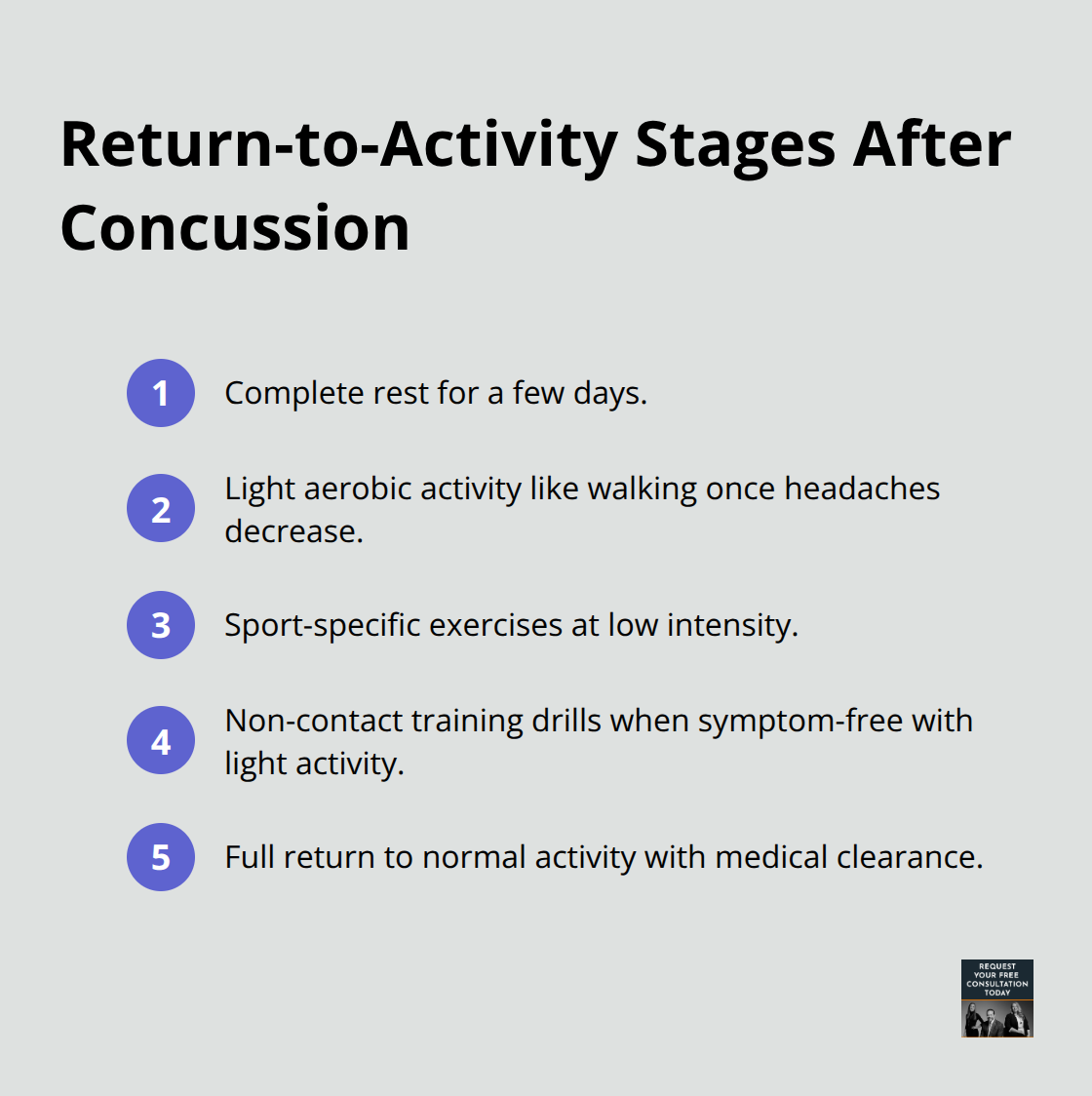
As symptoms improve, you progress through specific stages: complete rest for a few days, light aerobic activity like walking once headaches decrease, sport-specific exercises, non-contact training drills, and finally full return to normal activity. Rushing this progression significantly increases your risk of prolonged recovery or second-impact syndrome (a dangerous condition that can occur if you suffer another head injury while still recovering). Many employers and schools pressure accident victims to return too quickly, but your health comes first.
Specialized Treatment Options
Vestibular therapy addresses balance and dizziness issues and helps some patients recover faster. Concussion clinics, now available in many California hospitals, provide specialized monitoring and adjust your recovery plan if symptoms persist beyond the typical timeline. These facilities track your progress and modify treatment recommendations based on how your body responds.
Documenting Your Recovery for Compensation
Your medical records and recovery timeline form the foundation for your compensation claim. Lost wages during your recovery period, reduced income from part-time work, and ongoing treatment costs all factor into what you can claim. The more detailed your medical documentation (including dates, symptoms, treatment adjustments, and activity restrictions), the stronger your position when negotiating with insurance companies or pursuing legal action against the at-fault party.
Legal Rights and Compensation for Concussion Injuries
Types of Damages You Can Claim
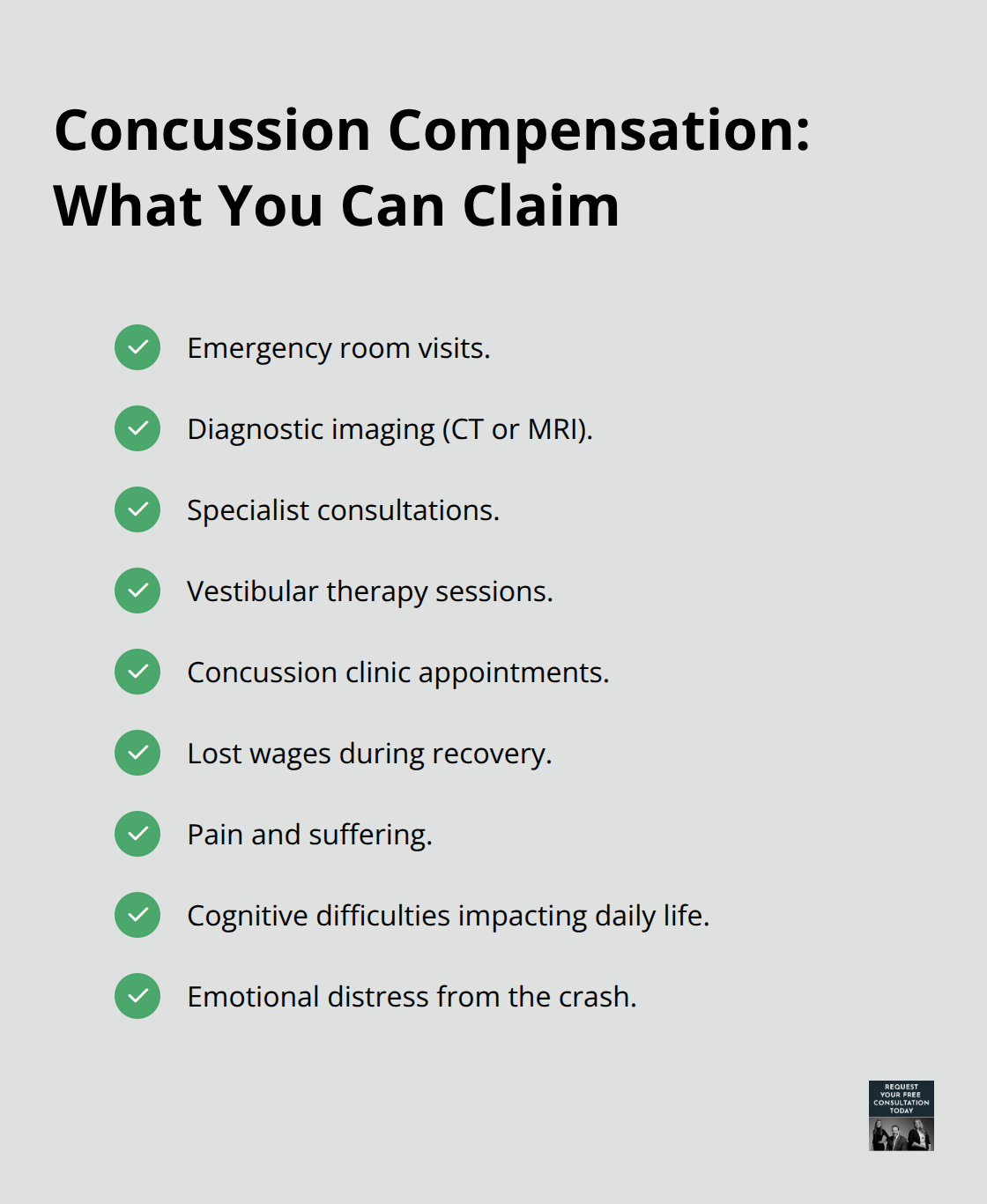
A concussion injury qualifies for multiple types of compensation that go far beyond your immediate medical bills. Accident victims often leave money on the table because they don’t understand the full scope of what they can claim. Economic damages include all documented medical expenses from emergency room visits, diagnostic imaging, specialist consultations, vestibular therapy, and ongoing concussion clinic appointments. You can also claim lost wages for time away from work during your recovery period.
California courts recognize that concussion recovery takes time, and your employer’s pressure to return early doesn’t eliminate your right to compensation for those lost earnings.
Non-economic damages cover pain and suffering, cognitive difficulties that affect your quality of life, and emotional distress from the accident itself. Insurance companies typically assign lower values to concussion injuries compared to broken bones or obvious trauma, but this undervaluation reflects their bias, not the actual impact on your life. A concussion affecting your concentration directly impacts your earning capacity and career advancement, yet insurers often ignore these long-term effects. The American Journal of Sports Medicine documents that post-concussion syndrome affects approximately 10-15% of concussion patients, with symptoms persisting beyond three months and requiring ongoing treatment costs that accumulate significantly.
How Insurance Companies Calculate Your Compensation
Insurance companies use formulas that multiply your medical expenses by 1.5 to 5 times, depending on severity, but this calculation only works if your medical records clearly establish the concussion diagnosis and your treatment progression. Detailed documentation of your medical treatment, recovery timeline, and impact on daily functioning forms the foundation for fair compensation. Your medical bills, lost income documentation, and treatment records give you leverage in negotiations, but only if you present them strategically alongside a clear understanding of your injury’s true cost.
Many accident victims accept initial settlement offers that fall 40-60% below what they could recover with proper legal representation. When dealing with insurance adjusters, understand that their first offer rarely reflects your actual damages, and accepting quickly means surrendering your right to additional compensation later.
Negotiating with Insurance Companies and At-Fault Parties
At-fault drivers carry liability insurance specifically to cover injuries they cause, yet insurers employ delay tactics and low-ball offers as standard practice. Insurance adjusters operate under pressure to minimize payouts, which means their initial proposals typically undervalue your claim. You have the right to counter their offers and request additional compensation based on your documented losses and ongoing treatment needs.
The negotiation process requires presenting your medical records, treatment progression, and impact statements in a way that demonstrates the concussion’s true severity. If you live in Santa Cruz County and face resistance from an insurance company, the legal team at Schaar & Silva LLP can handle these negotiations on your behalf, allowing you to focus on recovery while we address the legal complexities of your situation.
Final Thoughts
A concussion injury after a crash demands immediate medical attention and strategic legal action to protect your rights. Your recovery depends on early diagnosis, proper treatment, and thorough documentation of your symptoms and medical care from day one. Insurance companies systematically undervalue concussion claims because these injuries lack visible damage, and they count on accident victims accepting low offers without understanding the full scope of what they can recover.
Negotiating with insurance adjusters alone puts you at a disadvantage since these professionals employ delay tactics and low-ball strategies as standard practice. Economic damages cover your medical bills and lost wages, but non-economic damages address the cognitive difficulties and quality-of-life impact that persist long after the initial injury. Post-concussion syndrome affects roughly 10-15% of patients, creating ongoing treatment costs that extend far beyond the first few weeks and require strategic compensation planning.
The legal team at Schaar & Silva LLP handles these negotiations on your behalf, allowing you to focus entirely on recovery while we pursue fair compensation based on your documented losses. We assist with medical bill management, evaluate your property damage claims, and connect you with support specialists who understand accident trauma. If you live in Santa Cruz County, Oakland, or Sacramento, contact Schaar & Silva LLP to discuss your case and protect your rights to full compensation.