
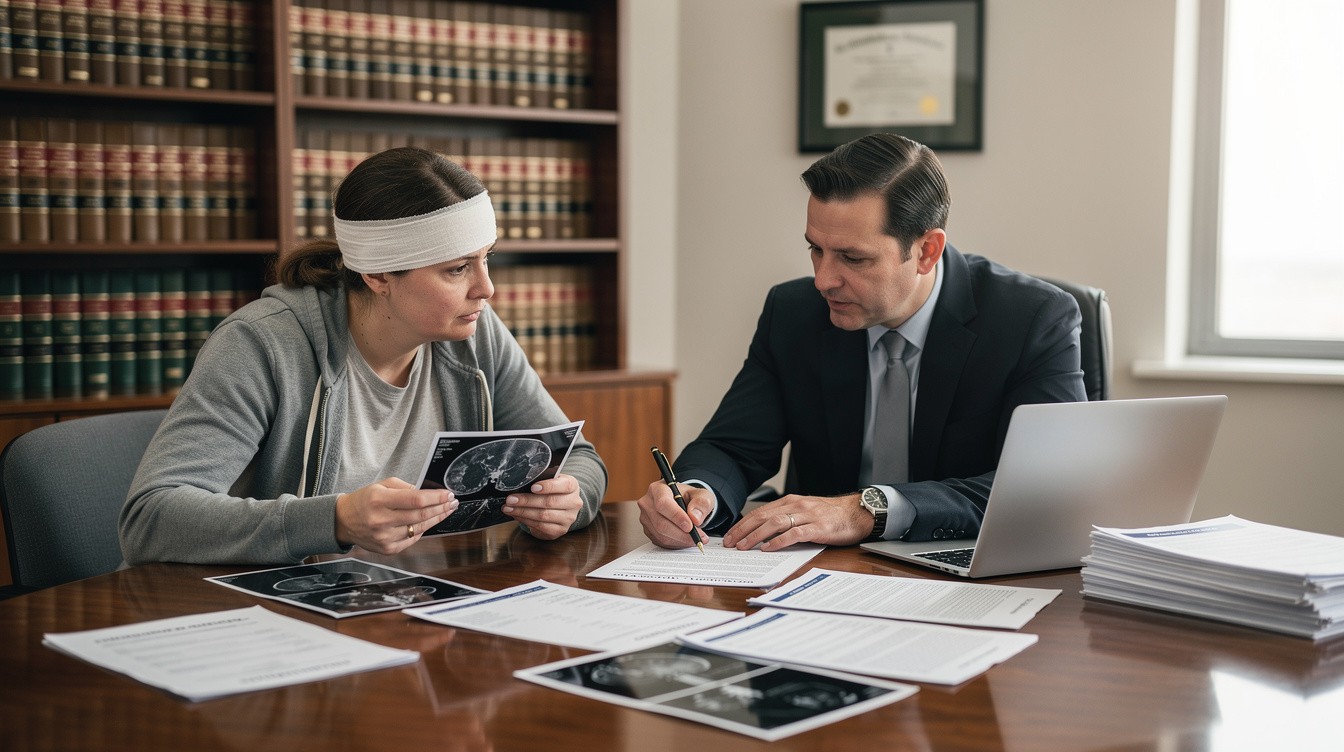
A concussion can change your life in seconds, leaving you with headaches, memory problems, and mounting medical bills. If you’ve suffered a head injury from a car accident, workplace incident, or pedestrian accident in California, you may have grounds for compensation.
At Schaar & Silva LLP, we help injured people navigate concussion claims California residents file every day. This guide walks you through the legal process, from understanding your injury to calculating what you’re owed.
What Is a Concussion and Why Does It Matter for Your Claim
Understanding Concussion Injuries
A concussion is a type of traumatic brain injury caused by a blow or jolt to the head that changes how your brain normally works. The Centers for Disease Control and Prevention reports that roughly 223,050 Americans are hospitalized annually for traumatic brain injuries, with concussions making up a significant portion of these cases. In California, concussion claims have risen steadily over the past five years, particularly following vehicle accidents where head impact is common.
Recognizing Concussion Symptoms
Symptoms appear immediately or develop over hours and days: headaches, dizziness, confusion, memory lapses, sensitivity to light and noise, nausea, and balance problems are standard indicators. Some people report feeling foggy or struggling to concentrate weeks after the injury. The problem is that concussions don’t always show up on standard X-rays, which makes medical documentation absolutely critical for your claim. You need a CT scan or MRI to confirm the injury, plus follow-up evaluations from a neurologist or physician to establish severity and ongoing effects.
California’s Legal Framework for Concussion Claims
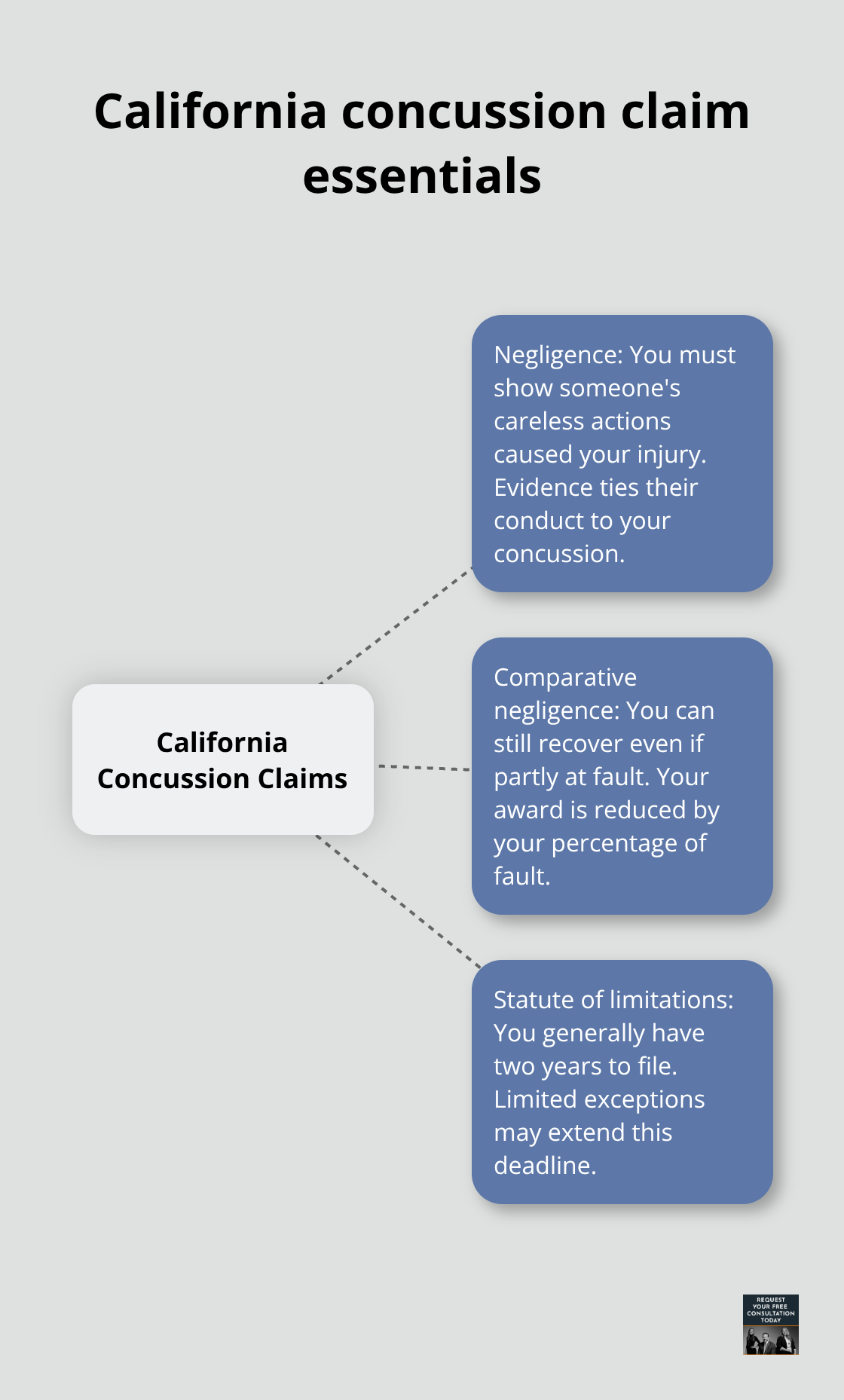
California law treats concussion claims as personal injury cases, meaning you must prove negligence-that someone’s careless actions caused your injury. The state follows a comparative negligence rule, so even if you’re partially at fault for the accident, you can still recover damages, though your award is reduced by your percentage of fault. You have two years from the date of your injury to file a lawsuit in California, though this deadline can be extended in rare circumstances.
Building Your Evidence
Medical records, accident reports, witness statements, and testimony from medical professionals all strengthen your case. If your concussion stems from a vehicle accident, the at-fault driver’s insurance typically covers your damages. For workplace injuries, workers’ compensation applies instead. Pedestrian or bicycle accidents may involve municipal liability if poor road conditions contributed to the incident. The sooner you document your injury and seek legal guidance, the stronger your position becomes.
What Happens Next
Different accident types require different legal approaches, and understanding which category your injury falls into shapes how you’ll pursue compensation. Vehicle accidents, workplace incidents, and pedestrian accidents each present unique challenges and opportunities for recovery.
Types of Accidents That Lead to Concussion Claims
Vehicle Collisions and Head Impact Injuries
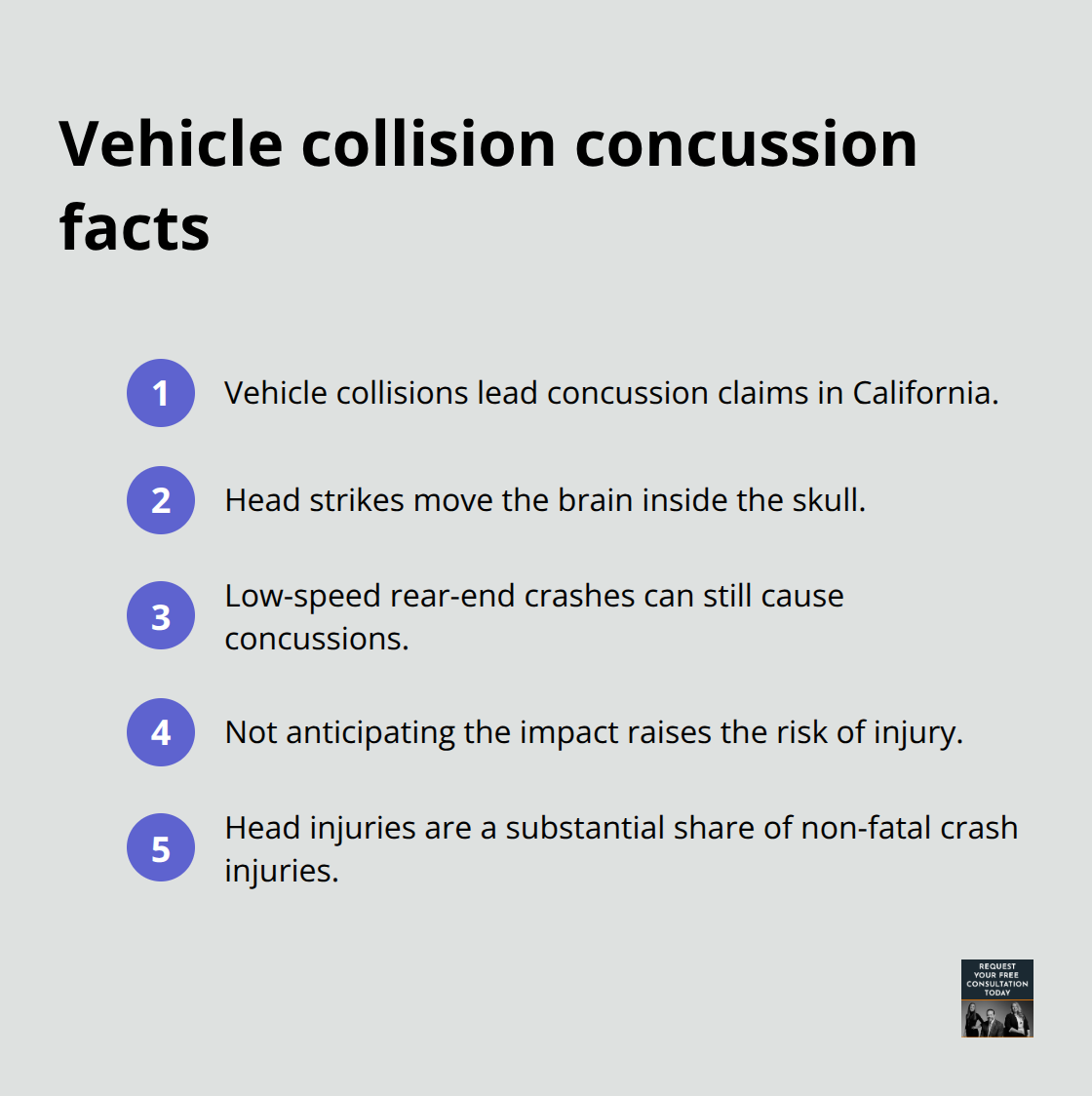
Vehicle collisions remain the leading cause of concussion claims in California. The National Highway Traffic Safety Administration reports that over 42,000 traffic fatalities occurred in 2022, with head injuries accounting for a substantial share of non-fatal injuries. When your head strikes the steering wheel, dashboard, or window during impact, your brain moves rapidly inside your skull, causing the injury. Even low-speed rear-end collisions generate enough force to cause concussions, particularly if you weren’t expecting the impact.
Insurance data shows that concussion claims from vehicle accidents average between 15,000 to 20,000 annually across California. Many people don’t realize they have a concussion immediately after an accident, which delays medical treatment and complicates your claim later. You must seek medical evaluation within 24 to 48 hours of any head impact, regardless of whether you feel fine initially. If you’ve suffered a head injury from a vehicle accident in Santa Cruz County or the surrounding areas, the legal team at Schaar & Silva LLP can help you navigate your claim while you focus on recovery.
Workplace Incidents and Premises Liability
Workplace incidents produce concussions through falls, equipment strikes, and repetitive impacts. Construction sites, warehouses, and manufacturing facilities account for a significant portion of workplace head injuries in California. If you slip on a wet floor, fall from a ladder, or get struck by falling debris, workers’ compensation covers your medical costs and lost wages, but the process differs fundamentally from personal injury claims.
Premises liability cases arise when a property owner’s negligence causes your injury, such as inadequate lighting in a parking garage or unmarked hazards. The property owner bears responsibility for maintaining safe conditions, and their failure to do so creates grounds for compensation beyond workers’ compensation benefits.
Pedestrian and Bicycle Accidents
Pedestrian accidents involving vehicles create some of the most severe concussion claims because the speed differential between a person and a car generates tremendous force. According to the California Office of Traffic Safety, pedestrian injuries spike during evening hours and in urban areas where foot traffic is heaviest. If a driver failed to yield, ran a red light, or wasn’t paying attention, their liability becomes clear-cut.
Bicycle accidents caused by poorly maintained roads, missing bike lanes, or inattentive drivers may involve municipal liability, meaning the city or county shares responsibility for inadequate infrastructure. Each accident type requires a different legal approach to recover the compensation you deserve, and understanding which category applies to your situation shapes how you’ll pursue your claim.
Building Your Concussion Case
Medical Documentation Forms the Foundation
Medical documentation is non-negotiable for concussion compensation in California. The moment you experience head trauma, you must seek medical evaluation and request imaging studies like CT scans or MRI results, as these form the foundation of your claim. Insurance adjusters and defense attorneys will scrutinize every gap in your medical records, so you should maintain a detailed timeline of doctor visits, test results, and symptom progression. Neuropsychological testing has become increasingly valuable in California concussion cases because it quantifies cognitive deficits that standard scans cannot reveal. The American Academy of Neurology recommends baseline testing when possible, and if you had previous testing, those records strengthen your evidence significantly. Medical bills themselves become part of your damages calculation, so you must preserve every receipt and statement from hospitals, imaging facilities, and specialists.
Documenting Lost Income and Work Impact
Wage loss documentation is equally critical if your injury prevented you from working. You will need pay stubs, tax returns, and employer statements confirming lost income. For self-employed individuals, this requires additional accounting records to establish your normal earning capacity. The sooner you compile this documentation, the stronger your position becomes when negotiating with insurance companies.
Calculating Damages Beyond Medical Expenses
Calculating actual damages for concussions involves more than just medical expenses and lost wages. California courts consider past and future medical treatment, ongoing therapy, diminished earning capacity if the injury affects your career long-term, and pain and suffering. Insurance companies typically offer low initial settlements because concussions lack the visual evidence of broken bones or visible scarring. Neurologists and neuropsychologists become your strongest allies here because their testimony quantifies the injury’s severity and projected recovery timeline.
Understanding Long-Term Injury Patterns
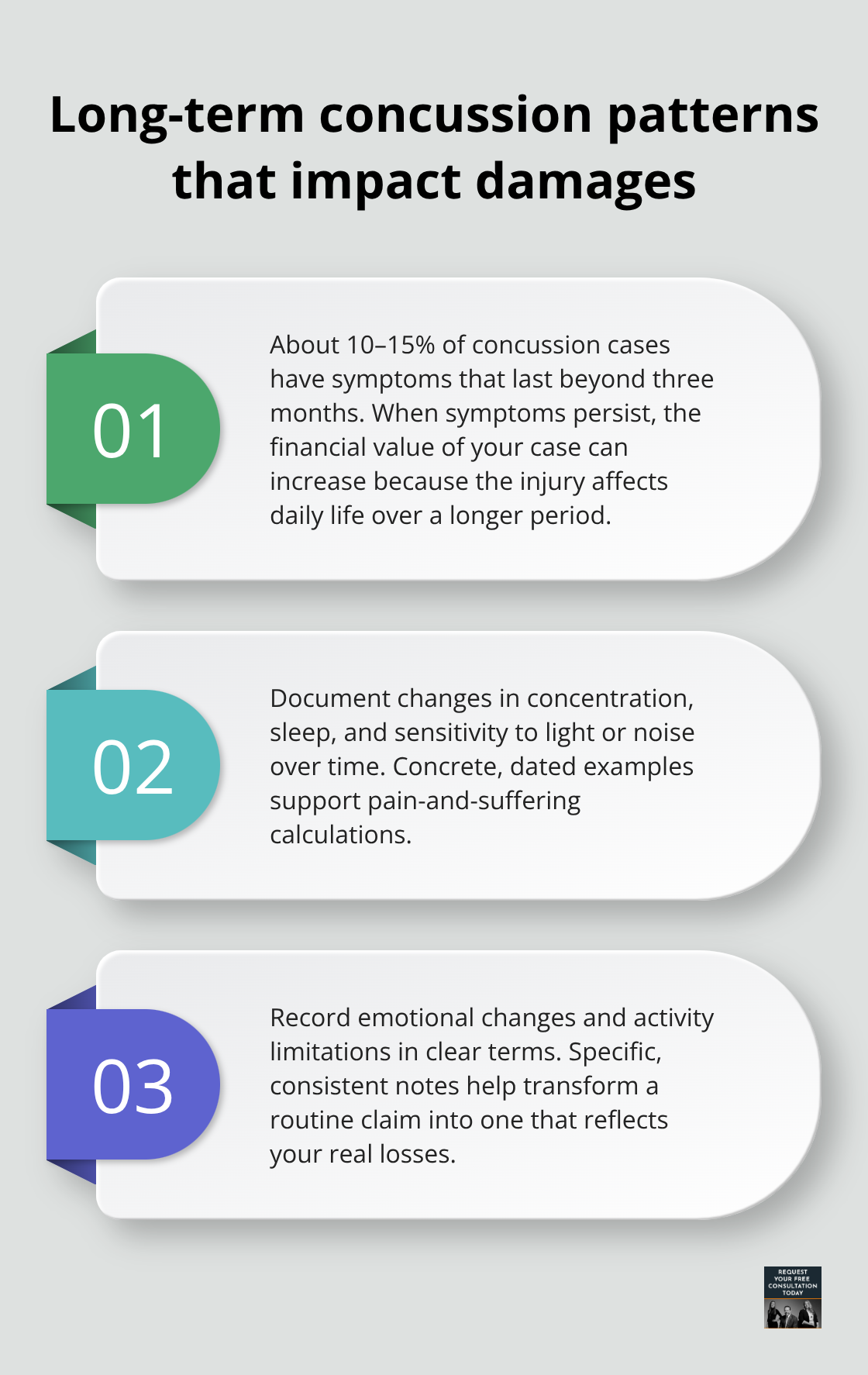
If symptoms persist beyond three months (which happens in approximately 10-15 percent of concussion cases according to research from the American Academy of Neurology), your damages increase substantially. You should document how the injury affects daily activities: difficulty concentrating, sleep disruption, sensitivity to stimuli, and emotional changes all factor into pain and suffering calculations. These details transform your claim from a routine injury case into one that reflects the true impact on your life.
Aligning Medical Evidence with Legal Requirements
Working with medical professionals who understand personal injury law ensures your medical narrative aligns with legal requirements for compensation recovery. When it comes to auto accidents in Santa Cruz, the legal team at Schaar & Silva LLP can help evaluate your full damage picture while you focus on healing.
Final Thoughts
Pursuing concussion claims in California requires you to act quickly on three fronts: obtain immediate medical evaluation to document your injury, compile comprehensive evidence including medical records and wage loss documentation, and identify which legal pathway applies to your accident type. Insurance adjusters work to minimize payouts, and they exploit gaps in your documentation or medical evidence. An attorney who handles concussion claims California residents file regularly knows how to counter these tactics and present your injury’s true impact to insurance companies or a jury.
Your accident type determines your next steps. If a vehicle collision caused your injury, contact Schaar & Silva LLP to discuss your claim and learn how we can help with medical bill navigation and property damage evaluation. For workplace injuries, file a workers’ compensation claim immediately while consulting an attorney about potential third-party liability. Pedestrian or bicycle accident victims should document the scene conditions and seek legal guidance quickly, as municipal liability cases involve different procedural requirements.
Time works against you in concussion cases because memories fade, witnesses become harder to locate, and medical records grow incomplete. The sooner you take action, the stronger your position becomes when negotiating with insurance companies or preparing for trial.
