
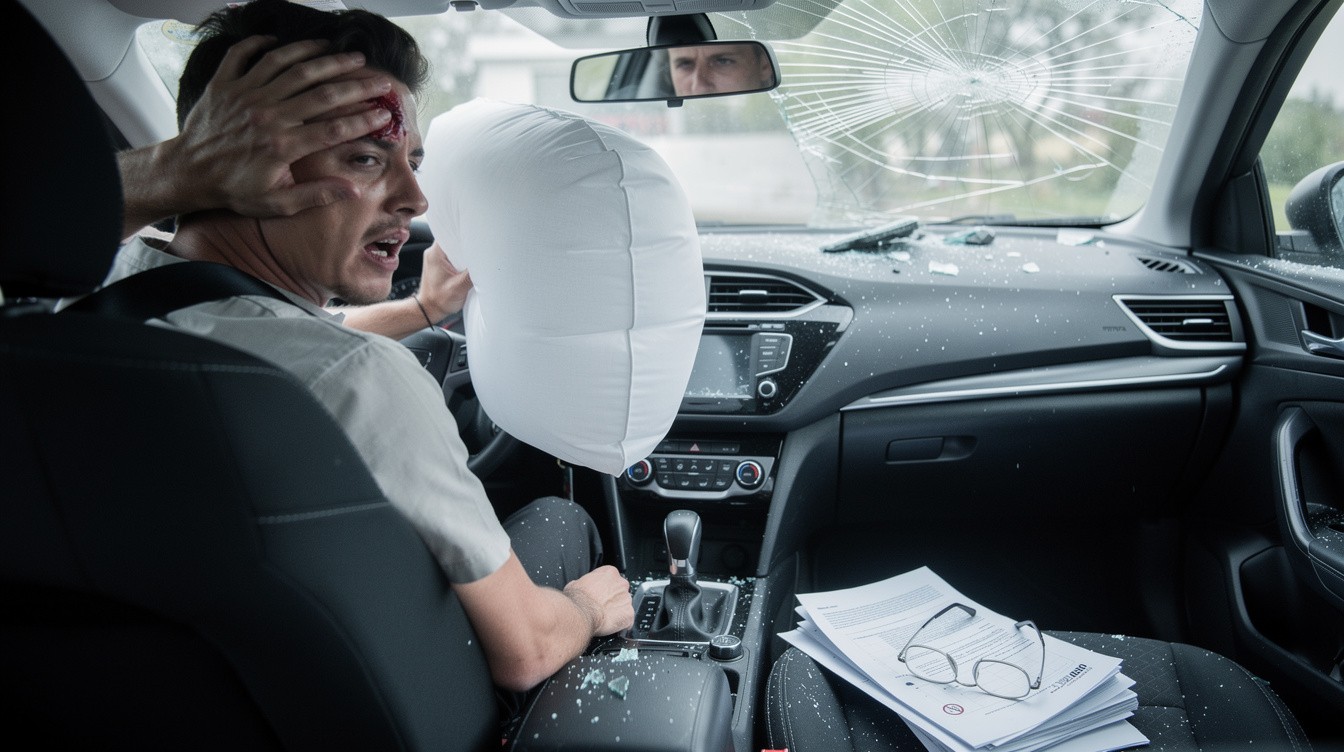
A concussion after a crash can have serious effects on your health and quality of life. Many people don’t realize they have a concussion because symptoms develop gradually or seem minor at first.
At Schaar & Silva LLP, we help accident victims understand their injuries and fight for fair compensation. This guide walks you through recognizing concussion symptoms, getting proper medical care, and building a strong legal claim.
What Does a Concussion Feel Like After a Crash
Immediate Physical Symptoms
The first hours and days after a crash reveal whether a concussion occurred. Physical symptoms appear quickly in most cases. Headaches stand out as the most common sign, affecting approximately 70% of concussion patients according to research from the Brain Injury Association. Dizziness and balance problems follow closely, leaving victims feeling unsteady or experiencing vertigo when they move their head. Nausea and sensitivity to light also signal a concussion. Some people report neck pain or stiffness, though this can overlap with other crash-related injuries. A headache that worsens over several hours, vision problems, or ringing in the ears warrant immediate medical attention. Don’t wait for symptoms to resolve on their own.
Cognitive Effects That Linger
Cognitive problems from a concussion often emerge within days of the crash and persist for weeks or months. You might struggle to remember details about the accident itself or find it difficult to concentrate at work. The Journal of Athletic Training reports that approximately 50% of concussion patients experience persistent memory issues beyond the first week. Confusion, difficulty finding words, and slower processing speed become common complaints. Some people describe feeling mentally foggy or unable to follow conversations. These symptoms matter significantly for your legal claim because they document the injury’s impact on your daily functioning. Keep a journal noting when these problems occur and how they affect your work or personal life. This documentation becomes valuable evidence when you pursue compensation.
Emotional and Behavioral Changes
Emotional symptoms after a concussion are often overlooked but equally important. Irritability, mood swings, and anxiety frequently develop following head injuries. You might feel unusually emotional, have difficulty sleeping, or experience depression. Some people withdraw from activities they normally enjoy or lose interest in hobbies. These changes strain relationships and affect your ability to work. Track these changes with specific dates and examples of how they’ve impacted your daily life. When building your compensation claim, documented behavioral changes strengthen your case by showing the full scope of your injury’s effects on your quality of life.
Understanding these physical, cognitive, and emotional symptoms positions you to take the next critical step: obtaining proper medical documentation that supports your recovery and your claim.
Getting Medical Documentation for Your Concussion
Seek Immediate Medical Evaluation
Medical evaluation immediately after a crash isn’t optional-it forms the foundation of both your recovery and your legal claim. Many accident victims make the mistake of waiting to see if symptoms improve on their own, which delays diagnosis and weakens their compensation case. You need a medical professional to document your concussion within 24 to 48 hours of the crash. This early evaluation creates an official record linking your injury directly to the accident, something insurance companies and courts require. If you delay seeking care, insurers will argue that your concussion resulted from something else entirely. Emergency room visits or urgent care evaluations provide timestamped medical records that prove you sought treatment immediately. Adrenaline from a crash masks symptoms that emerge days later, so getting evaluated even when you feel relatively fine establishes a baseline for your condition and prevents gaps in medical documentation that defense attorneys exploit.
Diagnostic Imaging and Testing
Diagnostic imaging has become more sophisticated in identifying concussions over recent years. CT scans and MRI machines reveal brain swelling, bleeding, or other structural damage, though standard X-rays typically won’t show concussion-related injuries. The American College of Radiology recommends baseline imaging for moderate to severe head injuries, and many hospitals now use advanced neuroimaging protocols that capture subtle changes missed by older equipment. Neuropsychological testing measures your cognitive function before and after injury, creating measurable data about memory loss, processing speed, and concentration problems. This testing becomes powerful evidence in your claim because it quantifies your injury rather than relying on subjective descriptions.
Track Your Recovery Progress
Your doctor will likely order follow-up evaluations at two weeks, one month, and three months post-injury to track your recovery trajectory. Long-term treatment focuses on gradual return to normal activities rather than complete bed rest, which outdated protocols once recommended. Physical therapy, vestibular rehabilitation for balance problems, and cognitive rehabilitation help restore function while your medical records document each stage of recovery. These documented improvements (or setbacks) demonstrate the injury’s ongoing impact on your life and strengthen your compensation claim.
Your complete medical file now establishes the injury’s severity and your commitment to recovery. This documentation becomes the evidence foundation when you build your legal case and calculate what compensation you actually deserve.
Building Your Compensation Claim After a Concussion
Establishing Liability and Fault
Fault in your concussion case requires connecting the other driver’s negligence directly to your brain injury. California uses comparative negligence rules, meaning you can recover compensation even if you’re partially at fault, though your award reduces by your percentage of blame. The National Highway Traffic Safety Administration reports that driver error causes approximately 94% of serious crashes, which works in your favor when the other party violated traffic laws or drove recklessly.
You must document everything from the crash scene: police reports, witness statements, traffic camera footage, and the other driver’s insurance information. Photos showing road conditions, vehicle damage patterns, and accident location strengthen your liability argument significantly. Insurance adjusters will scrutinize every detail, so gather evidence immediately while details remain fresh and before the scene changes.
Calculating Your Economic Damages
Your actual damages extend far beyond medical bills alone. The Bureau of Labor Statistics shows that the average American worker earns approximately 55,000 dollars annually, which translates to specific lost wage calculations if your concussion keeps you from work. Medical costs accumulate quickly through neuropsychological testing, physical therapy, and ongoing appointments that extend months beyond your initial crash.
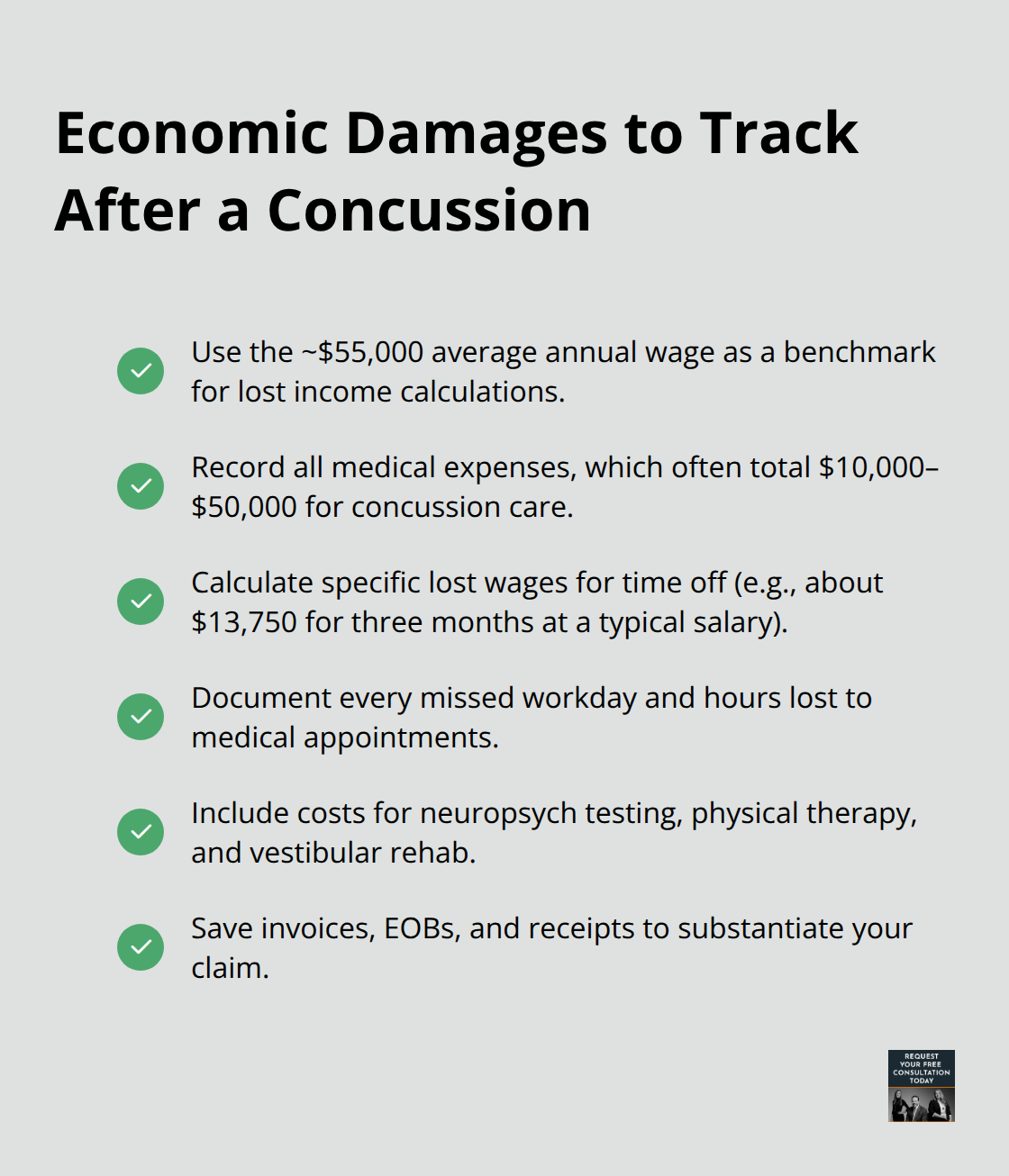
Many concussion patients incur 10,000 to 50,000 dollars in medical expenses depending on treatment intensity and duration.
Lost wages matter tremendously-if your concussion prevents you from working for three months at a typical California salary, that’s roughly 13,750 dollars in lost income alone. You must document every absence from work and every medical appointment that interferes with your employment.
Valuing Pain and Suffering
Pain and suffering damages compensate for your cognitive struggles, emotional distress, and reduced quality of life. These require careful documentation through medical records and your personal journal (tracking specific dates when symptoms affected your daily activities). Insurance companies typically calculate pain and suffering at one to five times your actual economic damages, but this varies based on injury severity and jurisdiction within California.
Your complete medical file, therapy records, work absence documentation, and personal impact statements create the evidence foundation for demanding full compensation rather than accepting lowball settlement offers that fail to account for long-term recovery costs.
Final Thoughts
A concussion after a crash demands immediate medical attention and thorough documentation from the moment the accident occurs. Insurance companies will challenge your claim and offer settlements far below what you deserve, counting on accident victims accepting quick payouts without understanding their long-term costs. Don’t accept their lowball offers when your medical records, lost wages, and pain and suffering damages tell a different story about your actual injury.
We at Schaar & Silva LLP help accident victims in Santa Cruz County, Sacramento, and Oakland pursue the compensation they actually need. Our team handles the legal complexities while you focus on healing, and we manage medical bills through lien services while evaluating your property damage claims fairly. Your recovery matters, and your compensation should reflect every cost and hardship you’ve endured.
Contact Schaar & Silva LLP to discuss your concussion case and let us review your medical documentation. We’ll calculate your damages accurately and fight for fair compensation on your behalf. You don’t pay unless we win your case.