

Truck accidents on California’s roads can have devastating consequences. At Schaar & Silva LLP, we’ve seen firsthand the impact these collisions have on victims and their families.
Understanding the common causes of truck accidents in California is essential for improving road safety. This post explores the key factors contributing to these incidents, from driver fatigue to mechanical failures.
Why Are Truck Drivers Falling Asleep at the Wheel?
The Pressure of Tight Schedules
Trucking companies often set unrealistic delivery deadlines. This pressure forces drivers to push themselves beyond safe limits. A study by the National Transportation Safety Board reveals that 13% of truck drivers were fatigued at the time of their crash (a statistic that underscores the severity of this issue).
The Hidden Dangers of Long Hauls
Many truck drivers work shifts that last up to 14 hours, with 11 hours of actual driving time. These extended periods behind the wheel take a severe toll on a driver’s alertness and reaction time. The Federal Motor Carrier Safety Administration reports that 18 hours of wakefulness equals a blood alcohol concentration of 0.08% (the legal limit for intoxication).
When Sleep Deprivation Strikes
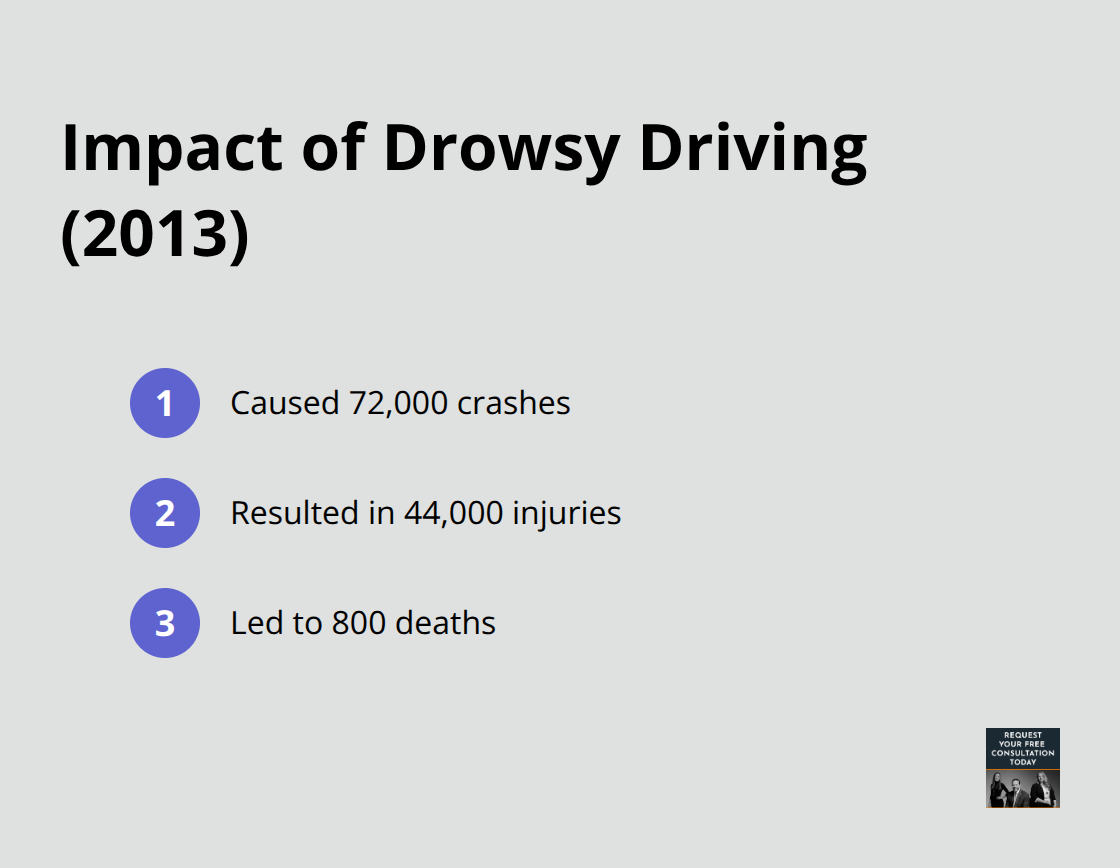
Fatigue impairs a truck driver’s ability to make quick decisions and react to sudden changes in traffic. The National Highway Traffic Safety Administration estimates that drowsy driving caused 72,000 crashes, 44,000 injuries, and 800 deaths in 2013. These numbers likely underestimate the true impact of fatigue on road safety.
The Impact on California Roads
California’s extensive highway system and busy ports make it a hotspot for trucking activity. The combination of long-distance hauls and congested urban areas creates a perfect storm for fatigue-related accidents. Truck drivers often face pressure to cover vast distances in short timeframes, leading to dangerous levels of exhaustion.
Legal Implications of Driver Fatigue
When truck accidents occur due to driver fatigue, the legal ramifications can be significant. Trucking companies may be held liable for encouraging or turning a blind eye to unsafe practices. Victims of these accidents have the right to seek compensation for their injuries and losses.
The next section will explore another major contributor to truck accidents: distracted driving and reckless behavior. These factors, combined with fatigue, create a dangerous cocktail on California’s roads.
Why Truck Drivers Take Risks on the Road
The Mobile Device Menace
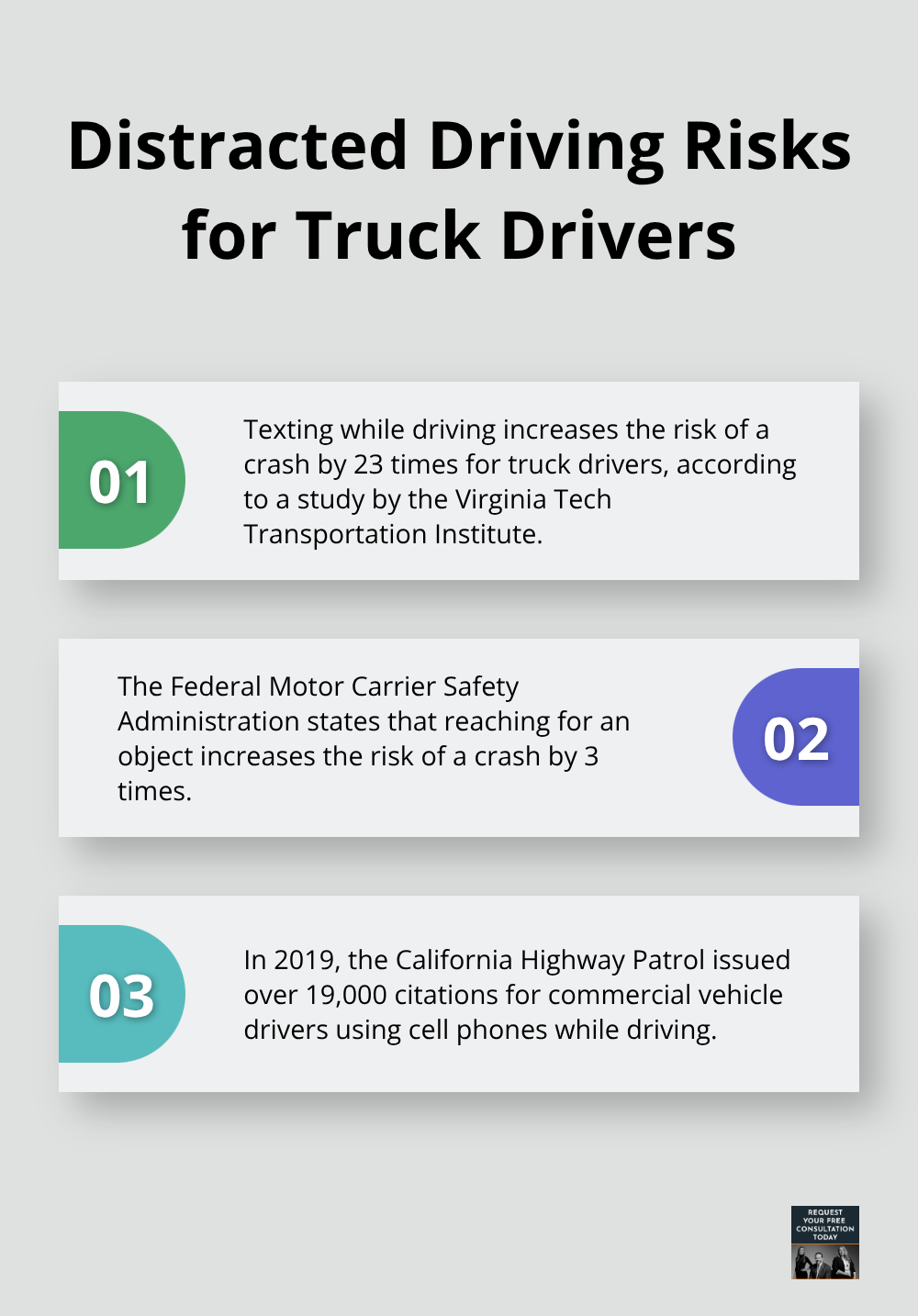
Truck drivers often use their phones for navigation, communication, and entertainment during long hauls. This seemingly innocent act can have deadly consequences. A study by the Virginia Tech Transportation Institute found that texting while driving increases the risk of a crash by 23 times for truck drivers.
In California, the law prohibits truck drivers from using handheld devices while driving. Despite this regulation, many continue to do so, putting themselves and others at risk. The California Highway Patrol issued over 19,000 citations for commercial vehicle drivers using cell phones in 2019 alone.
Dangerous Multitasking
Eating, drinking, or adjusting controls might appear harmless, but these activities significantly impair a truck driver’s ability to react to road conditions. The Federal Motor Carrier Safety Administration states that reaching for an object increases the risk of a crash by 3 times.
Truck drivers often face long hours on the road, which tempts them to multitask. However, even a few seconds of distraction can lead to catastrophic results. A truck traveling at 65 mph covers the length of a football field in just 3.2 seconds (ample time for a life-altering accident to occur).
The Speeding Epidemic
Aggressive driving and speeding prove particularly dangerous when it comes to large trucks. The Insurance Institute for Highway Safety reports that 27% of large truck crash deaths in 2019 occurred in crashes where speeding was a factor.
In California, where traffic congestion is common, truck drivers may feel pressured to make up for lost time by speeding. This behavior not only increases the risk of accidents but also the severity of crashes when they do occur.
The Cost of Reckless Behavior
The consequences of distracted driving and reckless behavior extend far beyond the immediate accident. Victims often face long-term physical and emotional trauma, substantial medical bills, and lost wages. In some cases, these accidents result in fatalities, leaving families devastated.
Legal repercussions for truck drivers and their employers can be severe. Fines, license suspensions, and even criminal charges may result from reckless driving behaviors. Companies that encourage or turn a blind eye to unsafe practices may face significant liability.
The next section will explore another critical factor in truck accidents: mechanical failures and poor maintenance. These issues, combined with driver distraction and recklessness, create a perfect storm of danger on California’s roads.
Even the safest driver can lose control of their vehicle under certain circumstances, highlighting the importance of constant vigilance and adherence to safety protocols.
Why Are Truck Breakdowns So Dangerous?
The Deadly Consequences of Brake Failures
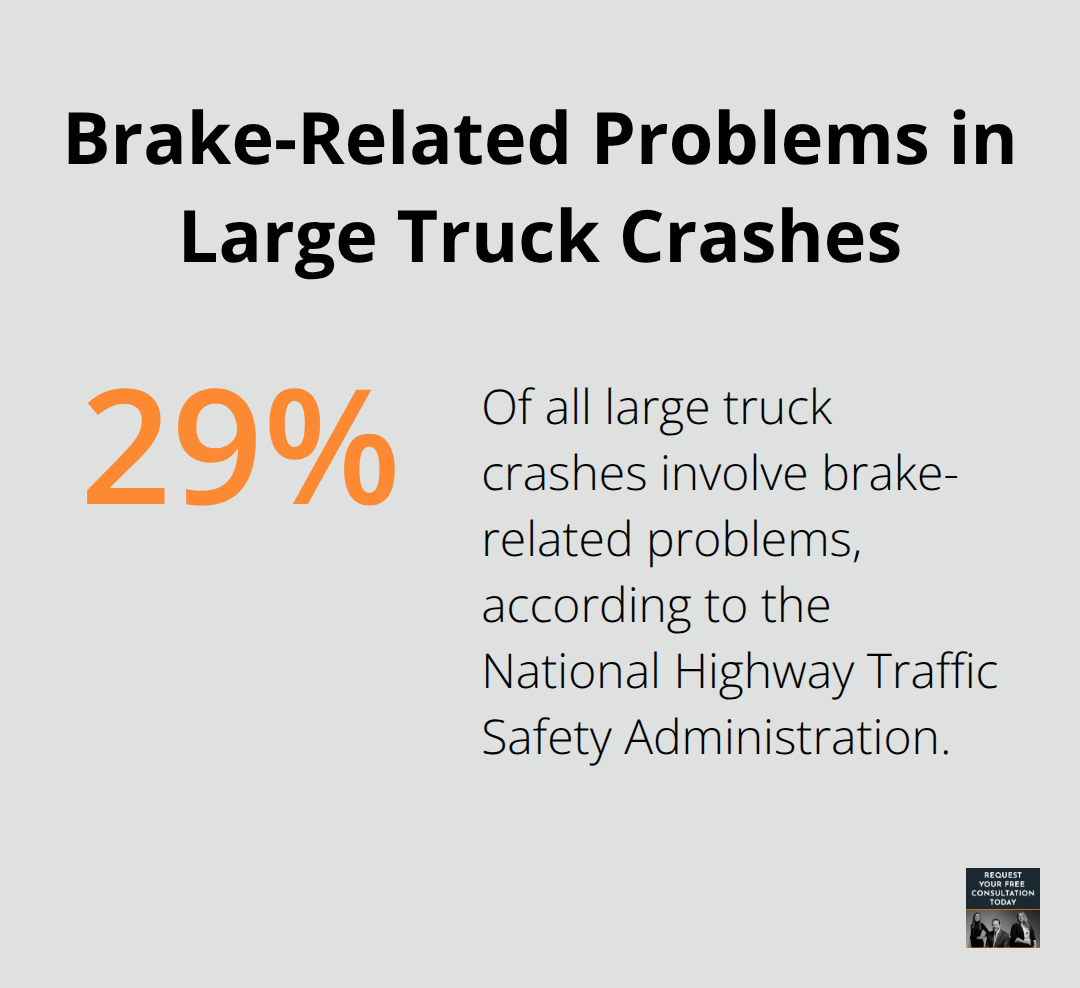
Brake failures present one of the most significant threats to road safety in California. The National Highway Traffic Safety Administration reports that brake-related problems occur in 29% of all large truck crashes. California’s mountainous terrain and heavy traffic make functioning brakes absolutely essential.
A Federal Motor Carrier Safety Administration study found that trucks with out-of-adjustment brakes are 1.8 times more likely to crash than those with properly maintained brakes. This statistic highlights the critical need for regular brake inspections and maintenance.
Tire Blowouts: A Ticking Time Bomb
Tire blowouts cause approximately 11,000 truck crashes each year (according to the National Highway Traffic Safety Administration). California’s soaring temperatures increase the risk of tire failure significantly.
The American Trucking Associations’ Technology & Maintenance Council identified underinflated tires as the leading cause of tire failures. Regular pressure checks and tire rotations can prevent many of these incidents.
The Hidden Dangers of Improper Loading
Improperly loaded cargo can shift during transit, causing trucks to lose balance or overturn. The Federal Motor Carrier Safety Administration reports that cargo shifts contribute to 4% of large truck crashes.
California’s frequent transport of agricultural products and consumer goods makes proper loading techniques vital. The California Highway Patrol conducts regular inspections to enforce cargo securement regulations, but violations still occur.
The Importance of Regular Inspections
Vehicle inspections serve as the first line of defense against mechanical failures. The Commercial Vehicle Safety Alliance’s 2020 International Roadcheck found that 20.9% of inspected vehicles were placed out of service due to critical violations (a percentage that indicates a persistent problem with vehicle maintenance in the trucking industry).
California’s Department of Motor Vehicles requires annual inspections for commercial vehicles. However, more frequent checks are necessary to ensure ongoing safety. Trucking companies should implement rigorous maintenance schedules and thorough pre-trip inspections to identify potential issues before they lead to accidents.
Tractor-trailers and delivery vehicles hold considerable mass, making any collision especially dangerous. Driver fatigue remains a common concern, as truck drivers often face long hours on the road.
Final Thoughts
Truck accidents in California result from multiple factors, including driver fatigue, distracted driving, and mechanical failures. These common causes of truck accidents in California require immediate action from all parties involved in the trucking industry. The consequences of these accidents extend beyond the crash site, affecting victims, families, and communities across the state.
We must address these issues through stricter regulations, enhanced penalties, and proactive maintenance schedules. Trucking companies should prioritize safety over tight schedules, while drivers need ongoing training to make responsible decisions on the road. Law enforcement agencies must consistently enforce regulations to create safer roads for all Californians.
If you’ve been affected by a truck accident, proper legal guidance is essential. At Schaar & Silva LLP, we understand the complexities of truck accident cases (and provide comprehensive support from handling medical bills to addressing property damage claims). Our team’s experience in personal injury law allows us to help victims navigate the legal process effectively.
