
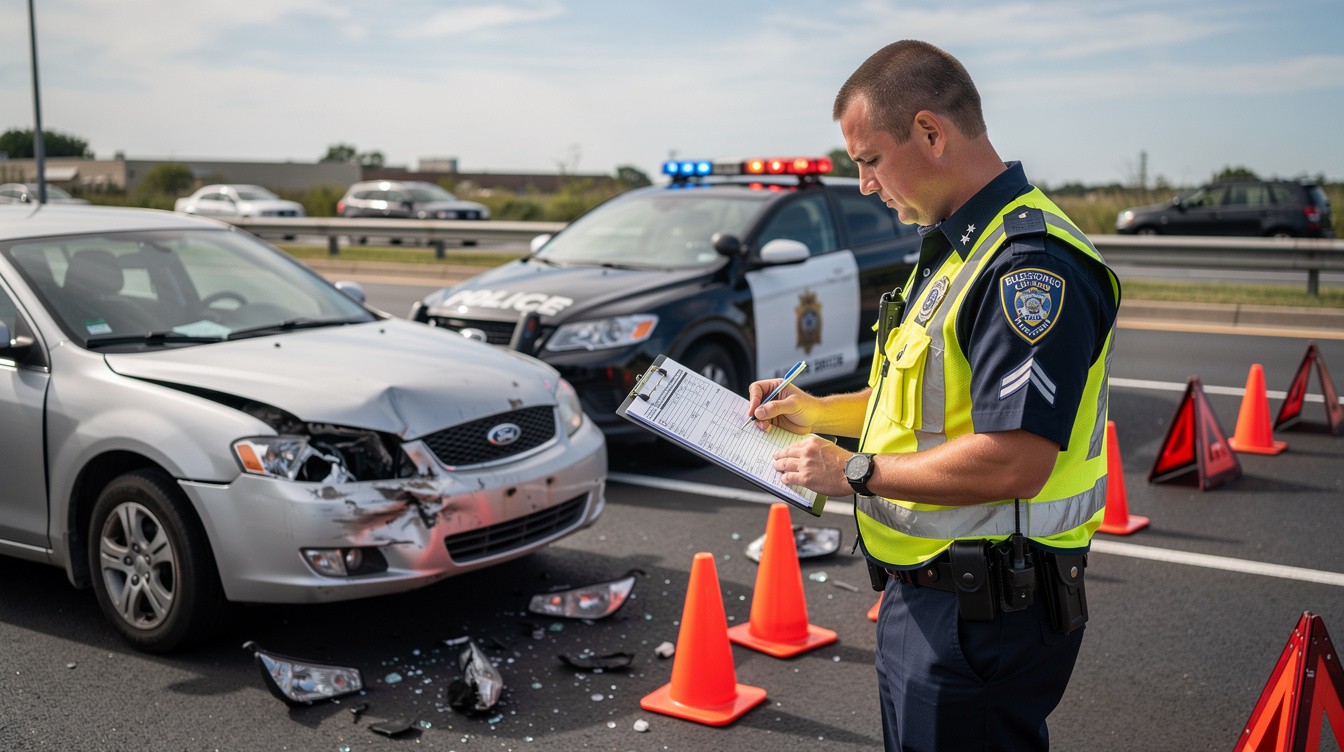
After a car crash, a police report becomes one of your most valuable documents. This report shapes how insurance companies evaluate your claim and influences the strength of your case.
At Schaar & Silva LLP, we’ve seen how delays in filing or obtaining a car crash police report can weaken your position. Getting your report quickly and reviewing it carefully protects your rights and preserves critical evidence.
What Gets Documented in a Police Report
The Official Record Law Enforcement Creates
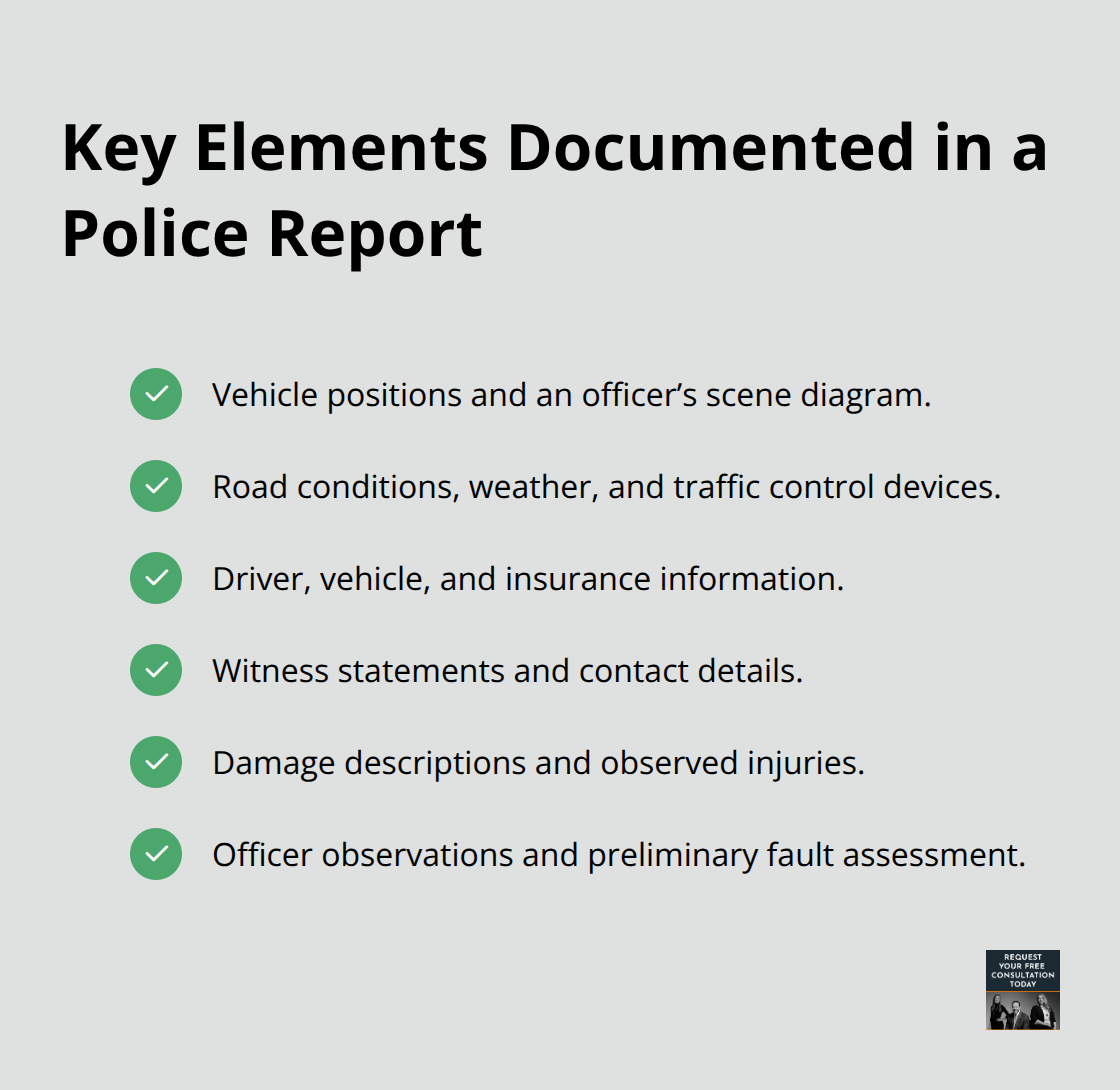
A police report after a car crash is an official document created by law enforcement that records the circumstances, facts, and initial findings from the accident scene. This report becomes the foundation for insurance investigations and legal proceedings. When an officer arrives at the scene, they document vehicle positions, road conditions, weather, traffic signals, witness statements, and their observations about how the crash occurred.
California law requires police to file reports for accidents involving injuries, deaths, or significant property damage. You cannot file the report yourself-only law enforcement can. The officer should complete the report within a specific timeframe, though delays happen frequently in busy jurisdictions like Sacramento and Oakland.
Why Insurance Companies Rely on Police Reports
Insurance companies depend heavily on these reports because they contain unbiased observations made while details remain fresh. The officer’s assessment of fault appears in the report, though this assessment can be challenged later. A poorly documented report or one with inaccuracies can severely undermine your claim, which is why reviewing it immediately matters.
The Specific Data Points That Shape Your Case
Vehicle information, driver details, insurance data, and damage descriptions all appear in the document. Witness contact information is included, though not always complete or accurate. The officer’s diagram of the accident scene helps establish vehicle positions and impact points.
The narrative section is where the officer describes what happened, and this section often contains subjective language that can favor one party over another. Medical information about injuries may be noted if the officer observed them at the scene.
Correcting Errors Before They Damage Your Case
You have the right to request corrections if the report contains factual errors about your vehicle, your statements, or the accident circumstances. Inaccuracies in this document affect settlement negotiations and court proceedings, so catching them early prevents problems later. Identifying statements that need correction before they influence your case protects your position significantly.
Understanding what appears in your police report sets the stage for the next critical step: obtaining that report and reviewing it thoroughly.
Why Speed Matters With Police Reports
California’s Filing Requirements Shape Your Timeline
California law mandates that police file accident reports within specific timeframes, and these deadlines directly impact your ability to recover damages. In Santa Cruz County, Sacramento, and Oakland, law enforcement typically must complete reports within ten business days for injury accidents, though jurisdictions vary in their enforcement. The moment that report is filed, insurance companies launch their investigation, and delays in your access to that document put you at a significant disadvantage.
Insurance adjusters use the police report to establish fault percentages and determine settlement offers, which means inaccuracies or missing information in that report translate directly into lower payouts. California Vehicle Code Section 20008 requires drivers to report accidents to police within 24 hours if injuries or significant property damage occur, but many people miss this deadline without realizing the consequences.
How Early Access Protects Your Position
The longer you wait to obtain and review your police report, the weaker your evidence becomes and the stronger the insurance company’s position grows. Witness memories fade within days, not weeks, and if you don’t catch inaccuracies in the report early, those errors become embedded in the insurance file and influence every subsequent negotiation.
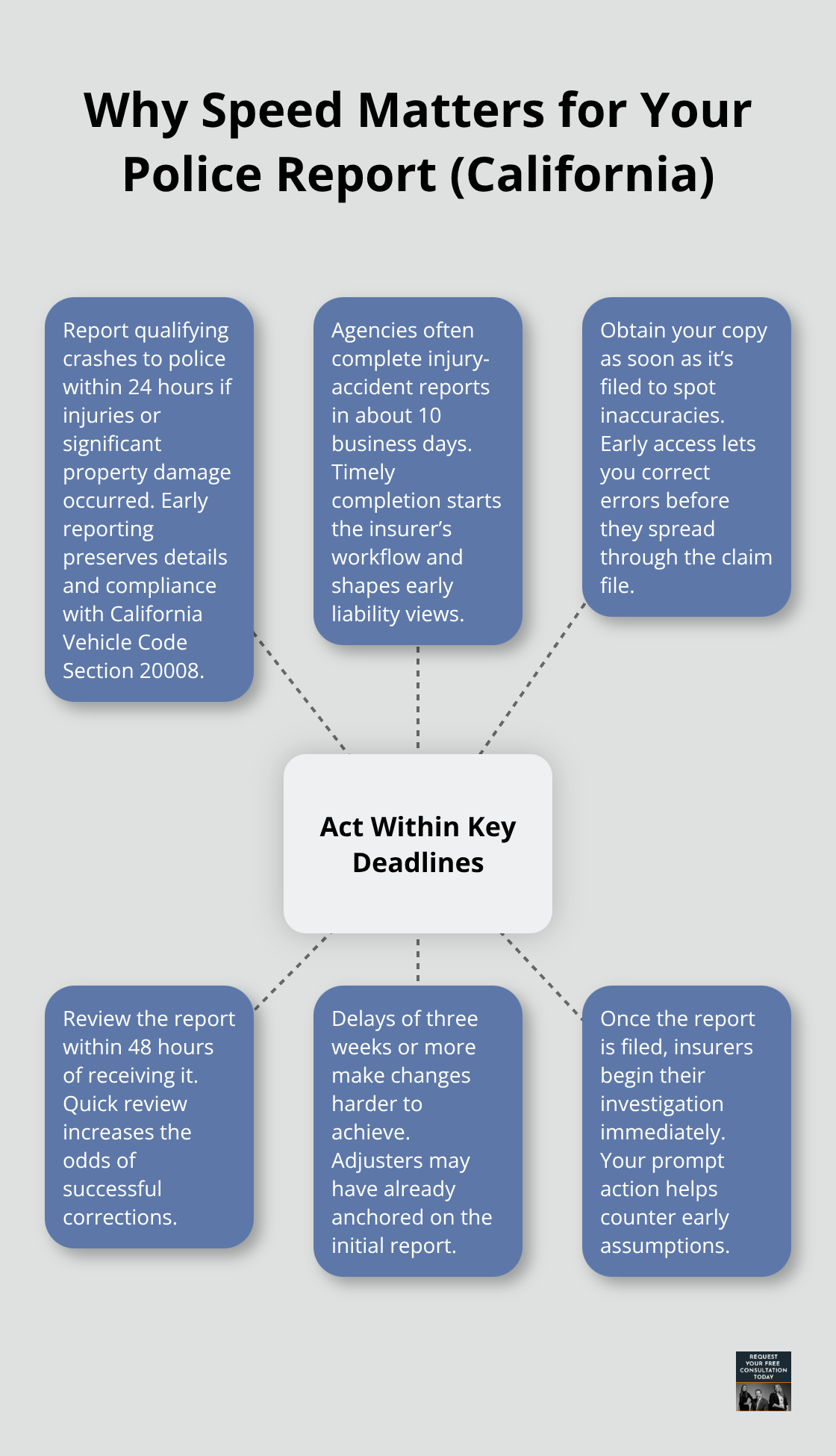
Once the insurance company receives and reviews the report, they form their initial liability assessment, and changing that assessment later becomes exponentially harder. Property damage claims move faster when the police report is accurate and complete from day one, because adjusters don’t need to conduct supplementary investigations to fill gaps.
Real Consequences From Delayed Action
Accident cases in Sacramento show that clients who obtained their reports within 48 hours and identified errors caught them before adjusters finalized their investigations, while those who waited three weeks or longer found their corrections were largely ignored. Medical records, vehicle damage assessments, and witness statements all connect to what appears in that police report, and delays compound each problem into a cascading disadvantage.
Taking Immediate Steps Forward
If you’ve been in an accident in these counties and haven’t yet obtained your report, contact local law enforcement immediately for the report number and filing status, then request a copy without delay. The steps you take in the first 48 hours after obtaining that report determine whether you catch critical errors before they damage your settlement negotiations.
Getting Your Police Report and Finding the Errors
Request Your Report From the Right Agency
Requesting your police report in Santa Cruz County, Sacramento, or Oakland requires contacting the specific law enforcement agency that responded to your crash, not a central database or the insurance company. Call the non-emergency line for the police department or sheriff’s office in the jurisdiction where the accident occurred and ask for the report by your case or incident number, which you should have received at the scene. If you don’t have the number, provide the date, time, location, and your name. Most agencies charge between $10 and $25 for a copy and mail it within 5 to 10 business days, though some departments now offer online portals for faster retrieval. Sacramento Police Department, for example, allows online requests through their records bureau website, cutting wait times significantly.
Don’t rely on your insurance company to obtain this for you. They have no obligation to share it with you, and requesting it yourself protects your access to the raw document without their interpretations layered on top.
Read the Report With a Critical Eye
Once you have the report, examine it carefully because officer errors are common and costly. Check that your vehicle description, insurance information, and statements match what you actually told the officer. Names get misspelled, vehicle colors get recorded wrong, and damage descriptions frequently miss injuries you reported. Look at the narrative section for language that assigns fault, such as statements like you failed to yield or didn’t maintain safe speed, because these phrases directly influence settlement negotiations.
If a witness is listed but their statement seems incomplete or contradicts what you remember, that’s a red flag worth investigating further.
Challenge Inaccuracies Through Formal Channels
Inaccuracies must be challenged formally through a request for amendment submitted to the police department in writing, not through phone calls. Include specific corrections, reference the report page numbers, and explain why the information is wrong. Some departments respond within 10 days; others take several weeks. Don’t wait passively for a response-follow up after two weeks to confirm receipt and expected completion.
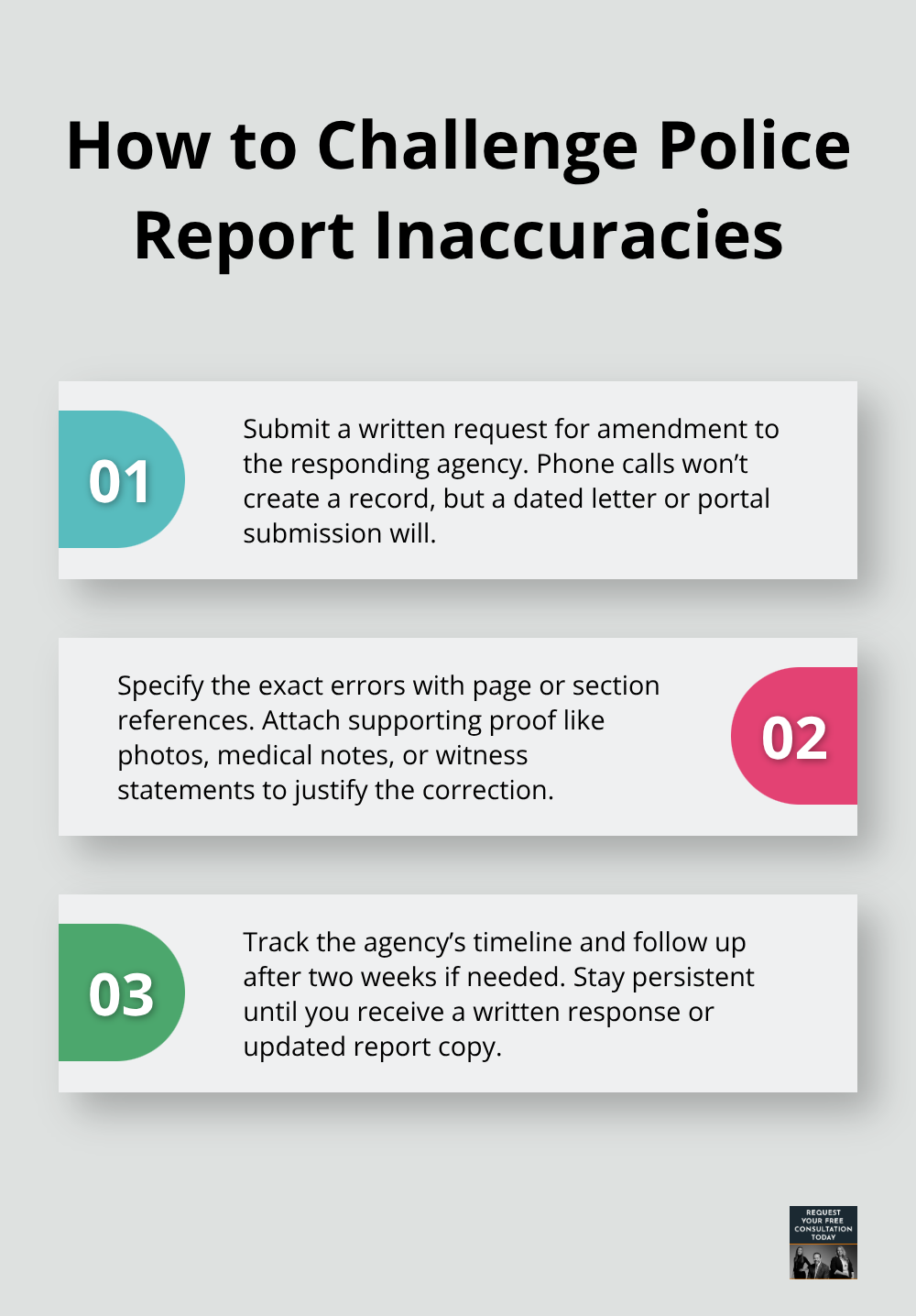
Clients who challenge inaccuracies within 48 hours of receiving their reports see higher correction rates because departments haven’t yet closed the case file. The window for successful corrections narrows quickly once law enforcement completes their investigation.
Final Thoughts
Your car crash police report forms the foundation of your recovery, and the actions you take immediately after obtaining this document determine whether you catch errors before they damage your settlement. Reviewing the report within 48 hours, identifying inaccuracies, and submitting formal amendment requests protects your position far more effectively than waiting weeks or months to address problems. After you’ve obtained your report and verified its accuracy, coordinate that information with your insurance claim, medical records, and any witness statements you’ve gathered, because inconsistencies between documents raise questions that adjusters use to reduce settlement offers.
If the police report contains language assigning fault to you, you’ll need documentation that contradicts those statements, which is why early review matters so much. The coordination of your car crash police report with supporting evidence requires attention to detail and a clear understanding of how insurance companies evaluate claims. Medical lien services can address your medical bills while your case resolves, allowing you to focus on recovery without financial pressure.
If you’ve been in an accident in Santa Cruz County, Sacramento, or Oakland and need guidance on your police report or claim process, contact Schaar & Silva LLP to discuss your situation. The sooner you address your report, the stronger your position becomes.