
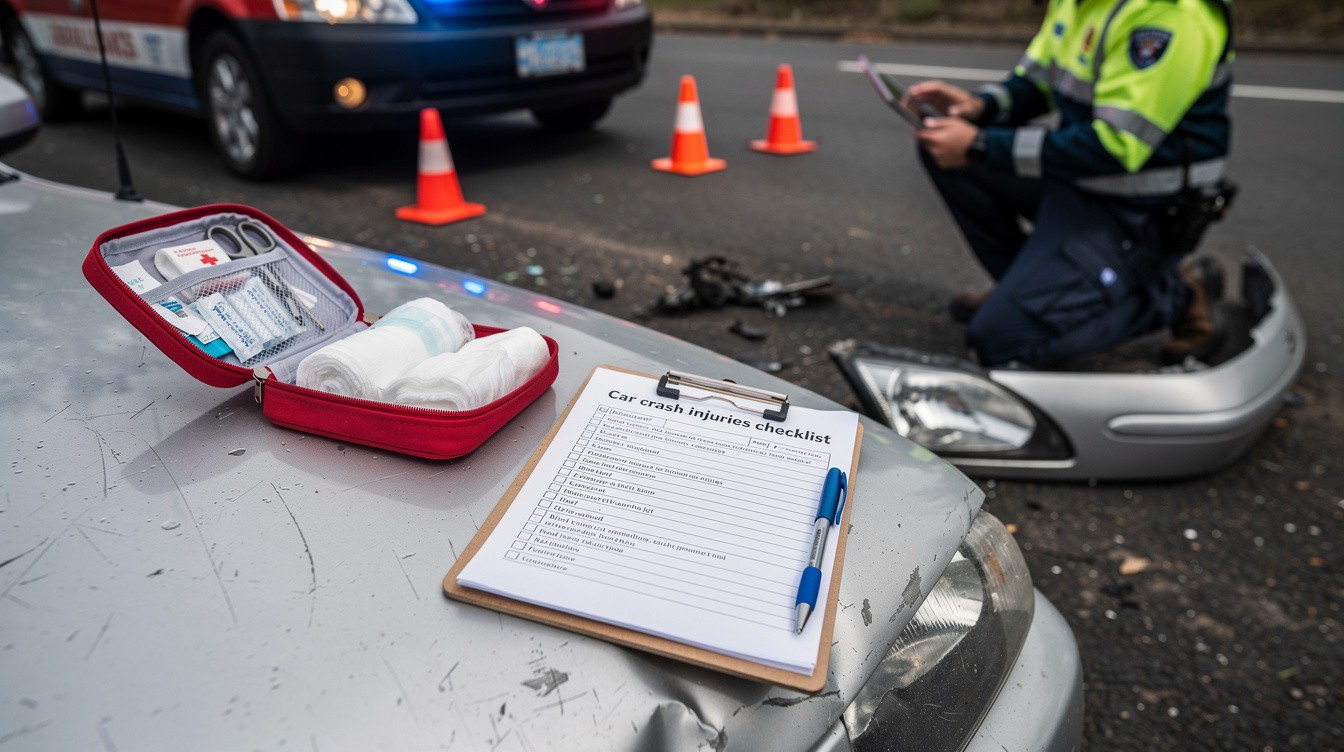
Car accidents happen fast, but the injuries they cause can take months or years to fully appear. Many Santa Cruz victims miss warning signs because they don’t know what to look for in those critical first hours and days.
We at Schaar & Silva LLP created this car crash injuries checklist to help you identify what matters most after an accident. You’ll learn what steps protect your health, your claim, and your future.
What to Do Right After Your Accident
Move to Safety and Assess the Scene
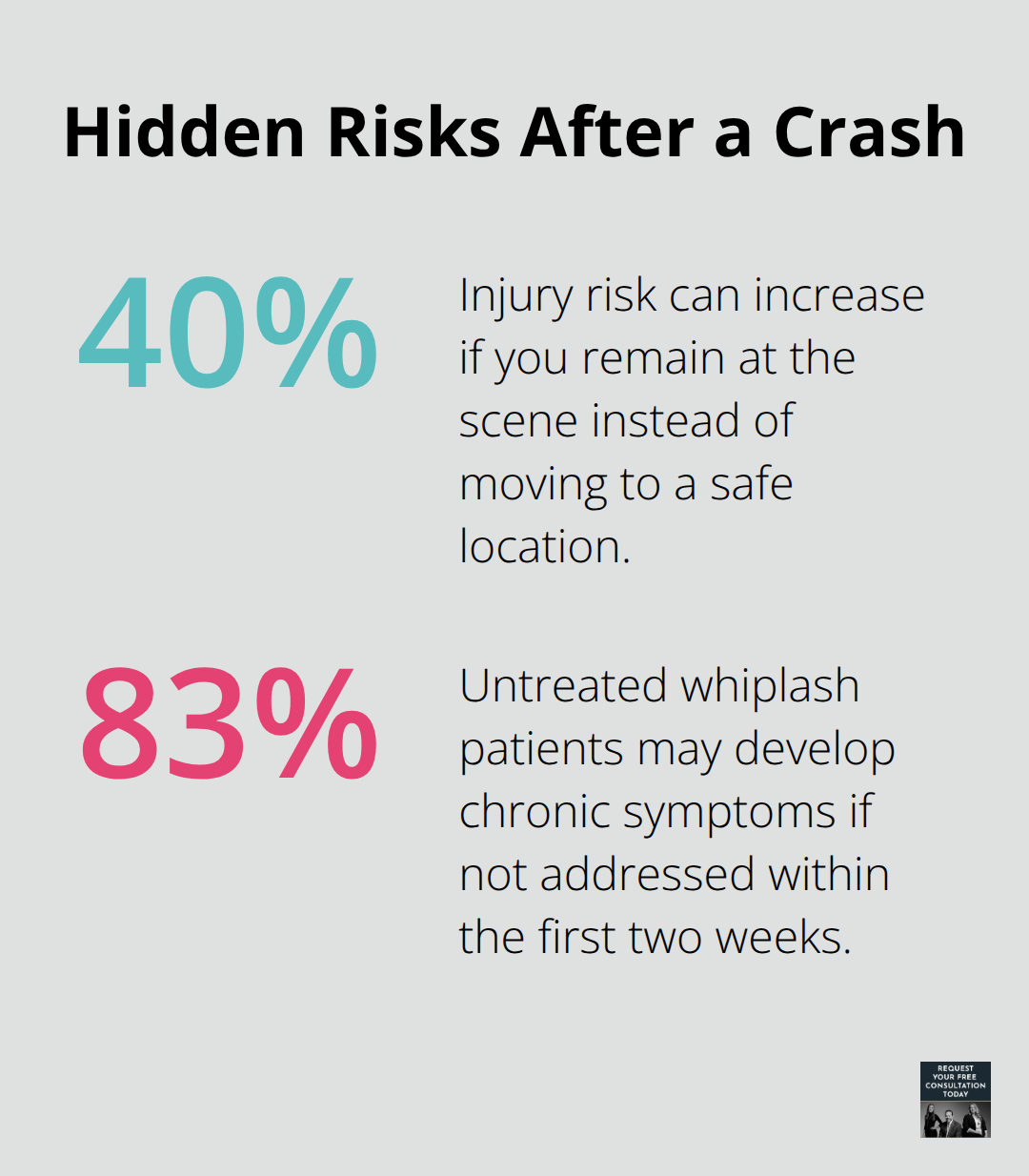
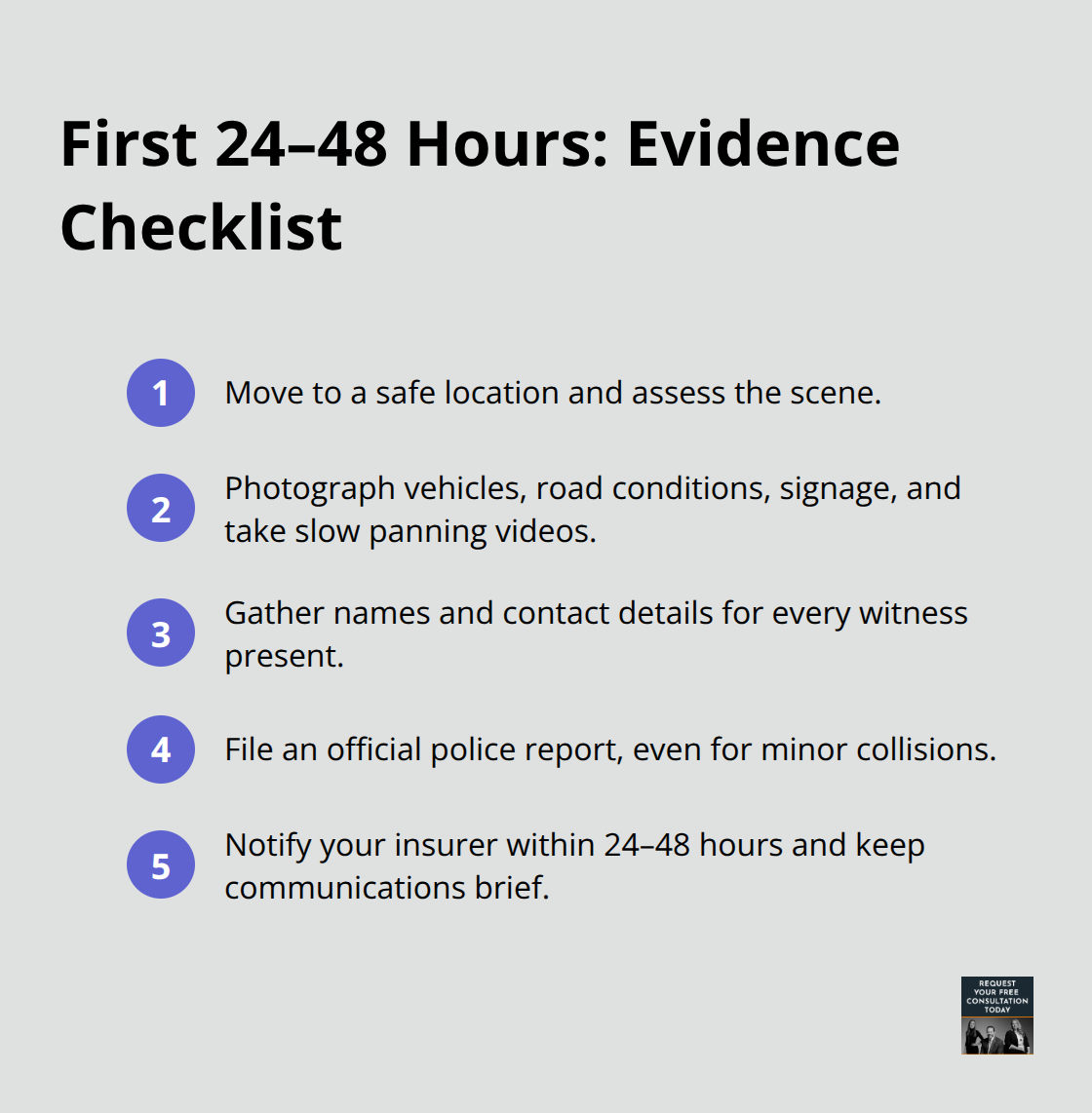
The first hour after a car accident determines whether you’ll have strong evidence for your claim or weak documentation that insurance companies can challenge. Your actions during this window matter far more than most victims realize. Move to safety if possible-the National Highway Traffic Safety Administration reports that remaining at the scene of an accident without moving to a safe location increases your injury risk by up to 40 percent.
Document Everything with Photos and Video
Pull out your phone and photograph everything: vehicle damage from multiple angles, road conditions, traffic signs, skid marks, and the overall scene. Take videos as well, panning slowly across the accident area so timestamps and environmental details are captured. These images become critical evidence because insurance adjusters often arrive days later when conditions have changed, weather has altered the scene, or cleanup crews have removed debris.
Gather Witness Information While Memories Are Fresh
Collect the names, phone numbers, and addresses of every witness present-not just those who stop to help, but anyone nearby who saw what happened. Witnesses disappear quickly, and their statements become exponentially harder to obtain weeks later. Write down their account of events in their own words while memories remain sharp.
File an Official Police Report
Contact the Santa Cruz Police Department to file an official accident report, even for minor collisions. According to California vehicle code, accidents involving injuries, deaths, or property damage exceeding $1,000 must be reported. This report creates an official record that prevents the other driver from later changing their story.
Notify Your Insurance Company Promptly
Notify your insurance company within the timeframe specified in your policy-most require notification within 24 to 48 hours. Provide factual information about what happened, but avoid admitting fault or speculating about injuries since your statement can be used against you later. Keep this communication brief and documented, requesting written confirmation of your report.
Once you’ve secured the scene and filed reports, the next critical phase involves identifying injuries that may not appear immediately.
Injuries That Appear Days or Weeks After Impact
Why Symptoms Emerge Later
Car accident injuries don’t always announce themselves immediately. The adrenaline surge after a collision masks pain signals your body sends, which means you could feel fine at the scene but experience severe symptoms within 48 hours. Whiplash occurs when your head and neck snap forward and backward rapidly during impact, and the Journal of Orthopaedic Surgery and Research found that 83 percent of whiplash patients develop chronic symptoms if untreated during the first two weeks.
Recognizing Neck and Back Injuries
Neck stiffness, headaches, and shoulder pain are the most common early signs, but many victims ignore these symptoms thinking they’ll resolve on their own. The truth is different: delayed treatment significantly reduces your chances of full recovery. Back and spinal cord injuries present a more serious concern because damage to your spine can worsen over time without proper medical intervention. You might notice lower back pain, numbness in your legs, or difficulty moving certain ways, but these symptoms often intensify over several weeks as inflammation increases.
Head Trauma and Concussion Dangers
Head trauma and concussions are particularly dangerous because external signs may be minimal while internal brain injury progresses. Symptoms include persistent headaches, dizziness, confusion, sensitivity to light, and memory problems that appear hours or days after the accident. The Centers for Disease Control and Prevention reports that repeated concussions significantly increase long-term neurological risks, making early diagnosis through proper medical evaluation essential.
Securing Medical Documentation
Seek medical attention even if you feel fine. Visit an emergency room or urgent care clinic within 24 hours of your accident and describe every symptom you’re experiencing, no matter how minor. Request specific imaging tests like MRI or CT scans if you’ve hit your head or experienced neck and back pain, because X-rays often miss soft tissue damage. Document everything your doctor finds, including their observations about your condition and recommended treatment plans. Keep all medical records organized and accessible because insurance companies will scrutinize these documents when evaluating your claim. If symptoms develop after your initial visit, schedule follow-up appointments and inform your doctor about the accident connection. The stronger your medical documentation during these early weeks, the stronger your position becomes if you need to pursue a claim or legal action.
Next Steps With Your Insurance Company
Your medical records now form the foundation for what comes next: navigating your insurance claim and understanding what coverage actually applies to your situation.
Building Your Medical Record After a Crash
Establish a Medical Baseline Immediately
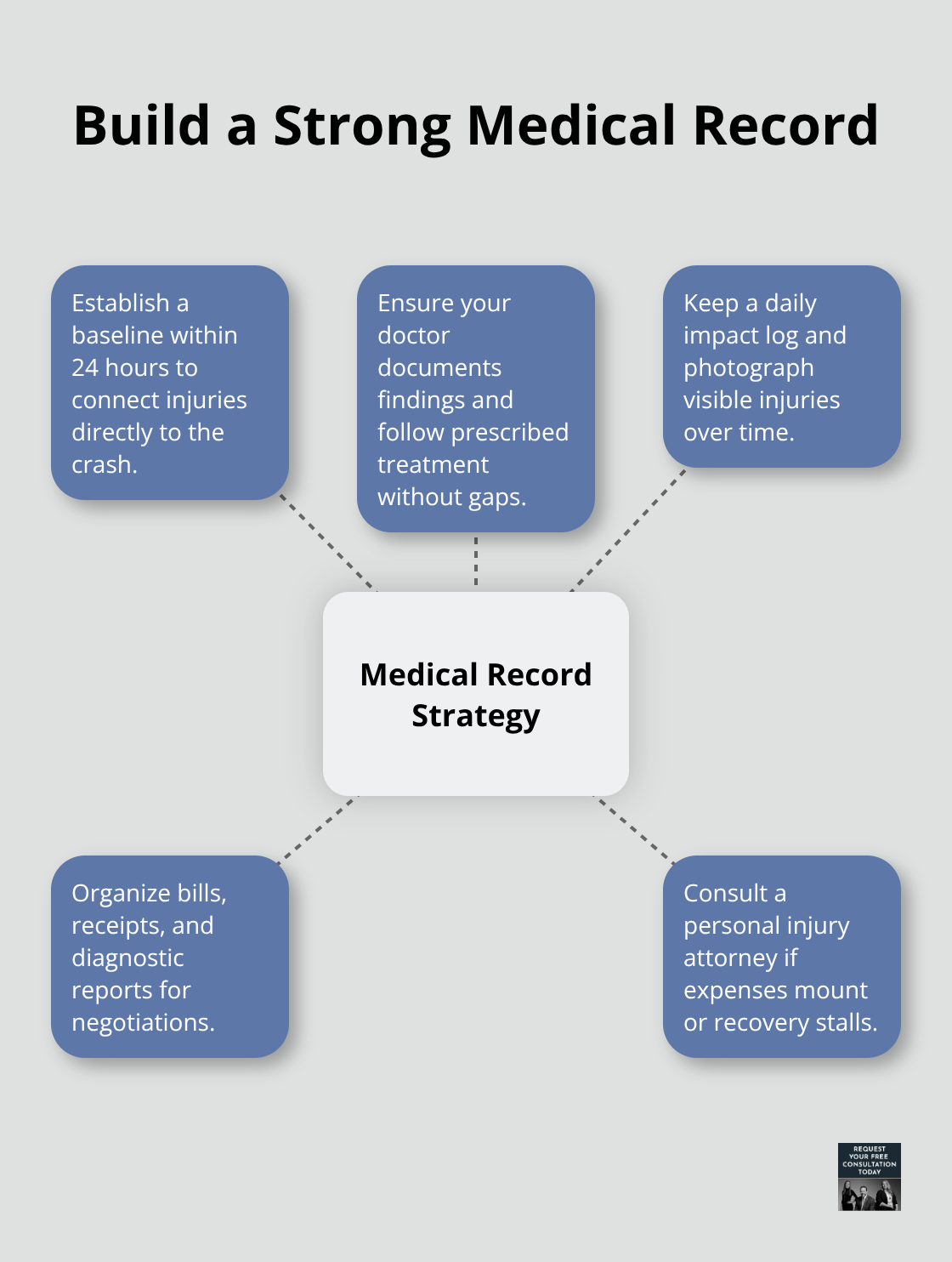
The medical documentation you collect in the weeks following your accident determines whether you receive fair compensation or face an uphill battle with insurance companies. Visit an emergency room or urgent care clinic within 24 hours, even if you feel relatively fine, because this establishes a medical baseline that connects your injuries directly to the accident. Tell your doctor exactly what happened and describe every sensation you’re experiencing-pain, numbness, dizziness, cognitive fog, anything unusual. Request specific imaging like MRI or CT scans if you’ve experienced head impact or neck and back trauma, since standard X-rays frequently miss soft tissue damage that causes long-term problems.
The American College of Radiology recommends MRI imaging for suspected ligament and disc injuries, which are common in car accidents but invisible on basic radiographs.
Document Your Doctor’s Findings and Treatment Plans
Your doctor’s observations, their assessment of your condition, and their treatment recommendations must all appear in writing. If your doctor prescribes physical therapy, pain management, or specialist care, follow through completely because gaps in treatment give insurance adjusters ammunition to argue your injuries weren’t serious. Schedule follow-up appointments if new symptoms emerge weeks later and explicitly tell each healthcare provider about your accident so they document the connection. Keep every receipt, medical bill, prescription record, and diagnostic report organized in one folder-insurance companies scrutinize these documents intensely when calculating settlement offers.
Create a Daily Impact Log and Visual Record
Maintain a simple log that documents how your injuries affect daily activities: missed work days, inability to perform household tasks, sleep disruption, anything that demonstrates impact on your life. Photograph any visible injuries like bruising or swelling on multiple days as they change. Request copies of all medical records directly from your healthcare providers rather than relying on summaries, because complete documentation reveals the full scope of your treatment and recovery timeline. Insurance adjusters often lowball settlements for accident victims without thorough medical evidence, but comprehensive records force them to offer fair value.
Organize Records for Insurance Negotiations
Your medical records become leverage in negotiations, but only if they’re complete and detailed from day one. Insurance companies scrutinize every document when calculating what they’ll actually pay you. The strength of your medical evidence directly correlates with the settlement amount you’ll receive. If your medical expenses continue mounting or your recovery takes longer than expected, contact an experienced personal injury law firm to discuss whether your case warrants pursuing compensation beyond initial insurance offers. We can review your medical documentation and advise whether a formal claim makes financial sense for your situation.
Final Thoughts
Your medical documentation and accident scene evidence now sit in front of you, and what happens next determines whether you recover fairly or accept less than you deserve. Insurance companies count on accident victims not understanding their coverage limits or the true value of their claims, which is why many people settle for far below actual costs. Review your insurance policy carefully to understand your coverage limits, deductibles, and what types of injuries your policy actually covers, since California requires only minimum liability coverage of $15,000 for injury to one person-barely enough for serious accident injuries.
Contact an attorney if your medical bills exceed $5,000, if you’ve missed significant work time, or if your injuries show signs of becoming long-term problems. Many accident victims wait too long before seeking legal guidance, which weakens their negotiating position considerably. We at Schaar & Silva LLP help Santa Cruz accident victims navigate insurance claims, evaluate property damage, and connect you with medical lien services so bills don’t pile up while your case resolves.
Your car crash injuries checklist should now guide your next steps: medical records organized, police reports filed, and insurance notifications completed. If settlement negotiations stall or insurance companies deny your claim, contact Schaar & Silva LLP to discuss whether pursuing legal action makes financial sense for your situation. You’ve already done the hard work of documenting everything properly, which puts you in a strong position moving forward.