
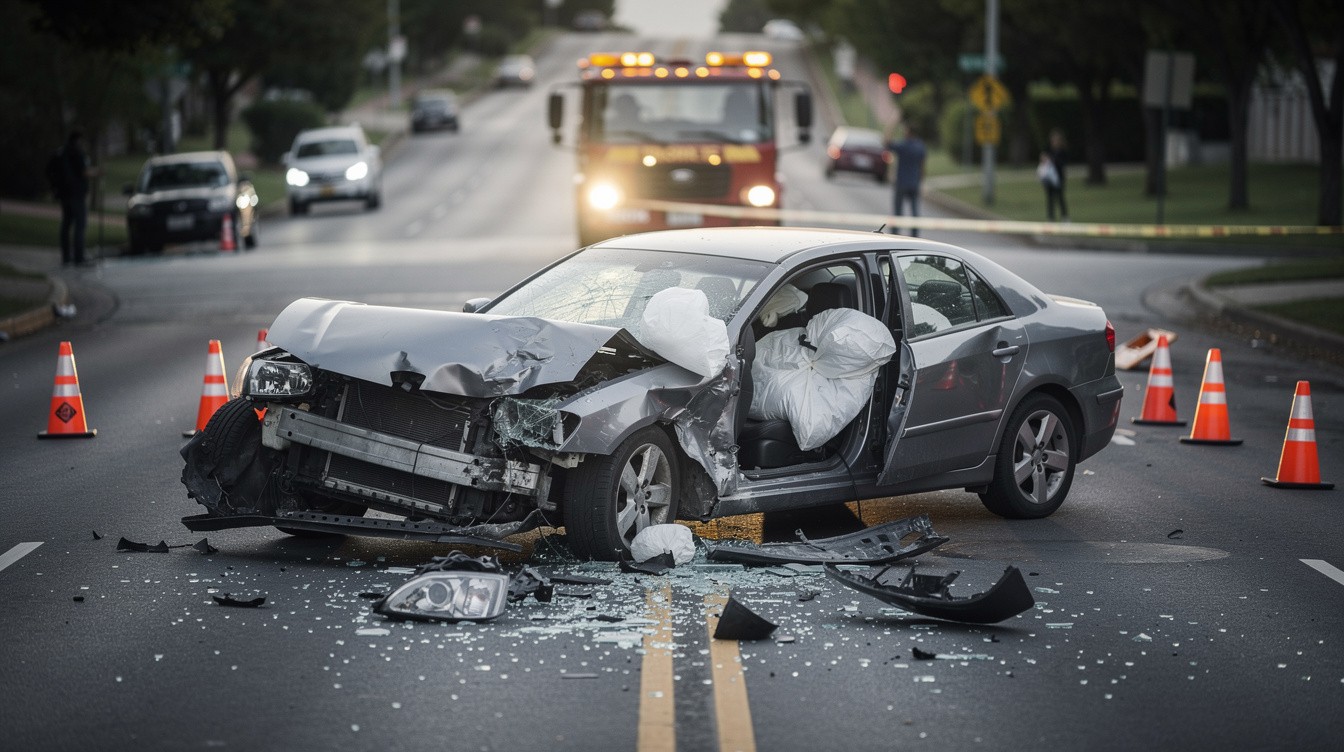
A car collision in Santa Cruz can leave you shaken and unsure about what comes next. The decisions you make in the hours and days following the crash directly impact your ability to recover damages and protect your rights.
We at Schaar & Silva LLP have guided countless Santa Cruz County residents through this process. This roadmap walks you through each critical step, from documenting the scene to understanding your claim options.
What to Do Right After a Crash
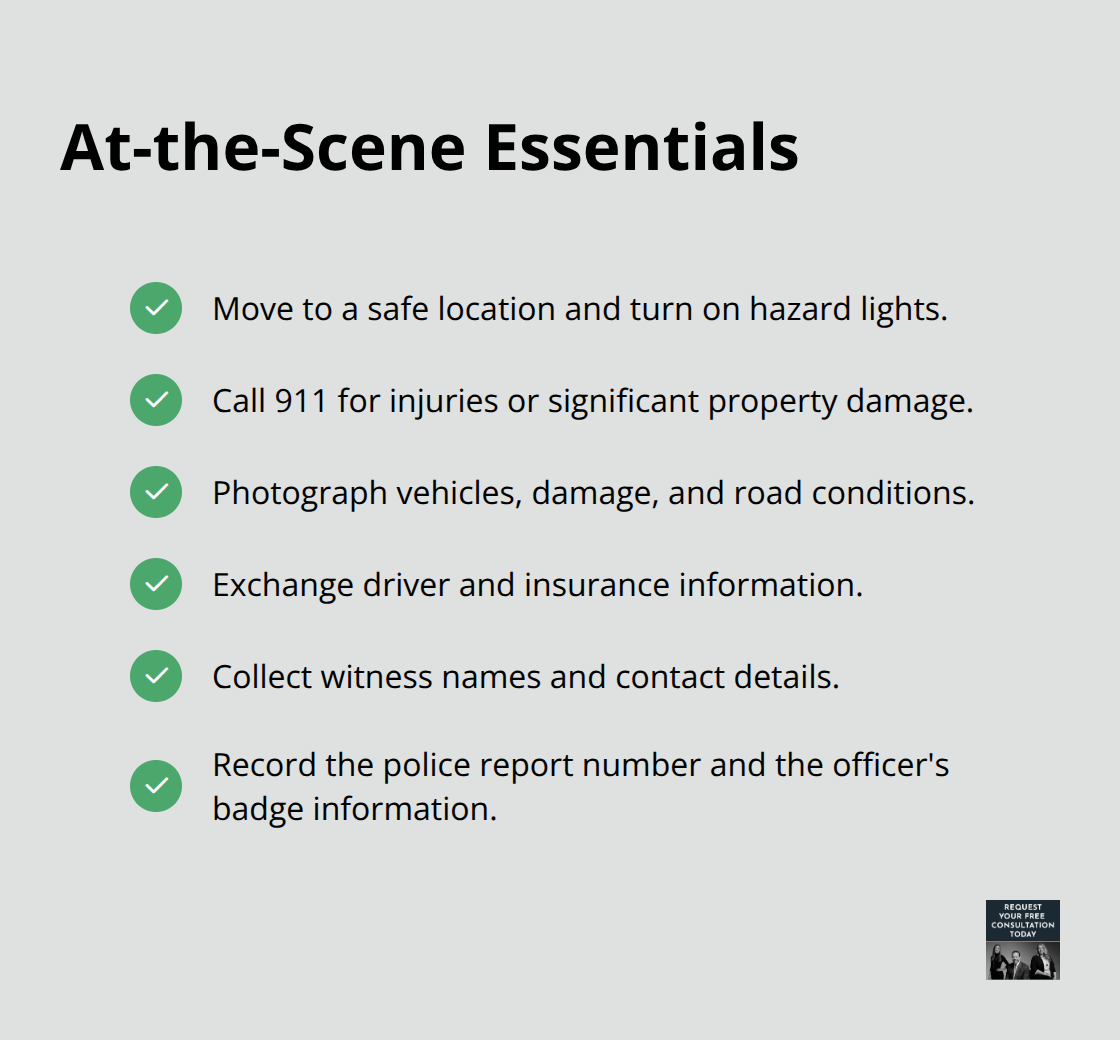
The first hour after a collision determines how strong your claim becomes. Your actions in this window create the foundation for everything that follows. Start by moving to safety if possible. If vehicles are drivable and traffic allows, move them out of active lanes to prevent additional accidents. Turn on hazard lights, set up warning triangles if you have them, and call 911 if anyone is injured or if there’s significant property damage. California law requires you to report accidents involving injury, death, or property damage exceeding $1,000 to local police.
Capture Everything at the Scene
Photography is non-negotiable. Use your phone to photograph the overall accident scene from multiple angles, showing vehicle positions and road conditions. Take close-ups of all vehicle damage, license plates, and visible injuries. Photograph the road itself-weather conditions, road markings, traffic signals, and any debris. These images become critical evidence that insurance adjusters and attorneys will reference.
Exchange information with the other driver: full name, phone number, address, driver’s license number, vehicle identification number, license plate, insurance company name, and policy number. If witnesses are present, get their names and contact information before they leave. Police reports are valuable but often incomplete; your photos and witness statements fill those gaps.
Write down the exact date, time, weather conditions, and your account of how the collision happened while details are fresh. Get the police report number and the responding officer’s name and badge number for your records.
Report Promptly and Protect Your Rights
Contact your insurance company within 24 hours, not days. Most policies require prompt notification, and delays can complicate claims. When you call, stick to facts: where, when, what happened, and who was involved. Avoid admitting fault or speculating about causes-let the facts speak.
File a police report in Santa Cruz County if you haven’t already; you can do this at the local police station or online through the Santa Cruz Police Department’s non-emergency system. Request a copy of the report once it’s filed.
Keep all documentation organized: photos, police report, insurance correspondence, medical records, repair estimates, and receipts. This organized file becomes invaluable if your claim becomes disputed or if legal representation becomes necessary. The insurance company will assign an adjuster to your case; cooperate fully but understand that adjusters work to minimize payouts. Document every conversation with dates and names.
Your documentation now sets the stage for the next phase-addressing any injuries and understanding what medical care you need.
Medical Care and Injury Documentation
Ignoring injuries after a crash is a costly mistake. Symptoms like neck pain, headaches, and back stiffness often appear hours or even days later, not immediately. The adrenaline from a collision masks pain, which means you could walk away feeling fine and wake up the next morning unable to move. Visit a doctor or emergency room within 24 hours of the crash, regardless of whether you feel injured. This creates a medical record that directly links your injuries to the collision-something insurance companies and courts require to validate your claim. If you delay medical care by days or weeks, insurers will argue your injuries stem from something else entirely, weakening your ability to recover damages. California courts take this seriously: a documented medical visit within 24 hours carries far more weight than one scheduled weeks later.
Document Every Medical Expense and Treatment
From the first doctor’s visit onward, keep meticulous records. Request itemized bills from every provider-hospitals, urgent care clinics, physical therapists, chiropractors-and organize them chronologically. Insurance adjusters scrutinize medical bills closely, so ensure each one clearly states the date of service, the treatment provided, and the connection to your collision. Medical lien services can defer payment until your case resolves, taking financial pressure off you during recovery. Photograph or scan every receipt, prescription, and medical record. Track mileage to and from medical appointments-that’s a reimbursable expense under California law. Keep a simple log noting the date, provider name, treatment type, and any out-of-pocket costs you paid. This documentation becomes your evidence when calculating the full cost of your injuries.
Show How Your Injuries Changed Your Life
Medical bills alone don’t capture the true impact of your injuries. Insurance companies and courts need to understand how the collision affected your ability to work, care for your family, and enjoy daily activities. If you couldn’t work for three weeks due to back pain, that’s lost income. If you couldn’t lift your child or perform household chores, that’s documented hardship. Write detailed notes describing your limitations: I couldn’t sit at my desk for more than two hours without severe pain. I missed my daughter’s soccer games because I couldn’t stand for extended periods. I required help with basic tasks like showering and grocery shopping. These personal accounts, combined with your medical records, demonstrate the real-world consequences of the crash and strengthen your claim for damages beyond just medical expenses.
Understand Your Claim’s Full Value
Your medical records and personal documentation form the foundation for calculating what your claim is actually worth. Insurance adjusters use formulas that multiply your medical expenses by a factor (typically 1.5 to 5, depending on severity) to estimate pain and suffering damages. However, this calculation only works if your documentation is complete and compelling. A gap in medical treatment or vague injury descriptions will lower that multiplier significantly. The stronger your evidence-consistent medical visits, detailed treatment notes, clear descriptions of how injuries affected your life-the higher your potential recovery. When you’re ready to pursue your claim, an experienced personal injury lawyer can help you navigate the process and maximize your recovery.
Filing a Claim and Understanding Your Options
Review Your Insurance Policy Coverage
Your insurance policy is a contract, and most Santa Cruz drivers have never actually read theirs. This gap in knowledge costs people thousands of dollars. Pull out your policy documents or log into your insurer’s online portal and find your declarations page. This page lists your coverage types and limits. California requires minimum liability coverage of 15/30/5, meaning $15,000 per person for bodily injury, $30,000 total per accident for bodily injury, and $5,000 for property damage. If you carry these minimums and the other driver caused the accident, their insurance should cover your damages up to those limits. However, if the other driver is uninsured or underinsured, your own uninsured/underinsured motorist coverage kicks in.
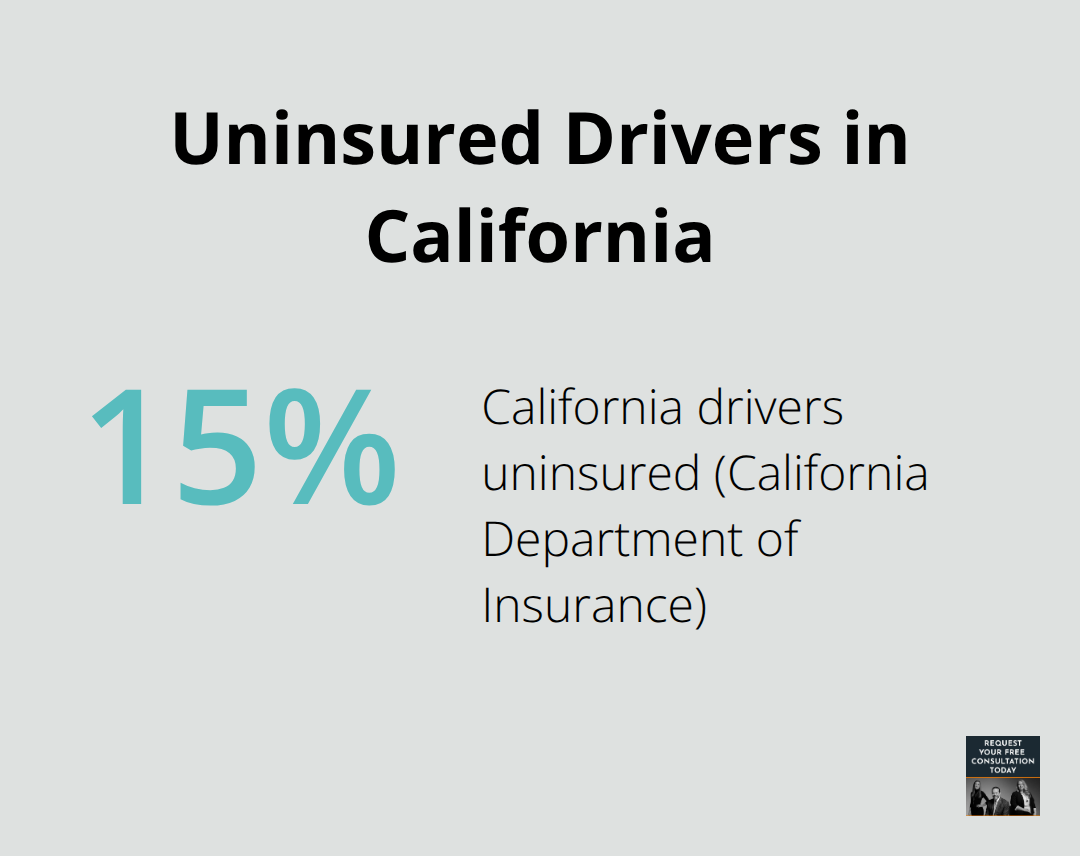
This coverage is optional in California, but skipping it is a financial mistake. About 15% of California drivers are uninsured, according to the California Department of Insurance, meaning there’s a real chance you’ll need this protection. Collision and comprehensive coverage pay for damage to your own vehicle regardless of fault. Your deductible (typically $500 or $1,000) comes out of your pocket before the insurance payout. Review what you actually have in writing rather than assuming coverage based on what an agent told you years ago.
Understand Liability and Fault Determination
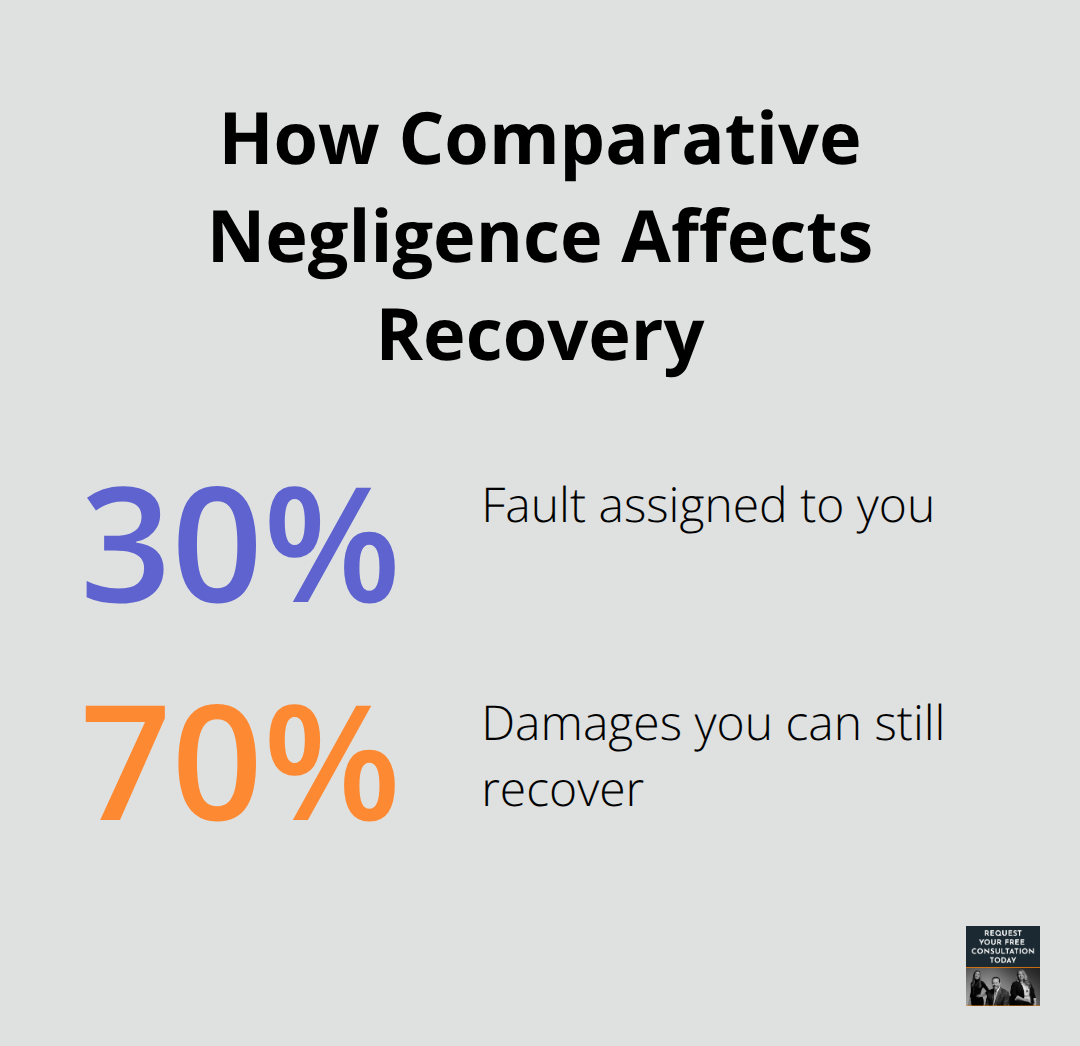
California follows comparative negligence rules, which means fault determination directly affects your recovery. If you’re found 30% at fault for a collision, you can still recover 70% of your damages from the other party’s insurance.
The insurance company will investigate your claim and make a fault assessment based on police reports, photos, witness statements, and damage patterns. Don’t accept their initial fault assessment if you disagree. Document your version of events clearly and provide any additional evidence that supports your position. If the other driver admits fault in writing or to police, that strengthens your claim significantly. Medical expenses, lost wages, property damage, and pain and suffering are all recoverable if liability rests with the other party. However, pursuing these damages depends on the severity of your injuries and whether a settlement offer covers your actual losses.
Know When to Pursue a Personal Injury Claim
If your medical bills total $3,000 but the insurance company offers $2,500, that gap matters. For minor injuries with clear liability, accepting a settlement often makes sense because litigation costs time and money. For serious injuries, permanent damage, or disputed liability, pursuing a personal injury claim through an attorney becomes the smarter path. We help Santa Cruz County residents evaluate whether settlement or litigation serves their situation best. We can direct you to medical lien services that facilitate payment of your bills until your case is resolved, and we assist in evaluating property damage to ensure you receive fair valuation for your loss. Your decision should rest on facts rather than pressure from adjusters.
Moving Forward After Your Car Collision in Santa Cruz
The claims process unfolds over weeks or months, depending on complexity and whether liability is clear. Your insurance adjuster will contact you within days to schedule a vehicle inspection and discuss your claim. They’ll request medical records, repair estimates, and your account of the accident, and you should respond promptly to these requests while understanding that adjusters work within strict timelines and budgets. If you disagree with their valuation of your vehicle or their liability assessment, you have the right to challenge it by requesting a detailed written explanation and providing any additional evidence that supports your position.
When injuries are substantial or the other party contests liability, legal representation changes the outcome significantly. An attorney handles communication with insurance companies, ensuring you don’t accidentally say something that weakens your claim, and they evaluate settlement offers against the true value of your case to protect you from accepting less than you deserve. Medical bills, lost wages, property damage, and pain and suffering all factor into what your claim is worth, and insurance companies count on injured people accepting their first offer without understanding the full picture. We at Schaar & Silva LLP help Santa Cruz County residents navigate this complexity by directing you to medical lien services that defer payment of your bills until your case resolves and by evaluating property damage thoroughly to ensure you receive fair valuation for your vehicle loss.
Recovery extends beyond the legal and financial aspects, as physical therapy, mental health support, and time all contribute to healing. Some injuries resolve quickly while others require months of treatment, so you should document your progress and setbacks since this information supports your claim for ongoing damages. Return to work gradually if possible, and avoid rushing activities that aggravate your injuries, because your health comes first.