
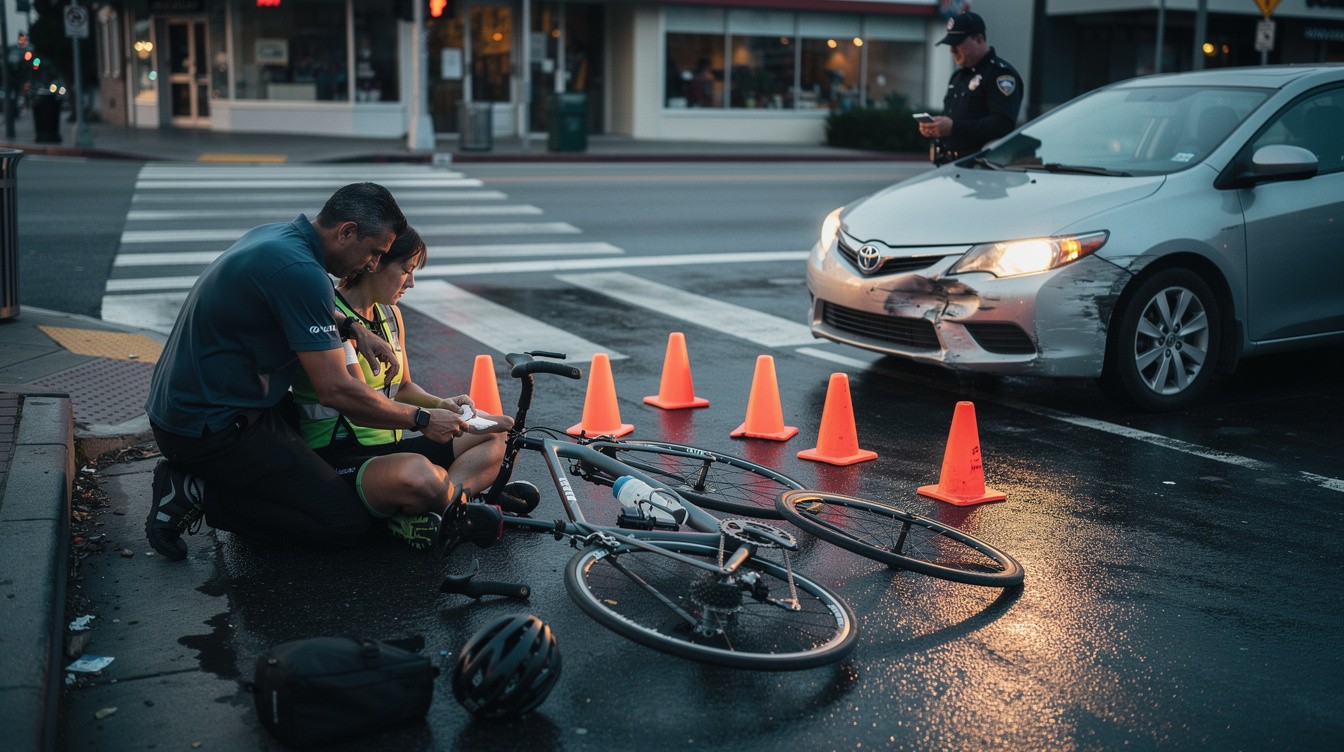
A bicycle collision in Santa Cruz can leave you with serious injuries, damaged property, and mounting medical bills. The question of who pays for these damages isn’t always straightforward, and insurance coverage can be confusing.
We at Schaar & Silva LLP help accident victims understand their rights and recover the compensation they deserve. This guide walks you through liability, insurance options, and the steps you need to take to protect your claim.
Determining Liability in Bicycle Collisions
How California Negligence Laws Apply to Bike Accidents
California follows a comparative negligence rule that fundamentally changes how bicycle accidents are handled. Under this system, liability isn’t always black and white-multiple parties can share fault, and your compensation gets reduced by your percentage of responsibility. If you’re found 20 percent at fault for a collision, you can still recover 80 percent of your damages. This matters significantly in Santa Cruz, where bike-car collisions happen frequently on busy streets like Mission Street and Water Street near the downtown area.
Bicycle Collision Statistics in Santa Cruz County
Santa Cruz County experienced over 200 bicycle-involved collisions annually in recent years, with many resulting from driver negligence rather than rider error. Intersection collisions represent the highest percentage of bike accidents in urban areas like Santa Cruz, according to the National Highway Traffic Safety Administration. These numbers show that driver violations-not rider mistakes-cause most serious collisions in our community.
What Establishes Fault in a Bicycle Accident
Concrete evidence determines fault: traffic camera footage, witness statements, police reports, and accident scene photos all carry weight. Police reports from Santa Cruz law enforcement provide official documentation that insurers and attorneys rely on heavily when determining who bears financial responsibility. California Vehicle Code Section 21202 requires cyclists to follow traffic laws, but Vehicle Code Section 21750 mandates drivers give cyclists at least three feet of clearance-a rule frequently violated in Santa Cruz.
Common Collision Scenarios
Common collision scenarios include drivers turning left into cyclists, opening car doors into bike lanes, and failing to yield at intersections. When a driver causes injury through violating these laws, establishing their negligence becomes straightforward. Intersection collisions happen most often because drivers fail to see cyclists or misjudge their speed and distance.
Collecting Evidence at the Scene
Witness contact information proves invaluable because driver and cyclist accounts often conflict dramatically. Photograph vehicle positions, road conditions, traffic signals, and any visible damage immediately after the collision. These photos create the foundation for your claim and help insurers understand exactly what happened.
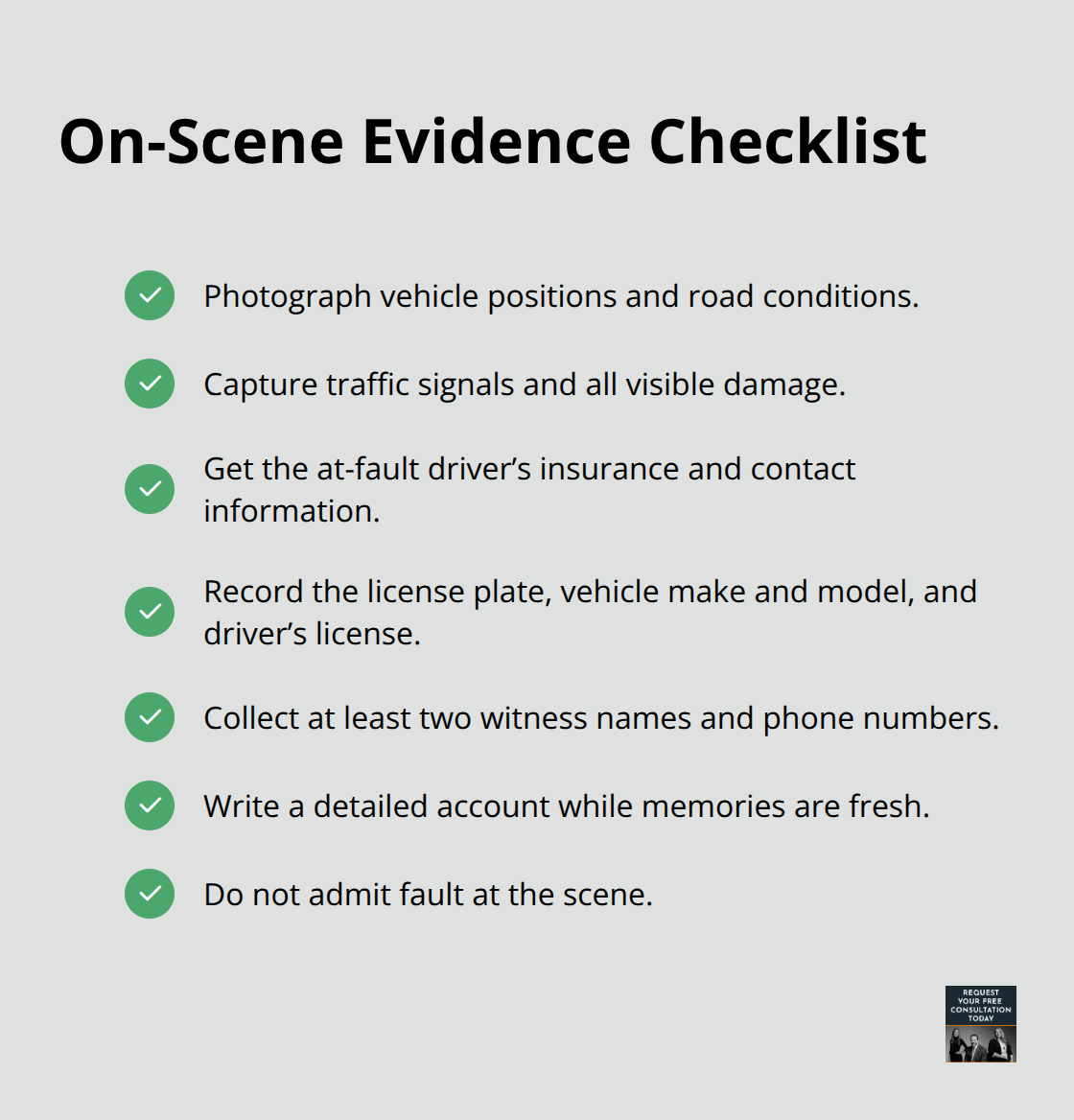
The specific details you capture at the scene-including time of day, weather conditions, and traffic patterns-directly influence how liability gets determined.
Who Pays for Your Damages and Medical Bills
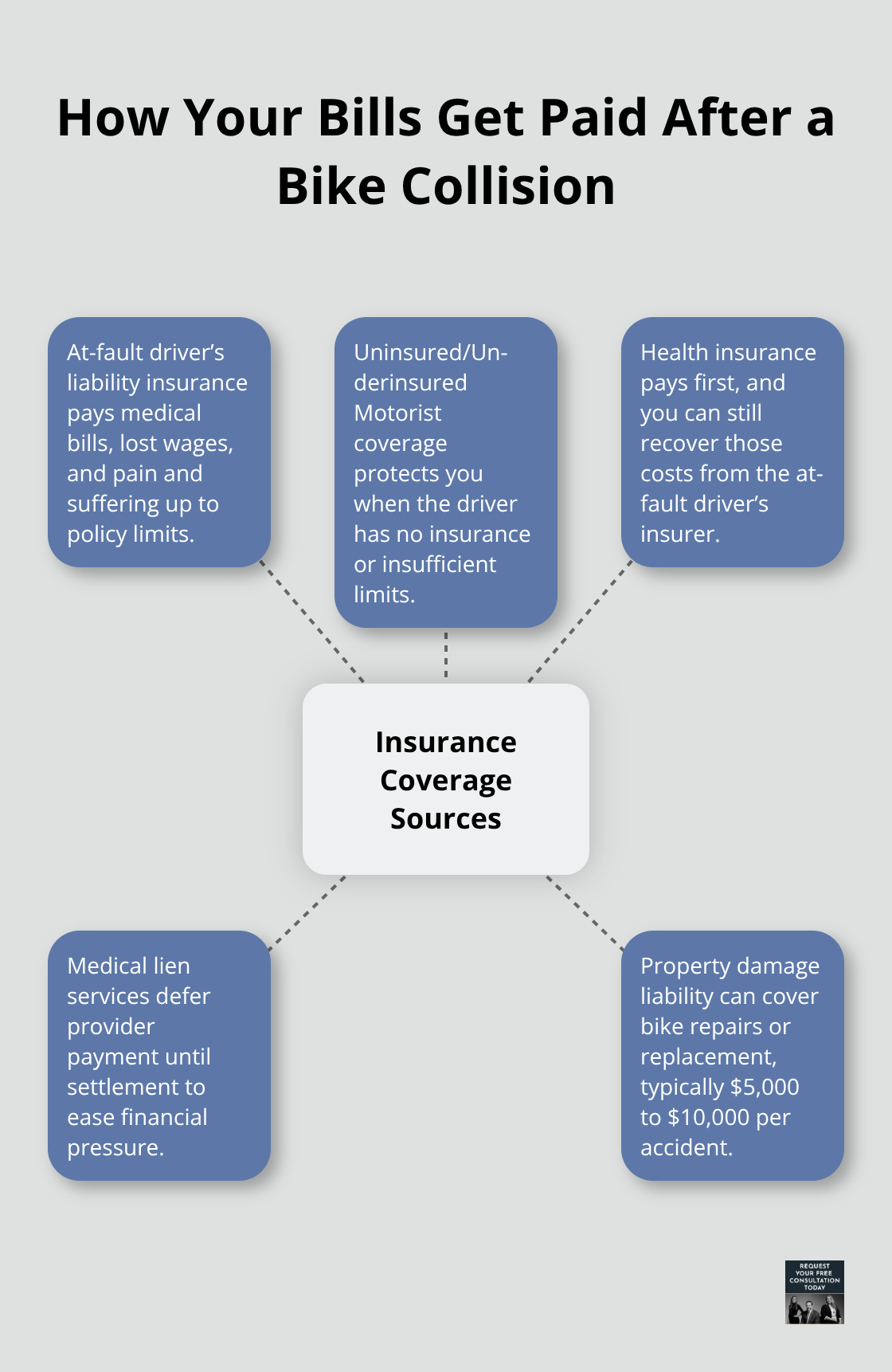
California’s comparative negligence system means the at-fault driver’s insurance typically covers your damages, but the reality gets complicated when multiple insurance policies and coverage limits come into play. If a driver hits you, their liability insurance should pay for your medical bills, lost wages, and pain and suffering up to their policy limits. However, many drivers in Santa Cruz carry minimum coverage of just $15,000 for bodily injury, which disappears quickly with serious injuries.
Your Own Insurance Protection
Your own insurance becomes critical when the at-fault driver lacks sufficient coverage. California requires drivers to carry uninsured and underinsured motorist coverage, which protects you when the at-fault driver carries no insurance or insufficient limits. If you have health insurance, your medical bills get submitted there first, but your personal injury claim can still recover those costs through the at-fault driver’s liability insurance.
Property Damage Claims
Property damage claims work differently than injury claims. If a driver damages your bicycle, the at-fault driver’s property damage liability coverage should pay for repairs or replacement, typically up to $5,000 to $10,000 per accident depending on their policy. You should document your bike’s value with purchase receipts or photos before any collision occurs, because proving value after the fact becomes harder.
Medical Expenses and Lost Wages
Medical expenses mount quickly after bicycle collisions. According to the Centers for Disease Control and Prevention, over 1,000 bicyclists die annually in traffic collisions nationwide, and survivors often face months of physical therapy and rehabilitation. Lost wages represent another recoverable damage category that many victims overlook. If your injuries prevent you from working for three months, you can recover your actual wages during that period, not an estimate.
Getting Help With Medical Bills
Medical bills create immediate financial pressure while your case resolves. We can direct you to medical lien services that handle your medical bills, removing the financial burden while you focus on healing. These services allow your medical providers to wait for payment until your settlement comes through, giving you breathing room during recovery.
The path to recovering your damages depends heavily on what happens next-documenting everything at the accident scene and reporting the incident properly can make or break your claim.
What to Do Immediately After a Bicycle Collision
Act Fast in the First Thirty Minutes
The first thirty minutes after a bicycle collision determine how strong your claim becomes. Most victims make critical mistakes during this window that weaken their position later. Your immediate actions directly influence whether you recover full compensation or face reduced payouts.
Move to Safety and Call for Help
Start by moving to safety if you can do so without worsening injuries. If you’re unable to move, stay where you are and call 911. Once you’re safe, photograph everything before memories fade and before the scene changes.
Document the Scene Thoroughly
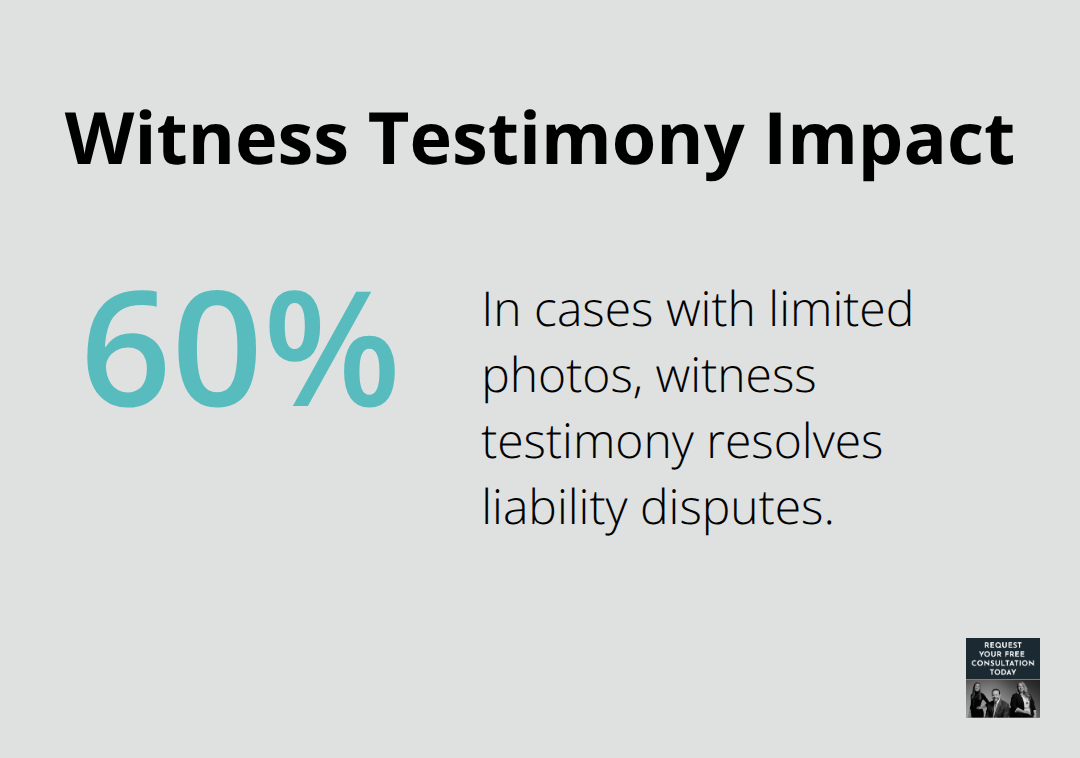
Take photos of vehicle positions, your bicycle damage, road conditions, traffic signals, and any visible injuries on your body. Photograph the at-fault driver’s license plate, vehicle make and model, and driver’s license if they’re cooperative. Get the driver’s insurance information, phone number, and address. Collect names and phone numbers from at least two witnesses who saw the collision happen, because witness statements carry tremendous weight with insurance companies and attorneys. The National Highway Traffic Safety Administration reports that witness testimony resolves liability disputes in approximately 60 percent of cases where photographic evidence is limited.
Write down what happened while details are fresh, including the time of day, weather conditions, traffic volume, and the exact sequence of events. This written account, created within hours of the collision, proves far more credible than one written weeks later. Do not admit fault or apologize for the collision, even if you think you might be partially responsible. Anything you say at the scene can be used against you later, and California’s comparative negligence system means partial fault doesn’t eliminate your right to recover damages.
Report to Police and Insurance
Report the collision to Santa Cruz police immediately, even for minor injuries. Police reports create official documentation that insurers and attorneys rely on heavily, and California law requires police response to collisions causing injury. Get the police report number and officer’s name before leaving the scene. Call your own insurance company within 24 hours to report the collision, regardless of who caused it. Your insurance company needs to know about the incident to protect your coverage and investigate the claim properly.
Seek Medical Attention Right Away
Seek medical attention even if you feel fine, because bicycle collision injuries often develop hours or days after impact. Emergency room doctors document your injuries in medical records that form the foundation of your claim. Head injuries in particular require immediate evaluation because symptoms like concussions can appear delayed. If you sustained any injury requiring medical care, contact an experienced personal injury attorney to discuss your claim and understand your options for recovery.
Final Thoughts
A bicycle collision in Santa Cruz leaves you with immediate decisions that shape your entire recovery. Understanding California’s comparative negligence system means you can recover damages even if you’re partially at fault, but only if you act quickly and document everything properly. The evidence you gather in those first minutes after impact directly determines whether insurers pay your full claim or reduce your compensation.
Your rights after a bicycle collision include recovering medical expenses, lost wages, property damage, and pain and suffering from the at-fault driver’s insurance. However, navigating insurance claims, medical bills, and liability disputes requires more than good intentions-many victims miss deadlines, fail to document injuries properly, or accept settlements far below what they deserve because they lack guidance through the process. Contact Schaar & Silva LLP to discuss your bicycle collision Santa Cruz claim and understand your options for recovery.
Our team handles the legal complexities while you focus on healing. We evaluate your case, explain your rights, and negotiate with insurance companies so you don’t have to. The sooner you reach out, the sooner we can protect your claim and work toward the recovery you deserve.