
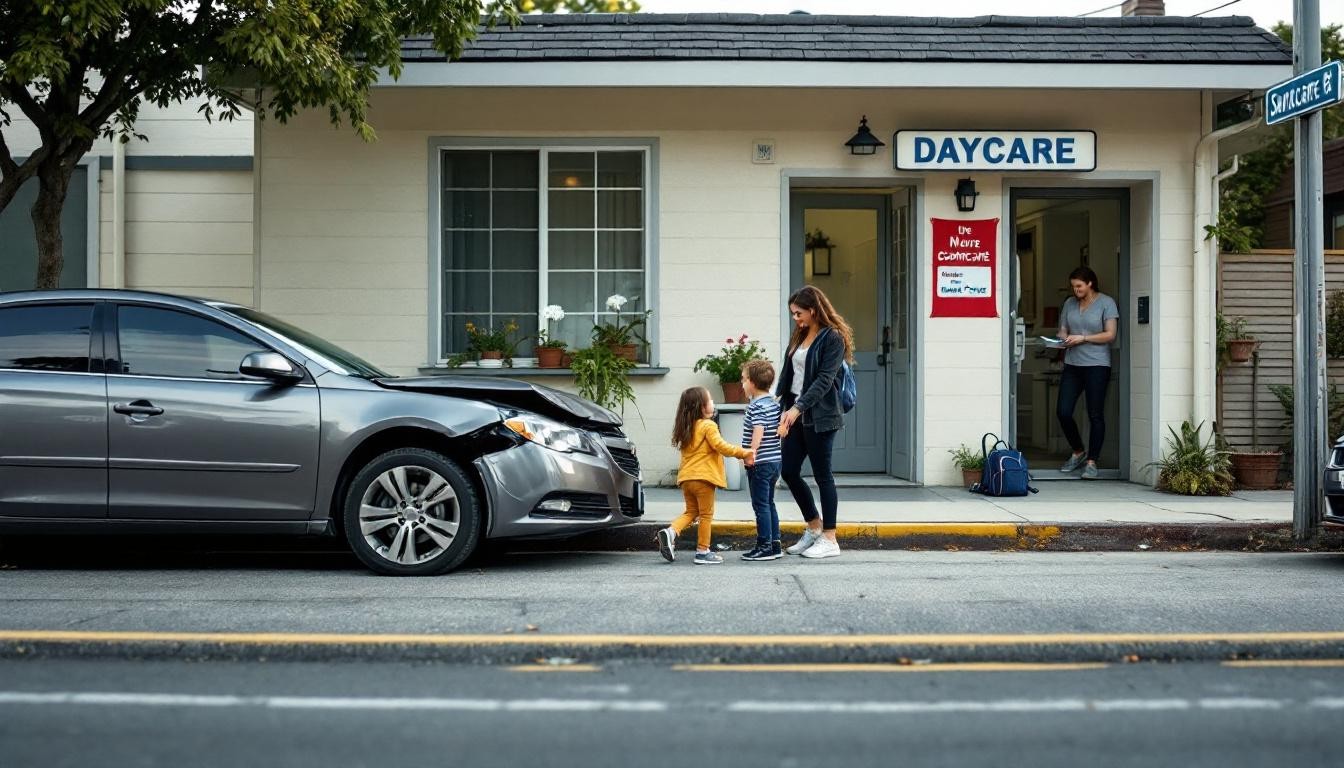
School drop-off zones present real dangers. Every year, collisions near schools injure children who should be safe during the most routine part of their day-a Santa Cruz daycare collision or school zone accident can happen in seconds.
At Schaar & Silva LLP, we help parents understand their legal options after these incidents. This guide covers documentation, reporting, and how to recover damages for your child’s injuries.
What Causes School Drop-Off Collisions in Santa Cruz
Distracted Driving and Inexperience Create Deadly Patterns
Distracted driving and inexperience create the deadliest combination in school zones. The Centers for Disease Control reports that teen crash rates are nearly three times higher than adult drivers, with about 2,800 teen deaths annually in motor vehicle crashes across the United States. Texting while driving increases crash risk by 23 times according to the National Highway Traffic Safety Administration, and 9% of fatal crashes involving drivers under 20 involve distraction.

In Santa Cruz school zones, parents rush morning drop-offs, teens learn to drive, and delivery vehicles navigate tight spaces-all while children cross streets or wait at curbs. The Virginia Tech Transportation Institute found that teens who use phones while driving crash at roughly 400% higher rates than those who avoid phone use. Speed violations happen twice as often with teen drivers, and 31% of male teen drivers involved in fatal crashes were speeding at impact.
Speed and Environmental Factors Amplify Risk
School zones demand slower speeds, yet many drivers treat them as ordinary streets. Weather and construction zones overwhelm inexperienced drivers, according to research from the National Institutes of Health. Passenger presence also matters-one teen passenger increases crash risk by 44%, and three or more passengers increase it by 182%, according to the Insurance Institute for Highway Safety. These documented patterns play out daily near Santa Cruz schools.
How Injuries Occur in Drop-Off Zones
The leading cause of death for children ages 1 to 14 is unintentional injuries, according to the Federal Interagency Forum on Child and Family Statistics. Drop-off zone injuries typically involve pedestrian collisions in drop-off areas, vehicle collisions in school zones, and trips or falls in parking or crosswalk areas. The first 1,000 miles of driving carry the highest crash risk for teens, with risk declining after about 18 months of licensed driving-yet inexperienced drivers need 5 to 8 seconds to recognize hazards, leaving no margin for error in congested school zones.
Nighttime driving is especially dangerous, with about 40% of teen crash deaths occurring between 9 PM and 6 AM, though morning drop-off collisions happen in daylight when visibility should favor safety.
Evidence Tells the Story
When a collision occurs, immediate medical evaluation is non-negotiable, even if injuries appear minor. Property damage also tells a story-fresh scratches, dents, or curb damage on vehicles indicate aggressive or distracted driving patterns that often precede crashes. You should gather evidence at the scene, including photos of vehicle damage, road conditions, and witness contact information, as this evidence becomes critical for any subsequent claim. Understanding these injury patterns and causes prepares you to act quickly when an accident happens-and knowing what to document next can protect your child’s legal rights.
Documenting Your Child’s Injuries After a School Zone Collision
Act Immediately at the Scene
The first minutes after a collision determine whether you have strong evidence for your claim or weak documentation that insurance companies will exploit. Photograph everything before vehicles move-vehicle positions, damage patterns, road conditions, traffic signals, and any obstructions that limited visibility. Take photos from multiple angles and distances, capturing close-ups of dents, scratches, and impact points on both vehicles. Document the time, date, weather conditions, and lighting. Write down the names, phone numbers, and addresses of all witnesses, including other parents, school staff, or pedestrians who saw the collision.
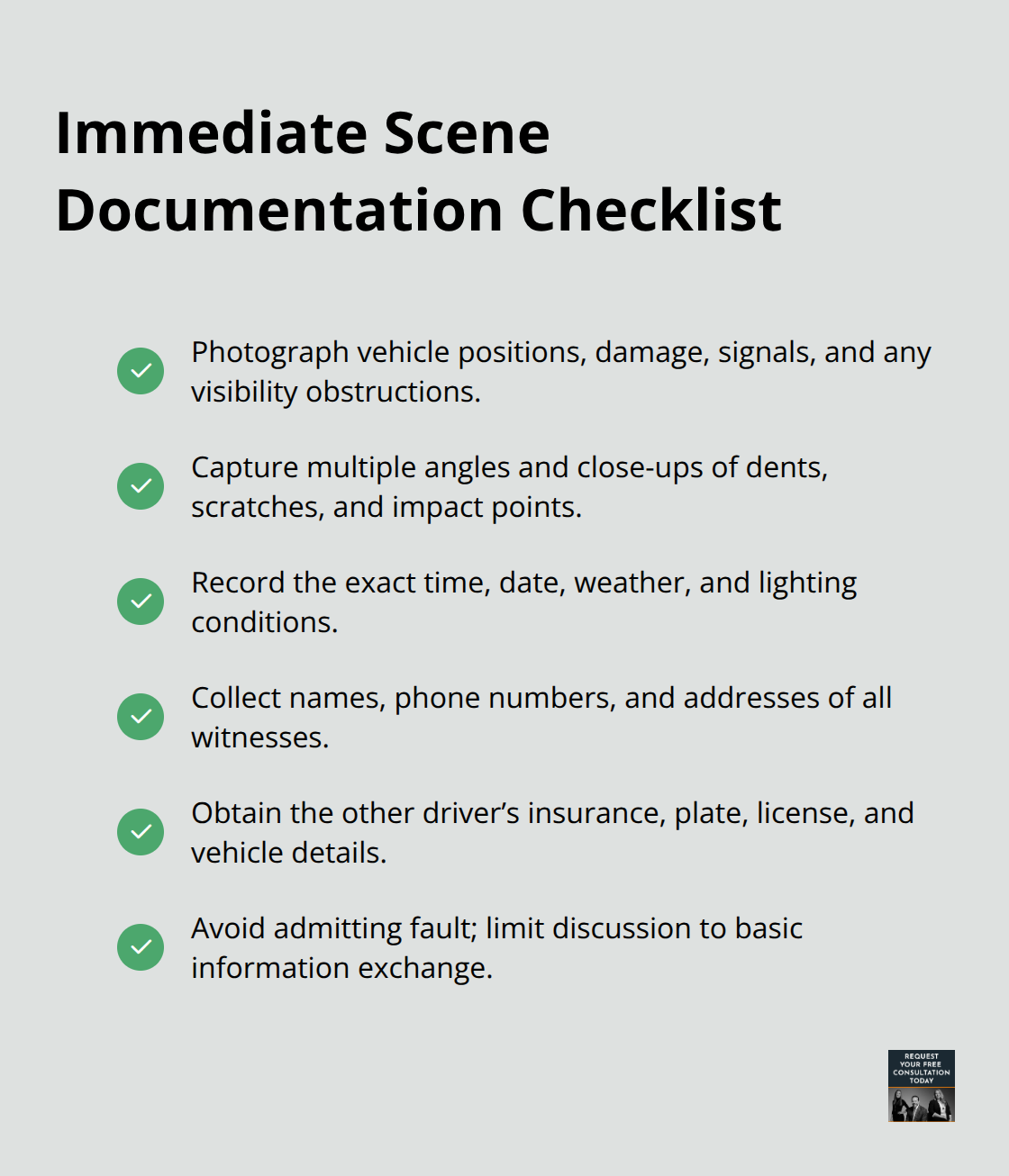
Get the other driver’s insurance information, license plate number, driver’s license details, and vehicle description. Do not admit fault or discuss what happened beyond exchanging basic information.
Create an Official Police Record
If police arrive, obtain the report number and the responding officer’s name. If they don’t arrive, file a police report yourself within 24 hours-this creates an official record that strengthens your claim. This step protects your child’s legal rights and provides documentation that insurance companies cannot dismiss as incomplete or biased.
Seek Medical Evaluation Without Delay
Take your child to a physician or emergency room immediately, even if injuries seem minor. Concussions, internal injuries, and soft tissue damage don’t always show obvious symptoms, and pediatric injuries sometimes develop complications days later. Request and keep copies of all medical records, including initial examination notes, imaging results like X-rays or CT scans, treatment plans, and follow-up visit summaries. Track every medical expense-emergency room bills, specialist consultations, physical therapy sessions, prescription medications, and transportation costs to appointments.
Document Injuries and Behavioral Changes
Photograph any visible injuries on your child’s body over the first week, as bruising and swelling patterns evolve and provide visual evidence of impact force. Document behavioral or emotional changes after the collision, as these indicate psychological trauma that is recoverable as part of compensation. The Federal Interagency Forum on Child and Family Statistics reports that unintentional injuries create lasting medical costs and long-term disability for children. These documented changes strengthen your case when you pursue compensation.
Understand Your Timeline for Action
California’s statute of limitations generally allows you to file a claim until two years after your child’s 18th birthday, but acting quickly protects evidence and strengthens negotiating power with insurance companies. Property damage also tells a story-fresh scratches, dents, or curb damage on vehicles indicate aggressive or distracted driving patterns that often precede crashes. Once you have gathered this documentation, the next step involves reporting the accident to the appropriate authorities and understanding who bears legal responsibility for the collision. You may also be entitled to inconvenience compensation for disruptions caused by the accident.
How to Report and Build Your Claim
Report the Collision to Police and School
File a report with Santa Cruz Police Department within 24 hours if officers did not respond at the scene. Provide them with your documentation package: photographs, witness statements, medical records, and the other driver’s information. Request the police report number and keep it for your records.
Report the incident to your child’s school or daycare administration in writing, including the date, time, location, and injuries sustained. Schools have a legal duty to provide a safe environment and adequate supervision in drop-off zones. Your written report creates an official record that strengthens any claim against the school district if negligence contributed to the collision.
Contact Insurance Companies Strategically
Contact the other driver’s insurance company only after you have gathered all documentation and ideally after consulting with legal representation. Insurance adjusters are trained to minimize payouts, and statements you make early can be used against you later. Do not sign any settlement offers or medical authorization forms without reviewing them carefully. This approach protects your child’s financial recovery and prevents you from accepting inadequate compensation.
Identify All Liable Parties
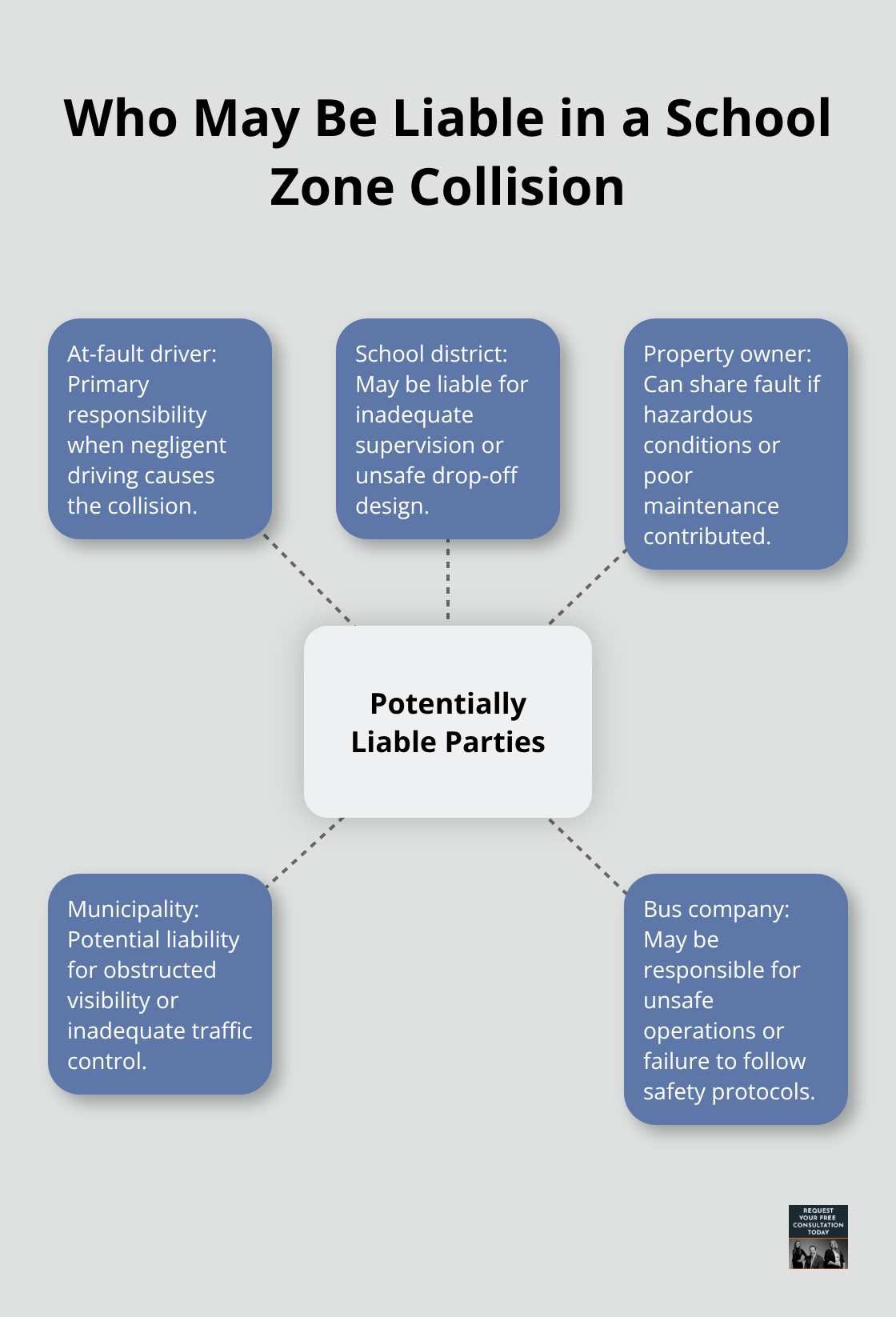
Liability in school zone collisions often extends beyond the at-fault driver. The property owner, school district, municipality, or bus company may share responsibility if hazards existed in the drop-off zone, visibility was obstructed, traffic control was inadequate, or supervision was insufficient. California law holds parents and guardians to a specific statute of limitations: you have until two years after your child turns 18 to file a claim, but acting quickly preserves evidence and strengthens your negotiating position.
Work with Legal Representation
An experienced attorney evaluates the full scope of liability, connects you with medical specialists, and negotiates fair compensation that covers current and future medical costs, lost wages if you missed work, and documented emotional trauma. Legal representation handles the complex details of your case so you can focus on your child’s recovery. At Schaar & Silva LLP, we serve Santa Cruz County families by providing dedicated client service and in-depth legal knowledge in personal injury cases. Our team directs you to medical lien services that facilitate payment of bills until your case is resolved and assists in evaluating property damage claims to ensure fair valuation for your loss.
Final Thoughts
School drop-off accidents happen fast, but your response determines whether your child receives fair compensation for injuries and trauma. Acting quickly protects evidence and strengthens your negotiating position with insurance companies, whether your child was injured in a Santa Cruz daycare collision or a school zone accident. Contact an attorney as soon as possible after the accident, ideally before speaking with insurance adjusters, since early statements can undermine your case.
Insurance companies employ trained professionals to minimize payouts, and delays weaken your position and risk losing critical evidence. An experienced personal injury lawyer evaluates the full scope of liability, connects you with medical specialists, and ensures you understand your rights under California law. The statute of limitations allows you until two years after your child turns 18 to file a claim, but acting quickly protects your family’s financial security.
We at Schaar & Silva LLP serve Santa Cruz County families by providing dedicated client service and in-depth legal knowledge in personal injury cases. Our team connects you with specialists who address the emotional trauma your child experienced and assists in evaluating property damage claims to ensure fair valuation. Contact Schaar & Silva LLP to discuss your case and protect your family’s rights after a school drop-off accident.
