

Having a Sacramento car accident claim denied can feel like a second collision, especially when you are still dealing with injuries, missed work, and a damaged vehicle. Whether your crash happened on Interstate 80, Highway 50, Watt Avenue, or a neighborhood street in Natomas, a denial letter from an insurance company is not always the final word on your claim.
At Schaar & Silva LLP, we help people in Sacramento who have been hurt in car accidents, truck accidents, and other serious crashes so you can move forward with confidence. This guide explains how California’s claim-handling rules actually work, the most common reasons insurers deny car accident claims, the steps you can take after a denial, and the mistakes that can make a denial harder to overcome.
How California Claim Rules Actually Work
Insurance companies in California do not get to handle claims however they like. The California Department of Insurance enforces the Fair Claims Settlement Practices Regulations in Title 10 of the California Code of Regulations, which set timelines and written-notice requirements for how insurers respond to claims. These rules apply whether you are making a claim against the at-fault driver’s insurer or against your own policy.
Knowing these rules helps you recognize when a claim is being handled properly and when an insurer may be cutting corners. It also helps you keep the kind of records that make a denial easier to challenge.
The Timeline After You Report a Claim
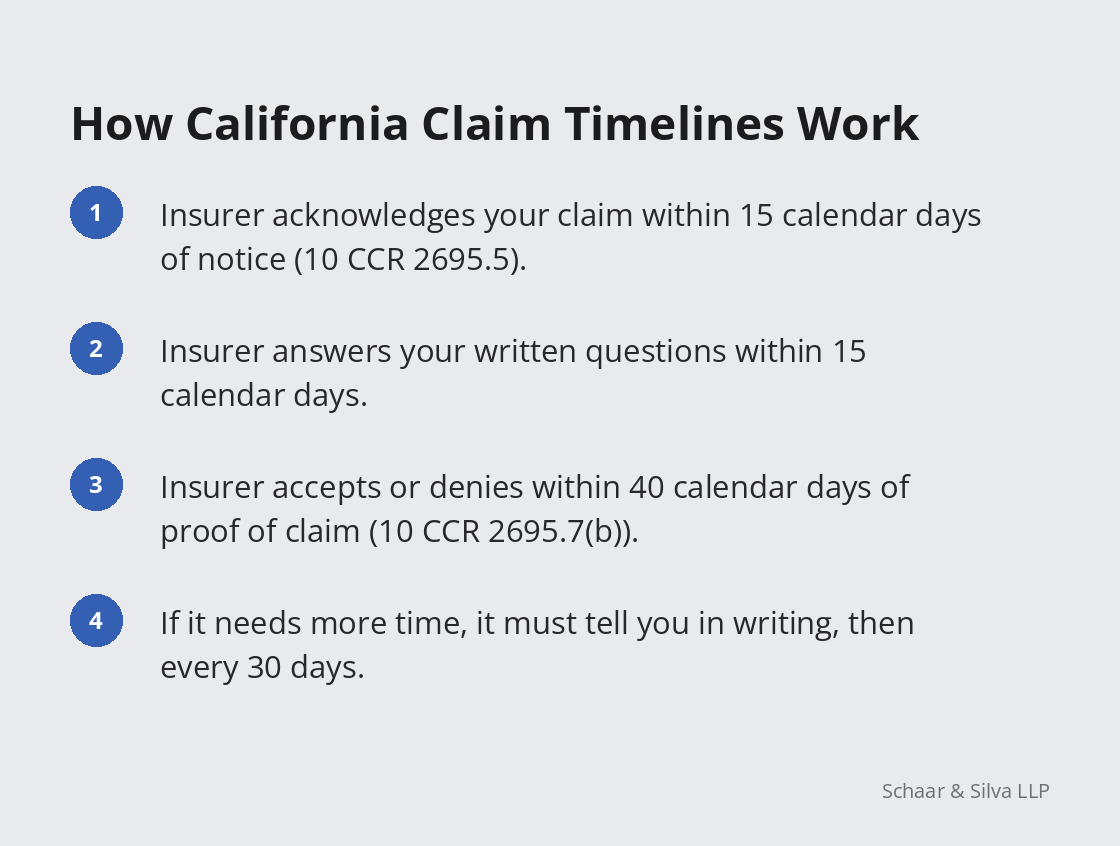
Under Title 10, Section 2695.5 of the California Code of Regulations, an insurer must acknowledge a claim within 15 calendar days of receiving notice of it, unless payment is made within that time. The insurer must also provide the necessary forms, instructions, and reasonable assistance, including telling you what information you need to provide as proof of claim, and it must begin any necessary investigation.
The same regulation requires an insurer to respond within 15 calendar days to communications from a claimant that reasonably suggest a response is expected. If you send a letter or email asking about the status of your claim and hear nothing back, write down the date. A pattern of silence can matter later.
The Forty-Day Decision Rule
Section 2695.7(b) of the regulations provides that, upon receiving proof of claim, every insurer shall immediately, but in no event more than forty calendar days later, accept or deny the claim, in whole or in part. In a car accident claim, the supporting materials you send, such as medical records, repair estimates, and the collision report, are what help the insurer evaluate the claim, so sending them promptly and keeping copies matters.
If an insurer needs more time, Section 2695.7(c)(1) requires it to give you written notice within that forty-day period specifying the additional information it needs to make a determination. The insurer must then provide a new written notice every thirty calendar days until it makes a determination or notice of legal action is served.
What a Written Denial Must Include
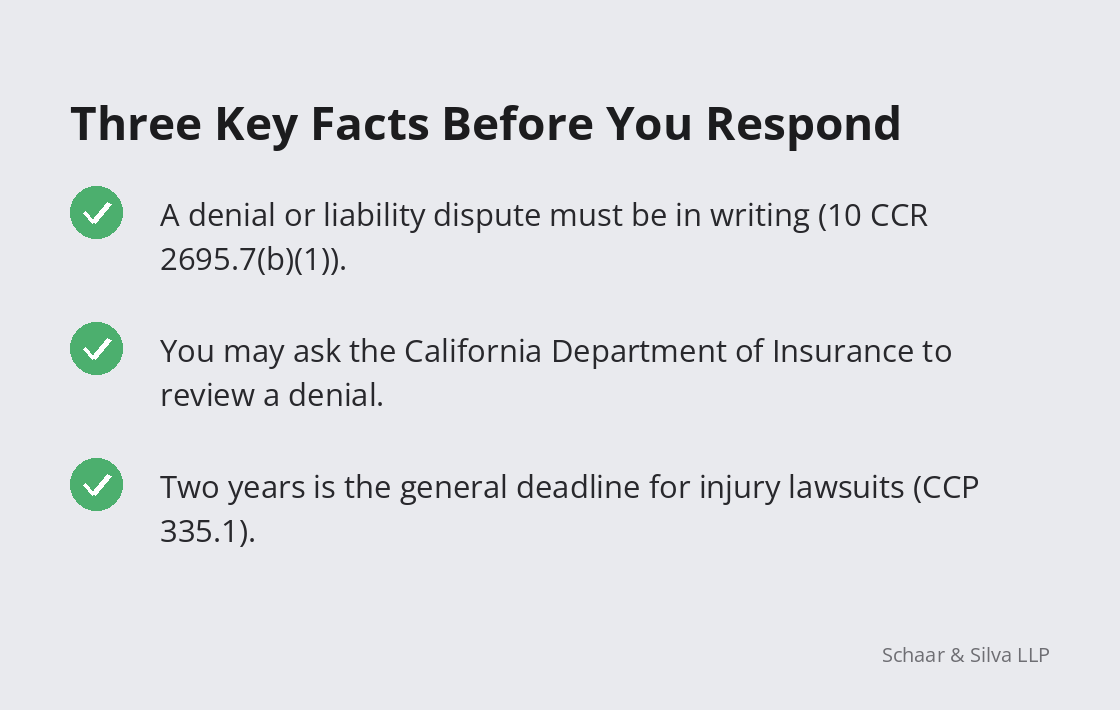
Section 2695.7(b)(1) requires an insurer that denies or rejects a third-party claim, in whole or in part, or that disputes liability or damages, to do so in writing. When an insurer denies a claim under your own policy, the written denial must list all the bases for the denial, along with the factual and legal reasons for each, and must reference and explain any policy provision, condition, or exclusion it relies on.
Under Section 2695.7(b)(3), a written denial must also include a statement that if you believe all or part of the claim has been wrongfully denied or rejected, you may have the matter reviewed by the California Department of Insurance, along with the address and telephone number of the unit that reviews claims practices. If your denial letter is vague or missing that information, keep a copy, because it may be important later.
Why Sacramento Car Accident Claims Get Denied
Insurers deny claims for many reasons, and some are more legitimate than others. Understanding the reason given in your denial letter is the first step toward deciding how to respond. In many Sacramento crashes, the denial has less to do with whether you were hurt and more to do with how the insurer reads the evidence about fault and injuries.
A denial based on a dispute about the facts can often be answered with better evidence. A denial based on a policy term may require a closer look at the policy language itself.
Disputes Over Who Caused the Crash
The most common reason a third-party claim is denied is that the other driver’s insurer says its policyholder was not at fault. The other driver may have told a different story, the collision report may be incomplete, or there may be no independent witnesses. Rear-end crashes on Interstate 5 and left-turn collisions at busy intersections like Florin Road and Stockton Boulevard often turn on small details that a quick investigation can miss.
California follows a comparative fault rule, as reflected in the state’s civil jury instructions, which means a person who shares some responsibility for a crash can still recover damages reduced by his or her share of fault. An insurer that denies a claim entirely because you were partly at fault may be taking a position the law does not fully support.
Questions About Your Injuries and Treatment
Insurers also deny or reduce claims by arguing that an injury was not caused by the crash, was a pre-existing condition, or was not serious enough to need the treatment you received. Delays in seeing a doctor, gaps in treatment, and missed appointments are common reasons an adjuster gives for questioning an injury.
Prompt medical care, consistent follow-up, and clear notes from your providers about how your symptoms began are some of the strongest answers to this type of denial. If you had a prior injury to the same part of the body, records showing how the crash made it worse can be especially important.
Coverage Issues and Policy Exclusions
Some denials are based on coverage rather than fault. An insurer may claim the policy had lapsed, the driver was not covered under the policy, or an exclusion applies. Claims under your own uninsured or underinsured motorist coverage can also be denied based on policy conditions or disputes about whether the other driver was actually uninsured.
For a claim under your own policy, the regulations require the insurer to explain the specific provision it relies on and how it applies. Reading that explanation carefully, alongside the policy itself, helps you see whether the denial holds up.
What to Do After a Claim Is Denied
A denial letter starts a new phase of your claim rather than ending it. The steps you take in the weeks after a denial can decide whether the insurer reconsiders, whether a regulator gets involved, or whether your claim moves toward a lawsuit against the at-fault driver.
The key is to respond in an organized way, in writing, while keeping a close eye on the legal deadlines that continue to run.
Answer Each Reason in Writing
Start by reading the denial letter carefully and identifying every reason the insurer gave. Then gather evidence that answers each one, such as witness statements, photos, video, medical records, and the collision report from the Sacramento Police Department, the Sacramento County Sheriff’s Office, or the California Highway Patrol. Send your response in writing and keep copies of everything you send and receive.
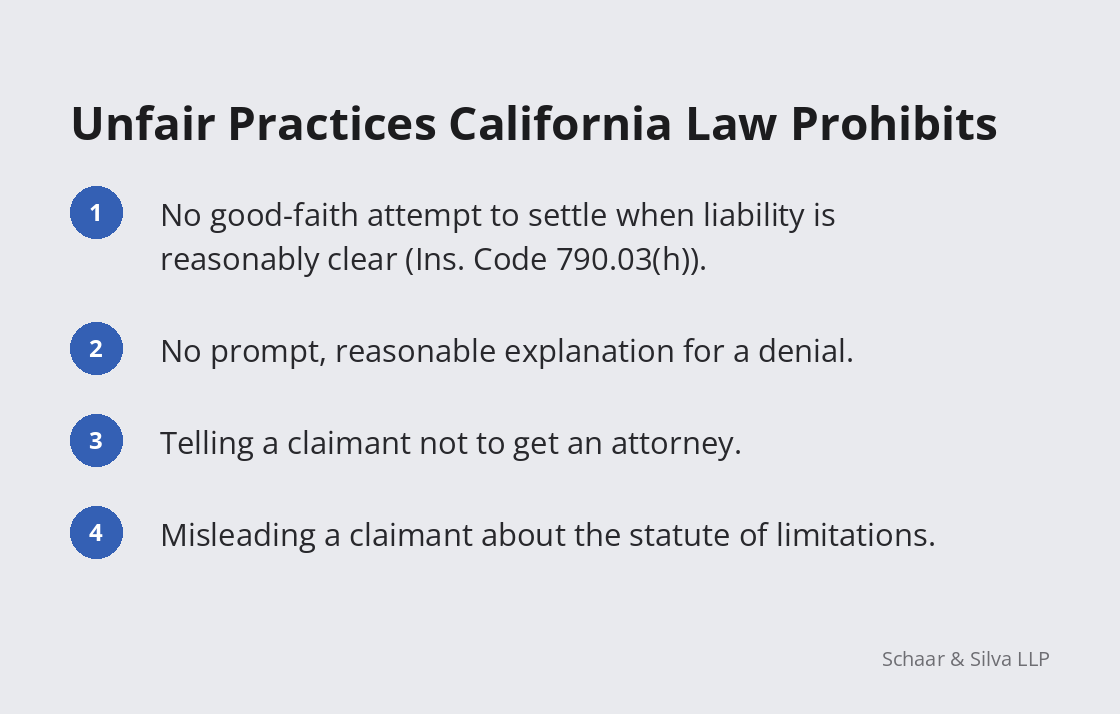
California Insurance Code Section 790.03(h) lists unfair claims settlement practices that insurers may not knowingly commit or perform as a general business practice. The list includes not attempting in good faith to effectuate prompt, fair, and equitable settlements of claims in which liability has become reasonably clear, and failing to provide promptly a reasonable explanation of the basis for the denial of a claim.
Ask the Department of Insurance to Review It
Because the regulations require a denial letter to tell you that you may have the matter reviewed by the California Department of Insurance, you can use that contact information to submit a request for review if you believe the claim was handled unfairly. A review by the department does not replace a lawsuit, but it can create a record of how the insurer handled your claim.
Section 2695.7(d) also requires every insurer to conduct and diligently pursue a thorough, fair, and objective investigation. If the insurer never spoke with your witnesses or ignored medical records you submitted, those facts belong in any request for review.
Mistakes That Make a Denial Harder to Fight
One common mistake is giving up after the first denial. Another is continuing to argue with the adjuster by phone, which leaves no clear record of what was said. Under Insurance Code Section 790.03(h), directly advising a claimant not to obtain the services of an attorney and misleading a claimant about the applicable statute of limitations are both listed as unfair claims settlement practices.
The most serious mistake is losing track of the deadline to file a lawsuit. A denial by an insurer does not stop the clock. Code of Civil Procedure Section 335.1 sets a two-year limit for most lawsuits for injury caused by the wrongful act or neglect of another, and that deadline keeps running while you dispute the denial.
Final Thoughts
A Sacramento car accident claim denied by an insurer is a setback, but it is often not the end of the road. California’s Fair Claims Settlement Practices Regulations require insurers to acknowledge claims, make decisions within set timeframes, and explain denials in writing, and those rules give you tools to push back when a claim is handled unfairly.
Understanding why your claim was denied, answering each reason with evidence, using the review process available through the California Department of Insurance, and protecting the two-year lawsuit deadline can put you in a much stronger position. The sooner you act, the more evidence you can preserve.
If your car accident claim was denied, contact Schaar & Silva LLP to speak with our team about your crash in Sacramento. We’ll review the denial, explain your options, and help you move forward with confidence.