
A Sacramento traumatic brain injury after a car accident can be one of the hardest injuries to recognize and one of the hardest to explain to an insurance company. You may walk away from a crash on Interstate 5, Highway 50, or a busy intersection downtown feeling shaken but otherwise fine, only to notice headaches, memory problems, or changes in mood days or weeks later. Because brain injuries are often invisible on the outside, injured people and their families frequently struggle to get the care and the accountability they deserve.
At Schaar & Silva LLP, we help people in Sacramento who have suffered brain and spinal injuries in car and truck accidents so you can move forward with confidence. This guide explains how traumatic brain injuries actually happen in collisions, how fault and damages are proven under California law, and the mistakes that most often weaken a brain injury claim.
What a Traumatic Brain Injury Actually Is After a Car Accident
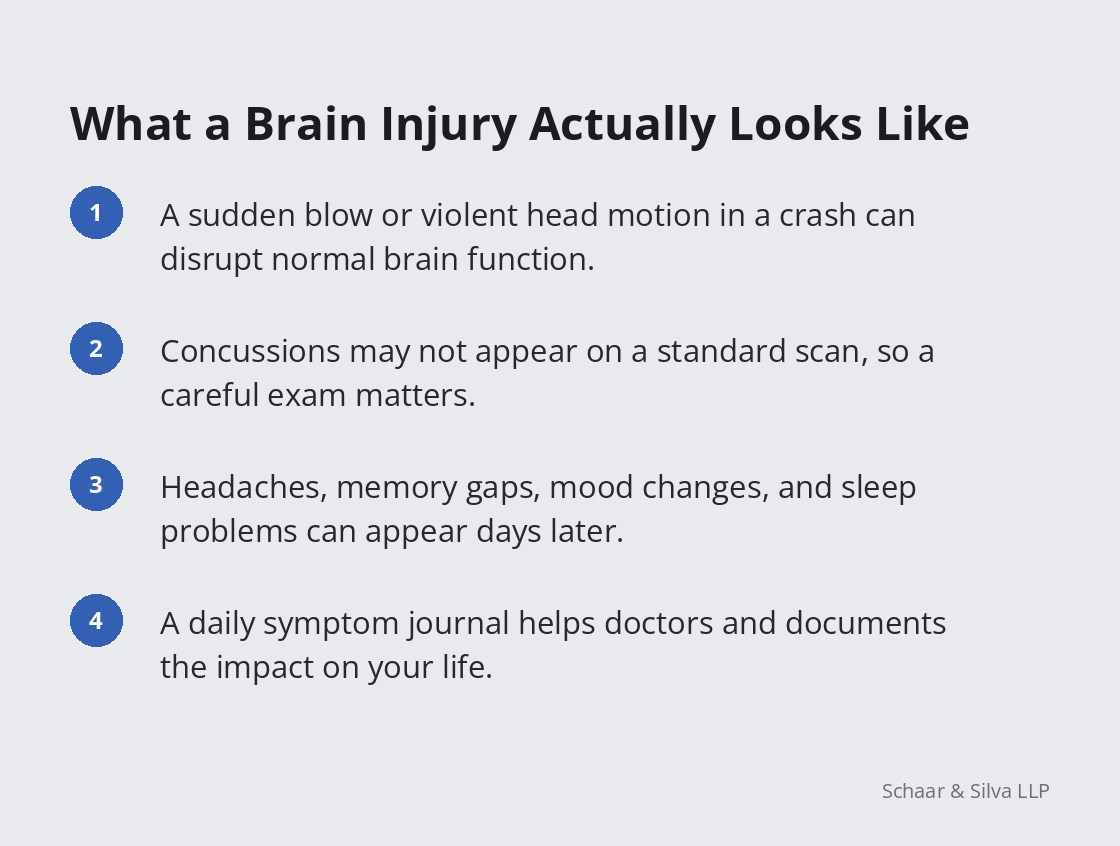
A traumatic brain injury happens when a sudden force disrupts normal brain function. In a car accident, that force can come from a direct blow to the head against a window, steering wheel, or headrest, or from the violent back-and-forth motion of the head during impact, even when the head never strikes anything at all.
Brain injuries range widely in severity, and the label a doctor uses in the emergency room does not always predict how long symptoms will last or how much they will affect daily life.
Concussions and Mild Brain Injuries
A concussion is often described as a mild traumatic brain injury, but the word mild refers to the initial medical classification, not to the experience of living with it. Many people recover within a period of weeks, while others deal with lingering headaches, sensitivity to light and noise, trouble concentrating, and sleep problems for much longer.
Because a concussion may not show up on a standard scan, the diagnosis often depends on a careful history and examination. Telling your doctor exactly how the crash happened and every symptom you notice helps create an accurate record from the beginning.
Moderate and Severe Brain Injuries
More serious injuries can involve bleeding, bruising, or swelling of the brain and may require hospitalization, surgery, or extended rehabilitation. These injuries can affect movement, speech, memory, judgment, and personality, and they may change a person’s ability to work, drive, or live independently.
Families often become caregivers overnight. Planning for the long term requires input from treating physicians, therapists, and rehabilitation providers who can describe what the future is likely to look like.
Delayed and Hidden Symptoms
Some of the most important signs of a brain injury appear gradually. Irritability, anxiety, depression, confusion, and difficulty finding words may be noticed first by a spouse, a coworker, or a child rather than by the injured person.
Keeping a simple daily journal of symptoms, missed activities, and changes that others observe can be valuable. Those notes help doctors adjust treatment and help show how the injury has affected your life.
How Fault and Damages Are Proven in a Sacramento Brain Injury Claim
A brain injury claim has two parts that must both be proven: that another driver was responsible for the crash, and that the crash caused the injury and the losses that followed.
California law provides a clear framework for both questions, but insurers often push back hardest on brain injury claims because the injury is difficult to see.
Proving the Other Driver Was Careless
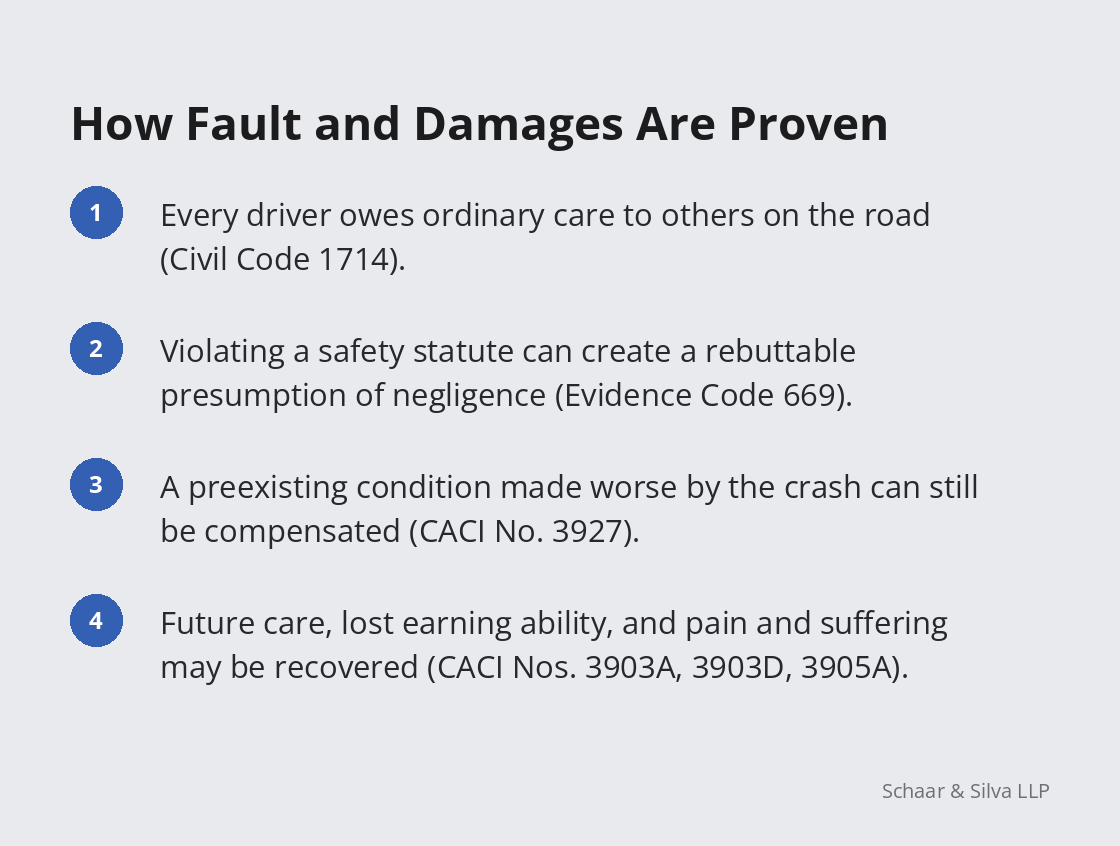
Civil Code Section 1714 makes everyone responsible for an injury caused to another by a lack of ordinary care or skill in the management of their property or person. A driver who speeds, follows too closely, runs a red light, or looks at a phone instead of the road may fail that standard.
When the driver broke a traffic law, Evidence Code Section 669 can help. It presumes a failure to exercise due care when a person violated a statute, the violation caused the injury, the injury was the kind the statute was designed to prevent, and the injured person was one of those the statute was meant to protect. The presumption can be rebutted, but it often shifts the focus to the other driver’s conduct.
Connecting the Crash to the Brain Injury
Insurers frequently argue that symptoms come from stress, aging, or an earlier condition rather than the collision. Medical records, imaging when available, neuropsychological testing, and testimony from people who knew you before the crash can show the difference between your life before and after.
A prior condition does not end a claim. Under CACI No. 3927, a person is not entitled to damages for a condition that existed before the defendant’s conduct, but if that condition was made worse by the defendant’s wrongful conduct, the jury must award damages that reasonably and fairly compensate for the effect on that condition.
Accounting for Future Care and Lost Earning Ability
Brain injury claims often look far into the future. California jury instructions allow recovery for reasonably necessary medical care an injured person is reasonably certain to need in the future, as described in CACI No. 3903A, and for the loss of the ability to earn in the future when it is reasonably certain the injury will reduce what the person could otherwise have earned, as described in CACI No. 3903D.
Noneconomic losses matter just as much. CACI No. 3905A recognizes past and future physical pain, mental suffering, loss of enjoyment of life, physical impairment, inconvenience, anxiety, and emotional distress, and it instructs jurors that no fixed standard exists for deciding these damages. Comparative fault can also play a role, because under CACI No. 405 a plaintiff’s damages are reduced by the percentage of responsibility assigned to the plaintiff.
Mistakes That Can Weaken a Sacramento Brain Injury Claim
Many brain injury claims are harmed not by the facts of the crash but by decisions made in the confusing days and weeks afterward. Knowing the most common mistakes can help you avoid them.
Each of these problems is understandable, especially when the injury itself affects memory, focus, and decision-making.
Skipping or Delaying Medical Evaluation
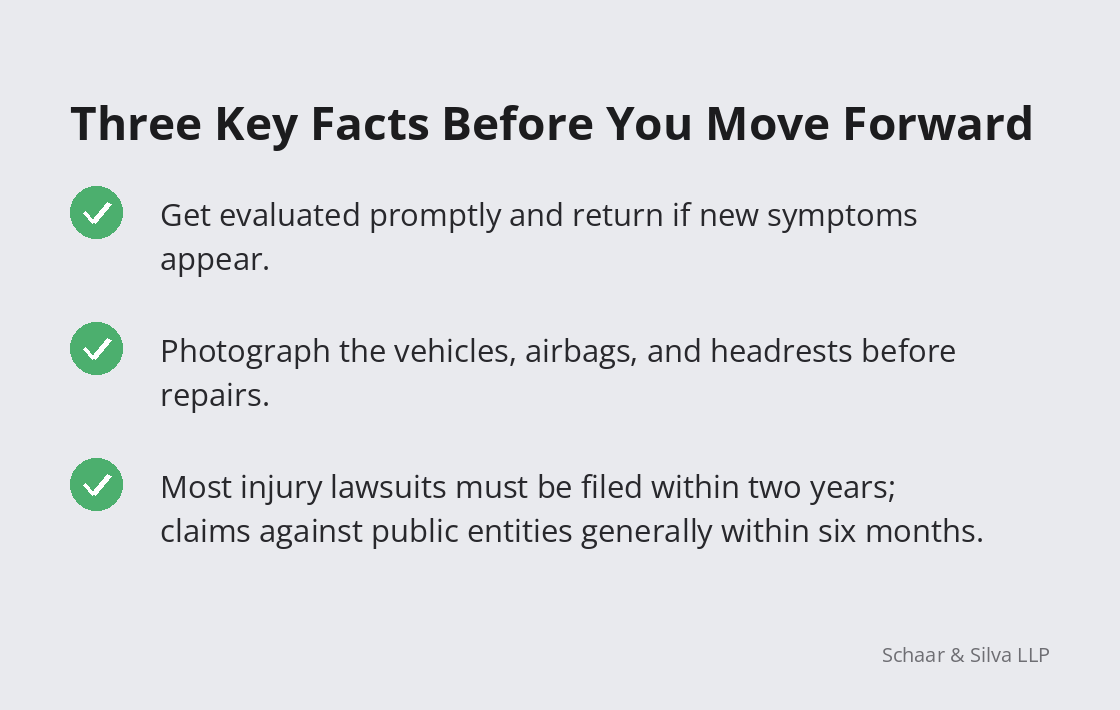
Feeling fine at the scene does not rule out a brain injury. Getting evaluated promptly, and returning to a doctor if new symptoms appear, protects your health and creates a record connecting the injury to the crash. Following through with referrals to neurologists, therapists, or other providers matters just as much.
Gaps in treatment give an insurance company room to argue that you recovered quickly or that something else caused your symptoms.
Talking to the Insurer Too Soon
Adjusters may call within days and ask for a recorded statement. Someone with a brain injury may have trouble recalling details or may downplay symptoms without realizing it, and those statements can later be used to question the claim.
It is usually wise to understand your rights before giving a detailed statement. Asking a family member to help keep track of calls and paperwork can also reduce the burden while you recover.
Letting Evidence Disappear
The physical evidence from a crash helps explain how much force your head and body absorbed. Photographs of the vehicles, the deployed airbags, a cracked windshield, or a damaged headrest can support the medical findings, so take pictures before the vehicles are repaired or sent to salvage whenever possible.
Surveillance video from nearby businesses, traffic cameras, and dashboard cameras is often recorded over within days. Names and phone numbers of witnesses, the police report number, and the names of the responding agency and officers are also worth collecting early, because tracking them down later can be difficult, especially when memory problems are part of the injury itself.
Missing Legal Deadlines
California sets firm time limits for injury claims. Code of Civil Procedure Section 335.1 sets a two-year limit for most personal injury actions, and Government Code Section 911.2 generally requires a claim against a public entity for personal injury to be presented within six months after the claim accrues.
If a city vehicle, a county bus, or a dangerous road condition played a role in your crash, that shorter timeline may apply. Waiting to see how symptoms develop is natural, but it should not come at the expense of your legal rights.
Final Thoughts
A traumatic brain injury after a Sacramento car accident can affect your health, your work, and your relationships in ways that are not always visible to others. California law allows injured people to pursue accountability for the full impact of the injury, including future care and the changes it brings to daily life.
The steps you take early, from prompt medical care to careful documentation and meeting every deadline, can make a meaningful difference. You can learn more about our Sacramento brain and spinal injury practice and how we approach these cases.
If you or a loved one suffered a brain injury in a Sacramento car accident, contact Schaar & Silva LLP to speak with our team. We’ll listen to your story, explain your options, and help you move forward with confidence.