
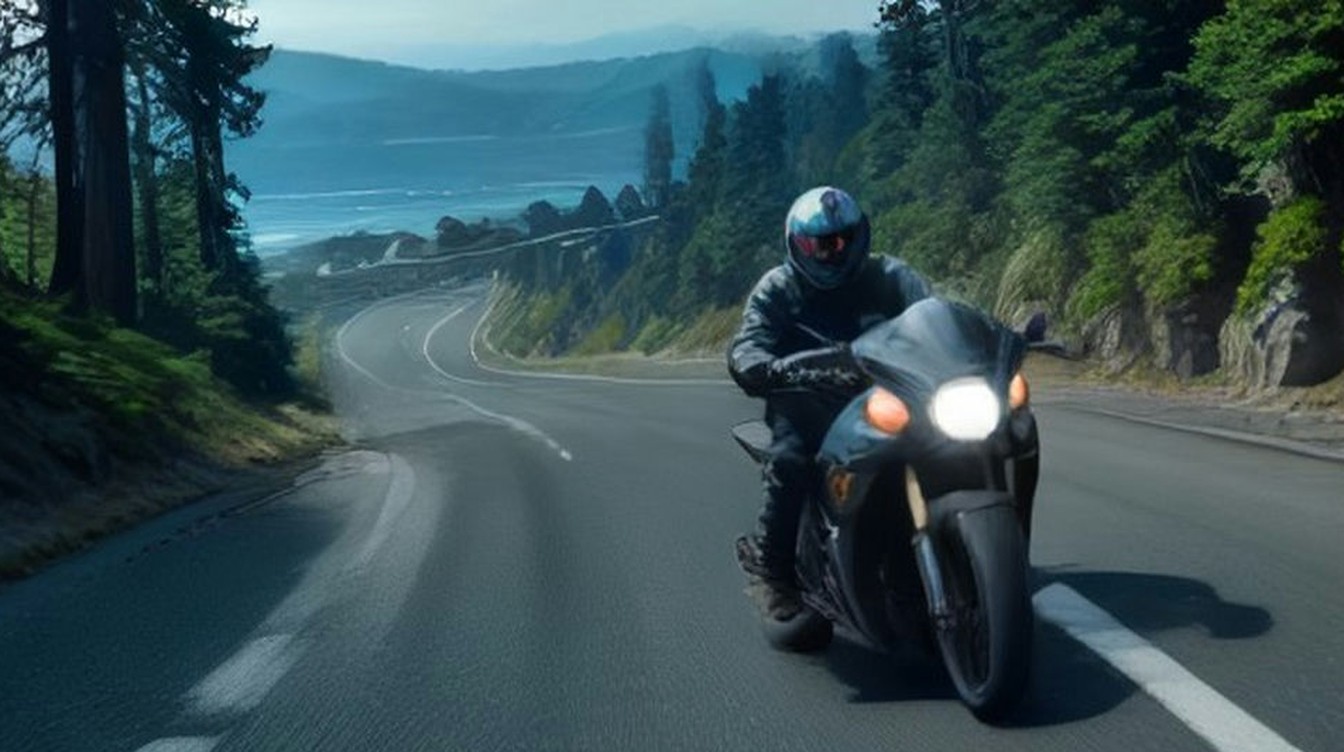
A motorcycle accident in Santa Cruz County can turn a beautiful ride along Highway 1, a commute over Highway 17, or a weekend loop through the mountains into a long recovery in a matter of seconds. Riders have almost no protection when a car turns across their path or drifts into their lane, and the injuries that follow are often far more serious than the damage to either vehicle. On top of the physical recovery, injured riders frequently face insurance adjusters who assume the motorcyclist must have been riding carelessly.
At Schaar & Silva LLP, we help people across Santa Cruz County who have been hurt in car, truck, and motorcycle collisions so you can move forward with confidence. This guide explains how California’s rules on lane splitting, left turns, and lane changes affect fault, how responsibility is actually proven after a crash between a car and a motorcycle, and the mistakes that most often weaken a rider’s claim.
How Motorcycle Accidents Actually Happen in Santa Cruz County
Santa Cruz County is one of the most popular riding areas in Northern California. Coastal fog, sharp mountain curves, sandy shoulders, heavy tourist traffic, and congested commuter corridors all appear within a short distance of each other, and drivers who are unfamiliar with local roads may not expect a motorcycle to appear around the next bend.
Most crashes between cars and motorcycles come down to a driver who failed to see the rider or misjudged the rider’s speed and distance. Identifying the specific rule the driver broke is usually the starting point for proving fault.
Left Turns Across a Rider’s Path
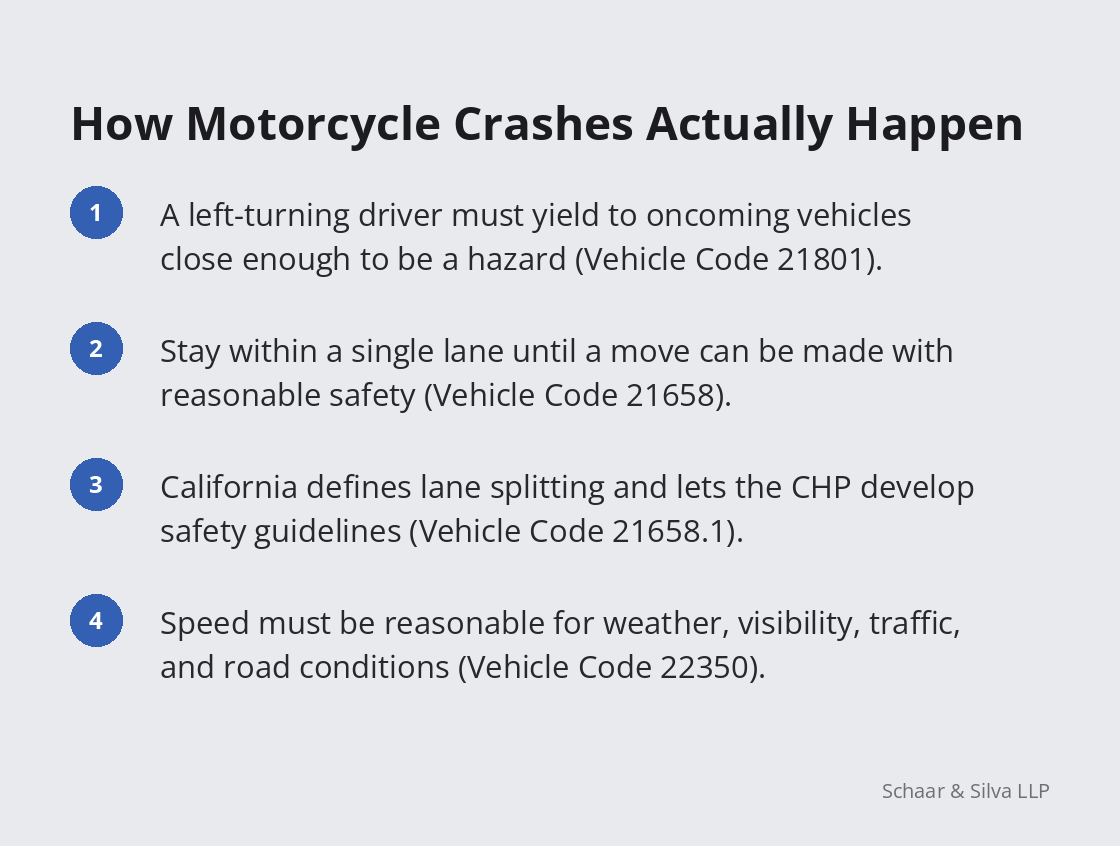
One of the most common and dangerous scenarios happens when a driver turns left in front of an oncoming motorcycle at an intersection or into a driveway. Vehicle Code Section 21801 requires a driver intending to turn left or make a U-turn to yield the right-of-way to all vehicles approaching from the opposite direction that are close enough to constitute a hazard at any time during the turning movement, and to continue yielding until the turn can be made with reasonable safety.
That rule applies to motorcycles exactly as it applies to cars and trucks. A driver who says the motorcycle came out of nowhere is often admitting that they never looked carefully enough before turning. On busy local roads such as Soquel Drive, Mission Street, and Freedom Boulevard, these collisions can happen quickly and with devastating results.
Unsafe Lane Changes and Blind Spots
Motorcycles are narrow and easy to miss in a mirror. Vehicle Code Section 21658 requires that on a roadway divided into clearly marked lanes, a vehicle be driven as nearly as practical entirely within a single lane and not be moved from that lane until the movement can be made with reasonable safety. Vehicle Code Section 22107 adds that a driver may not move right or left on a roadway until the movement can be made with reasonable safety, and then only after giving an appropriate signal when another vehicle may be affected.
When a driver merges into a rider’s lane on Highway 17 or changes lanes without checking over a shoulder, those statutes give a clear standard for measuring the driver’s conduct. A rider who was lawfully occupying the lane should not bear the blame for a driver who never confirmed the lane was clear.
Lane Splitting and Heavy Traffic
California is unusual because its Vehicle Code expressly recognizes lane splitting. Vehicle Code Section 21658.1 defines lane splitting as driving a two-wheeled motorcycle between rows of stopped or moving vehicles in the same lane, and it allows the California Highway Patrol to develop educational guidelines intended to keep motorcyclists and surrounding drivers safe.
Lane splitting does not automatically make a rider responsible for a collision. The question in most cases is whether everyone involved acted reasonably under the conditions. Vehicle Code Section 22350, the basic speed law, prohibits driving at a speed greater than is reasonable or prudent given the weather, visibility, traffic, and the surface and width of the highway. That standard applies to riders and drivers alike, and a driver who suddenly swerves or opens a door into a lane of slow traffic may still be the one at fault.
How Fault Is Proven After a Santa Cruz County Motorcycle Accident
Insurance companies often begin with a bias against motorcyclists. Overcoming that bias requires evidence and a clear understanding of how California law assigns responsibility after a crash.
The legal framework is the same one that applies to any vehicle collision, but the details of a motorcycle case often require a closer look at sight lines, speed estimates, and the physical evidence left at the scene.
The Duty of Ordinary Care
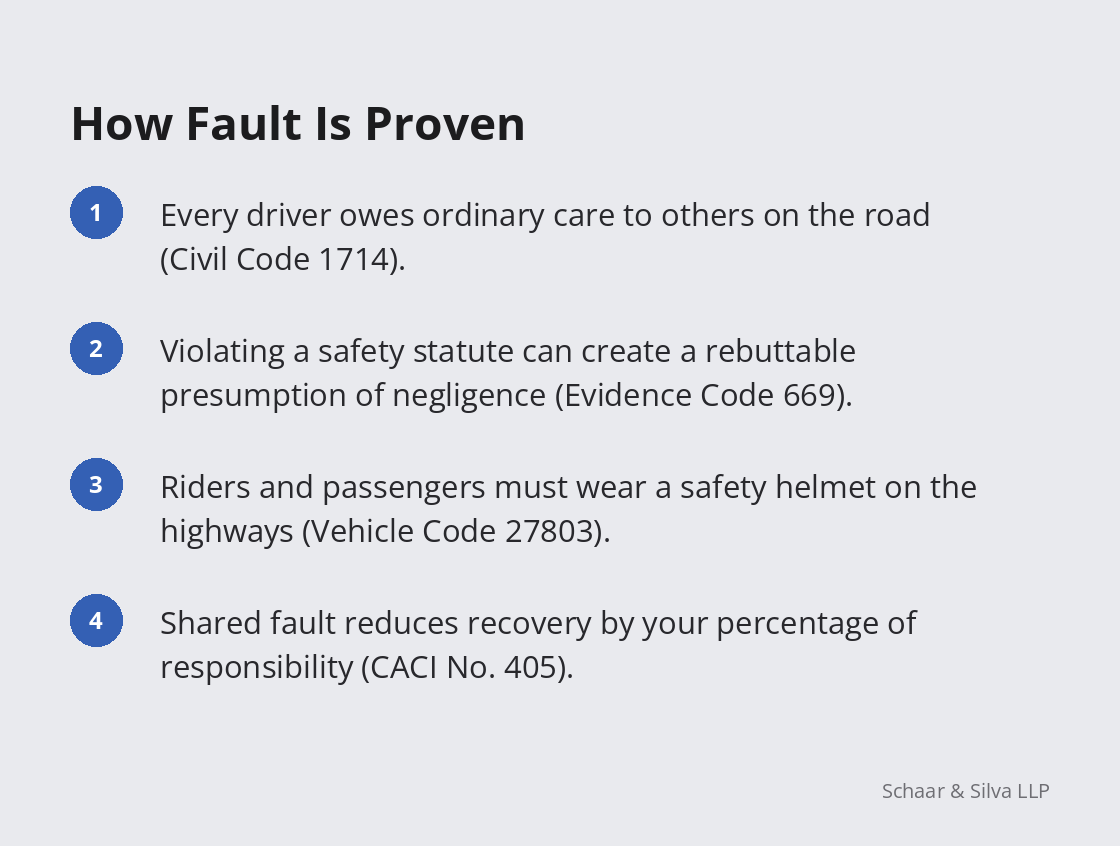
Civil Code Section 1714 makes everyone responsible for an injury caused to another by a lack of ordinary care or skill in the management of their property or person. For drivers, that means watching for every kind of traffic on the road, including motorcycles, bicycles, and pedestrians, and adjusting to what they see.
Proving that a driver failed to use ordinary care usually involves showing what a reasonably careful driver would have done in the same situation. Photographs of the intersection, witness statements, video from nearby businesses, and the location of the damage on both vehicles can all help reconstruct what the driver should have seen.
When a Traffic Violation Creates a Presumption of Negligence
California law gives injured people an important tool when a driver breaks a safety statute. Under Evidence Code Section 669, the failure to exercise due care is presumed if the person violated a statute, the violation proximately caused the injury, the injury resulted from an occurrence of the kind the statute was designed to prevent, and the injured person was one of the people the statute was meant to protect.
A driver who failed to yield on a left turn or changed lanes unsafely may fall squarely within that rule. The presumption can be rebutted, so it does not end the case, but it shifts the conversation toward what the driver did wrong rather than assumptions about the rider.
Helmets and Shared Fault
Vehicle Code Section 27803 requires every motorcycle driver and passenger in California to wear a safety helmet meeting state requirements when riding on the highways. Wearing a properly fastened, well-fitting helmet protects your health and also takes away an argument the other side may try to use.
Even when a rider made a mistake, California does not bar recovery entirely. Under the comparative fault rule described in CACI No. 405, a plaintiff’s damages are reduced by the percentage of responsibility assigned to the plaintiff. An insurer may try to inflate the rider’s share, which is why careful investigation of the driver’s conduct matters so much.
Mistakes That Can Weaken a Motorcycle Accident Claim
Many motorcycle claims are damaged not by the facts of the crash but by what happens in the days and weeks afterward. Avoiding a few common mistakes can protect both your health and your ability to hold the responsible driver accountable.
Each of these mistakes is easy to make when you are injured, stressed, and trying to get your life back to normal.
Delaying Medical Care
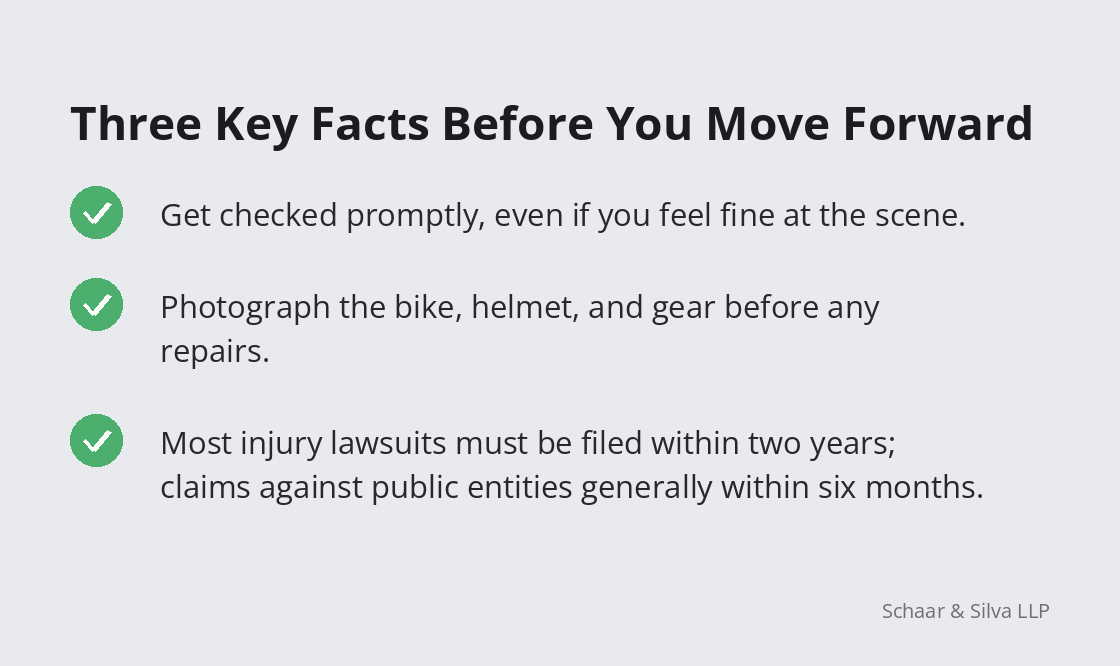
Adrenaline can mask pain for hours after a crash, and riders often walk away believing they are fine. Head injuries, internal injuries, and fractures do not always announce themselves right away. Getting checked promptly creates a medical record that connects your injuries to the collision and protects your health at the same time.
Following through with recommended treatment matters too. Gaps in care give an insurance company room to argue that your injuries were minor or were caused by something else.
Repairing the Bike or Losing the Gear
Your motorcycle, helmet, jacket, and boots are evidence. Scrapes, impact marks, and damage patterns can show the angle and force of the collision and support your account of how the crash happened. Photograph everything before any repairs, and keep damaged gear in a safe place.
Ask nearby homes and businesses about security cameras as soon as possible, because many systems record over older footage within days. Witness contact information is just as valuable and much harder to find later.
Missing Reports and Deadlines
Vehicle Code Section 20001 requires a driver involved in a collision that results in injury or death to immediately stop at the scene and fulfill related duties. Separately, Vehicle Code Section 16000 requires a driver involved in a collision that causes bodily injury or death to report it to the DMV within 10 days on an approved form, which is separate from any police report.
Lawsuit deadlines are strict as well. Code of Civil Procedure Section 335.1 sets a two-year limit for most personal injury actions, and Government Code Section 911.2 generally requires a claim against a public entity for personal injury to be presented within six months after the claim accrues. If a county vehicle or a road defect played a role in your crash, that shorter timeline can apply.
Final Thoughts
A motorcycle accident in Santa Cruz County often involves serious injuries and an uphill battle against assumptions about riders. California law provides clear rules on left turns, lane changes, and lane splitting, and those rules can help show that the driver, not the rider, caused the crash.
The steps you take early on, from prompt medical care to preserving your gear and meeting every deadline, can make a real difference in the outcome of your claim. Learn more about how we handle motorcycle accident cases for injured riders.
If you were hurt in a motorcycle crash on a Santa Cruz County road, contact Schaar & Silva LLP to speak with our team. We’ll review what happened, explain your options, and help you move forward with confidence. We serve Santa Cruz County and surrounding areas.