
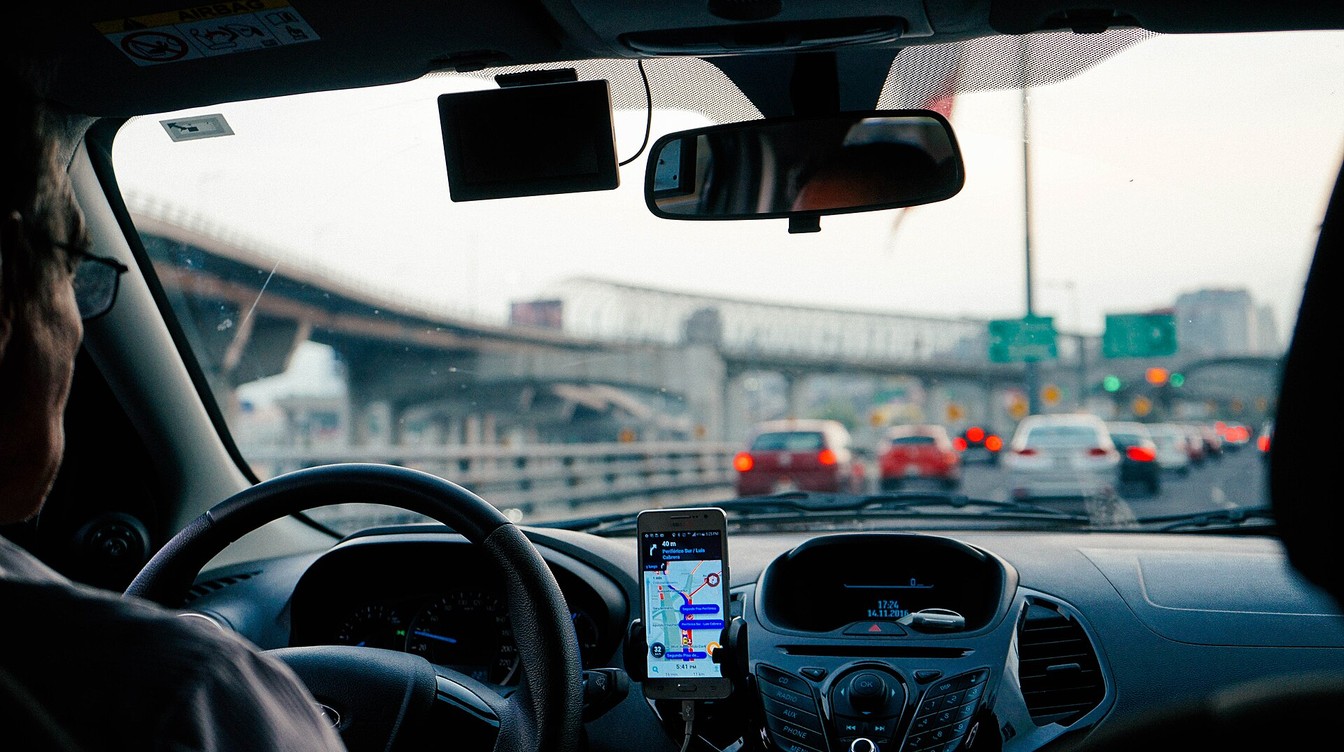
A distracted driving car accident in Santa Cruz County can happen in the time it takes another driver to glance at a text message. Whether you were rear-ended on Highway 1, struck in an intersection in Watsonville, or sideswiped on a winding mountain road, a driver who was looking at a phone instead of the road may be responsible for your injuries. California has specific laws that limit how drivers can use phones and other devices behind the wheel, and those laws can play an important role in proving fault. Knowing how they work gives you real control over your claim from the start.
At Schaar & Silva LLP, we help people injured in car accidents throughout Santa Cruz County hold careless drivers accountable so you can move forward with confidence. This guide explains what California’s phone laws actually require, how distraction is proven after a crash, and the mistakes that can weaken a distracted driving claim.
What California’s Phone Laws Actually Require
California addresses phone use while driving in several sections of the Vehicle Code. These laws do not ban every use of technology in a car, but they draw clear lines around holding and operating a phone while driving. When a driver crosses those lines and causes a crash, the violation can become key evidence in an injury claim. Understanding the specific rules helps you see whether the other driver’s conduct broke the law. It also helps you understand which details from the scene and the days after the crash are worth writing down while they are still fresh.
The Hands-Free Requirement
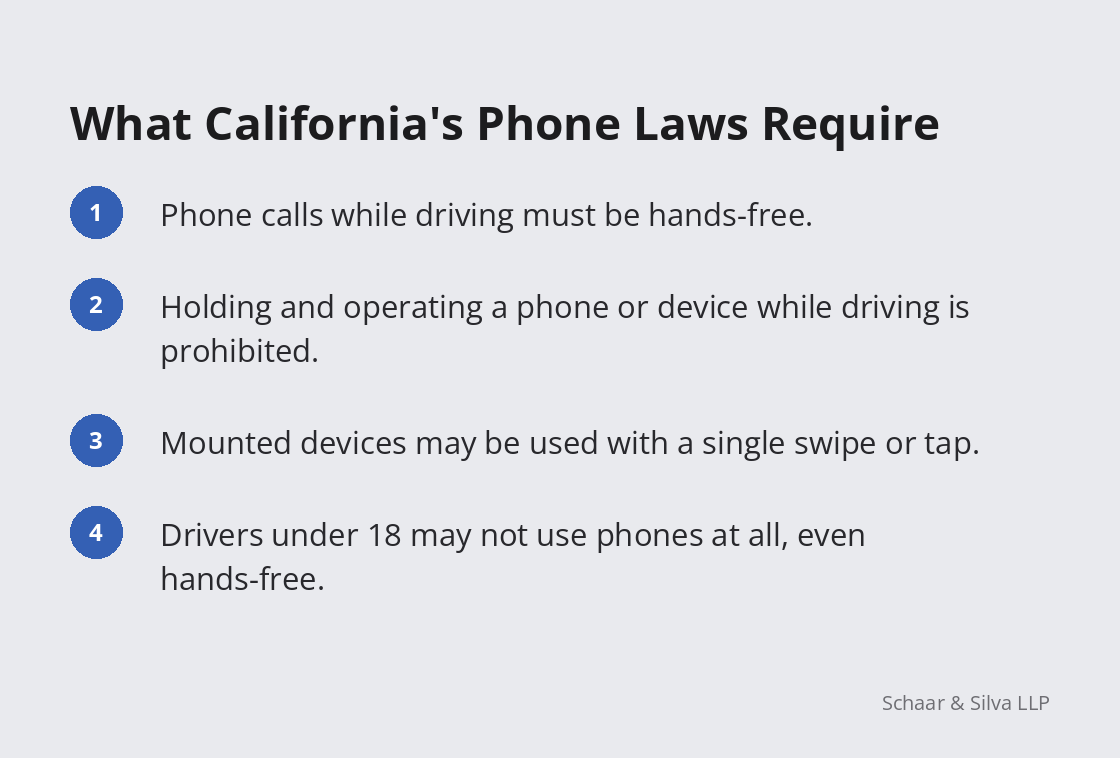
Vehicle Code Section 23123 provides that a person shall not drive a motor vehicle while using a wireless telephone unless that telephone is specifically designed and configured to allow hands-free listening and talking, and is used in that manner while driving. In practical terms, holding a phone to your ear for a call while driving is not allowed. The section includes limited exceptions, such as using a phone for emergency purposes, including an emergency call to law enforcement, a health care provider, or a fire department.
Holding and Operating a Device
Vehicle Code Section 23123.5 goes further and covers texting, apps, and other device use. It provides that a person shall not drive while holding and operating a handheld wireless telephone or an electronic wireless communications device unless the device is designed and configured for voice-operated and hands-free operation and is used that way. The statute allows hand use only if the device is mounted on the windshield, dashboard, or center console in a way that does not hinder the driver’s view of the road, and the driver activates or deactivates a feature with a single swipe or tap of a finger. Scrolling through messages, typing a text, or holding a phone to watch a video while driving falls outside those limits.
Stricter Rules for Drivers Under 18
Younger drivers face even tighter limits. Vehicle Code Section 23124 provides that a person under the age of 18 shall not drive a motor vehicle while using a wireless telephone or an electronic wireless communications device, even if it is equipped with a hands-free device. Emergency use is excepted. If a teen driver was using a phone in any way at the time of a crash, that fact can be significant evidence of negligence.
How Distraction Is Proven After a Santa Cruz County Crash
Distracted drivers rarely admit to looking at their phones. Proving distraction usually depends on gathering evidence quickly and connecting the driver’s conduct to California’s negligence rules.
Evidence That Shows Phone Use
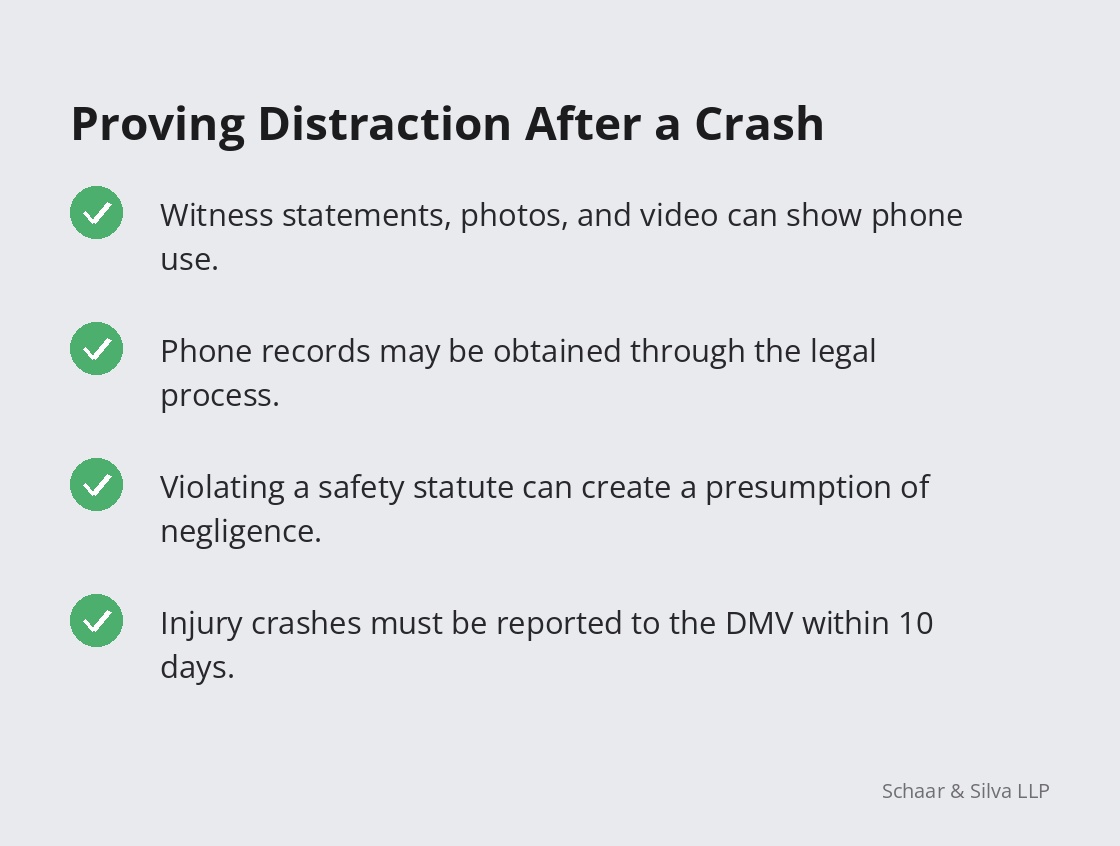
Useful evidence can include statements from witnesses who saw the driver looking down, photographs of the scene and vehicles, video from nearby businesses or dashcams, and the officer’s observations in the collision report. In some cases, phone records showing calls, texts, or data use around the time of the crash can be obtained through the legal process in a lawsuit. Signs at the scene, such as a lack of braking before impact or a driver drifting across a lane, can also support a claim that the driver was not paying attention.
How a Violation Supports Negligence
California Civil Code Section 1714 provides that everyone is responsible for an injury caused to another by a lack of ordinary care in managing their property or person. Evidence Code Section 669 adds a presumption that a person failed to exercise due care if the person violated a statute, the violation proximately caused the injury, the injury resulted from an occurrence of the kind the statute was designed to prevent, and the injured person was among those the statute was meant to protect. Phone laws exist to prevent distraction-related crashes and to protect other people on the road, which is why a violation of Section 23123 or 23123.5 can carry real weight in a claim. The presumption can be rebutted, so the evidence still matters.
Reporting the Accident
Documentation starts with reporting. Vehicle Code Section 16000 requires a driver involved in an accident that results in bodily injury or death, among other situations, to report the accident to the Department of Motor Vehicles within 10 days, on a form approved by the department. That report is separate from any police report. Making sure the crash is properly documented helps preserve the record of what happened, including any statements about phone use.
Mistakes That Weaken a Distracted Driving Claim
Distracted driving claims are strongest when evidence is preserved early and the injured person avoids common pitfalls. These are the mistakes we see most often after car accidents in Santa Cruz County.
Waiting to Preserve Evidence
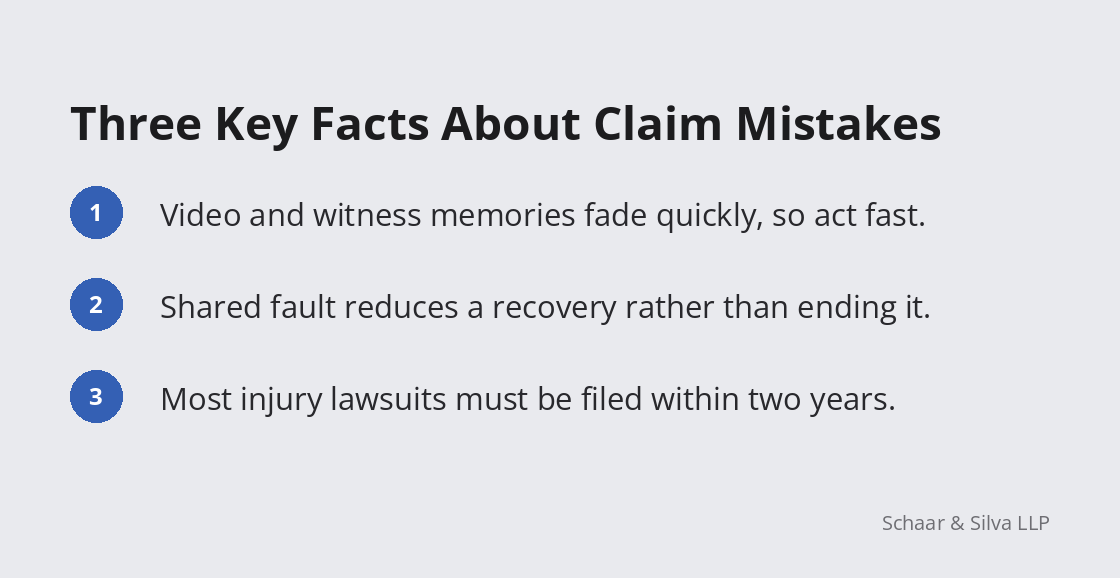
Video recordings from nearby businesses and traffic cameras are often overwritten within a short time, and witness memories fade. If you suspect the other driver was on a phone, write down everything you remember, collect the names and contact information of witnesses, and take photos as soon as you are able. Reaching out to a lawyer early allows formal requests to preserve video and other records before they disappear.
Assuming Your Own Fault Ends the Claim
Insurance companies often argue that the injured driver also made a mistake, such as following too closely or reacting too slowly. California follows comparative fault. Under the Judicial Council’s civil jury instruction on comparative fault, CACI No. 405, if a defendant proves that the injured person was negligent and that the negligence was a substantial factor in causing the harm, the injured person’s damages are reduced by the percentage of that person’s responsibility. A share of fault reduces a recovery rather than eliminating it, so it should not stop you from pursuing a claim.
Giving a Recorded Statement Too Soon
Shortly after a crash, the other driver’s insurance company may call and ask for a recorded statement. These conversations can feel routine, but the questions are often designed to find details that shift blame or minimize your injuries. Saying you feel fine before you have been fully evaluated, guessing about speeds or distances, or speculating about what you might have done differently can all be used later to dispute your claim. Before agreeing to a recorded statement with the other driver’s insurer, it is usually wise to speak with a lawyer first so that your account is accurate, complete, and focused on the facts you actually know.
Missing the Filing Deadline
Under Code of Civil Procedure Section 335.1, an action for injury to or death of an individual caused by the wrongful act or neglect of another generally must be filed within two years. If the distracted driver was operating a government vehicle, a much shorter deadline to present a claim to the public agency may apply under the Government Claims Act. Waiting too long can end a strong claim before it begins, so it is wise to have your situation reviewed well before any deadline approaches.
Final Thoughts
A distracted driving car accident in Santa Cruz County is often entirely preventable. California law requires drivers to use phones hands-free, limits handheld device use to a single swipe or tap on a mounted device, and bars drivers under 18 from using phones at all while driving. When a driver breaks those rules and causes a crash, the violation can support a presumption of negligence. Acting quickly to gather evidence and protect your rights gives your claim the best chance of success. You can learn more about our approach on our page about distracted driving accident claims in Santa Cruz.
Focus on your recovery first, but keep your medical records, photos, and any notes about the other driver’s behavior in one place. Those details often make the difference in showing what really happened.
If you were hurt by a distracted driver in Santa Cruz County, contact Schaar & Silva LLP for a case evaluation. We will review your evidence, explain your rights under California law, and help you take the next step with confidence. We serve Santa Cruz County and surrounding areas.