

A Santa Cruz County Uber or Lyft accident raises questions that an ordinary car crash does not. Was the driver waiting for a ride request, heading to pick someone up, or carrying a passenger? Whose insurance applies, and what happens if you were the passenger, the other driver, or a pedestrian on Pacific Avenue? The answers depend on rules written specifically for rideshare companies, and understanding them gives you real control over your claim.
At Schaar & Silva LLP, we help people across Santa Cruz County who have been hurt in car and truck accidents, including crashes involving rideshare drivers. This guide explains how rideshare accident claims actually work in California, the steps that protect your claim, and the mistakes that most often get in the way, so you can move forward with confidence.
How Rideshare Accident Claims Actually Work in Santa Cruz County
Rideshare vehicles are part of daily traffic throughout Santa Cruz County, from Highway 1 and Highway 17 to neighborhood streets near the beaches and the university. Most of these cars are personal vehicles, driven by people who use an app to connect with passengers. California treats that arrangement differently from both a taxi and a private car, and the difference shapes every rideshare claim.
What California Law Calls a Rideshare Company
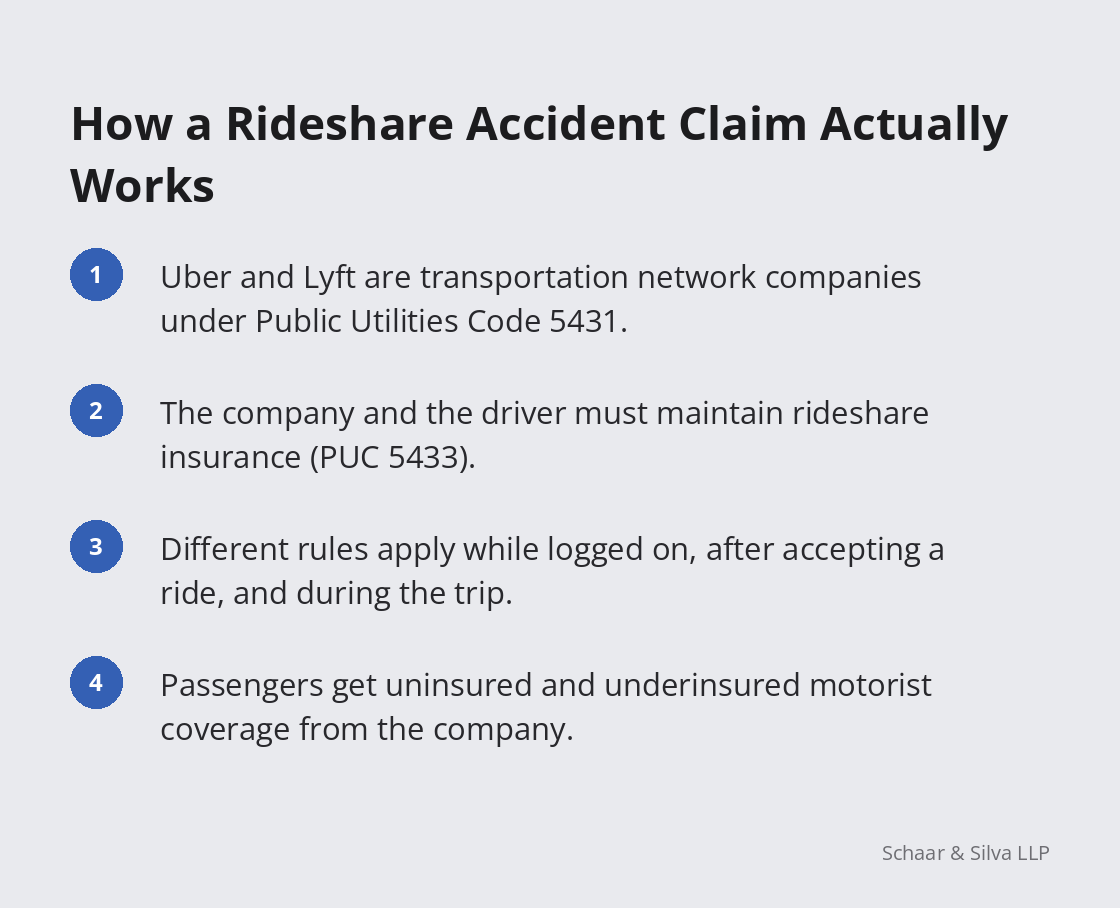
In the Public Utilities Code, Uber, Lyft, and similar services are called transportation network companies. Public Utilities Code 5431 defines a transportation network company as an organization operating in California that provides prearranged transportation services for compensation using an online-enabled application or platform to connect passengers with drivers using a personal vehicle. A participating driver is any person who uses a vehicle in connection with the company’s application or platform to connect with passengers. These definitions matter because the insurance rules that follow apply to these companies and their drivers specifically.
Why the App Status Matters
Public Utilities Code 5433 requires a transportation network company and any participating driver to maintain transportation network company insurance, and it sets different requirements for different stages of a driver’s work. One set of rules applies from the moment a driver logs on to the app until the driver accepts a ride request. A broader set applies from the moment the driver accepts a ride request until the ride is complete. When a driver is logged off the app entirely, these rideshare insurance periods do not apply, and the claim generally looks much more like an ordinary car accident. That is why one of the first questions in any rideshare case is exactly what the driver’s app showed at the moment of impact.
Protection for Passengers
Passengers have an added layer of protection. Under Public Utilities Code 5433, a transportation network company must provide uninsured motorist and underinsured motorist coverage from the moment a passenger enters the vehicle of a participating driver until the passenger exits the vehicle. The statute makes that coverage primary over other applicable uninsured or underinsured motorist coverage and solely the obligation of the company. If you were riding in an Uber or Lyft and another driver who lacked adequate insurance caused the crash, this rule can be an important source of recovery.
Claims by Other Drivers, Pedestrians, and Cyclists
You do not have to be a passenger to bring a rideshare claim. If a rideshare driver caused a crash that injured you while you were driving your own car, walking across a street in Capitola, or riding a bike along West Cliff Drive, the same rules about app status apply. Public Utilities Code 5431 defines transportation network company insurance as a liability insurance policy that specifically covers liabilities arising from a driver’s use of a vehicle in connection with the company’s online-enabled application or platform. In other words, this coverage exists to respond to people the driver harms while working through the app, and identifying the right policy early helps your claim reach the insurer that is actually responsible.
Steps to Protect Your Rideshare Accident Claim
Because rideshare claims turn on timing and app data, the steps you take in the first days after a crash carry extra weight. Thinking of the claim as a set of checkpoints helps keep the important details from slipping away.
Document the Driver and the Trip
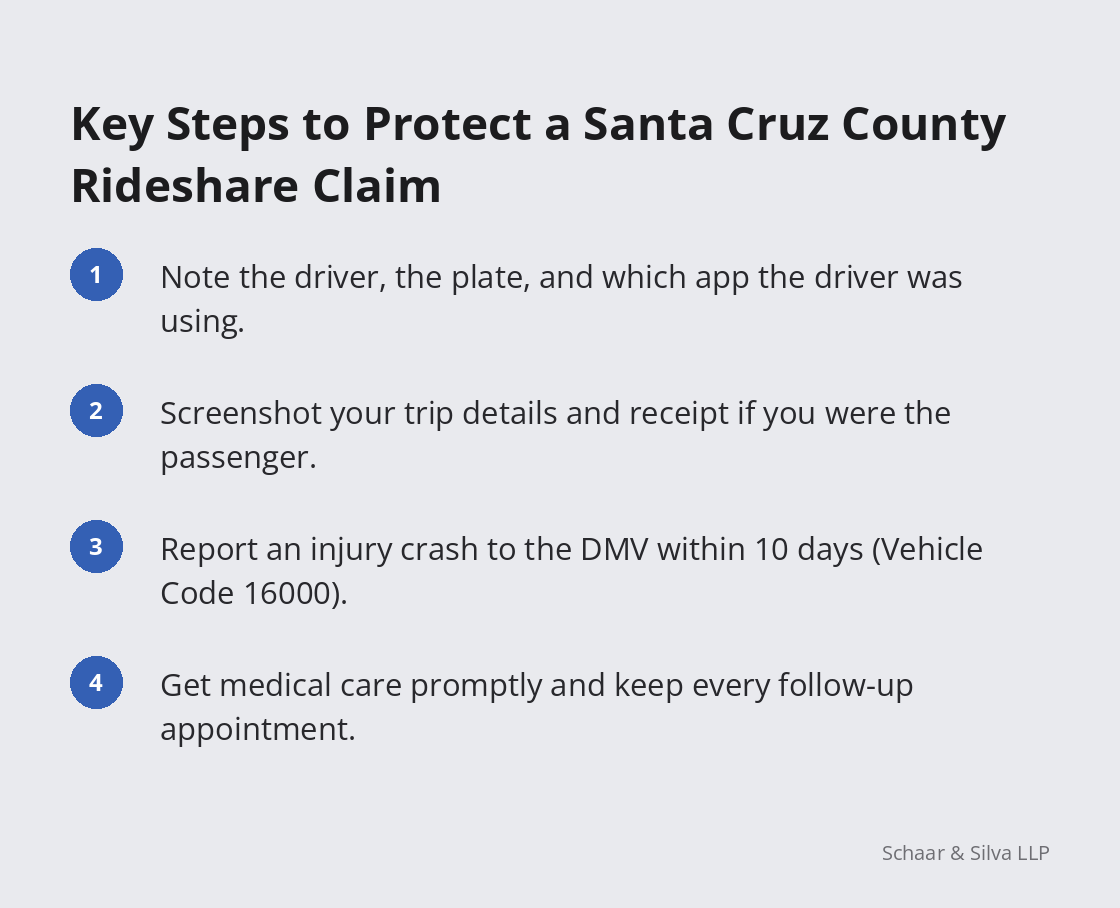
At the scene, note the driver’s name, the vehicle’s license plate, and which app the driver was using. If you were the passenger, take screenshots of the trip details and receipt in your own app as soon as you can. If you were in another vehicle, ask the driver whether they were logged in, waiting for a request, or carrying a passenger, and write down what they say. Photos of any rideshare decals, the damage to each vehicle, the road conditions, and nearby traffic signals help fill in the picture later, and the names of witnesses can become very valuable if the details are disputed.
Report the Crash and Get Medical Care
Vehicle Code 20001 requires the driver of a vehicle involved in an accident resulting in injury to a person or death to immediately stop at the scene. Vehicle Code 16000 requires a driver involved in a crash that results in bodily injury or death to report it to the Department of Motor Vehicles within 10 days after the accident. Getting checked by a doctor promptly matters just as much. Neck and back injuries, concussions, and other harm from a rideshare crash may not show their full effects right away, and a consistent medical record links those injuries to the collision and shows how they affect your daily life.
Look Closely at Phone and App Use
Rideshare drivers rely on their phones to accept rides and follow directions, which creates a real risk of distraction. Vehicle Code 23123.5 bars driving while holding and operating a handheld wireless telephone unless it is used in a voice-operated and hands-free manner, and it allows hand use only when the phone is mounted and operated with a single swipe or tap of a finger. A driver who was typing, scrolling, or reaching for a phone when the crash happened may have broken this rule, and app records and phone data can help show what the driver was doing.
Understand Who Responds to Your Claim
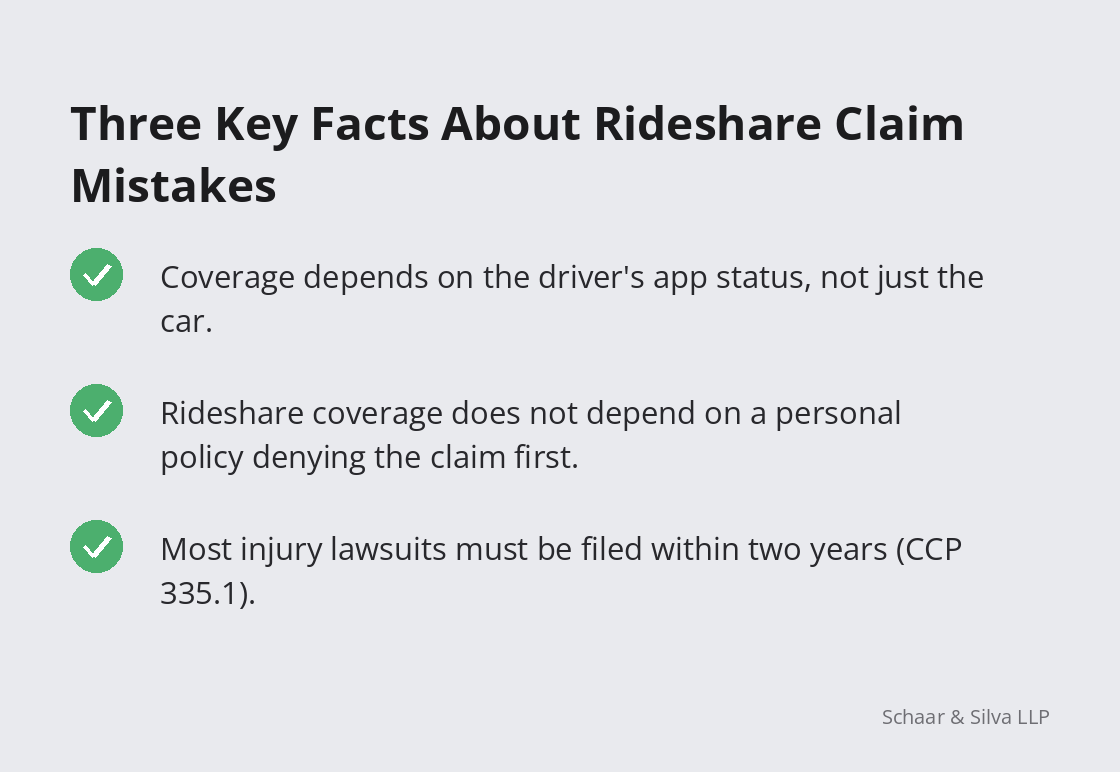
Depending on the app status, a rideshare claim may involve the driver’s personal insurer, the insurer that covers the rideshare company, or both. Public Utilities Code 5433 states that coverage under a transportation network company insurance policy shall not be dependent on a personal automobile insurance policy first denying a claim. Knowing that rule can help you push back if one insurer tries to send you to another before it will look at your claim.
Mistakes That Derail Santa Cruz County Rideshare Claims
Rideshare companies and their insurers handle a large number of claims, and they tend to move quickly. Injured people, on the other hand, are usually focused on healing and getting back to work. These are the mistakes we see most often.
Assuming the Rideshare Company Always Covers the Crash
Many people assume that any crash involving an Uber or Lyft car is automatically covered by the company’s insurance. In reality, the coverage that applies depends on what the driver was doing in the app. A crash that happens after the driver has logged off may fall entirely under the driver’s personal policy, while a crash during an active trip brings in the rideshare insurance rules. Making assumptions too early can lead you to deal with the wrong insurer or miss coverage that does apply.
Waiting Too Long to Act
California generally gives injured people two years to file a lawsuit. Code of Civil Procedure 335.1 sets a two-year limit for an action for injury to, or for the death of, an individual caused by the wrongful act or neglect of another. Waiting also gives trip data, dashcam footage, and witness memories time to fade, even when the legal deadline is still well into the future.
Giving a Detailed Statement Before You Know the Full Picture
An adjuster may call soon after the crash and ask you to describe what happened in a recorded statement. Your words can later be used to suggest you were partly at fault or that your injuries are minor. It is usually wise to understand which insurance applies, and the full extent of your injuries, before you give the other side a detailed account.
Final Thoughts
A Santa Cruz County Uber or Lyft accident can leave you dealing with more than one insurer and a set of rules that most people have never heard of. California law gives injured passengers, drivers, pedestrians, and cyclists real protection, but those protections depend on the details: the app status, the trip records, and the steps you take in the first days after the crash.
Getting medical care, documenting the driver and the trip, and keeping the legal deadlines in view are the steps that protect your claim the most. With the right information, you can focus on healing while the facts of your case are preserved.
If you were hurt in a rideshare crash anywhere in Santa Cruz County, contact Schaar & Silva LLP to speak with our team. We’ll review what happened, identify the insurance that applies, and help you take the next step with confidence. We serve Santa Cruz County and surrounding areas.