
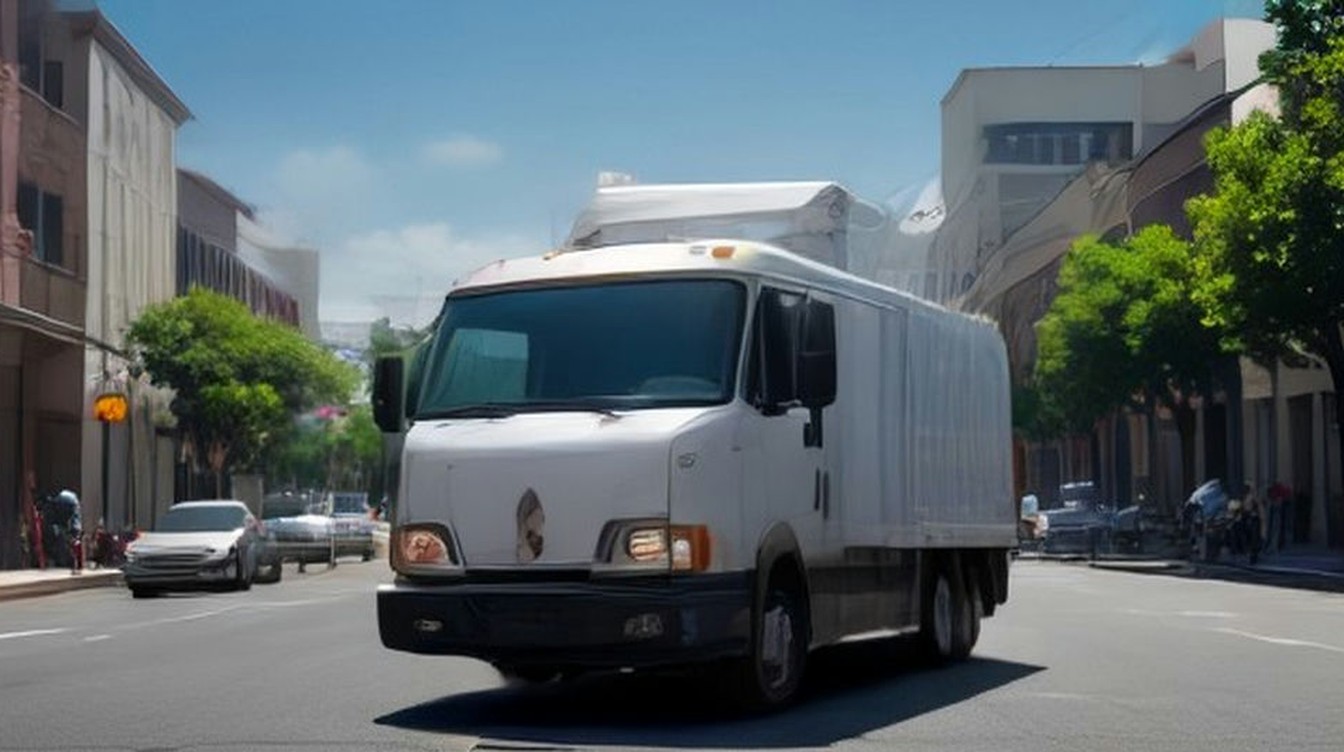
A Sacramento delivery truck accident often happens in the places you least expect trouble: a neighborhood street lined with parked cars, a busy stretch of Folsom Boulevard, or a downtown block where a box truck has stopped in the travel lane to drop off packages. These crashes can cause serious injuries, and the claim that follows usually involves more than one driver and one insurance policy. Knowing who may be responsible, and what evidence proves it, gives you real control over what happens next.
At Schaar & Silva LLP, we help people across Sacramento who have been hurt in car accidents and truck accidents, including collisions with cargo vans, step vans, and box trucks. This guide explains how delivery truck claims actually work under California law, how to build a strong case, and which mistakes most often weaken these claims, so you can move forward with confidence.
How Delivery Truck Accident Claims Actually Work in Sacramento
Delivery vehicles spend their days making short trips, frequent stops, and tight turns under time pressure. That combination creates risks that look different from an ordinary two-car collision. A delivery driver may be watching a route app, searching for an address, or rushing to stay on schedule, and the vehicle itself is often larger and heavier than the car it strikes.
Why Delivery Crashes Are Different From Ordinary Car Accidents
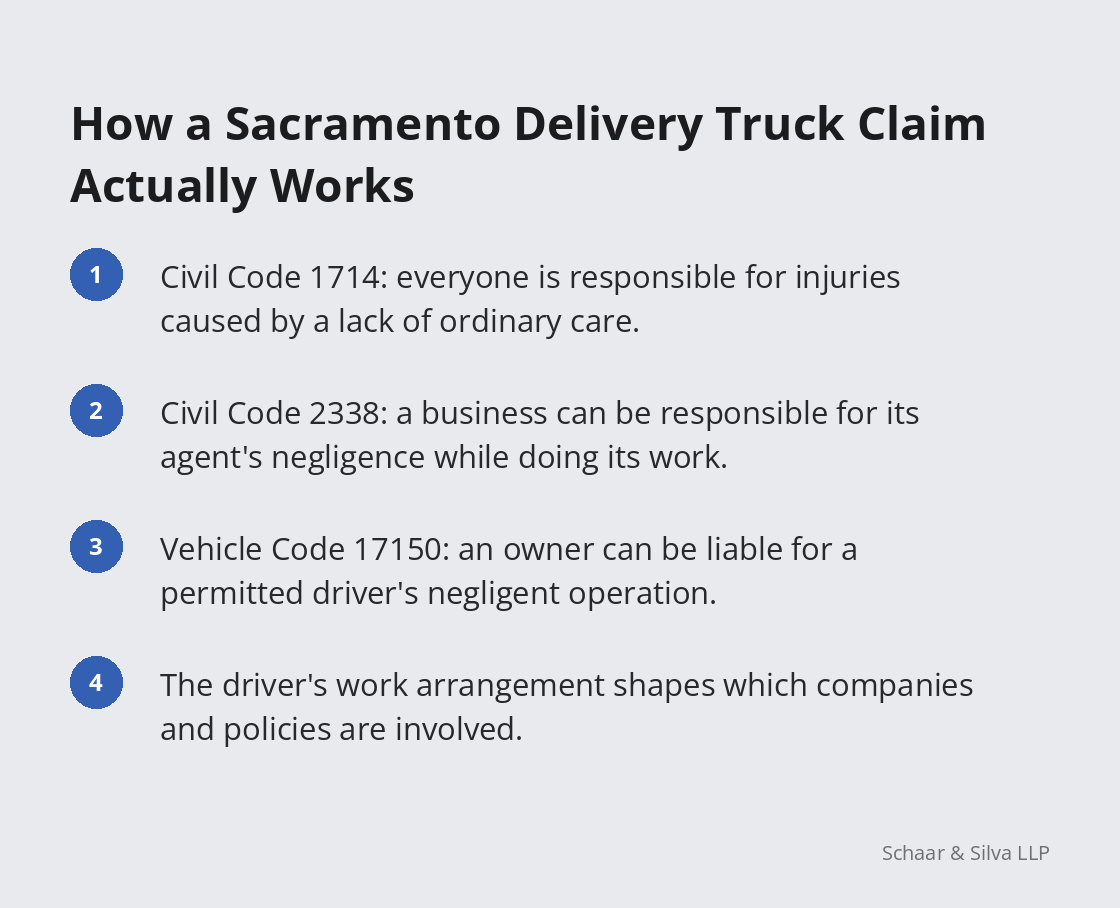
The basic rule of responsibility is the same for everyone on the road. California Civil Code 1714 provides that everyone is responsible for an injury occasioned to another by his or her want of ordinary care or skill in the management of his or her property or person. What changes in a delivery case is the number of people and businesses connected to the vehicle. The driver, the company that hired the driver, the business that owns or leases the truck, and sometimes a separate logistics contractor may all have a role. Each of them may carry its own insurance, and each may point to someone else when a claim is made.
When the Company Is Responsible for the Driver
California law has long held businesses accountable for the conduct of the people who work on their behalf. Civil Code 2338 states that a principal is responsible to third persons for the negligence of his agent in the transaction of the business of the agency. In practical terms, when a delivery driver causes a crash while making deliveries for a company, that company may share responsibility for the harm. Whether this rule applies often depends on the details of the working relationship, such as whether the driver was an employee, was working through a contractor, or was using a personal vehicle for an app-based platform. Those details are rarely obvious at the scene, which is why early investigation matters.
Owners and Other Parties Who May Share Responsibility
Ownership of the truck can matter as well. Vehicle Code 17150 provides that every owner of a motor vehicle is liable and responsible for death or injury resulting from a negligent or wrongful act or omission in the operation of the vehicle, in the business of the owner or otherwise, by any person using or operating it with the owner’s permission. The next section of the code, Vehicle Code 17151, limits that owner responsibility when it does not arise through an agency or employment relationship. Because the rules shift depending on how the driver and the vehicle are connected to a business, identifying every party involved is one of the first steps in a delivery truck case.
Building Your Case After a Sacramento Delivery Truck Crash
A strong claim connects three things: what the delivery driver did wrong, who is legally responsible for that conduct, and how the crash has affected your health and daily life. Gathering the right information early makes each of those connections easier to prove.
Traffic Rules Delivery Drivers Commonly Break
Many delivery crashes trace back to a handful of rules of the road. Vehicle Code 22500 generally prohibits stopping or parking on the roadway side of a vehicle that is stopped or parked at the curb, which is the double parking that forces other drivers to swerve into oncoming lanes. Vehicle Code 21703 says a driver shall not follow another vehicle more closely than is reasonable and prudent, and Vehicle Code 22107 requires that a turn or lane change be made only when it can be made with reasonable safety and after an appropriate signal. Vehicle Code 22350 adds that no one may drive faster than is reasonable or prudent given weather, visibility, and traffic. When a delivery driver breaks one of these rules and causes a crash, that conduct can become strong evidence of carelessness.
Distraction From Phones and Route Apps
Delivery work runs on screens. Drivers check addresses, confirm drop-offs, and receive new assignments through phones and handheld scanners throughout the day. Vehicle Code 23123.5 bars driving while holding and operating a handheld wireless telephone or electronic wireless communications device unless it is used in a voice-operated and hands-free manner, and it allows hand use only when the device is mounted and operated with a single swipe or tap. If a driver was typing, scrolling, or scanning a package when the crash happened, device records and app activity can help show it.
Evidence Delivery Companies May Keep
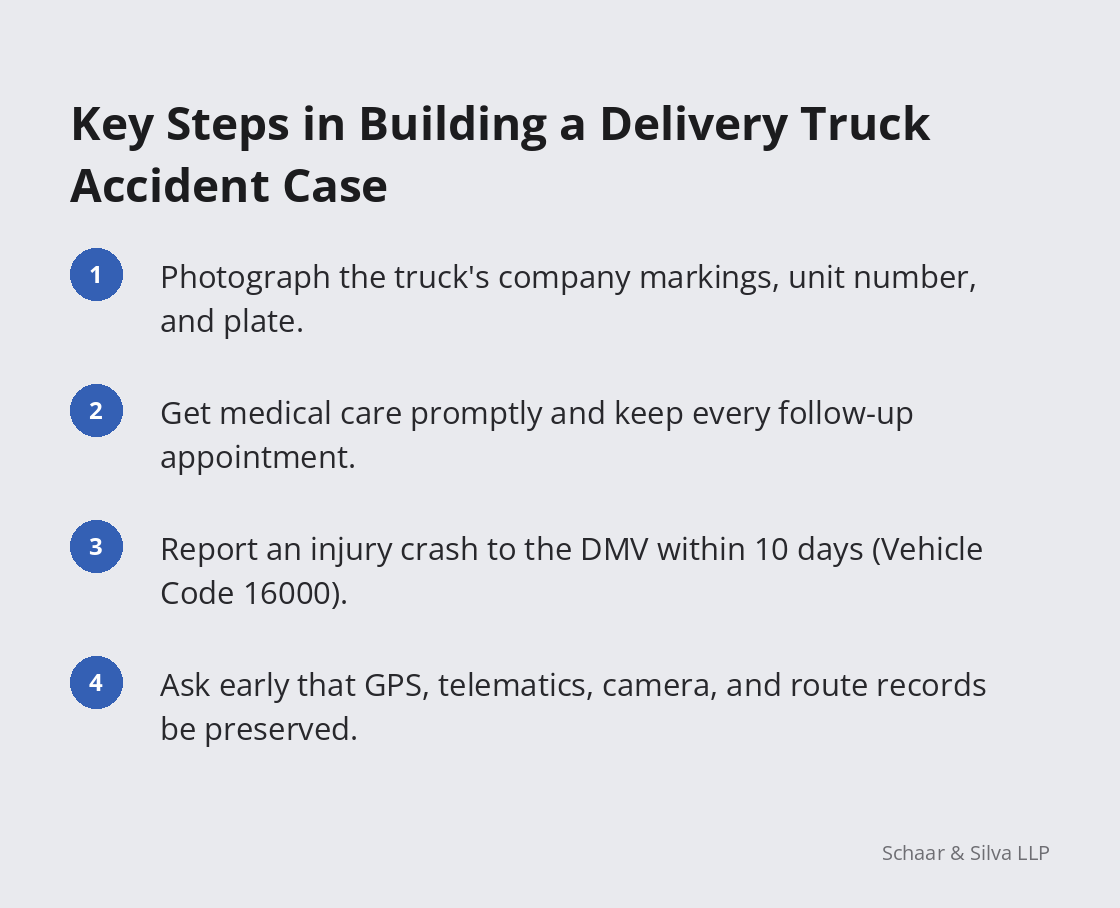
Many commercial vehicles are equipped with GPS tracking, telematics that record speed and braking, or forward-facing cameras. Delivery platforms may also keep route histories, delivery timestamps, and dispatch messages. This information can be extremely useful, but it may not be kept forever, so asking that it be preserved early can make a real difference. At the scene, photos of the truck’s company markings, unit number, and license plate help confirm which business is involved, and the names of witnesses and the responding officer help you reconstruct what happened later.
Reporting the Crash and Getting Medical Care
California law sets clear duties after an injury crash. Vehicle Code 20001 requires the driver of a vehicle involved in an accident resulting in injury to a person or death to immediately stop at the scene. Vehicle Code 16000 requires a driver involved in a crash that results in bodily injury or death to report it to the Department of Motor Vehicles within 10 days after the accident. Just as important, getting checked by a doctor promptly creates a medical record that links your injuries to the collision. Some injuries, such as concussions and soft-tissue damage, do not show their full effects for days, and consistent follow-up care helps document how they affect your work, sleep, and daily routine.
Mistakes That Weaken a Delivery Truck Accident Claim
Delivery companies and their insurers handle claims every day, and they often move quickly after a crash. Injured people, by contrast, are usually focused on recovering and getting back to normal. That imbalance is where many avoidable mistakes happen.
Waiting Too Long to Act
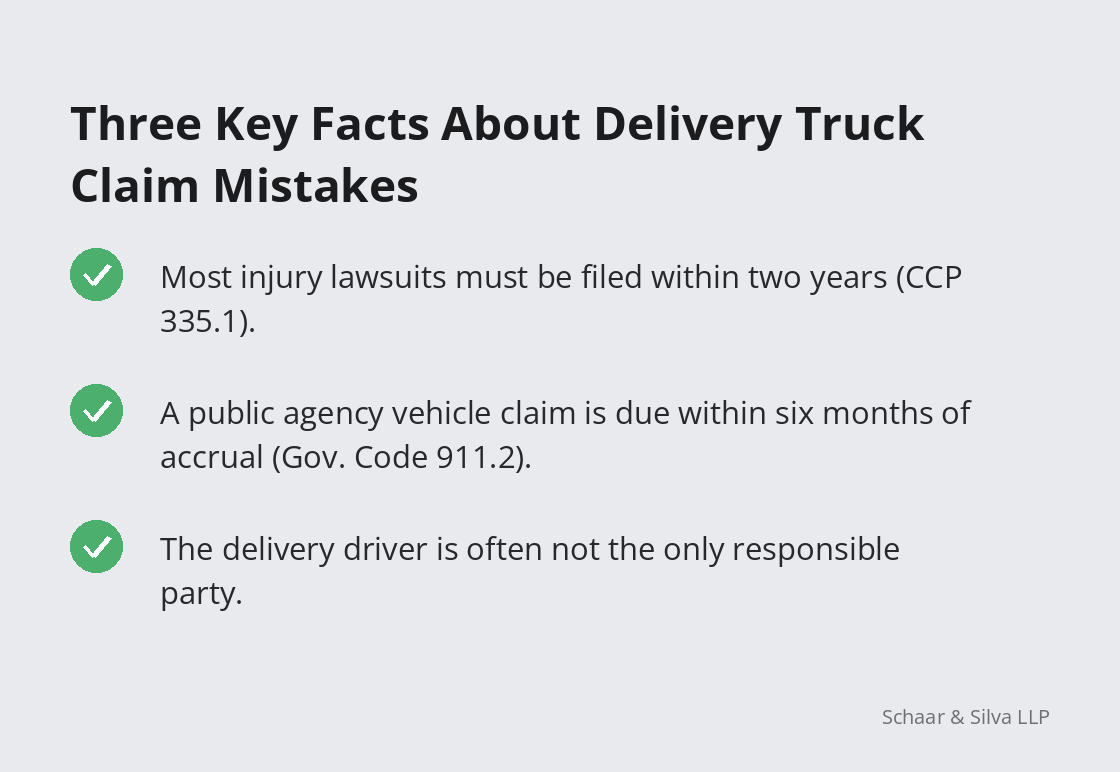
California generally gives injured people two years to file a lawsuit. Code of Civil Procedure 335.1 sets a two-year limit for an action for injury to, or for the death of, an individual caused by the wrongful act or neglect of another. If the delivery vehicle belonged to a city, county, or other public agency, a much shorter written claim deadline can apply, and Government Code 911.2 requires a claim for death or personal injury to be presented not later than six months after the cause of action accrues. Waiting also allows evidence such as video footage and telematics data to disappear, even when the legal deadline is still months away.
Giving a Recorded Statement Too Soon
An adjuster for the delivery company or its insurer may call within days and ask for a recorded statement. These conversations can feel routine, but your words may be used later to argue that you were partly at fault or that your injuries are minor. It is usually wise to understand your rights, and to know the full extent of your injuries, before describing the crash in detail to the other side’s insurer.
Assuming the Driver Is the Only Responsible Party
Many people assume that the delivery driver’s own insurance is the only source of recovery. In reality, the company that directed the driver’s work, the business that owns the truck, and other contractors may each have a role. Overlooking one of them can leave you with a claim that does not reflect the full harm you have suffered. Looking carefully at the driver’s work arrangement, the vehicle’s ownership, and the route records helps make sure every responsible party is identified.
Final Thoughts
A Sacramento delivery truck accident can turn an ordinary errand into months of medical appointments and uncertainty. The good news is that California law gives injured people clear tools to hold careless drivers and the businesses behind them accountable. Understanding how responsibility works, which traffic rules apply, and what evidence delivery companies may hold puts you in a far stronger position than going it alone.
The most important steps are often the earliest ones: getting medical care, documenting the scene, preserving evidence, and keeping the legal deadlines in view. Each of those choices protects your ability to tell the full story of what happened and how it has changed your life.
If you were hurt in a collision with a delivery truck, cargo van, or box truck in Sacramento, contact Schaar & Silva LLP to speak with our team. We’ll review what happened, identify every party who may be responsible, and help you take the next step with confidence.