
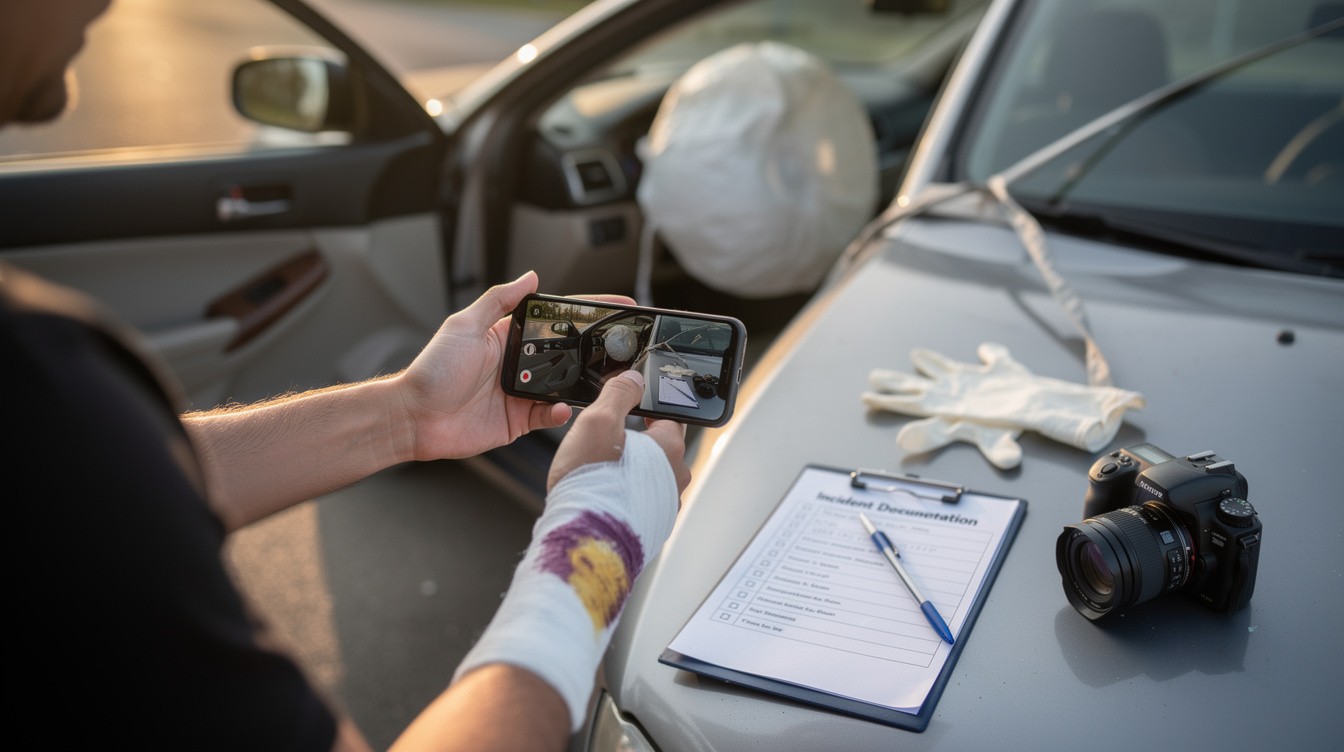
After a car accident in Santa Cruz, the paperwork and medical details pile up fast. Most people don’t know what to keep and what to toss, which weakens their claim later.
We at Schaar & Silva LLP have seen how proper injury documentation Santa Cruz makes the difference between a strong case and a weak one. This checklist walks you through exactly what to document, how to organize it, and why it matters.
What to Document Right After the Accident
Photograph Vehicle Damage and Scene Details
The first minutes after a car accident determine whether you’ll have strong evidence or weak documentation later. Most people grab their phone and take a few random photos, then leave the scene without capturing critical details. This approach costs accident victims thousands of dollars in lost claims.
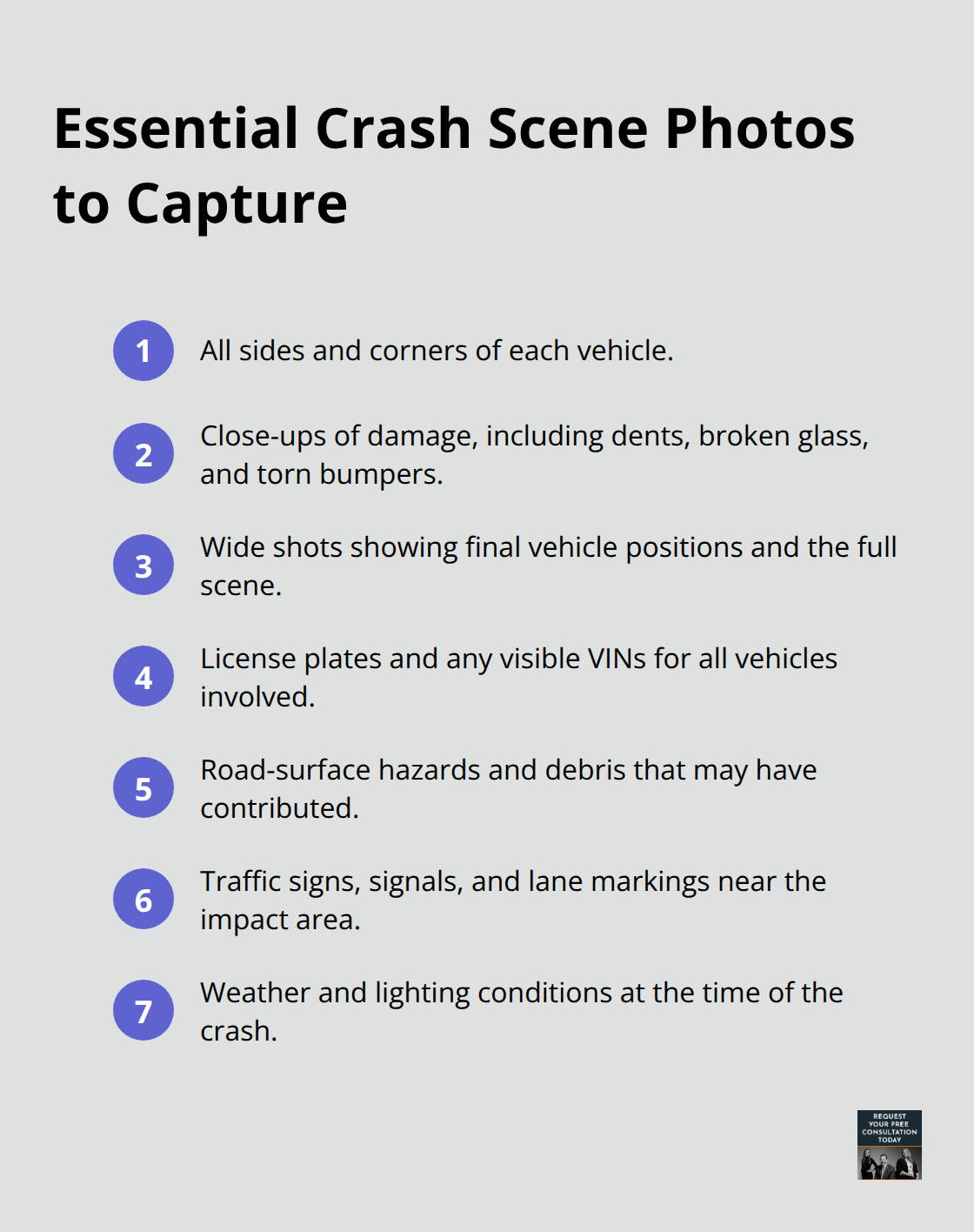
Start by photographing every angle of vehicle damage, including close-ups of dents, broken glass, and torn bumpers. Take wide shots showing the overall scene and how the vehicles came to rest. Photograph the license plates of all vehicles involved and any visible vehicle identification numbers.
Document the road surface itself, noting potholes, debris, oil stains, or damaged pavement that contributed to the accident. Capture traffic signs, traffic lights, and lane markings. If it was raining, snowing, or foggy, photograph those conditions (weather matters because it affects liability and demonstrates whether road conditions played a role in the collision).
Collect Information from Other Drivers and Witnesses
Get the full names, phone numbers, email addresses, home addresses, and insurance information from other drivers involved. Ask for their driver’s license numbers and vehicle identification numbers, then photograph their documents. Talk to any witnesses and record their names, contact information, and what they saw.
Most witnesses disappear before police arrive, so obtaining their details immediately is non-negotiable. Write down the police report number once officers complete their report, as you’ll need this for your claim. Note the exact time of the accident, the weather conditions, traffic volume, and visibility at that moment.
Document Your Injuries and Location
Take a photo of the accident location from multiple perspectives to show the geography of where the collision occurred. If you’re injured and able to do so, photograph any visible injuries like cuts, bruising, or swelling. If you’re too hurt to document the scene yourself, ask a friend or family member to do it, or return to the location within a day or two to capture photos when you’re able (this ensures you have visual records even if immediate documentation isn’t possible).
Once you’ve gathered scene documentation, the next step involves protecting your medical records and creating a clear paper trail of your injuries and treatment.
Building Your Medical Record Trail
Start Treatment Immediately After the Accident
Medical documentation becomes your most powerful evidence after a car accident. Insurance companies scrutinize medical records to determine the severity of your injuries and the legitimacy of your claim. Gaps in your medical timeline or missing treatment records give adjusters reasons to deny or reduce your settlement.
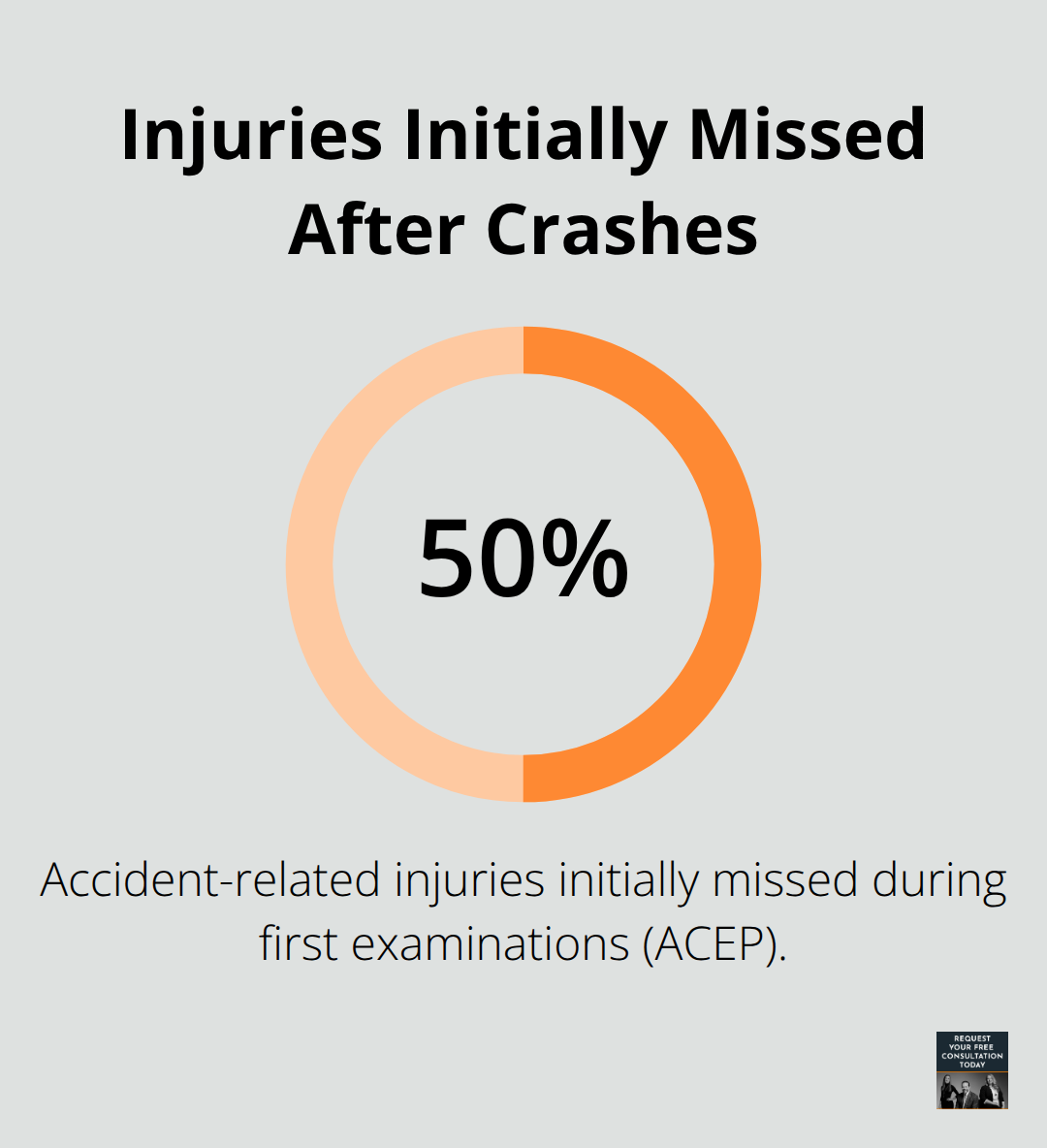
Start treatment immediately after the accident, even if you feel fine. Many injuries like whiplash, concussions, and soft tissue damage don’t show symptoms until hours or days later. The American College of Emergency Physicians reports that approximately 50% of accident-related injuries are initially missed during first examinations because victims haven’t yet experienced full symptom onset.
Collect Medical Records Before You Leave
When you visit a doctor, emergency room, or urgent care facility, request copies of all medical records, test results, imaging reports, and treatment summaries before you leave. Don’t rely on the healthcare provider to send these to you later-administrative delays happen constantly and you need immediate access to build your documentation file.
Document Your Symptoms Daily
Start a daily symptoms journal the moment the accident occurs and continue it throughout your recovery. Write down specific pain levels on a scale of 1 to 10, which body parts hurt, what activities aggravate your symptoms, and how your injuries affect your daily life, sleep, work capacity, and relationships. Insurance adjusters weight medical records heavily, but they also examine how injuries impacted your functioning. A journal entry stating you couldn’t work for three weeks or couldn’t lift your child because of back pain carries significant weight in settlement negotiations.
Organize All Medical Receipts and Expenses
Collect receipts for all medical expenses including doctor visits, physical therapy, medications, medical equipment, and transportation to appointments. Even small costs add up and demonstrate the full financial burden of your injury. Keep receipts organized chronologically in your documentation folder, as you’ll need to present these itemized expenses to insurance companies and potentially to an attorney.
Managing medical bills during recovery can feel overwhelming. An experienced personal injury law firm can connect you with medical lien services that help manage your bills during the claims process, allowing you to focus on recovery rather than payment logistics. Once your medical documentation is complete and organized, the next step involves creating a centralized system that ties together all your evidence-photos, medical records, receipts, and communications.
How to Organize Your Documentation
Create a Centralized Documentation System
A single folder for all your accident documentation prevents critical evidence from disappearing into email inboxes, filing cabinets, or your phone’s camera roll. Start this folder immediately after the accident and add to it consistently throughout your recovery. Use a physical folder with labeled dividers or a cloud-based system like Google Drive or Dropbox-both protect your records equally well, though cloud storage guards against fire or water damage.
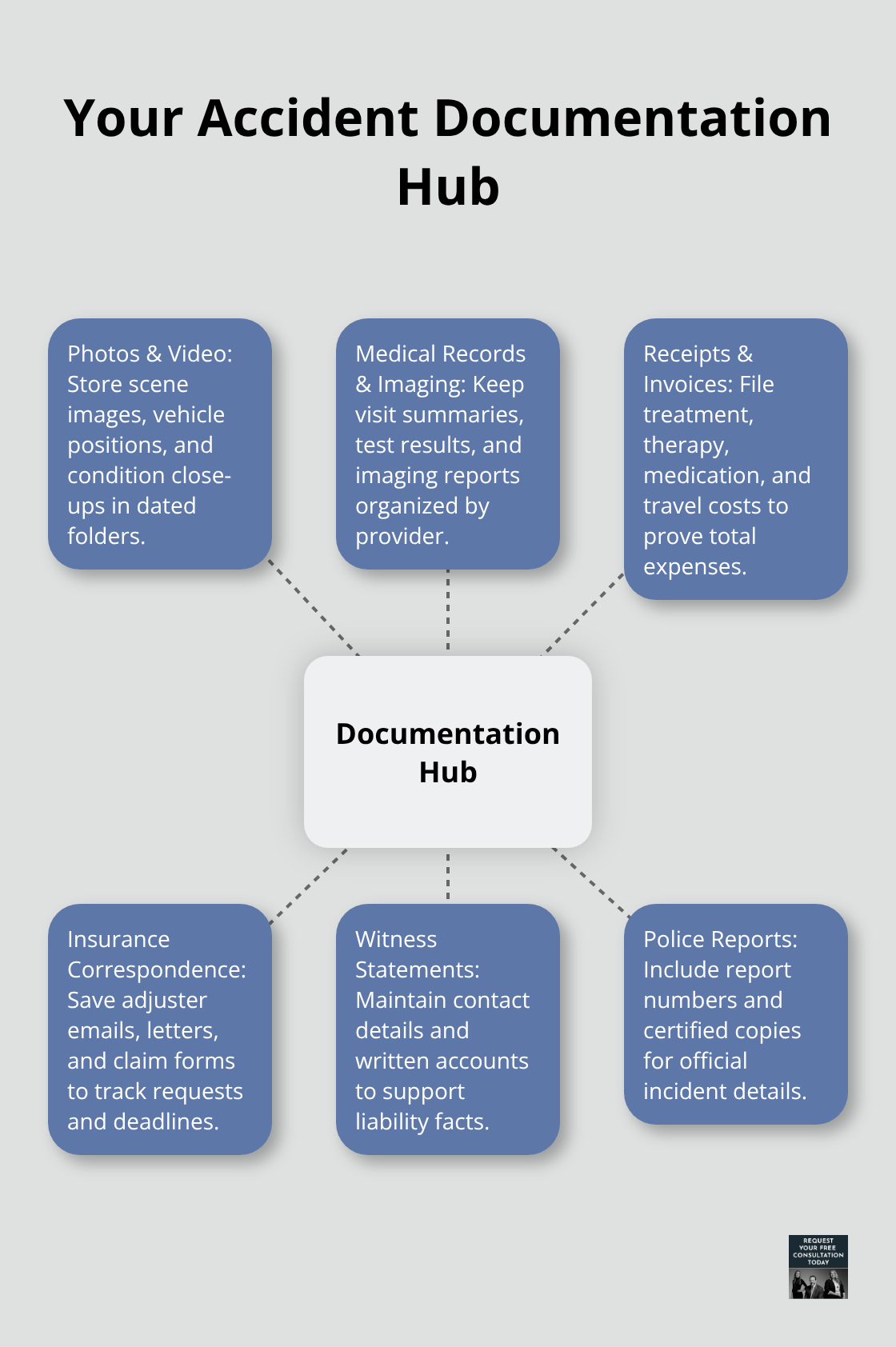
Within your folder, organize separate sections for photos and videos, medical records and test results, receipts and invoices, insurance correspondence, witness statements, and police reports. This organization system matters because when you meet with an attorney or negotiate with insurance adjusters, you’ll have every document at your fingertips rather than scrambling to locate missing receipts or medical reports.
Track Your Timeline and Recovery Progress
Build a detailed timeline document that starts with the accident date and time, then tracks every medical appointment, treatment session, medication change, and symptom progression through your recovery period. Include the dates you missed work, the specific activities you couldn’t perform because of your injuries, and when you returned to normal functioning. This timeline becomes your narrative framework-it shows insurance adjusters and potentially a jury exactly how the accident disrupted your life.
Insurance companies often request specific documentation within tight timeframes, and disorganized victims frequently miss deadlines or submit incomplete claims that get denied or delayed. Your timeline prevents these costly mistakes by keeping all critical dates visible and organized.
Preserve All Communications
Keep copies of all email and text conversations with insurance adjusters, other drivers, witnesses, and medical providers in a dedicated communications folder. Insurance adjusters often misrepresent what was discussed or conveniently forget promises they made, so written records protect you. Document every phone call with the date, time, who you spoke with, and what was discussed.
When you work with an attorney, having this organized documentation dramatically speeds up case evaluation and settlement negotiations because they immediately understand the full scope of your damages rather than requesting information multiple times. The legal team at Schaar & Silva LLP can help direct you to medical lien services that manage your bills during the claims process, allowing you to focus on recovery rather than payment logistics.
Final Thoughts
Thorough injury documentation Santa Cruz transforms a weak claim into a compelling case. Insurance adjusters make settlement decisions based on evidence, and the completeness of your documentation directly determines whether you receive fair compensation or face denial and delays. Victims who photograph the scene, collect witness information, maintain medical records, and organize receipts consistently recover more than those who gather documentation haphazardly.
Your organized records tell a clear story to insurance companies and attorneys. When every photo, medical report, receipt, and communication sits in one accessible location with a detailed timeline, adjusters see a credible victim who took the accident seriously. This organization removes doubt and accelerates settlement negotiations because nothing gets lost or forgotten. The legal team at Schaar & Silva LLP handles the complex parts of your case while you focus on healing.
Contact us to discuss your accident claim and bring your organized documentation folder to your consultation. We’ll evaluate your case with the full picture of your damages, medical treatment, and recovery timeline. The sooner you connect with our team, the sooner we can begin protecting your rights and pursuing the compensation you deserve.