
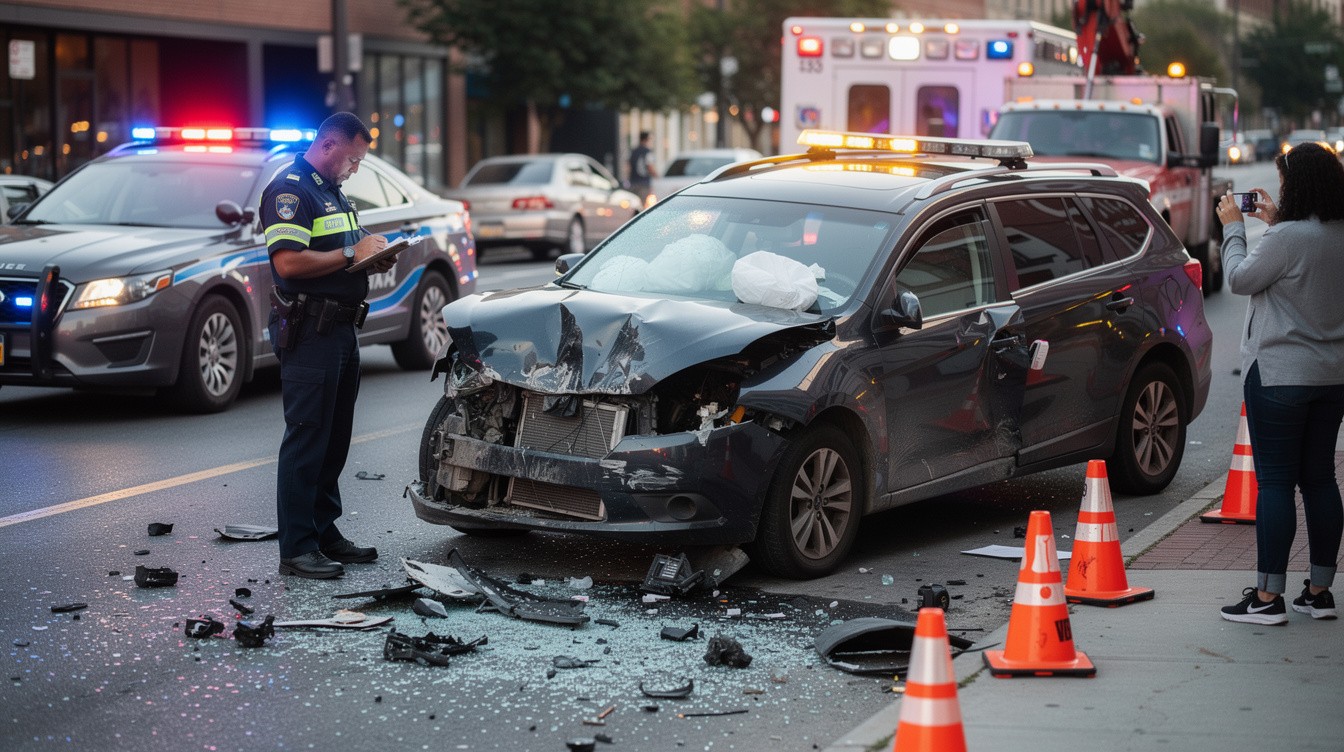
A car crash in Santa Cruz can leave you overwhelmed and unsure what to do next. The decisions you make in the first hours matter more than you might think.
We at Schaar & Silva LLP have helped countless accident victims navigate this process. This guide walks you through the concrete steps that protect your rights and your recovery.
What to Do Right After Your Crash
Move to Safety Immediately
The first hour after a crash determines how well your claim proceeds. Your immediate actions create the foundation for everything that follows, from insurance payouts to legal protection. Move to safety if possible. If you’re in a busy Santa Cruz intersection or highway, turn on hazard lights and move vehicles out of traffic to prevent additional collisions. Call 911 if anyone is injured or if there’s significant damage. The Santa Cruz Police Department responds to most accidents in the county, and an official police report filed at the scene strengthens your claim significantly. Obtain the report number before you leave, as insurers require this documentation.
Photograph Everything at the Scene
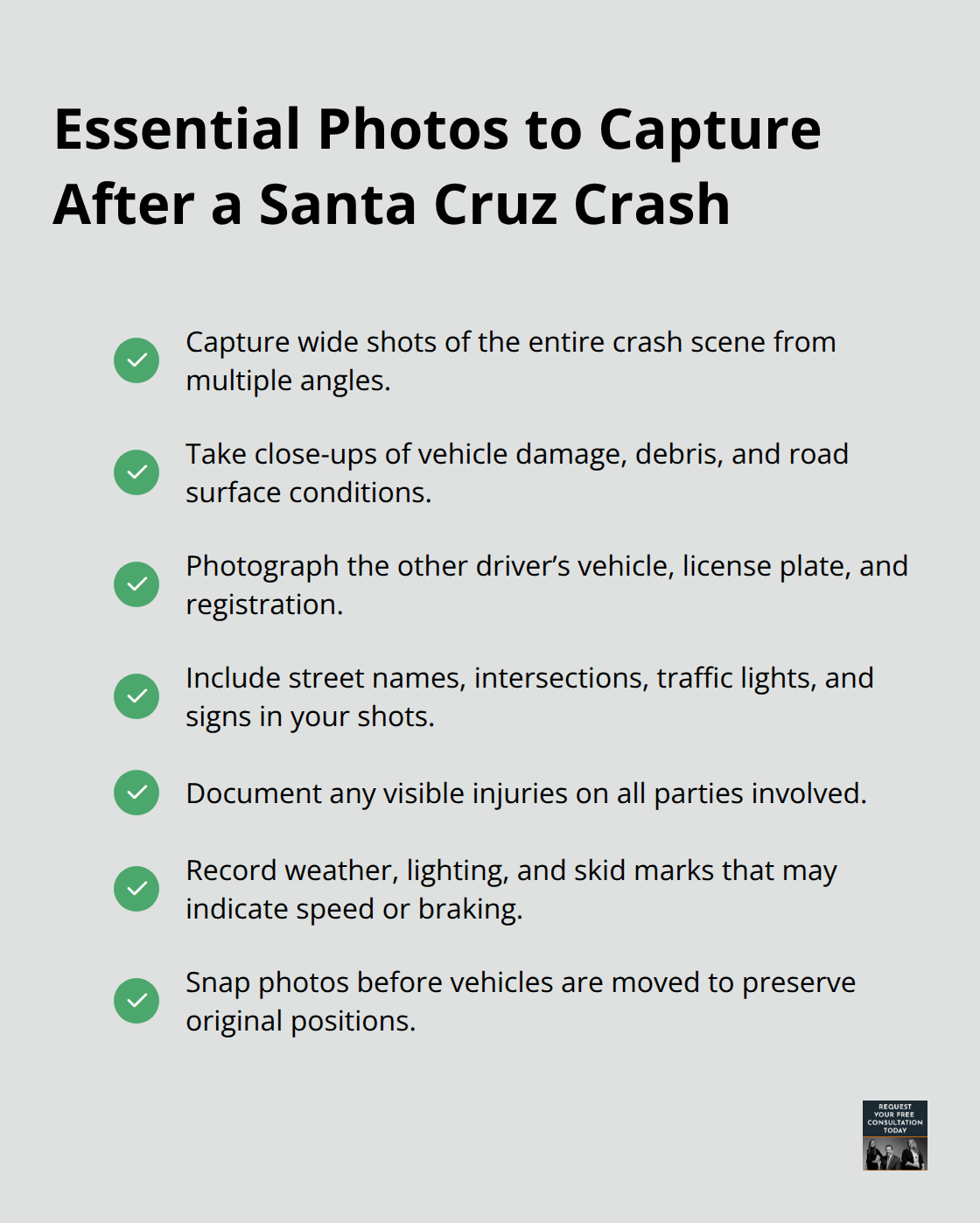
Photography is your strongest tool in the first minutes after impact. Take wide shots that show the overall scene, then close-ups of vehicle damage, road conditions, debris location, and any visible injuries. Photograph the other driver’s vehicle, license plate, and registration. Capture the street names and any traffic signals or signs visible. These images preserve evidence that fades quickly or disappears entirely once vehicles are moved.
Collect Information from All Parties
Request contact information from everyone involved: full name, phone number, address, driver’s license number, insurance company name, policy number, and vehicle details. Don’t accept partial information. Get names and contact details from any witnesses who saw the crash, as their accounts often prove invaluable when liability is disputed (especially in multi-vehicle incidents). Write down the exact time, weather conditions, and road surface conditions while they’re fresh.
Communicate Carefully with Others
Avoid discussing fault or apologizing, as these statements can be used against you later. When police arrive, provide factual information only and request a copy of the accident report or the case number so you can obtain it from the Santa Cruz County Sheriff’s office afterward. This documentation becomes essential as you move forward with your insurance claim and any potential legal action.
What Your Insurance Policy Actually Covers
Understanding California’s Minimum Coverage Requirements
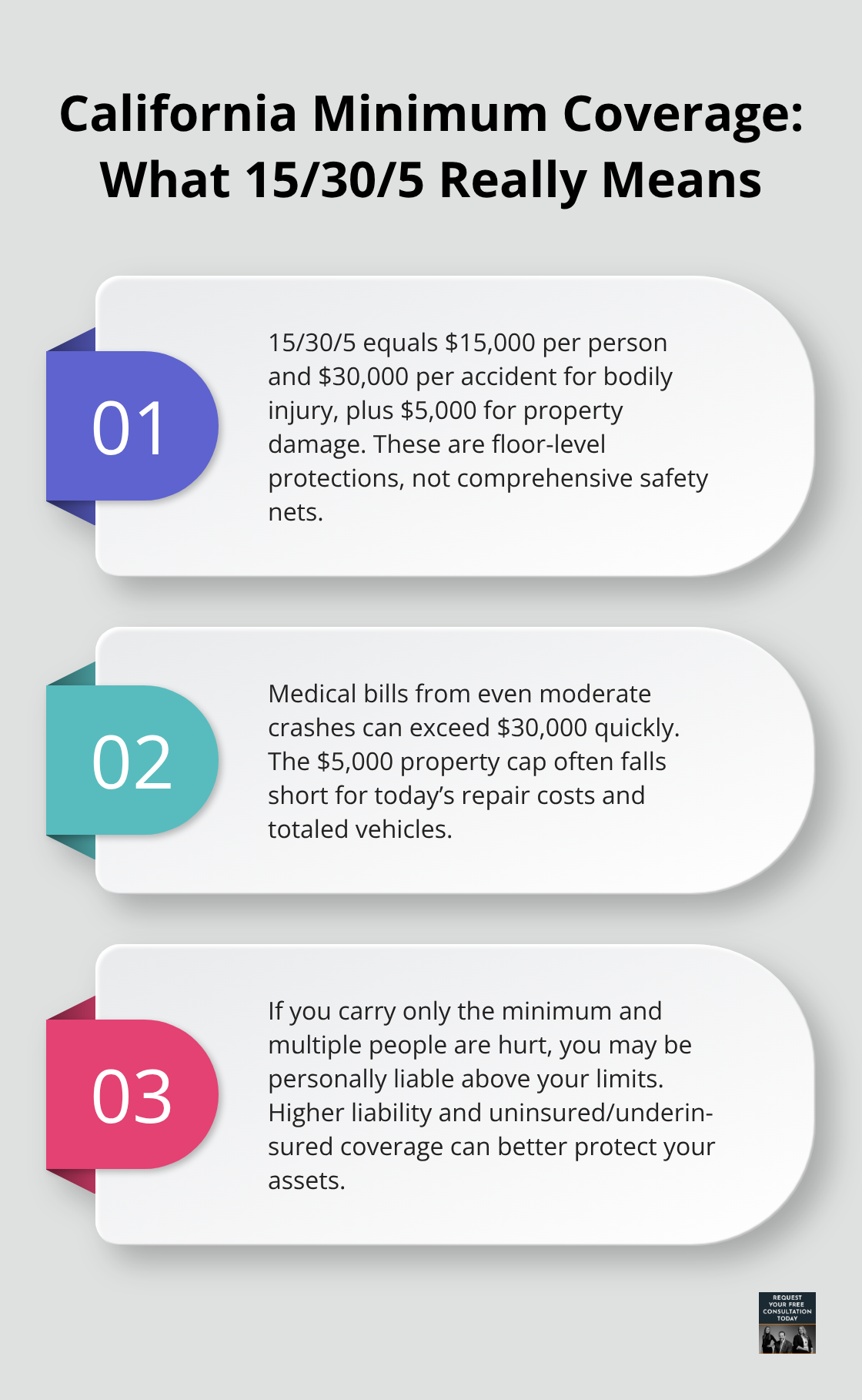
Your insurance policy is a contract with specific boundaries, and most accident victims discover too late that their coverage has significant gaps. California requires minimum liability coverage of 15/30/5, meaning $15,000 per person and $30,000 per accident for bodily injury, plus $5,000 for property damage according to the California Department of Insurance. This minimum barely covers medical expenses in moderate accidents. If you carry only state minimum coverage and cause injury to multiple people, you become personally liable for amounts exceeding your policy limits.
What You Need to Know About Your Coverage
Review your actual policy documents now, not after a crash. Look for your liability limits, collision coverage deductible, comprehensive coverage deductible, and uninsured motorist protection. California drivers often overlook uninsured motorist coverage, which protects you if the other driver lacks insurance or carries insufficient coverage. The Insurance Information Institute reports that approximately 1 in 8 drivers in California operate uninsured. Your policy likely includes medical payments coverage (MedPay) that covers immediate medical expenses regardless of fault, typically ranging from $1,000 to $5,000. This coverage applies to you and your passengers within the first year of treatment.
Filing Your Claim on Time
File your claim within 30 days of your accident, as most insurers impose strict deadlines. California law requires insurers to acknowledge your claim within 15 days and provide a claims decision within 40 days. Delays beyond these timeframes suggest the insurer may be acting in bad faith.
How Liability and Fault Actually Work
Liability and fault determination operate differently than most people assume. The at-fault driver’s insurance pays for damages, but determining who caused the accident isn’t always straightforward. Police reports influence but don’t determine fault; insurance adjusters make the final decision. If the other driver’s insurer denies your claim, you have the right to dispute their determination. Document everything: photographs, witness statements, medical records, repair estimates, and all communication with insurers.
When Disputes Arise and Settlement Offers Come
If liability is disputed or the damage exceeds available coverage, legal action may protect your interests better than settlement offers. Many accident victims accept initial settlement offers without understanding their actual losses, especially when medical symptoms emerge weeks later. Whiplash injuries, for example, worsen over time but may not be immediately apparent. Don’t accept any settlement until you’ve fully recovered or reached maximum medical improvement. California law gives you two years from the accident date to file a personal injury lawsuit, but waiting too long makes evidence collection difficult and memory unreliable. Medical care and property damage recovery require careful attention to detail and timing.
Healing and Recovery After Your Crash
Seek Medical Attention Immediately
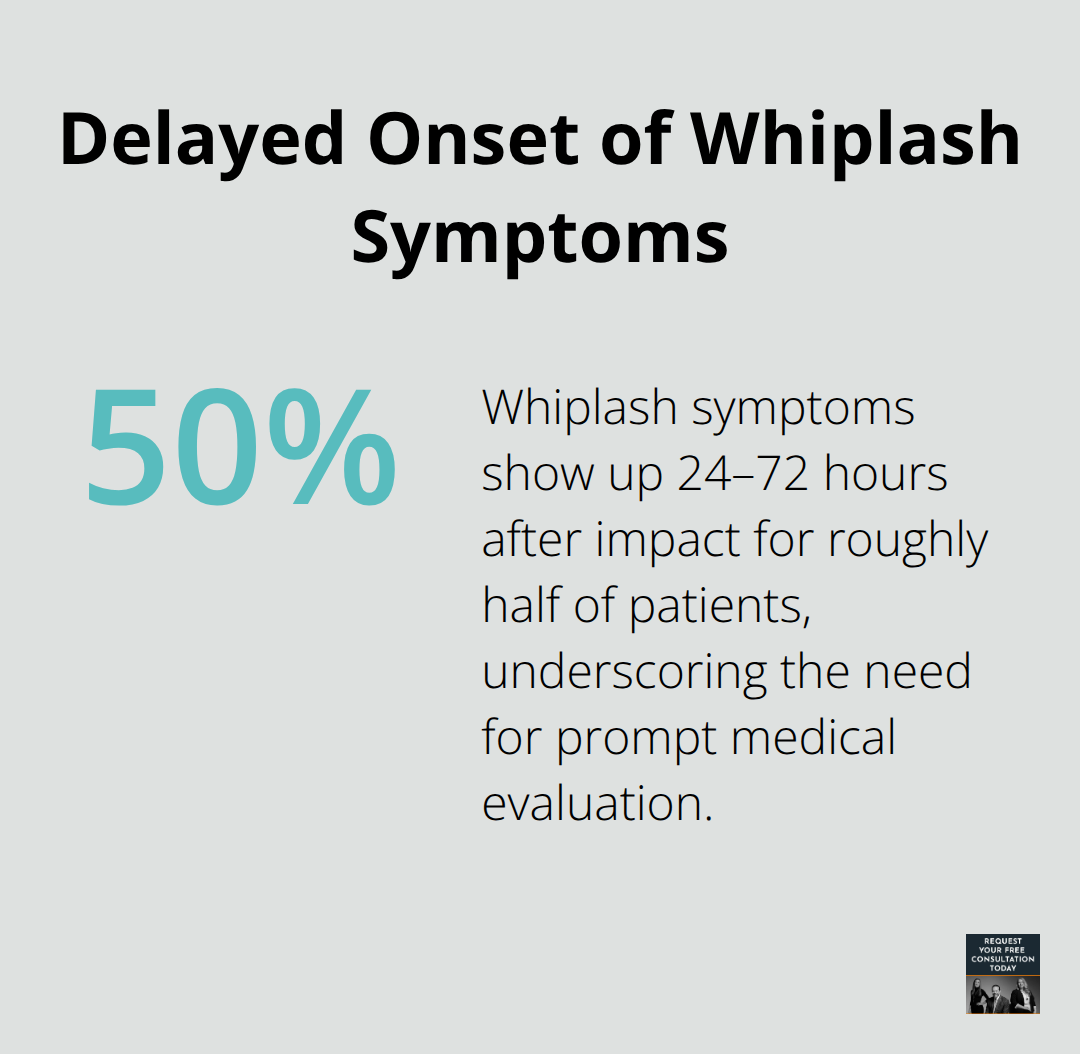
Medical attention after a car crash cannot wait, even when injuries feel minor. Many accident victims delay treatment because adrenaline masks pain, then suffer serious complications weeks later. The American College of Emergency Physicians reports that roughly 50% of whiplash injuries do not present symptoms until 24 to 72 hours after impact. Visit an emergency room or urgent care facility within hours of the accident, regardless of how you feel.
This action creates a medical record linking your injuries directly to the crash, which insurers require for claim approval. Medical providers will document everything they find, including X-rays, MRI results, and initial diagnoses. If you have MedPay coverage from your insurance, it covers these initial expenses immediately without waiting for fault determination.
Document Your Medical Records and Expenses
Keep every receipt, every prescription, and every invoice related to medical treatment because these form the foundation of your damages claim. Organize medical records in a dedicated folder and photograph each document for backup storage. Insurance companies scrutinize medical expenses carefully, so complete documentation protects your claim from denial or reduction. Track the dates of each appointment, the provider’s name, and the specific services rendered. This organization proves invaluable if disputes arise with insurers or if your case requires legal action.
Obtain Multiple Repair Estimates
Property damage recovery requires a different approach than medical claims. Obtain repair estimates from at least two independent mechanics in Santa Cruz County before agreeing to any repairs, as estimates vary significantly based on the shop’s assessment methods and labor rates. Your insurance company will likely assign an adjuster who inspects your vehicle, but their valuation often underestimates damage. If the adjuster’s estimate falls below the independent estimates you have collected, challenge it immediately with photographic evidence and written repair quotes.
Track All Accident-Related Expenses
Document every expense connected to the accident: rental car costs while your vehicle is repaired, rideshare expenses to medical appointments, childcare costs if you cannot drive, and lost wages from work time missed for treatment or vehicle repairs. California law allows you to recover these additional expenses from the at-fault driver’s insurance, but only if you document them thoroughly. Create a spreadsheet tracking dates, expenses, and amounts, then organize receipts in a folder you can access quickly if disputes arise with insurers. This meticulous record-keeping (combined with medical documentation and repair estimates) strengthens your position when negotiating with insurance companies.
Evaluate Property Damage Claims
We at Schaar & Silva LLP assist in evaluating the full extent of property damage and help guarantee you receive fair valuation for your losses. Our team can review adjuster reports and challenge undervalued estimates on your behalf. If property damage exceeds your vehicle’s value or if disputes with insurers persist, legal action may protect your interests better than accepting inadequate settlement offers.
Final Thoughts
The steps you take after a car crash in Santa Cruz determine whether you recover fully or face financial hardship. You’ve learned how to protect yourself at the scene, navigate insurance coverage, and document medical care and property damage. The foundation you build in those first hours shapes everything that follows.
Most accident victims handle claims alone and accept inadequate settlements without understanding their full rights. When disputes arise with insurers, when medical bills mount faster than expected, or when property damage valuations seem unfair, legal representation shifts the balance in your favor. Contact Schaar & Silva LLP if your claim stalls or if the settlement offer seems low.
You have two years from your accident date to pursue legal action, but evidence weakens and memories fade as time passes. Moving forward after your car crash in Santa Cruz means taking control of your recovery rather than waiting passively for insurers to decide your fate.