
Car accidents in Santa Cruz County leave you facing medical bills, vehicle repairs, and lost income. Insurance companies often offer settlements far below what you actually deserve, counting on you to accept quickly without understanding your rights.
We at Schaar & Silva LLP have helped accident victims recover fair compensation by following proven steps that prevent insurers from underpaying claims. This guide walks you through exactly what to do after your accident and how to negotiate a Santa Cruz accident claim that covers your real losses.
What to Do Right After Your Santa Cruz Accident
Photograph Everything at the Scene
The first hour after a car accident determines whether insurers will respect your claim or lowball you. Most people make critical mistakes in those moments that weaken their position before negotiations even begin. Photography and witness statements collected at the scene become your strongest defense against insurance company tactics that downplay injuries or deny liability.
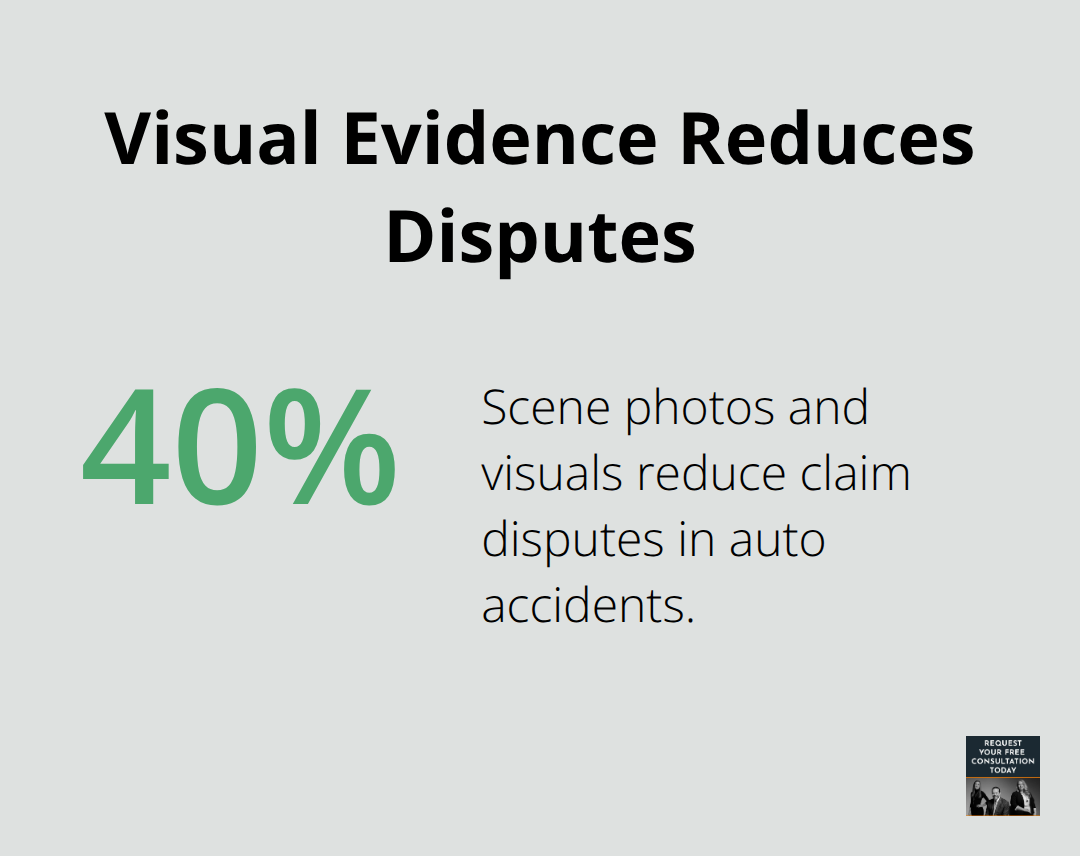
Take photos of vehicle damage from multiple angles, including close-ups of dents, broken glass, and tire marks on the pavement. Photograph the accident location itself, showing road conditions, traffic signals, weather, and sight lines that explain how the collision happened. The Insurance Institute for Highway Safety found that visual evidence at the scene reduces claim disputes by approximately 40 percent.
Collect Witness Information Before They Leave
Get contact information from every witness, including their phone numbers and email addresses, before they leave. Witnesses often become unavailable later, and their statements carry weight that your account alone cannot match. A single credible witness statement can shift the entire direction of your claim.
File a Police Report Immediately
Report the accident to the Santa Cruz Police Department or California Highway Patrol immediately if there are injuries, significant property damage, or if the other driver leaves the scene. A police report creates an official record that insurers cannot dismiss as one person’s word against another. This document protects you from later disputes about what actually happened.
Control What You Say to Insurance Adjusters
When you call your insurance company, stick to factual statements about what happened without admitting fault or speculating about injuries. Insurance adjusters record these calls and use your words against you later. Do not accept a settlement offer during this initial conversation, even if the adjuster pressures you.
Many accident victims in Santa Cruz County settle within days and later discover their injuries require ongoing treatment that their initial payment does not cover. Waiting to understand the full scope of your injuries protects you from accepting inadequate compensation.
Seek Medical Attention Immediately
Medical documentation matters enormously at this stage. Seek medical attention even if you feel fine, because some injuries like whiplash or internal bruising appear days later. Healthcare providers create records that establish the connection between your accident and your injuries-something no amount of later testimony can replicate.
Once you have documented your injuries and gathered evidence from the scene, you move into the next critical phase: understanding what your claim actually covers and what insurance companies owe you.
What Your Claim Actually Covers
How Insurance Companies Calculate Settlement Offers
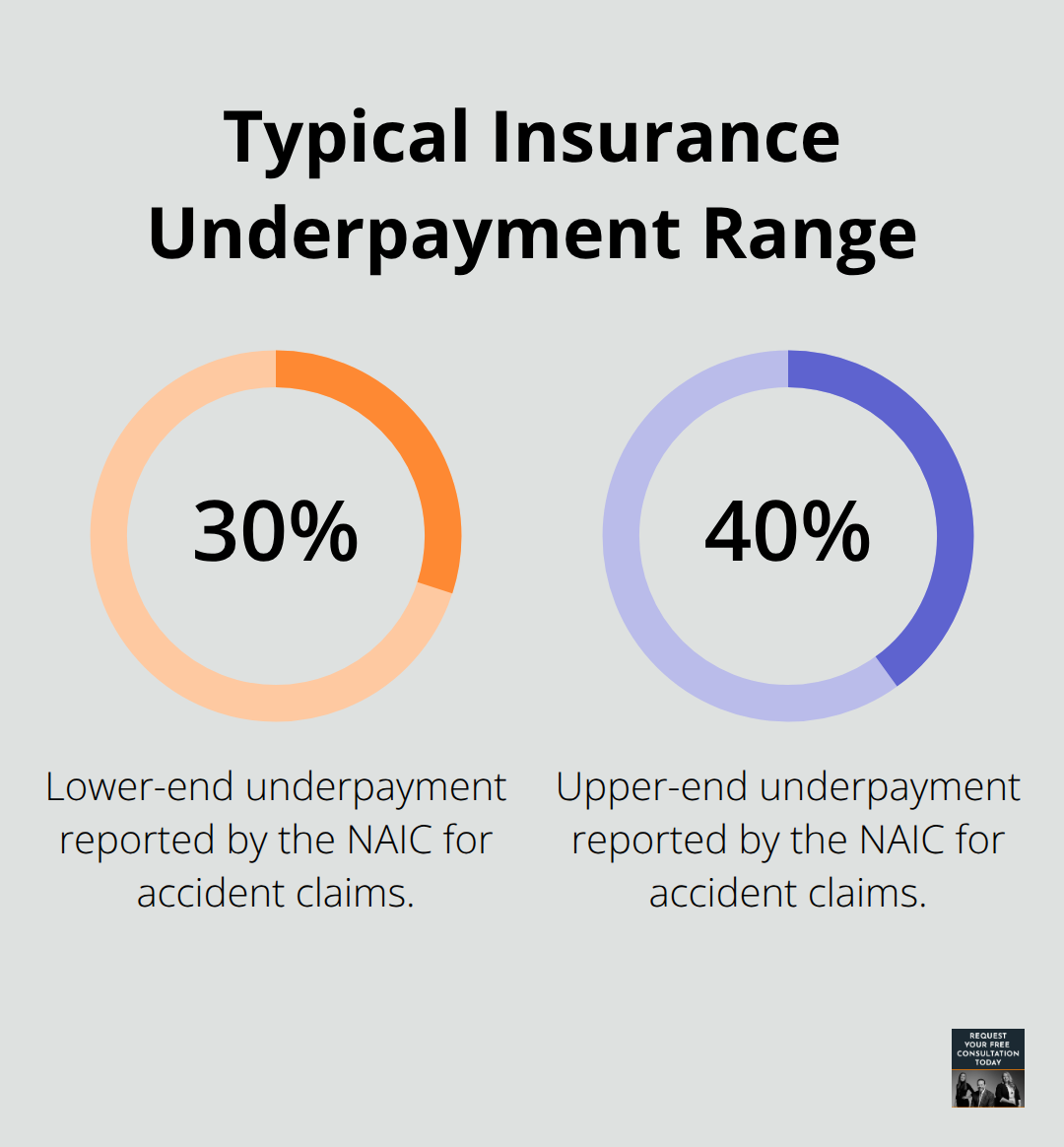
Insurance companies calculate settlement offers using formulas that rarely account for your specific situation. They multiply your medical expenses by a factor between 1.5 and 5, depending on injury severity, then subtract deductibles and often claim depreciation on vehicle repairs you’ve already paid. This approach leaves most accident victims underpaid by 30 to 40 percent according to data from the National Association of Insurance Commissioners.
Economic and Non-Economic Damages You Can Recover
California law entitles you to recover economic damages like medical bills, lost wages, vehicle repair costs, and rental car expenses. Non-economic damages cover pain and suffering, emotional distress, and loss of enjoyment of activities you can no longer do. Insurance adjusters deliberately undervalue non-economic damages because they’re harder to dispute than a medical bill.
Adjusters will offer you a settlement that covers only your documented medical costs while ignoring future treatment, permanent scarring, or ongoing mobility problems. They count on you not knowing that California law allows you to recover all damages directly caused by the accident, or being too overwhelmed to push back.
Common Tactics Insurers Use to Reduce Payouts
Insurance companies use specific tactics to reduce what they owe you. They request your social media accounts to find photos of you doing activities, then claim your injuries aren’t as serious as you say. They delay responses to your medical records requests, hoping you’ll accept a quick offer out of frustration.
They hire their own doctors to review your medical files and contradict your treating physician’s diagnosis. They argue that pre-existing conditions caused your current problems, not the accident. Most critically, they make their first offer within days of your accident, before you understand the full extent of your injuries or have gathered complete documentation.
Why You Should Never Accept the Initial Offer
Accepting this initial offer represents the single biggest mistake accident victims make in Santa Cruz County. You cannot reopen a settled claim to demand additional compensation if your injuries worsen months later. Waiting at least 90 days after your accident gives your medical team time to establish a clear picture of your recovery timeline and prognosis before you consider any settlement.
Understanding what your claim covers and recognizing insurance company tactics positions you to negotiate effectively. The next step involves building a strong claim with the right documentation and knowing exactly how to present your demand.
Negotiating Your Santa Cruz Settlement
Organize Medical Records to Strengthen Your Claim
Medical records in chronological order show the exact progression of your injuries from accident date forward. Request records from every provider who treated you, including emergency room visits, follow-up appointments, physical therapy sessions, and mental health consultations. Insurance adjusters scrutinize gaps in treatment, so if you stop seeing doctors for two months then resume, they argue your injuries weren’t serious enough to warrant ongoing care.
The American Association for Justice found that claims with complete medical documentation receive settlements 35 percent higher than those with incomplete records. Create a spreadsheet listing every expense related to your accident: medical bills, prescription costs, mileage to appointments, lost wages with pay stubs as proof, and vehicle rental receipts. This documentation transforms vague injury claims into concrete financial losses that adjusters cannot dispute.
Use Visual Evidence to Validate Pain and Suffering
Photographs of visible injuries taken over time strengthen your position considerably. Bruising or scarring in sequential photos validates your pain and suffering claim in ways that words alone cannot match. These images provide tangible proof that connects your physical condition directly to the accident.
Reject the Initial Settlement Offer
The initial settlement offer from an insurance company typically arrives 10 to 14 days after your accident, before your medical picture clarifies. Rejecting this offer is not confrontational; it represents standard practice in Santa Cruz County accident claims. Insurance adjusters expect rejection and build negotiation room into their opening number.
Submit a Detailed Demand Letter with Specific Figures
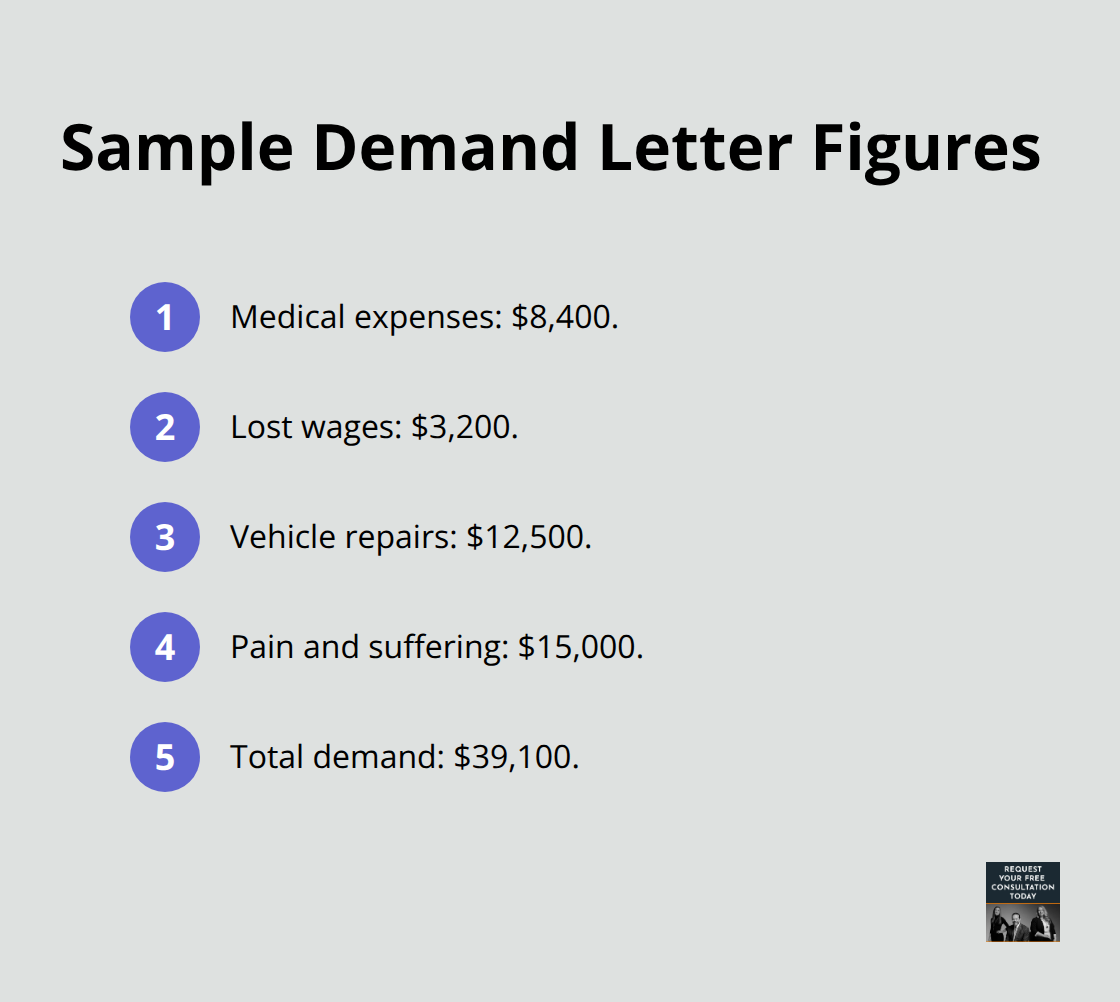
Your demand letter should reference specific damages with supporting documentation, stating something like: medical expenses total $8,400, lost wages amount to $3,200, vehicle repairs cost $12,500, and pain and suffering damages total $15,000, for a total demand of $39,100. Use actual figures from your records, not round numbers. The National Association of Insurance Commissioners reports that claimants who submit detailed demand letters receive final settlements 25 to 40 percent higher than those who simply respond verbally to adjuster offers.
Present your demand letter in writing through email or certified mail so you have a timestamped record. Include a reasonable deadline for response, typically 30 days, signaling that you’re serious and organized. If the adjuster’s counteroffer remains significantly below your documented losses, you’re not unreasonable in refusing it and escalating to a personal injury law firm or legal representation.
Final Thoughts
The steps outlined in this guide-documenting the scene, understanding your damages, and negotiating strategically-form the foundation of a fair Santa Cruz accident claim. Most accident victims in Santa Cruz County who follow this process recover significantly more than those who accept initial offers without question. Your medical records, photographs, witness statements, and detailed demand letter transform a vague injury claim into documented financial losses that insurers cannot dismiss.
Timing matters throughout this process. Waiting 90 days before settling allows your medical team to establish your full recovery picture, rejecting the first offer signals that you understand your rights, and submitting a written demand letter with specific figures demonstrates organization and seriousness. These actions consistently result in higher settlements because they show insurers you won’t accept underpayment. Some situations, however, require professional legal guidance-if the other driver was uninsured or underinsured, if liability remains disputed, if your injuries are severe, or if the insurance company refuses to negotiate fairly after your demand letter.
We at Schaar & Silva LLP help Santa Cruz County accident victims navigate complex claims and handle negotiations with insurance companies. Our team assists with medical bill management through lien services, evaluates property damage claims fairly, and connects you with psychological support when emotional trauma accompanies physical injuries. Contact us to discuss your specific situation and determine whether legal representation strengthens your position.