

After a car accident in Santa Cruz County, the settlement process can feel overwhelming. Insurance companies often make lowball offers, and understanding settlement steps in Santa Cruz helps you recognize when you’re being undervalued.
We at Schaar & Silva LLP have guided countless accident victims through negotiations that resulted in fair compensation. This guide walks you through each phase, from initial demands to final agreements, so you know exactly what to expect.
How Negotiations Begin and What Insurers Look For
Initial Demand Letters and Counteroffers
Settlement negotiations begin the moment you file a claim with the insurance company. You or your attorney will submit an initial demand letter that outlines your injuries, medical expenses, lost wages, and other damages. This letter sets the floor for discussions. Insurance adjusters rarely accept the first demand, which is why counteroffers follow. According to the Insurance Information Institute, the average settlement takes three to six months to finalize, though this timeline varies significantly based on claim complexity and how quickly medical treatment concludes.
The insurer’s initial counteroffer typically lands 30 to 50 percent below your demand, making your opening number strategically important. If you demand $50,000 for a clear injury case, expect a counteroffer around $25,000 to $35,000. This gap is normal and reflects how insurers approach negotiations.
How Insurance Companies Evaluate Your Claim
Insurance companies evaluate claims using specific metrics: the severity of your injuries documented in medical records, clarity of liability, local jury verdict history, and the strength of your evidence. Santa Cruz County juries have historically awarded higher damages in cases involving permanent injury or significant wage loss, which adjusters factor into their valuations.
They also scrutinize your medical documentation closely. Missing records, gaps between accident and treatment, or inconsistent symptom reporting all weaken your position and give insurers leverage to reduce offers. Insurance companies employ medical reviewers who analyze treatment necessity and costs, often challenging charges they deem excessive or unrelated to the accident.
The Negotiation Timeline and Strategy
Initial exchanges happen within two to four weeks of your demand letter. If the gap between your demand and their offer remains large, you’ll enter a back-and-forth period lasting weeks or months. This is where patience matters. Accepting the first counteroffer almost always means walking away from money you deserve.
Try waiting for at least three to four rounds of negotiation before seriously considering settlement, assuming your medical treatment is complete. During this time, continue documenting everything: follow-up medical appointments, physical therapy progress, any ongoing symptoms affecting work or daily life, and vehicle repair estimates if property damage exists.
Insurers monitor your social media and may use posts showing activity as evidence that injuries are less severe than claimed, so exercise caution with what you share publicly. The strongest settlements come when you present medical records showing clear causation between the accident and your injuries, employment records confirming lost income, and repair invoices substantiating property damage.
If negotiations stall or the insurer’s final offer falls significantly short of your actual damages, you have the option to reject it and pursue litigation (though this extends resolution by months or years and introduces court costs and uncertainty). Understanding when to walk away from a settlement offer requires knowing the true value of your claim-something that becomes clear as you move through the next phase of the process.
Common Obstacles in Settlement Talks
Liability Disputes Weaken Your Negotiating Position
Liability disputes top the list of obstacles that stall settlement negotiations. When accidents involve partial fault or unclear circumstances, insurers drag out negotiations intentionally. A rear-end collision seems straightforward, but if you received a citation for an equipment violation or the other driver claims you changed lanes unsafely, the insurer uses this ambiguity to justify lower offers. You need police reports, witness statements, and accident reconstruction photos to counter these challenges. Without clear liability documentation, you negotiate from weakness.
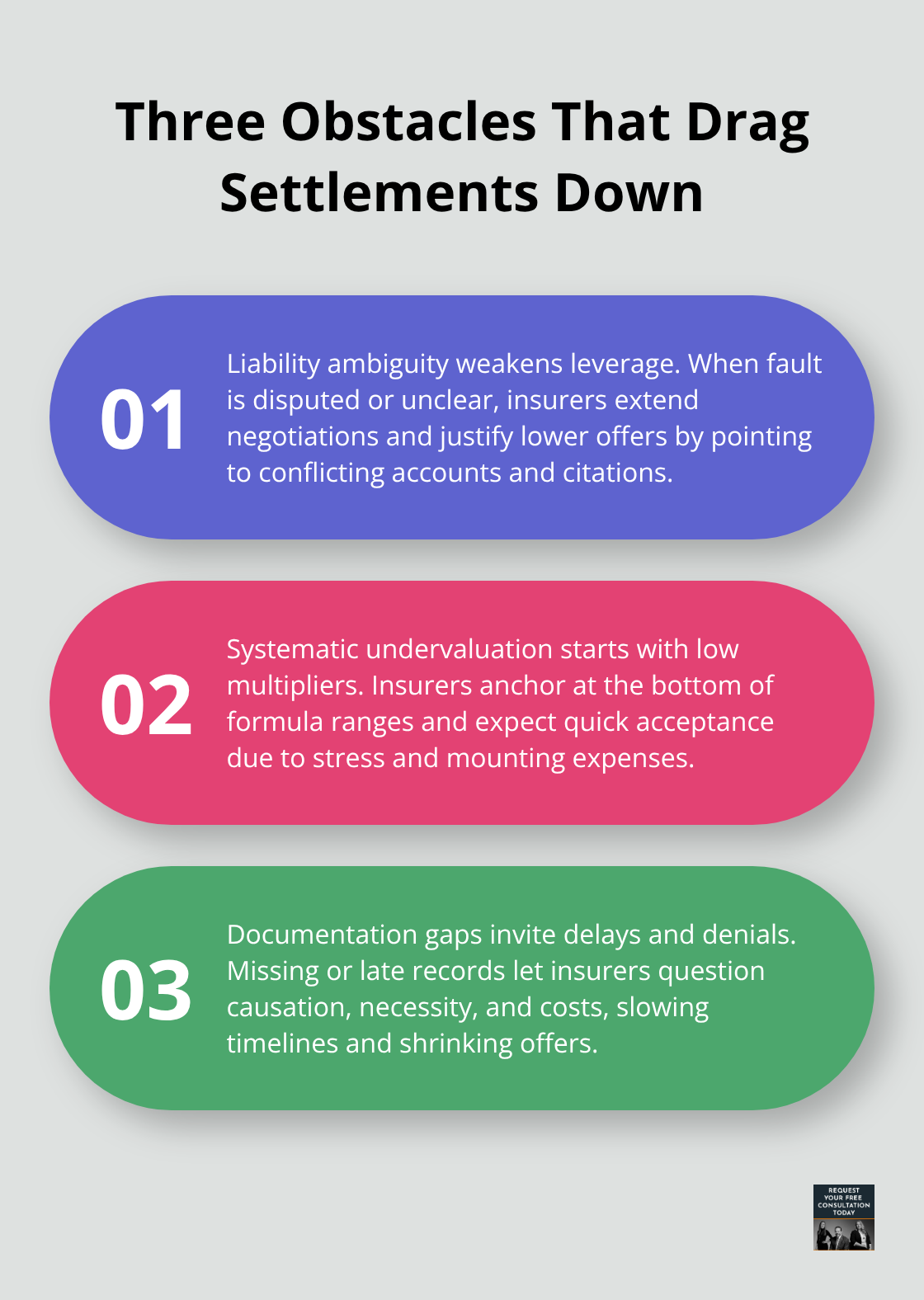
Insurers weaponize medical gaps ruthlessly. A two-week delay between your accident and first doctor visit gives them ammunition to argue your injuries weren’t serious or weren’t caused by the crash. Medical records showing consistent treatment following the accident strengthen your position dramatically. Insurance companies reject claims faster when documentation is incomplete, and they count on accident victims not fighting back hard enough.
Systematic Undervaluation Anchors Offers Too Low
Insurers calculate settlement ranges using formulas that multiply your medical expenses by factors ranging from 1.5 to 5, depending on injury severity. A $10,000 medical bill might generate a settlement range of $15,000 to $50,000, but insurers consistently anchor their offers at the bottom. They count on you accepting quickly because you’re stressed, injured, and facing mounting bills.
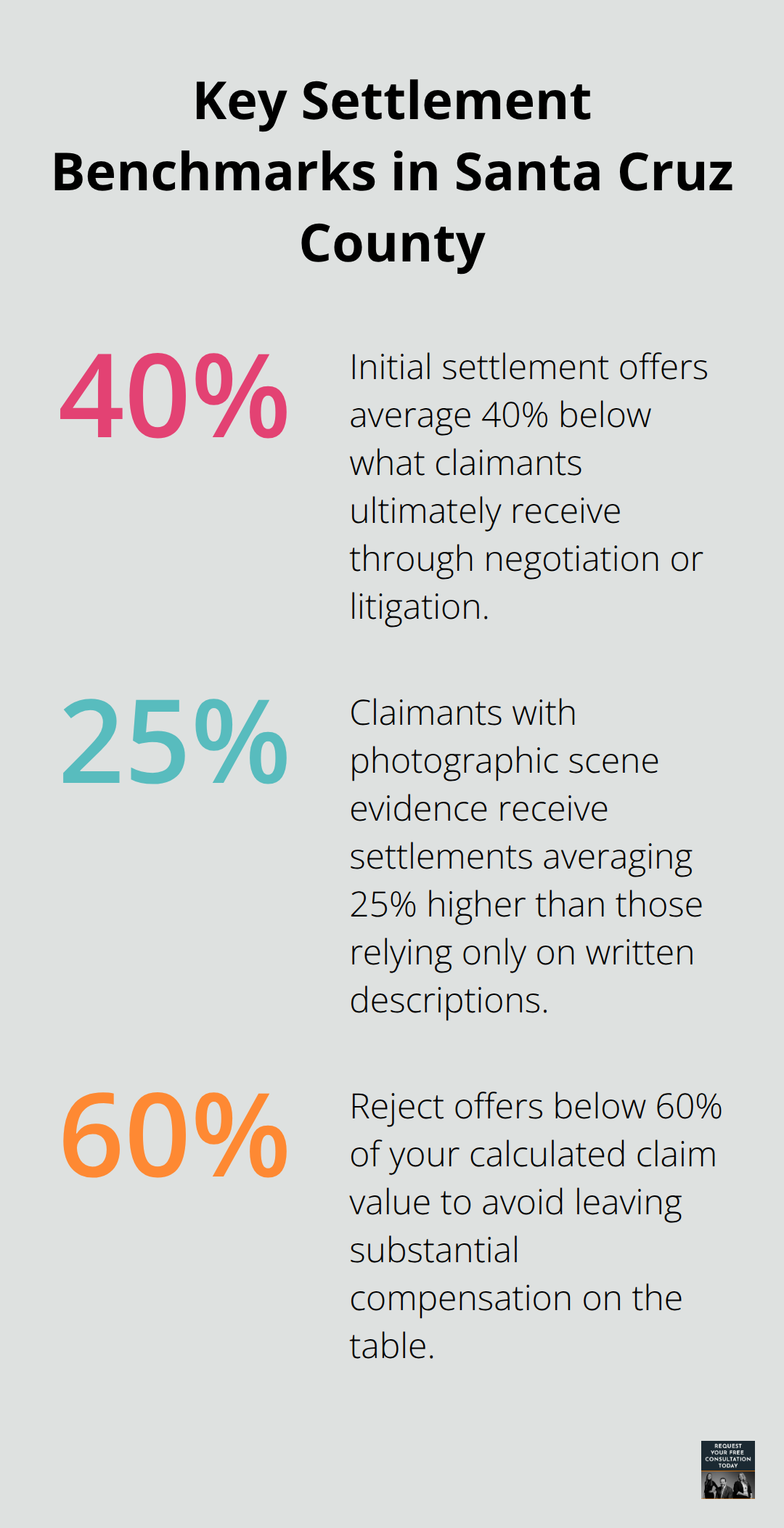
The National Association of Insurance Commissioners data shows that initial settlement offers average 40 percent below what claimants ultimately receive through negotiation or litigation. In Santa Cruz County specifically, accident victims who reject first offers and continue negotiating recover an additional $8,000 to $15,000 on average. This gap reveals how aggressively insurers lowball initial proposals.
Missing Documentation Creates Artificial Delays
Missing documentation creates artificial delays that pressure you financially. Insurers request records repeatedly, claim they never received documents you submitted, or demand additional medical evaluations. Each delay extends the timeline and forces you to accept less favorable terms out of desperation.
Maintain a detailed log of every document you send, when you send it, and to whom. Request email confirmations for all submissions. Keep copies of everything submitted and follow up in writing within one week if you haven’t received acknowledgment. These obstacles are not accidents-they’re standard insurer tactics designed to exhaust claimants into accepting less.
Understanding these three barriers positions you to move forward strategically. The next phase focuses on how you gather and present evidence that counters each tactic insurers employ.
Building Your Evidence to Win Fair Compensation
Winning fair compensation requires systematic documentation that proves the full scope of your losses. Start immediately after the accident by photographing vehicle damage from multiple angles, capturing road conditions, traffic signals, and any visible injuries. Request the police report within days of the crash and obtain the report number for your records. Photograph medical records showing treatment dates, diagnoses, and provider notes linking your injuries directly to the accident.
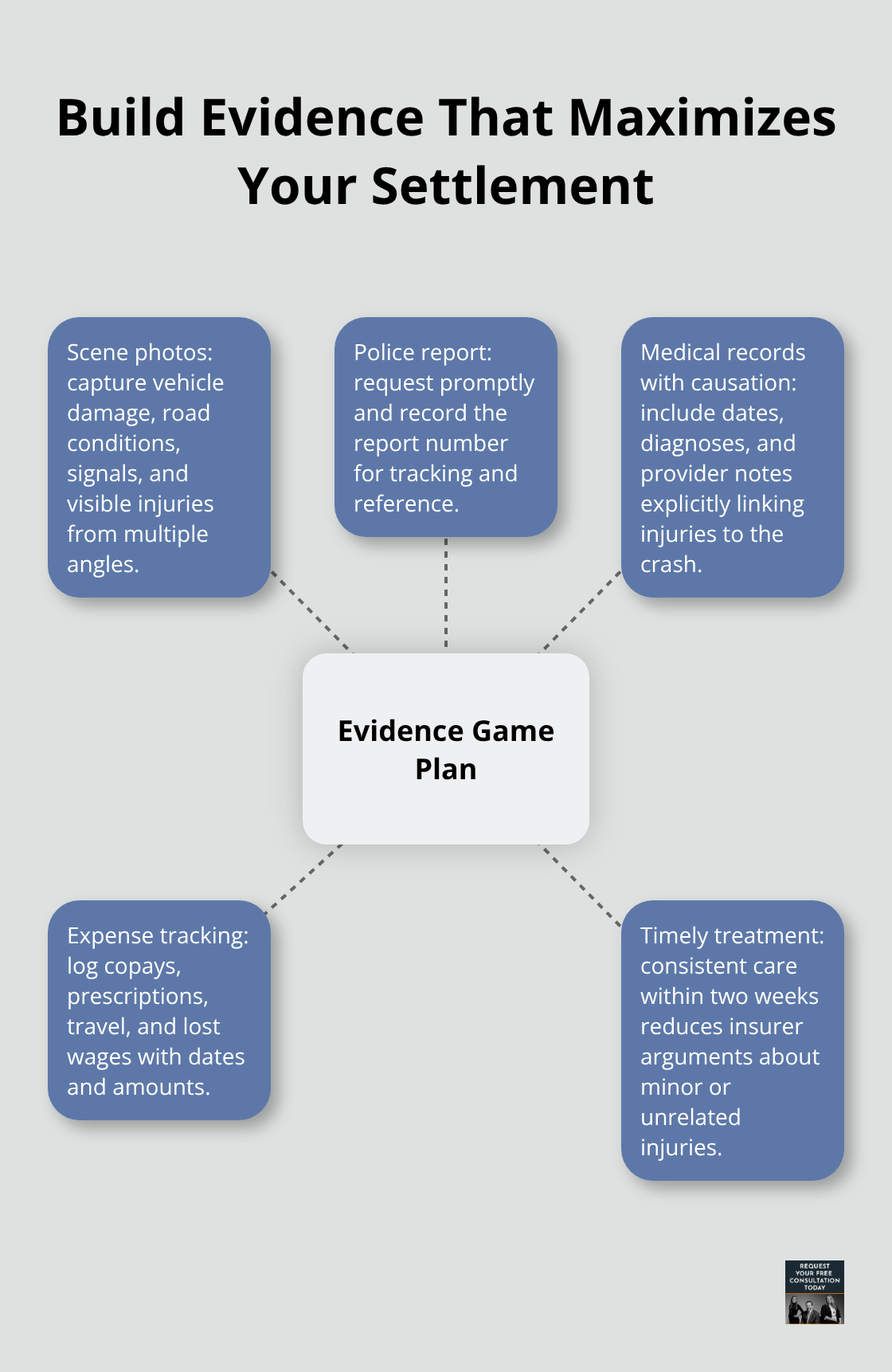
The American Journal of Public Health found that claimants with photographic evidence of accident scenes received settlements averaging 25 percent higher than those relying solely on written descriptions. Create a spreadsheet tracking every expense: medical copays, prescription costs, transportation to appointments, and lost wages with corresponding dates and amounts. Insurance companies scrutinize gaps between expenses, so detailed contemporaneous records eliminate their ability to argue injuries were minor or unrelated to the crash. Medical records showing consistent treatment within two weeks of the accident dramatically strengthen your position, while delays of several weeks give insurers ammunition to claim your injuries weren’t serious.
Medical Records That Counter Insurer Arguments
Insurance adjusters employ medical reviewers trained to find reasons to reject treatment as unnecessary or excessive. Counter this by ensuring your medical records contain clear causation statements from providers explicitly connecting your injuries to the accident. Request that doctors document how accident-related injuries prevent you from working or performing daily activities, as this directly translates to compensation. Medical records stating you suffered whiplash, back pain, or headaches without explaining how these injuries resulted from the collision give adjusters room to dispute necessity. Include records from all providers you’ve seen, including physical therapists, chiropractors, and mental health professionals if the accident caused psychological trauma. The Insurance Research Council reports that comprehensive medical documentation increases settlement values by an average of 30 to 40 percent compared to sparse records. Property damage documentation matters equally: obtain written repair estimates from multiple mechanics showing damage consistent with the accident’s force and location. If repairs cost $5,000, this establishes a baseline for injury severity that insurers factor into their calculations.
Calculating Your Settlement Floor and Walking Away When Necessary
Calculate your settlement floor before negotiations intensify by totaling all verifiable damages: medical expenses, property damage, lost wages, and reduced earning capacity if injuries affect your ability to work long-term. Multiply your medical expenses by a factor of three to four as a baseline for pain and suffering damages, a standard insurers use internally. If medical bills total $8,000, your total claim value likely ranges from $24,000 to $40,000 depending on injury severity and liability clarity. Reject any offer below 60 percent of this calculated value, as accepting lower amounts leaves substantial compensation on the table. Many accident victims in Santa Cruz County settle too quickly because they’re stressed, facing bills, or feel pressured by adjusters claiming the offer expires. Offers don’t expire, and walking away from inadequate settlements often results in receiving 20 to 35 percent more through continued negotiation or litigation. If the insurer’s final offer remains significantly below your documented damages after four or five negotiation rounds, litigation becomes the stronger choice despite its longer timeline. We can evaluate whether your claim’s value justifies pursuing court action, ensuring you make informed decisions about settlement acceptance based on actual damages rather than financial desperation.
Final Thoughts
Settlement steps in Santa Cruz follow a predictable pattern once you understand how insurers operate. Insurance companies use delay tactics, undervaluation strategies, and documentation gaps to pressure you into accepting less than your claim deserves. You counter these tactics by maintaining complete medical records, documenting all damages, and refusing inadequate offers that fall below your calculated settlement floor.
After you reach a settlement agreement, several critical actions follow before you accept the terms. Review the settlement document carefully to verify it accounts for all damages you documented and includes language protecting you from future claims related to the accident. Once you sign, the insurer processes payment within two to four weeks, and you should allocate funds strategically by paying outstanding medical bills first, then addressing property damage repairs and lost wages.
Working with legal support transforms your negotiating position fundamentally. We at Schaar & Silva LLP handle communication with insurers, counter their lowball offers with documented evidence, and calculate settlement values based on your actual damages rather than insurer formulas. Contact us to discuss your claim’s value and settlement strategy, as the difference between settling alone and having legal representation often amounts to thousands of dollars in your pocket.