

A car accident can leave you unable to work, and loss of wages quickly becomes one of your biggest financial worries. Medical bills pile up while your paycheck stops, creating a gap that’s hard to bridge.
We at Schaar & Silva LLP know that recovering the income you lost is just as important as treating your injuries. This guide walks you through what you can claim, how to document it, and how to get the full compensation you deserve.
What Income Can You Claim After Your Accident
After a crash, you lose more than just your hourly wage. Most people focus only on the days they missed work, but your lost income claim should include every dollar you stopped earning because of your injuries. Your base salary, hourly wages, commissions, bonuses, and overtime all count. If you receive irregular pay, document the average you earned over the three to six months before your accident. Your claim should capture your complete financial picture from the moment you couldn’t work.
Calculating What You Actually Lost
The math appears straightforward: take your daily rate and multiply it by days missed. Insurance companies, however, often underestimate this number. If you earned $60,000 annually, that equals roughly $230 per day before taxes. Missing eight weeks of work totals $9,200 in lost wages. Many people fail to account for benefits lost during that time. If your employer provides health insurance worth $400 monthly, that adds another $1,600 for two months.
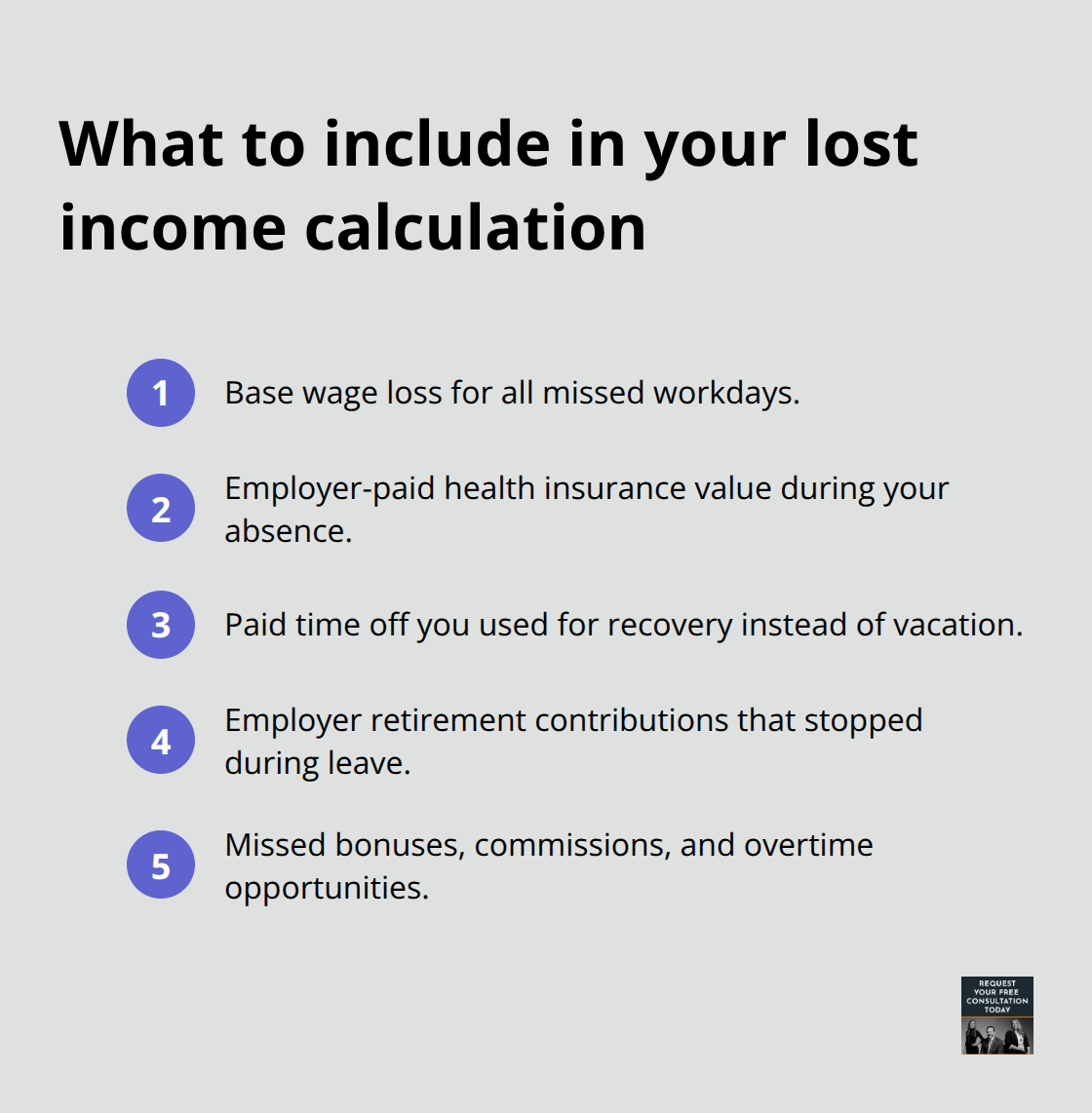
Paid time off you used while recovering, retirement contributions your employer stopped making, and even gym memberships or professional development funds all represent real money out of your pocket. Track everything-insurance companies count it, and so should you.
Understanding Reduced Earning Capacity
Lost wages and reduced earning capacity represent two separate claims, and this distinction matters enormously. Lost wages cover income you missed while healing. Reduced earning capacity applies when your injury permanently affects your ability to earn. A back injury might prevent you from returning to your previous job, or you can only work part-time now. You can then claim compensation for the difference between what you earned before and what you can realistically earn going forward. This calculation requires medical documentation showing your limitations and sometimes vocational expert testimony about job prospects. California courts recognize this difference, and your attorney should ensure your claim accounts for long-term earning impacts that extend years beyond the initial recovery period.
What Comes Next in Your Claim
Documentation transforms your lost income from a rough estimate into a concrete, defensible number. The next section covers exactly what paperwork you need to gather and how to present it to insurance companies in a way they cannot dismiss.
Building Your Documentation
Insurance companies reject lost wage claims every day, and the primary reason is simple: insufficient proof. You cannot claim $9,200 in lost income without documentation that proves you earned that money and missed work because of your accident.
Pay Stubs and Employment Records
Pay stubs from your employer form the foundation of your claim. Gather stubs from at least three months before your accident to establish your average earnings, then collect every stub covering the period when you couldn’t work. If your employer uses electronic pay systems, request a wage statement directly from payroll showing gross earnings, deductions, and dates worked. Insurance adjusters scrutinize these documents carefully, so any gaps or inconsistencies weaken your position.
Getting Your Employer to Verify Your Absence
Employment verification letters from your employer stating your job title, regular hours, hourly rate or salary, and specific dates you were absent due to injury carry substantial weight. Many employers hesitate to provide these letters, fearing legal complications, but California law protects them from liability when they cooperate with your claim. Contact your human resources department in writing and explain that you need documentation for your injury claim. Keep copies of every communication.
Documentation for Self-Employed and Gig Workers
Self-employed workers and gig economy participants face a different challenge because they lack traditional pay stubs. Tax returns from the two years preceding your accident become your primary evidence of income. The IRS Schedule C form shows your net business income, and this figure demonstrates what you actually earned. Bank statements and invoices from clients provide additional proof of regular earnings during the months before your injury.
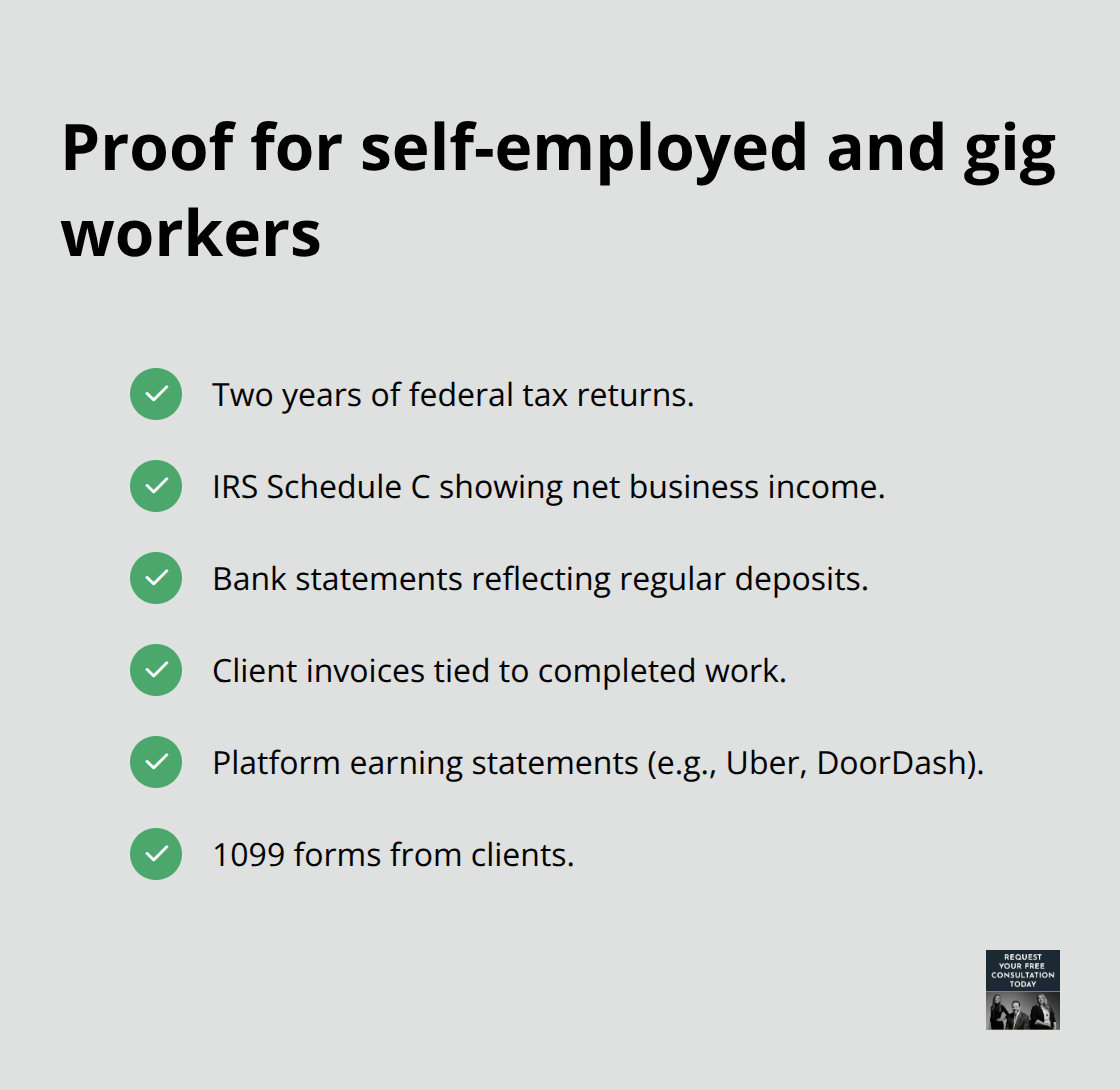
If you drive for a rideshare company or deliver packages, request earning statements directly from the platform. Uber and DoorDash provide detailed reports showing total earnings for any date range you specify. Construction workers, contractors, and freelancers should compile invoices, 1099 forms from clients, and bank deposits corresponding to completed work. Insurance companies often lowball self-employed claims by arguing income was inconsistent, so documentation showing steady monthly earnings over twelve to twenty-four months directly counters this tactic.
Why Documentation Quality Determines Your Outcome
The quality of your proof determines the compensation you receive. Keep meticulous records going forward because insurance adjusters base their decisions on what you can actually show them. Once you gather this documentation, the next step involves presenting it strategically to maximize what the insurance company must pay you.
What Insurance Companies Actually Pay for Lost Income
How Adjusters Calculate Your Loss
Insurance adjusters use formulas that systematically undervalue what you lost, and understanding their math is your first defense against accepting lowball offers. Most adjusters multiply your daily rate by days missed, then stop. They ignore the reality that your financial damage extends far beyond that simple calculation. If you earned $75,000 annually and missed twelve weeks, the adjuster calculates roughly $17,300 in lost wages. What they typically exclude are the health insurance premiums you continued paying out of pocket, the retirement contributions your employer stopped making, bonuses you would have earned during that period, and paid time off you burned through while recovering.
A study by the American Bar Association found that self-represented injury claimants recover approximately 40% less than those with representation, largely because they fail to document secondary income losses that adjusters deliberately overlook. Your actual financial damage during those twelve weeks likely totals $22,000 to $24,000 when you account for these hidden costs. Start tracking every benefit and payment you lost immediately after your accident, because insurance companies count them even when they claim they don’t.
The Hidden Costs Adjusters Ignore
Insurance companies systematically exclude expenses that directly resulted from your injury. Health insurance premiums you paid while unable to work represent real money out of your pocket. Retirement contributions your employer would have made continue to affect your long-term financial security. Bonuses tied to performance or attendance disappear when you cannot work. Paid time off that you used for recovery instead of vacation time represents compensation you lost. These items (health insurance, retirement funds, bonuses) add thousands to your actual loss, yet adjusters routinely omit them from their calculations.
Permanent Injuries and Long-Term Earning Loss
Permanent injuries demand a completely different compensation approach because your lost income claim extends decades into the future. If your injury prevents you from returning to your previous job, you can claim compensation for reduced earning capacity, which represents the difference between what you would have earned and what you can realistically earn going forward. A construction worker earning $65,000 annually who suffers a back injury and can only perform light-duty office work earning $38,000 annually has a reduced earning capacity loss of $27,000 per year. Over a thirty-year work life until retirement, that totals $810,000 in lost earnings.
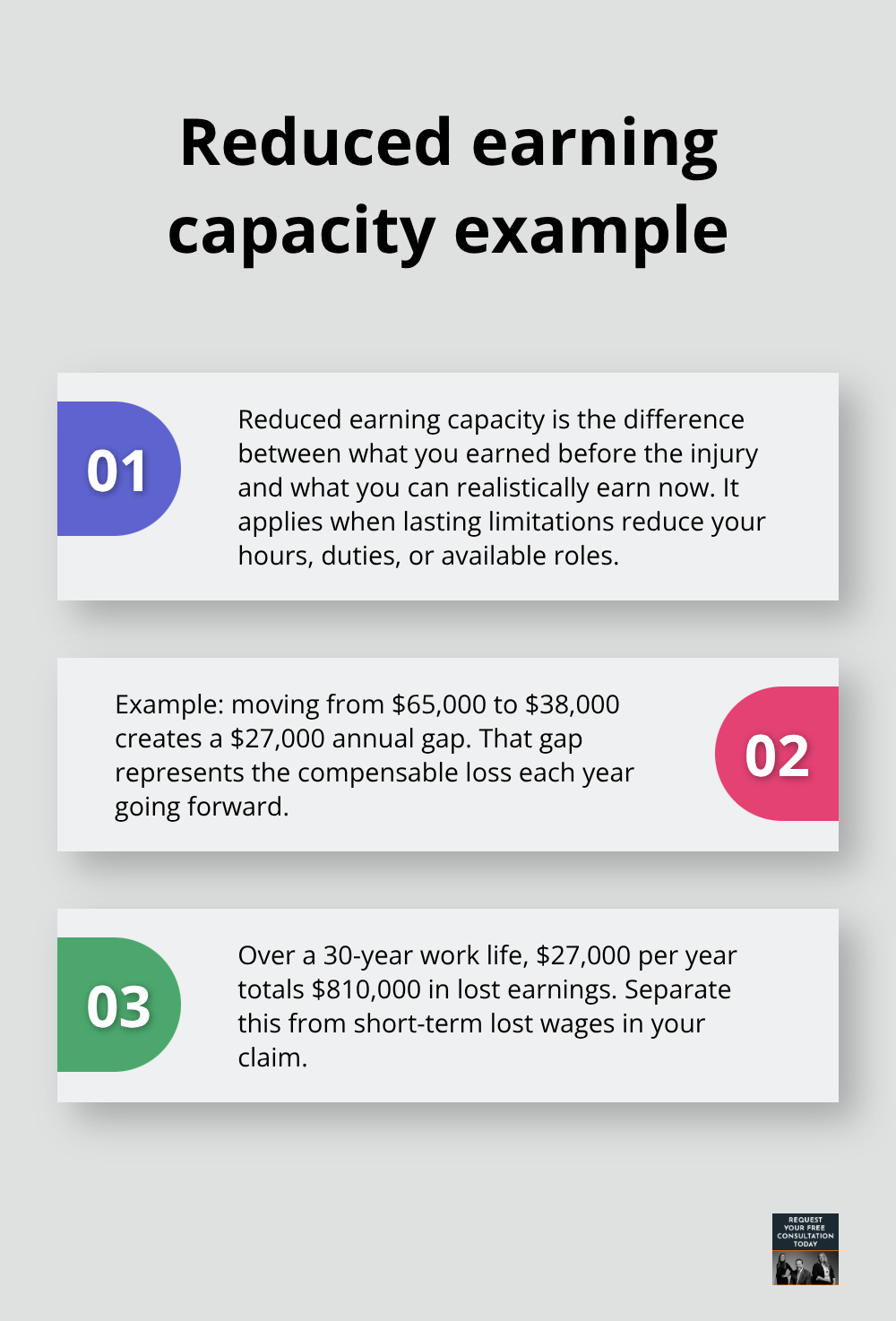
Insurance companies fight these claims aggressively because the numbers are substantial, which is why vocational experts and medical documentation become essential. Courts in California recognize these long-term impacts, and your claim should explicitly separate immediate lost wages from future earning reduction. Permanent injuries require compensation reflecting their true financial impact across your entire remaining career, not just the weeks you spent recovering.
Final Thoughts
Your loss of wages after a crash represents real financial damage that deserves full compensation. The documentation you gather, the income you track, and the long-term earning impacts you identify all determine whether you recover what you actually lost or accept an insurance company’s deliberately low offer. Most people underestimate their total financial damage because they focus only on missed paychecks and ignore the secondary costs that pile up during recovery.
Taking action immediately after your accident protects your financial future. Start collecting pay stubs, employment verification letters, and records of every benefit you lost before details fade or documents disappear. If you’re self-employed or work in the gig economy, compile your tax returns and platform earnings statements now.
Contact Schaar & Silva LLP to discuss how we can help you pursue the compensation your lost wages and long-term earning capacity truly deserve. We understand how insurance companies systematically undervalue these claims, and we build documentation strategies that counter their tactics. Our team serves Santa Cruz County and stands ready to help you recover what you actually lost.