
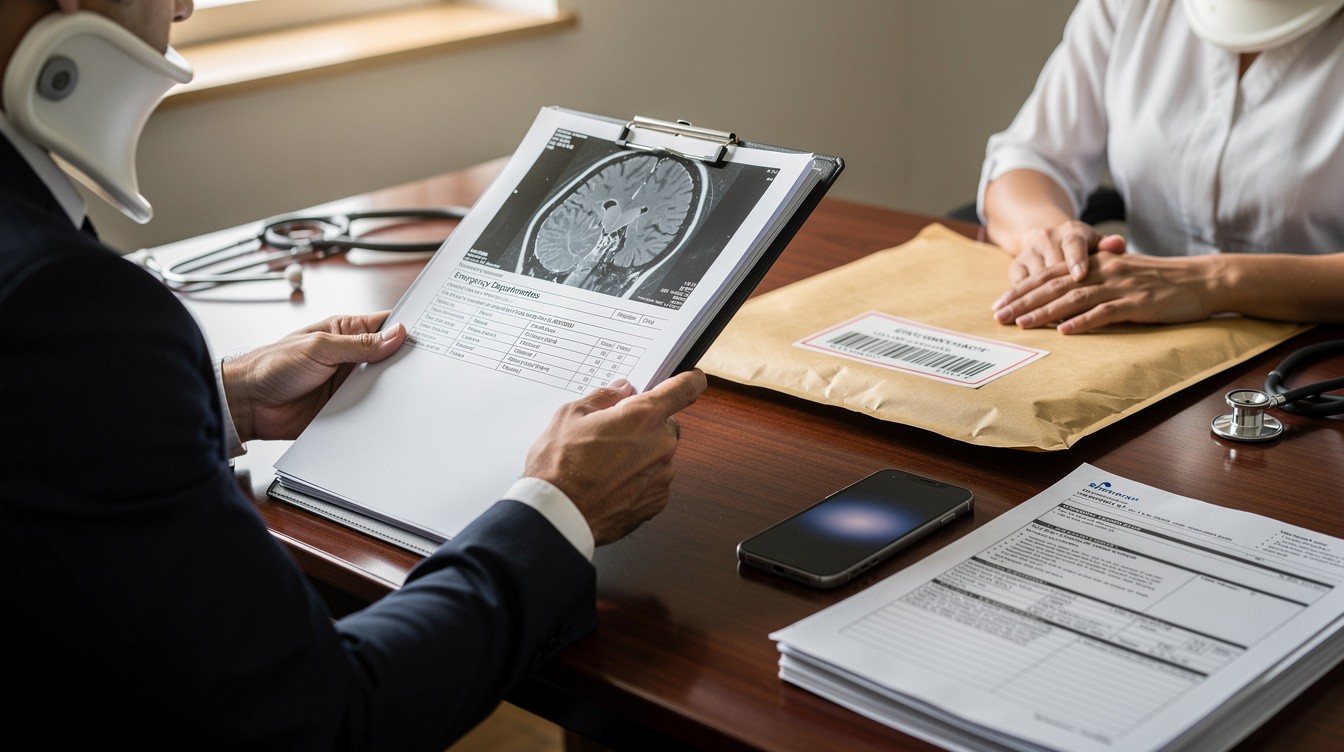
A concussion from a car accident can upend your life in seconds. At Schaar & Silva LLP, we know that concussion claims in Santa Cruz require solid medical proof and clear evidence linking your injury to the crash.
This guide walks you through the steps needed to build a strong case and get the settlement you deserve.
Medical Documentation and Diagnosis
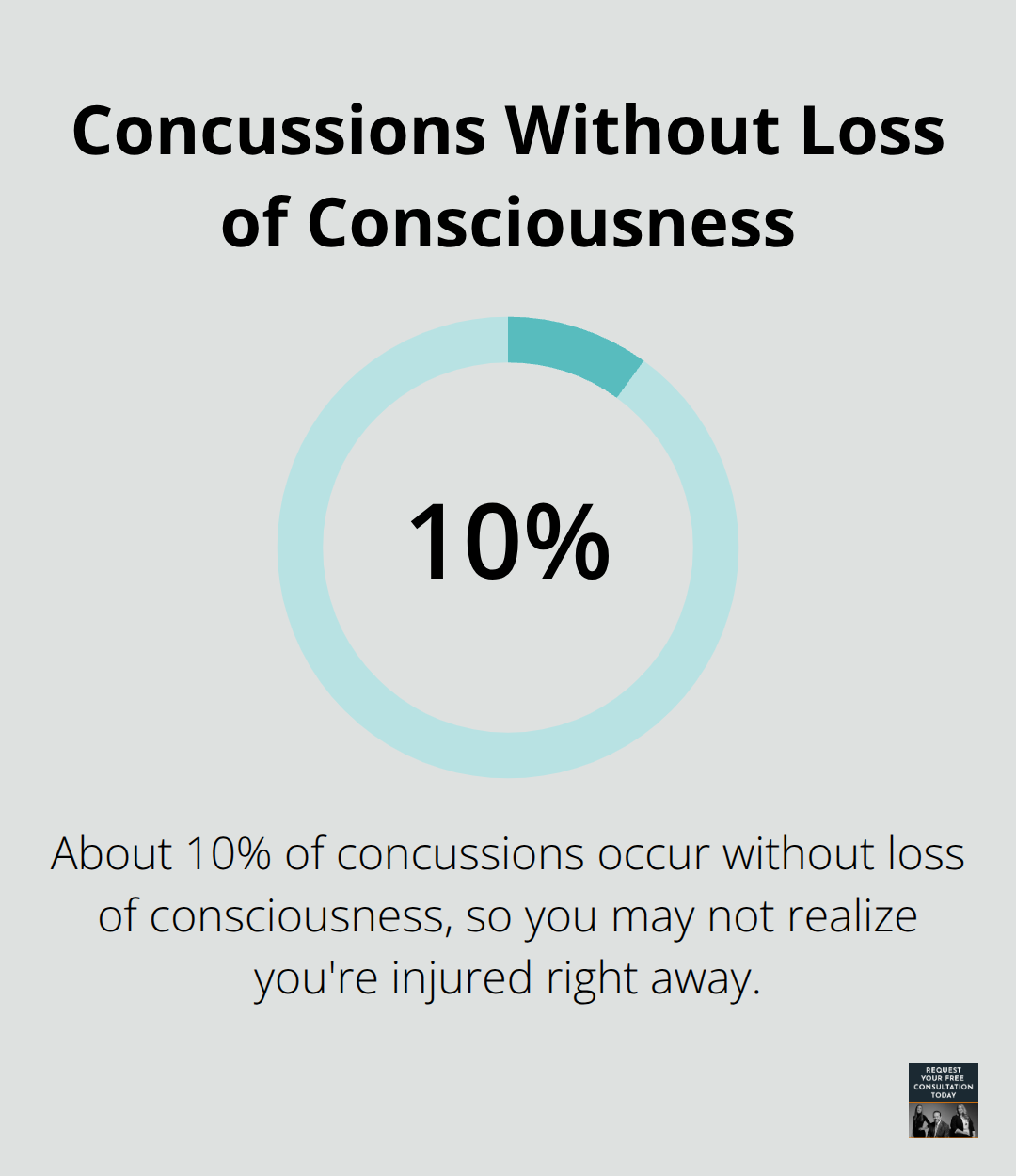
Waiting to see a doctor after a car accident in Santa Cruz ranks among the biggest mistakes we observe in concussion claims. The moment you hit your head, you need medical evaluation-not tomorrow, not next week. Insurance companies scrutinize treatment delays, and they weaponize gaps to argue your injury wasn’t serious. Head to an emergency room or urgent care facility immediately, even if you feel fine. Concussions don’t always produce obvious symptoms right away. The American Academy of Neurology reports that about 10% of concussions occur without loss of consciousness, meaning you could have a serious brain injury and not realize it for hours. Document everything from that first visit: the date, time, what symptoms you reported, and what the medical provider observed.
This initial record becomes the foundation of your entire claim.
Diagnostic Testing Strengthens Your Case
Medical providers use several tests to diagnose concussions, and understanding which ones matter for your claim helps you advocate for thorough evaluation. A CT scan or MRI can rule out bleeding or structural damage, which is critical information. Baseline neuropsychological testing compares your cognitive function before and after injury, showing measurable differences in memory, attention, and processing speed. Balance testing and vestibular assessments document physical impairment. Some providers use blood biomarkers like tau and phosphorylated tau-181, which show objective evidence of brain injury. Request copies of all test results and imaging reports immediately. Many concussion victims in Santa Cruz settle for a single emergency room evaluation, but thorough documentation requires follow-up appointments with a neurologist or concussion specialist who performs comprehensive testing. These detailed records directly translate to higher settlement values because they provide concrete, measurable proof of injury rather than relying solely on your description of symptoms.
Your Medical Record Determines Settlement Value
Build your medical file systematically from day one. Keep a symptom diary that documents headaches, dizziness, memory problems, sleep disturbances, and sensitivity to light or noise-record dates and severity. Attend every follow-up appointment and bring a list of specific questions about your recovery timeline. Request written summaries from each provider stating your diagnosis, treatment plan, and functional limitations. If your doctor states you cannot return to work, obtain that in writing. Insurance adjusters and opposing counsel review medical records looking for inconsistencies or gaps that undermine your credibility. A thorough, consistent medical file demonstrates you took your injury seriously and followed professional guidance.
Connecting Your Injury to the Accident
The medical documentation you gather now sets the stage for establishing causation-the legal link between the crash and your concussion. Insurance companies will challenge whether the accident actually caused your injury or whether a pre-existing condition explains your symptoms. Your medical records must show that you reported no concussion symptoms before the accident and that symptoms appeared immediately after impact. This connection matters enormously when calculating what your claim is worth.
Establishing Causation and Liability
Insurance companies won’t hand over settlement money based on your word alone. We see this constantly in Santa Cruz concussion cases: the insurer claims your symptoms stem from something else entirely, not the accident. You need to build an ironclad connection between the impact and your injury.
Timing Creates Your Causation Foundation
Start with your medical records from that first evaluation. The timing matters enormously. If you reported no concussion symptoms before the accident and symptoms appeared within hours afterward, that creates a strong causation link. Your doctor’s notes should explicitly state when symptoms began relative to the crash. This documentation forms the backbone of your causation argument and makes it harder for insurers to deny the connection.
Vehicle Damage and Scene Evidence Tell the Story
Photograph the accident scene and vehicle damage immediately. The National Highway Traffic Safety Administration data shows that head injuries correlate directly with impact force and vehicle damage severity. A photo of significant vehicle damage, combined with your immediate symptom onset documented in medical records, tells a compelling story about the force involved.
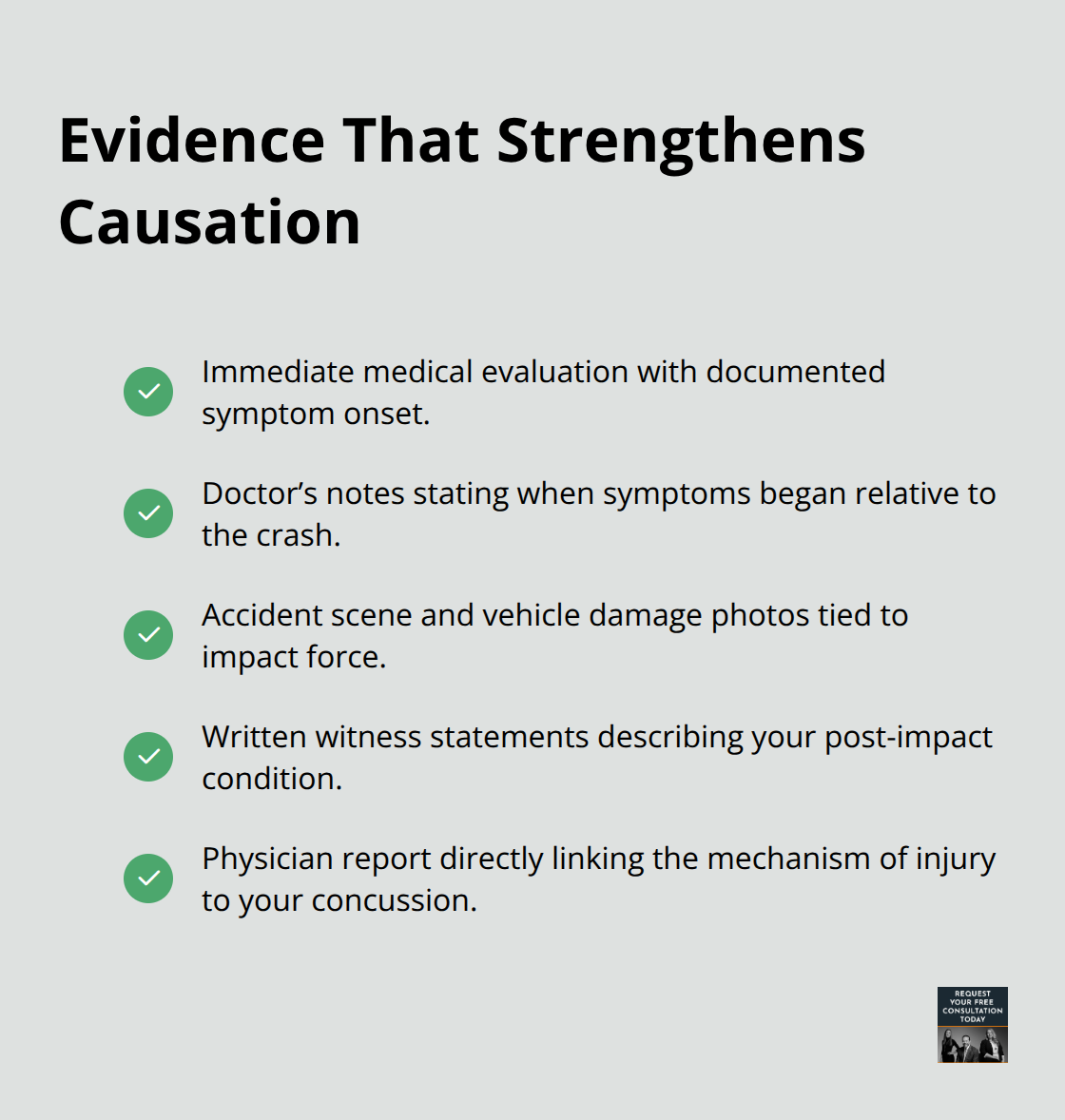
Get witness statements in writing within days of the accident, not weeks later. Witnesses can describe whether you hit your head, lost consciousness, or appeared disoriented after impact. These observations support your medical diagnosis and strengthen causation arguments.
Medical Opinion Transforms Your Case
Medical testimony from a healthcare provider transforms your case from subjective complaints into objective injury assessment. Insurance adjusters dismiss general statements about your symptoms, but they cannot ignore a doctor’s written opinion that your concussion resulted from the specific accident. Request that your neurologist or emergency room physician provide a detailed report addressing causation directly. The report should explain why the accident’s impact mechanism produced your particular concussion symptoms and why your medical history doesn’t account for these new injuries.
Pre-Accident Records Strengthen Your Position
Gather any pre-accident medical records proving you had no prior concussions or traumatic brain injuries. This absence of history makes the causal link even stronger. If you have employment records showing you worked without restrictions before the accident but had to miss work after it, that functional change demonstrates the injury’s reality and its origin point. Courts and insurers weight physician opinions heavily when the doctor has examined you, reviewed your imaging results, and documented your pre-accident health status. With liability firmly established through medical records, witness statements, and damage documentation, you’re ready to calculate what your injury actually costs.
Calculating Damages and Settlement Value
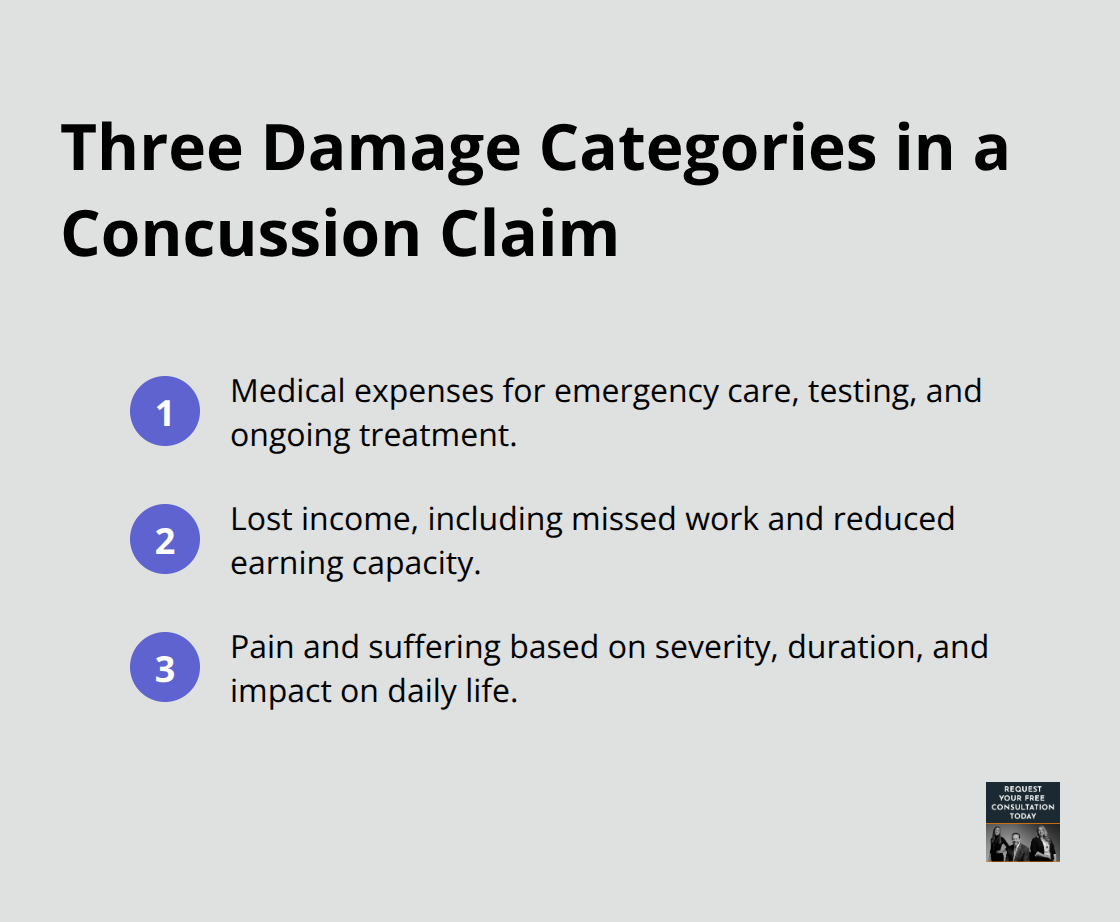
Calculating your concussion settlement requires precision, not guesswork. Insurance companies use formulas and multipliers to assign dollar values, and you need to understand exactly what numbers they’re working with. The total damages in a concussion claim typically break into three categories: medical expenses, lost income, and pain and suffering. Each category demands specific documentation and calculation methods.
Medical Expenses and Future Treatment Costs
Medical expenses include immediate emergency room visits, neurological evaluations, imaging tests, and ongoing treatment. The Centers for Disease Control reports that the average emergency room visit for a head injury costs between $3,000 and $8,000 depending on imaging and testing performed. If you required CT scans, MRI imaging, or neuropsychological testing, those costs accumulate quickly.
Beyond immediate treatment, concussion recovery often extends months. Some patients need vestibular therapy, cognitive rehabilitation, or follow-up neurology appointments. Request itemized bills from every provider and keep them organized by date. Insurance adjusters scrutinize these expenses, so verify that charges are reasonable and directly related to your injury.
Many Santa Cruz patients underestimate future treatment costs by failing to account for ongoing care. If your neurologist projects six months of monthly follow-up appointments at $300 each, that’s $1,800 you should include in your claim.
Lost Wages and Loss of Earning Capacity
Lost wages present a clearer financial picture than many injury categories. Gather pay stubs from the weeks you missed work and obtain a letter from your employer stating your hourly rate and the exact dates you were absent. If you earn commission or bonuses, include documentation showing your average monthly income.
Some concussion patients return to work but at reduced capacity, meaning you lost earning potential even while technically employed. Document these partial work restrictions with written statements from your doctor. If your employer required you to work modified duties at lower pay, calculate the wage differential and include it.
Loss of earning capacity matters more for severe cases where long-term cognitive effects prevent you from returning to your previous job. You’ll need vocational rehabilitation reports or labor market analysis showing what similar workers earn in your field and what salary reduction you’ll face due to your injury. These economic damages rest on concrete financial records rather than subjective assessments.
Pain and Suffering Compensation
Pain and suffering compensation represents the most complex and variable portion of your claim. Insurance companies typically use a multiplier method, multiplying your total medical expenses and lost wages by a factor between 1.5 and 5 depending on injury severity. A concussion with significant ongoing symptoms and substantial medical treatment might justify a 3 to 4 multiplier, while a mild case with quick recovery might warrant only 1.5 to 2.
Document your pain and suffering through your symptom diary, noting how the injury affected your daily activities, sleep quality, relationships, and mental health. Statements from family members describing changes in your mood, memory, or ability to participate in activities carry weight with adjusters. If you attended therapy or received treatment for depression or anxiety resulting from your injury, include those costs and records.
Insurance companies settle based on what they believe a jury would award, so your pain and suffering figure should reflect what a reasonable person would expect for your specific circumstances and recovery timeline.
Final Thoughts
Building a strong concussion claim in Santa Cruz requires comprehensive medical documentation, clear causation evidence, and accurate damage calculations working together from day one. You cannot rely on memory or general descriptions-every medical appointment, test result, and missed work day needs written proof that insurance adjusters can review and verify. The settlement you receive should cover every cost your concussion created, from emergency room bills to months of follow-up care to lost income during recovery.
We at Schaar & Silva LLP handle the complexity that most injury victims cannot manage alone. Our team knows how insurance companies evaluate concussion claims Santa Cruz residents file, what documentation they scrutinize, and where they look for reasons to deny or minimize settlements. We assist with medical bill management through lien services, evaluate property damage claims to establish impact force, and connect you with psychological support specialists when emotional trauma accompanies your physical injury.
Contact Schaar & Silva LLP to discuss your concussion claim and let us handle the legal details while you focus on healing.