

A whiplash injury from a car accident can derail your life for months. Medical bills pile up, work becomes impossible, and the pain feels endless.
A whiplash settlement in Santa Cruz should reflect the true cost of your injury. We at Schaar & Silva LLP walk you through exactly how to calculate fair compensation and move your claim forward fast.
What Triggers Whiplash and Why Speed Matters
How Whiplash Happens in Santa Cruz Accidents
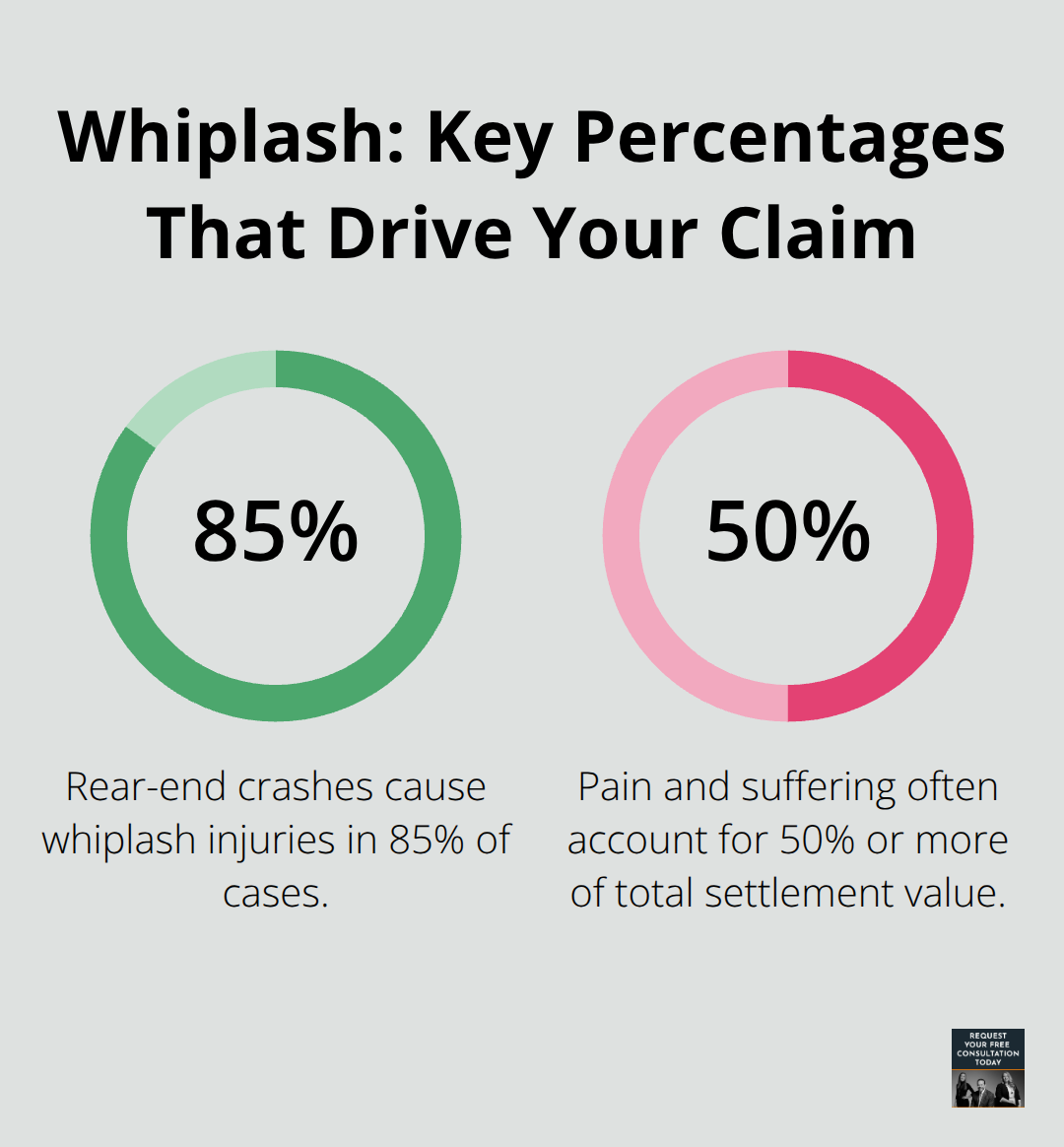
Whiplash occurs when your neck snaps forward and backward violently during a collision. Rear-end crashes cause about 85% of whiplash injuries, according to data from the American Academy of Orthopaedic Surgeons. Front-impact and side-impact accidents also produce whiplash, though less frequently.
The injury develops even at low speeds-studies show whiplash can occur from impacts as slow as 5 miles per hour.
Santa Cruz County Roads and Whiplash Risk
Santa Cruz County roads present specific risks that amplify whiplash danger. Highway 17, which connects Santa Cruz to San Jose, sees heavy traffic and frequent rear-end collisions during congestion. The Pacific Coast Highway’s winding sections and sudden stops contribute to accident rates that regularly exceed state averages. Local intersections in downtown Santa Cruz, particularly at Mission and Front Streets, experience high-volume traffic that increases collision frequency. Rain and fog on these routes create conditions where drivers follow too closely, making rear-end impacts more likely.
Why Quick Settlement Protects Your Finances
Quick settlement protects your financial future because medical costs for whiplash treatment accumulate fast. Average treatment expenses range from $10,000 to $25,000 for cases requiring physical therapy, imaging, and medical visits. Delayed settlements mean you absorb these costs while waiting for insurance resolution, which can take months or years. Lost wages during recovery represent another urgent financial pressure-most whiplash victims miss 2 to 4 weeks of work initially, with some requiring longer recovery periods.
How Insurance Companies Use Delay Against You
Insurance companies deliberately slow negotiations, hoping you’ll accept lower offers out of financial desperation. Acting quickly strengthens your position because medical records remain fresh, witness memories stay sharp, and accident scene details remain clear. Medical evidence collected immediately after your accident carries more weight than documentation gathered months later. The sooner you move forward with your claim, the stronger your negotiating position becomes.
Calculating Your Whiplash Settlement
How Medical Expenses Form Your Claim Foundation
Medical expenses form the foundation of your whiplash claim, and documentation determines how much you recover. Collect every invoice, receipt, and medical record from day one-emergency room visits, X-rays, MRI scans, physical therapy sessions, and ongoing treatment all count. The average whiplash case costs between $10,000 and $25,000 in medical expenses, according to the American Academy of Orthopaedic Surgeons, but your actual figure depends on your specific injuries and recovery timeline.
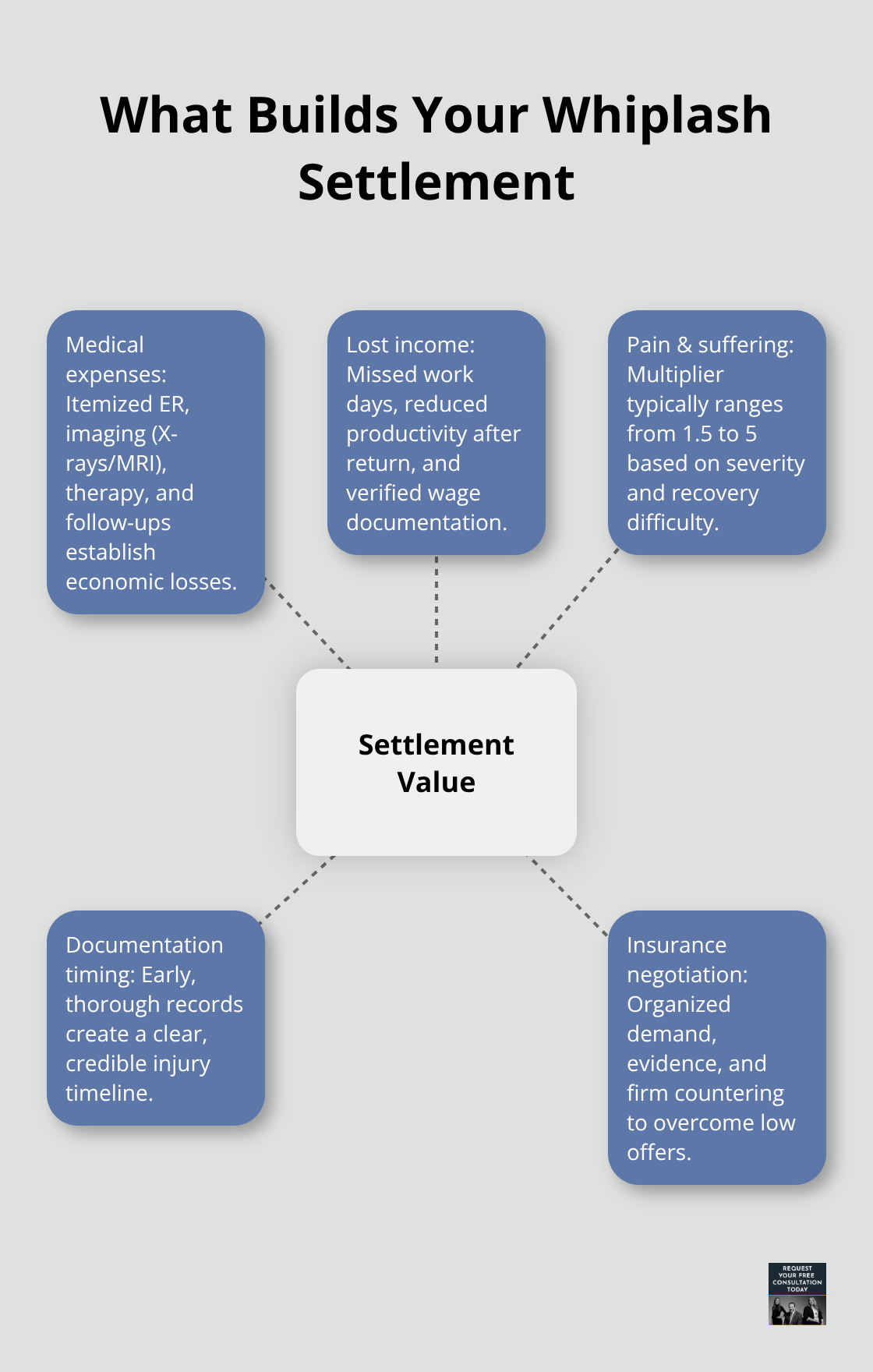
Insurance companies scrutinize medical bills carefully, so provide itemized statements rather than summaries. Request detailed explanations of charges from your healthcare providers, especially if costs seem inflated or duplicate services appear on bills. Some providers bundle charges in ways that confuse insurers, so clarity strengthens your negotiating position. If you received emergency care, follow-up visits, imaging, and rehabilitation, organize these chronologically with dates and costs clearly labeled.
Documenting Lost Income During Recovery
Lost wages during recovery represent income you actually earned or would have earned, and this calculation requires precision. Document the exact dates you missed work, your hourly rate or salary, and any benefits you forfeited during your absence. If you’re self-employed, provide tax returns and client invoices showing your typical income level during the injury period.
Most whiplash victims miss 2 to 4 weeks of work initially, but some experience longer recovery with reduced productivity even after returning. Insurance adjusters will request written verification from your employer stating the dates you were absent and your compensation rate, so coordinate with your HR department early. This documentation prevents disputes about how much income you actually lost.
Valuing Pain and Suffering Damages
Pain and suffering damages represent compensation for physical discomfort, emotional distress, and reduced quality of life-these are harder to quantify than medical bills or lost wages, yet they often comprise 50% or more of your total settlement. Insurance companies typically apply a multiplier between 1.5 and 5 times your medical expenses, depending on injury severity and recovery difficulty.
A minor whiplash case with quick healing might receive a 1.5 multiplier, while severe cases requiring months of physical therapy and lasting pain receive 4 or 5 times the medical costs. Your age, prior medical conditions, and the defendant’s level of negligence also influence this calculation. Document your pain through a daily journal noting symptom intensity, activities you couldn’t perform, sleep disruption, and emotional impact-concrete details convince adjusters far better than vague statements about suffering.
The next section walks you through the actual timeline and process you’ll face as your claim moves from initial report through final settlement.
Timeline and Process: What to Expect From Claim to Settlement
File Your Claim Immediately After Your Accident
Your whiplash claim moves through three distinct phases, and understanding each one prevents costly delays. The initial phase starts the moment you report your injury to your insurance company and healthcare providers. Within 24 to 48 hours of your accident, contact your insurer and file a formal claim, providing the police report number, accident location, date, and time. Request a claim number immediately and get the adjuster’s direct contact information.
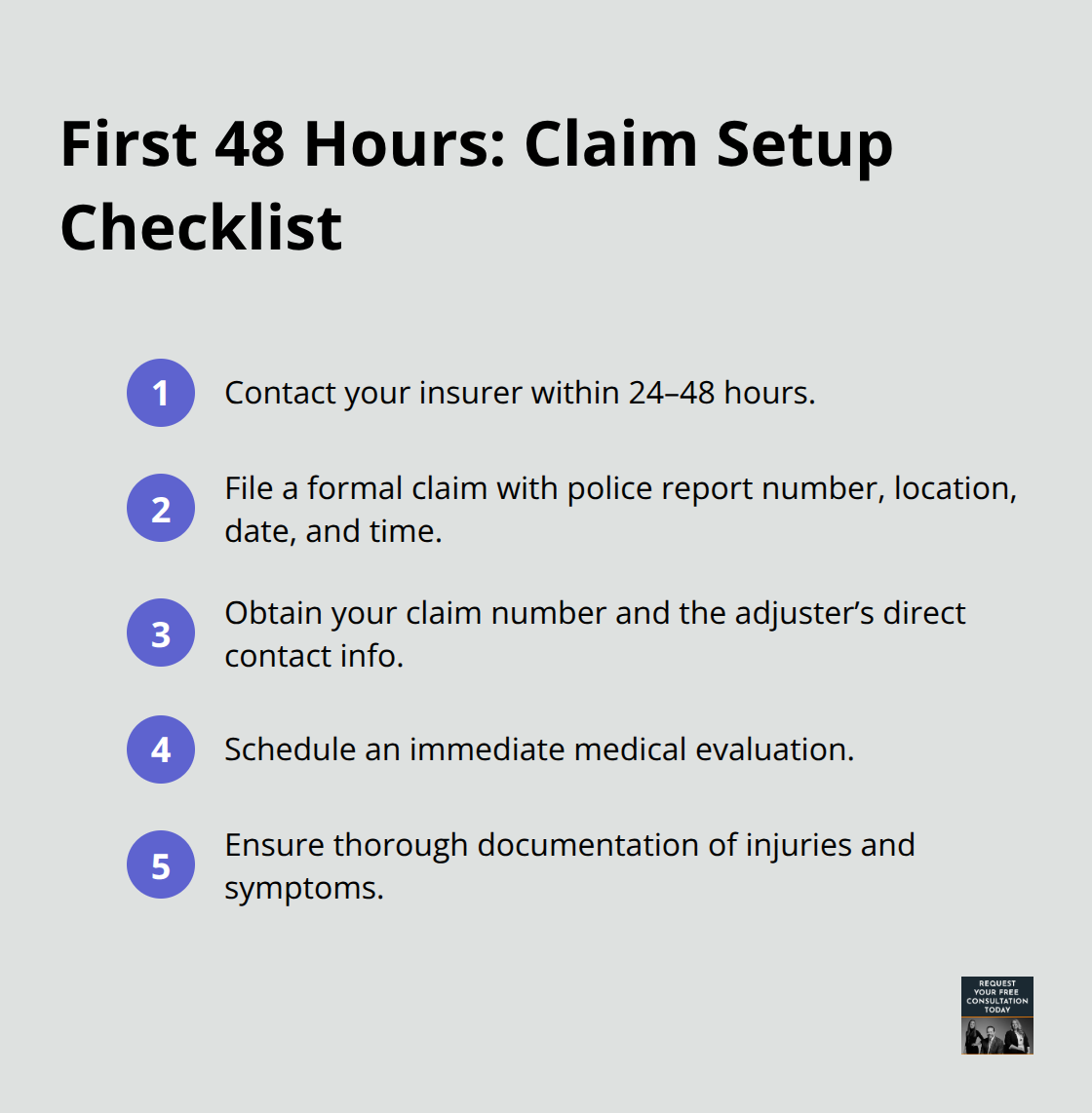
Simultaneously, schedule your first medical appointment and request that your healthcare provider document your injuries thoroughly, including pain levels, range of motion limitations, and any visible marks or swelling. This early medical documentation becomes your strongest negotiating tool later, so don’t skip this step even if your pain feels minor initially. Many whiplash victims underestimate their injuries in the days following an accident, then discover weeks later that symptoms intensify. Your medical records from day one establish a clear injury timeline that insurance companies cannot dispute.
Negotiate Your Settlement Aggressively
The negotiation phase typically starts 4 to 8 weeks after your accident, once you’ve completed initial treatment and gathered sufficient medical documentation. Your insurance adjuster will request a demand letter outlining your total damages, including all medical expenses, lost wages, and pain and suffering calculations. Submit this demand with organized supporting documents: itemized medical bills, wage loss verification from your employer, medical records showing treatment dates and diagnoses, and a detailed pain and suffering journal.
Insurance adjusters in Santa Cruz County typically respond within 2 to 3 weeks with a counter-offer, which is almost always lower than your initial demand. Reject lowball offers immediately and provide written reasons why their valuation fails to account for your documented losses. Many victims accept first offers out of financial pressure, but research shows that negotiating aggressively increases settlements by 40 to 60 percent compared to initial insurance proposals. If your adjuster refuses reasonable negotiation after 2 to 3 exchange rounds, escalate to their supervisor or consider involving a legal representative.
Finalize Your Settlement Agreement
The final settlement phase occurs once both parties agree on a figure. Your insurance company typically processes payment within 10 to 15 business days after you sign the settlement agreement. At Schaar & Silva LLP, we assist clients in evaluating settlement offers and can help direct you toward medical lien services that manage outstanding bills while your case resolves, allowing you to focus entirely on recovery rather than financial stress.
Final Thoughts
Your whiplash settlement in Santa Cruz depends on three actions: you document every medical expense immediately, you calculate lost wages with precision, and you value your pain and suffering honestly. Most victims who move quickly recover 40 to 60 percent more than those who delay, because insurance adjusters respond to organized evidence and tight timelines. Insurance companies count on financial desperation to force quick settlements at reduced rates, so moving fast and documenting thoroughly flips this dynamic entirely.
Medical records stay fresh when you act quickly, witness details remain sharp, and your negotiating position stays strong. Your adjuster knows you’re serious, your evidence is undeniable, and your claim carries real weight. When you accept a lowball offer or stop negotiating, your leverage disappears forever.
Contact Schaar & Silva LLP to discuss your whiplash settlement in Santa Cruz and move your claim forward with confidence. Our team evaluates settlement offers objectively and connects you with resources that manage outstanding bills until your case resolves. We support your recovery by handling the legal complexities while you focus on healing.