

After a car accident, the insurance company’s first offer rarely reflects what your claim is actually worth. We at Schaar & Silva LLP help people in Santa Cruz County, Sacramento, and Oakland understand how auto crash settlements work and what they can do to increase their payout.
Most accident victims leave money on the table because they don’t know the right negotiation strategies or they make preventable mistakes early on. This guide walks you through the settlement process, shows you common errors to avoid, and gives you concrete steps to maximize your compensation.
How Settlement Amounts Get Determined
The Insurance Company’s Formula
The settlement process starts the moment you file a claim with the insurance company, but most people misunderstand what happens next. The insurer does not calculate your payout based on fairness or what you actually lost. Instead, they apply a formula that multiplies your medical expenses by a number between 1.5 and 5, depending on how serious your injuries are. This multiplier method means a $10,000 medical bill might become a $15,000 to $50,000 claim value before negotiation even begins.
The timeline typically runs 2 to 4 weeks for the initial offer, but this speed is intentional. Insurance companies send quick offers because they know most people accept them without understanding their real claim value. In Santa Cruz County, Sacramento, and Oakland, accident victims frequently settle within 30 days of their accident, which is far too soon.
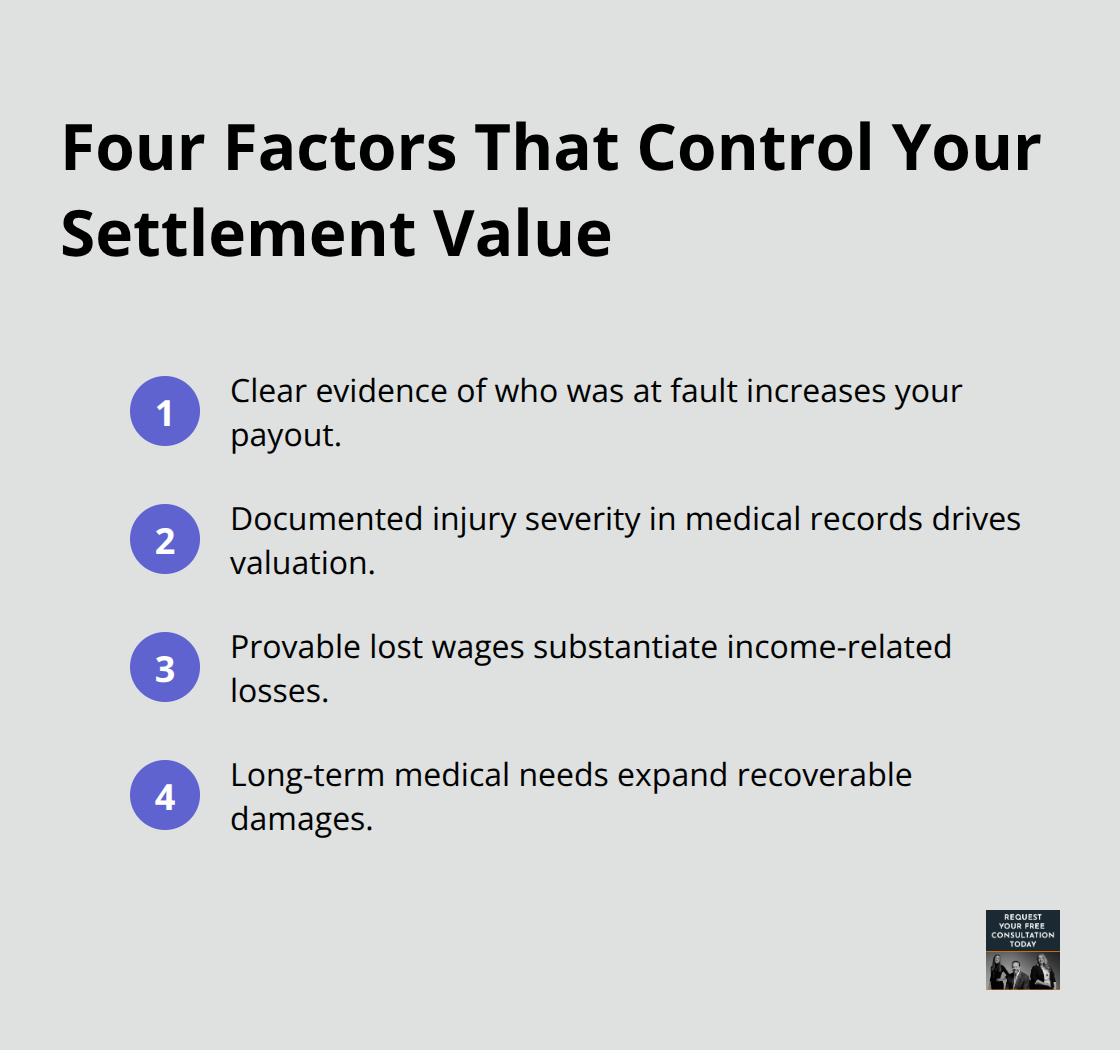
Four Factors That Control Your Settlement Value
Your settlement amount depends on four concrete factors: the clarity of fault, the severity of your injuries documented in medical records, the lost wages you can prove, and your long-term medical needs. If the other driver was clearly at fault, your settlement increases. If liability is shared or unclear, your payout drops significantly.
Medical documentation matters more than you think. A doctor’s report stating you have a herniated disc is worth substantially more than telling the insurance company your back hurts. The insurance adjuster assigns a value based on what they can see in writing, not on what you experience daily.
Economic and Non-Economic Damages
Your recoverable damages fall into two categories: economic and non-economic. Economic damages include medical bills, vehicle repairs, lost income, and transportation costs while your vehicle is being fixed. Non-economic damages cover pain and suffering, emotional distress, and loss of enjoyment of life.
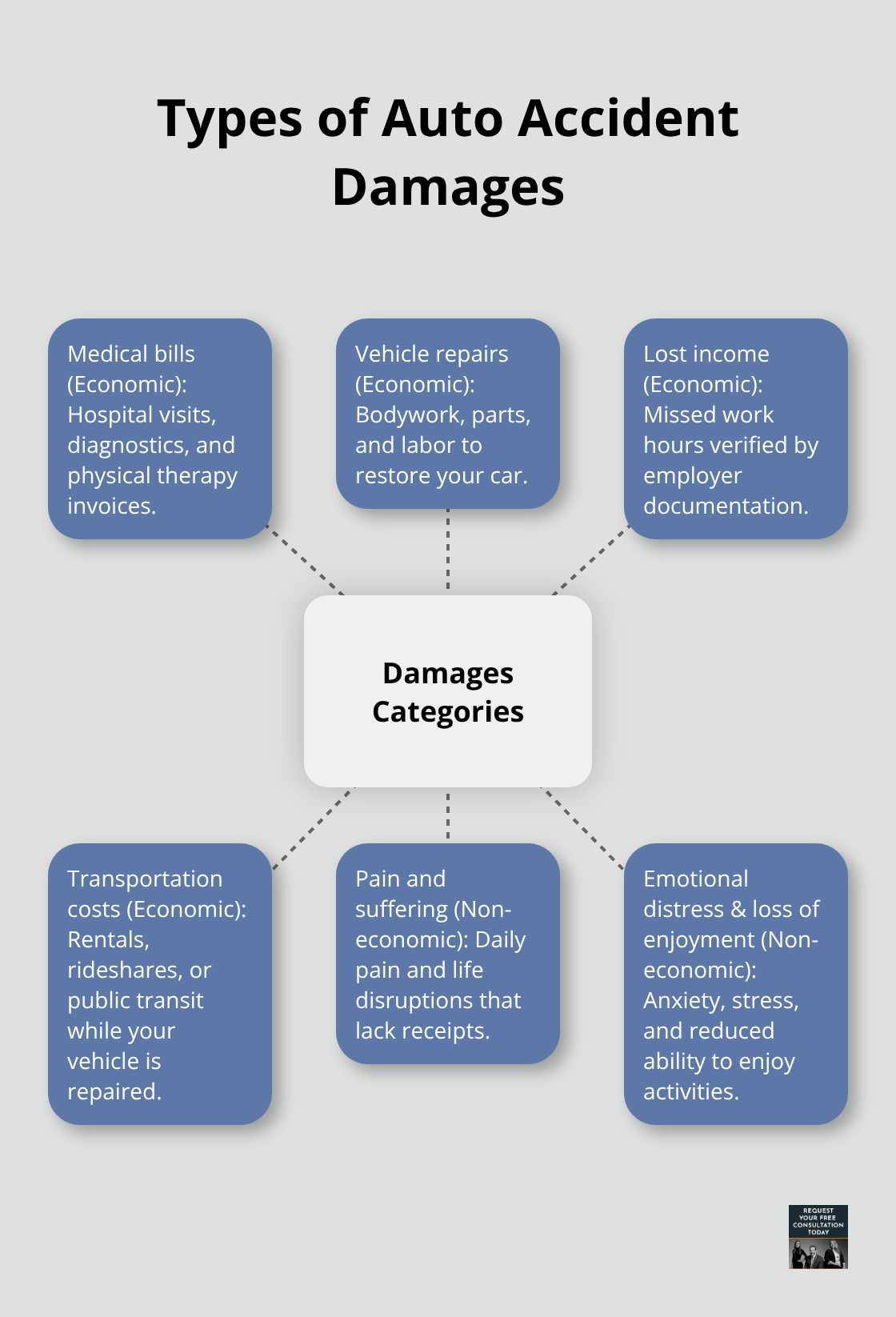
The problem is that insurance companies fight hard on non-economic damages because there’s no receipt for them. You can show a $15,000 medical bill with documentation, but proving $50,000 in pain and suffering requires a strong narrative supported by medical records and witness statements.
Documentation Strengthens Your Position
If you missed work, gather paycheck stubs and a letter from your employer confirming the dates and hourly rate. If you needed ongoing physical therapy, keep every invoice and attend every appointment. Insurance adjusters review these records carefully, and gaps in documentation give them reasons to reduce your offer.
The longer you delay medical treatment after your accident, the weaker your claim becomes because the insurer will argue your injuries aren’t serious. Starting treatment within 72 hours of your accident strengthens your settlement position significantly (and creates a clear medical timeline that supports your claim).
Why the First Offer Rarely Reflects Your True Value
The settlement negotiation rarely ends with the first offer, and accepting it immediately means leaving money on the table. You have leverage if you understand your case value and present evidence systematically. The insurance company counts on you not knowing what your case is actually worth, which is why so many accident victims in Santa Cruz County, Sacramento, and Oakland accept settlements that fall short of their actual damages.
Mistakes That Drain Your Settlement
The First Offer Trap
The gap between what you could receive and what you actually accept often comes down to decisions made in the first few weeks after your accident. Most accident victims in Santa Cruz County, Sacramento, and Oakland make at least one critical error that reduces their final payout. The insurance company’s initial offer arrives quickly, sometimes within days, and this timing is no accident. Adjusters know that people under stress, dealing with injuries, and facing medical bills often grab the first number they see.
Accepting that offer without understanding your actual claim value is the single biggest mistake you can make. Your case might be worth $50,000, but if you accept a $25,000 offer, that difference is gone forever. The insurer counts on you not knowing this, which is why they push for quick settlements.
Social Media Exposes Your Case
Social media activity after your accident hands ammunition directly to the insurance company’s defense team. If you post photos of yourself at a restaurant, hiking, or doing activities, the adjuster will use those images to argue your injuries aren’t as serious as you claim. One photo contradicting your medical narrative can cost you thousands in settlement reduction.
Medical professionals document your actual condition, but a single social media post suggesting otherwise creates doubt that the insurance company exploits aggressively. The defense team screenshots these posts and attaches them to their files, using them during settlement negotiations to lower their offers substantially.
Medical Treatment Timing Matters
Delaying medical treatment or skipping appointments weakens your entire case because gaps in your medical records tell the insurer your injuries weren’t serious enough to warrant immediate attention. Starting treatment within 72 hours of your accident creates a clear timeline that supports your claim value, while waiting weeks or months gives the insurer grounds to argue your injuries developed later or resulted from something else entirely.
Every missed appointment, every delayed doctor visit, and every gap in documentation reduces what you can realistically demand during negotiation. The insurance company reviews these records carefully, and inconsistencies give them reasons to lower their offers substantially.
Documentation Builds Your Negotiating Position
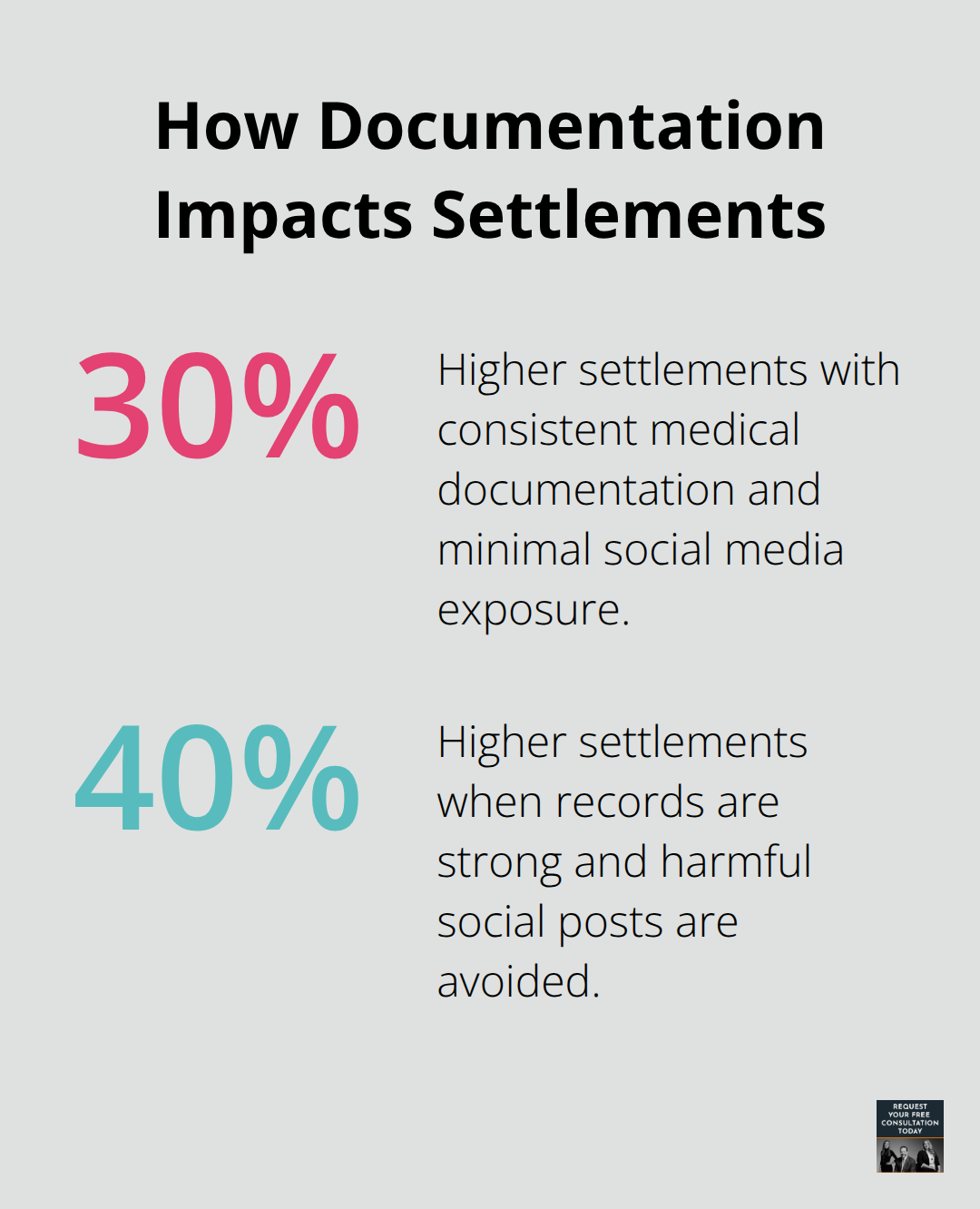
Consistent medical documentation strengthens your settlement position far more than verbal claims ever will. Accident victims who maintain regular doctor visits, attend all physical therapy sessions, and keep detailed records of their treatment receive significantly higher settlements than those with spotty medical histories.
The pattern is clear: those who avoid social media exposure and maintain consistent medical documentation receive settlements 30 to 40 percent higher than those who don’t follow these practices. This difference reflects how insurance adjusters value evidence.
What you can prove in writing matters far more than what you experience daily.
Understanding these mistakes positions you to avoid them, but knowing what not to do is only half the battle. The other half involves actively strengthening your case through strategic evidence gathering and proper valuation before you sit down to negotiate.
How to Value Your Case Before Negotiating
Calculate Your Economic Damages First
Knowing your settlement range before you negotiate is the difference between accepting $25,000 and walking away with $60,000. Most accident victims in Santa Cruz County, Sacramento, and Oakland never calculate their actual case value, which means they enter negotiations blind while the insurance company knows exactly what they’re willing to pay. Start with your economic damages because these are straightforward and documented. List every medical bill, every physical therapy invoice, every day of lost wages with your hourly rate, and vehicle repair costs. If you earned $25 per hour and missed 40 days of work, that’s $1,000 in lost income. Add 20 percent to your economic total for future medical care if your injuries require ongoing treatment. A $15,000 medical bill becomes an $18,000 economic damage claim when you factor in future care.
Apply the Medical Multiplier to Non-Economic Damages
Non-economic damages are where most victims undervalue their cases. The medical multiplier formula (1.5 to 5 times your medical expenses) gives you a starting point, but serious injuries deserve the higher multiplier. A herniated disc with ongoing pain and limited mobility justifies a 4 to 5 multiplier, while a minor whiplash injury with full recovery in weeks justifies 1.5 to 2. If your medical expenses total $20,000 and you suffered a serious back injury, your non-economic damages range from $80,000 to $100,000. This means your total case value sits between $98,000 and $120,000 before negotiation begins. Insurance companies count on you not doing this math, which is exactly why you must.
Organize Medical Records Chronologically
Presenting evidence systematically during negotiation forces the insurance company to justify their offers against your documented damages. Organize your medical records chronologically with dates of treatment, diagnosis codes, and provider statements about your condition. Include a summary letter from your treating physician describing your injuries, treatment plan, and expected recovery timeline. Wage loss documentation from your employer carries significant weight because it’s third-party verification. Medical records from the first 72 hours after your accident matter most because they establish injury severity immediately. If you waited three weeks to see a doctor, the insurer will argue your injuries weren’t serious enough to require immediate attention, which weakens your multiplier argument. Photographs of vehicle damage, accident scene conditions, and visible injuries (bruises, lacerations) strengthen your narrative substantially. The insurance adjuster reviews this evidence and adjusts their offer based on what they see, so gaps in documentation give them reasons to lower their settlement.
Understand How Legal Representation Changes Negotiations
When an attorney enters the case, insurance companies increase their offers because they know litigation costs them more than a fair settlement. Studies show that accident victims represented by attorneys receive settlements 3.5 times higher than those negotiating alone, according to data from the American Association for Justice. Your attorney knows the settlement ranges for similar cases in your jurisdiction, which gives you concrete benchmarks for negotiation. They also handle the back-and-forth communication with the insurance company, which prevents emotional decisions made under stress. We at Schaar & Silva LLP help people in Santa Cruz County understand how legal representation shifts the entire negotiation dynamic in your favor.
Final Thoughts
The path to maximizing your auto crash settlement starts with understanding what your case is actually worth and avoiding the mistakes that cost most accident victims thousands of dollars. Medical records from the first 72 hours after your accident, wage loss documentation from your employer, and photographs of vehicle damage create a narrative that forces the insurance company to justify their offers. When you calculate your economic damages and apply the appropriate multiplier to your non-economic damages, you enter negotiations with a realistic settlement range instead of hoping for the best.
Legal representation changes everything in your favor because insurers know litigation costs them more than a fair settlement. Accident victims represented by attorneys receive settlements significantly higher than those negotiating alone, and the difference between accepting a lowball offer and receiving a fair settlement often covers the cost of legal representation many times over. We at Schaar & Silva LLP help people in Santa Cruz County, Sacramento, and Oakland navigate the entire auto crash settlement process, from calculating your case value to negotiating with insurance companies on your behalf.
If your accident resulted in serious injuries, ongoing medical needs, or significant lost income, reaching out for legal assistance makes financial sense. Contact Schaar & Silva LLP to discuss your case and understand what your auto crash settlement should actually be worth.