
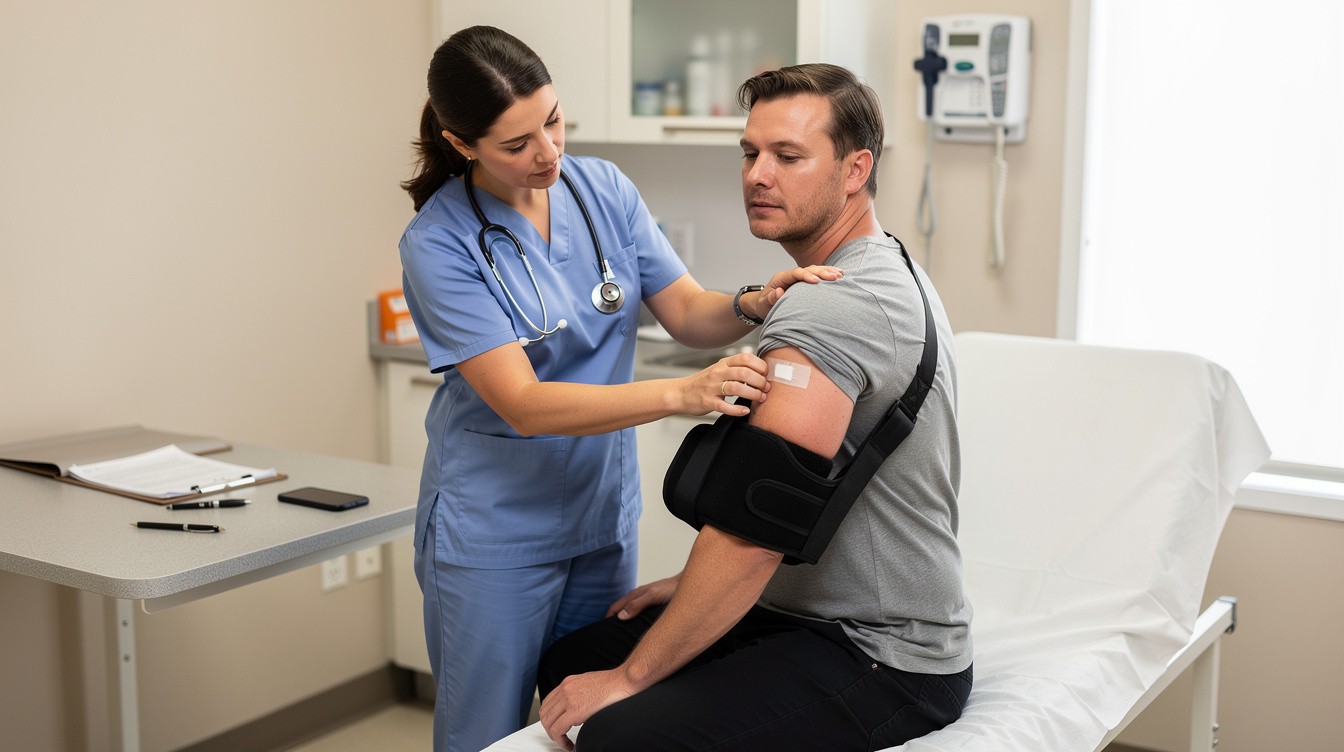
Shoulder injuries from car accidents are more common than many people realize, and they often cause pain that lingers long after the collision.
At Schaar & Silva LLP, we’ve helped countless Santa Cruz residents navigate the medical and legal sides of shoulder injury claims. This guide walks you through treatment options, recovery timelines, and how to build a strong claim for the compensation you deserve.
What Shoulder Injuries Actually Look Like After a Car Crash
How Impact Forces Damage Your Shoulder
Vehicle collisions create forces that push your shoulder in ways it’s not designed to handle. When a car hits you, your body doesn’t move smoothly-it jerks forward, backward, or sideways depending on where the impact comes from. Your shoulder absorbs much of this force because it’s a highly mobile joint with relatively loose ligaments holding it together.
Types of Shoulder Injuries from Collisions
Rotator cuff tears happen when the impact stretches or rips the tendons that stabilize your shoulder. Labral tears occur when the cartilage ring around your shoulder socket sustains damage. AC joint injuries, where your collarbone meets your shoulder blade, happen frequently in side-impact crashes. Shoulder dislocations are less common but extremely painful, and they often require immediate medical attention.
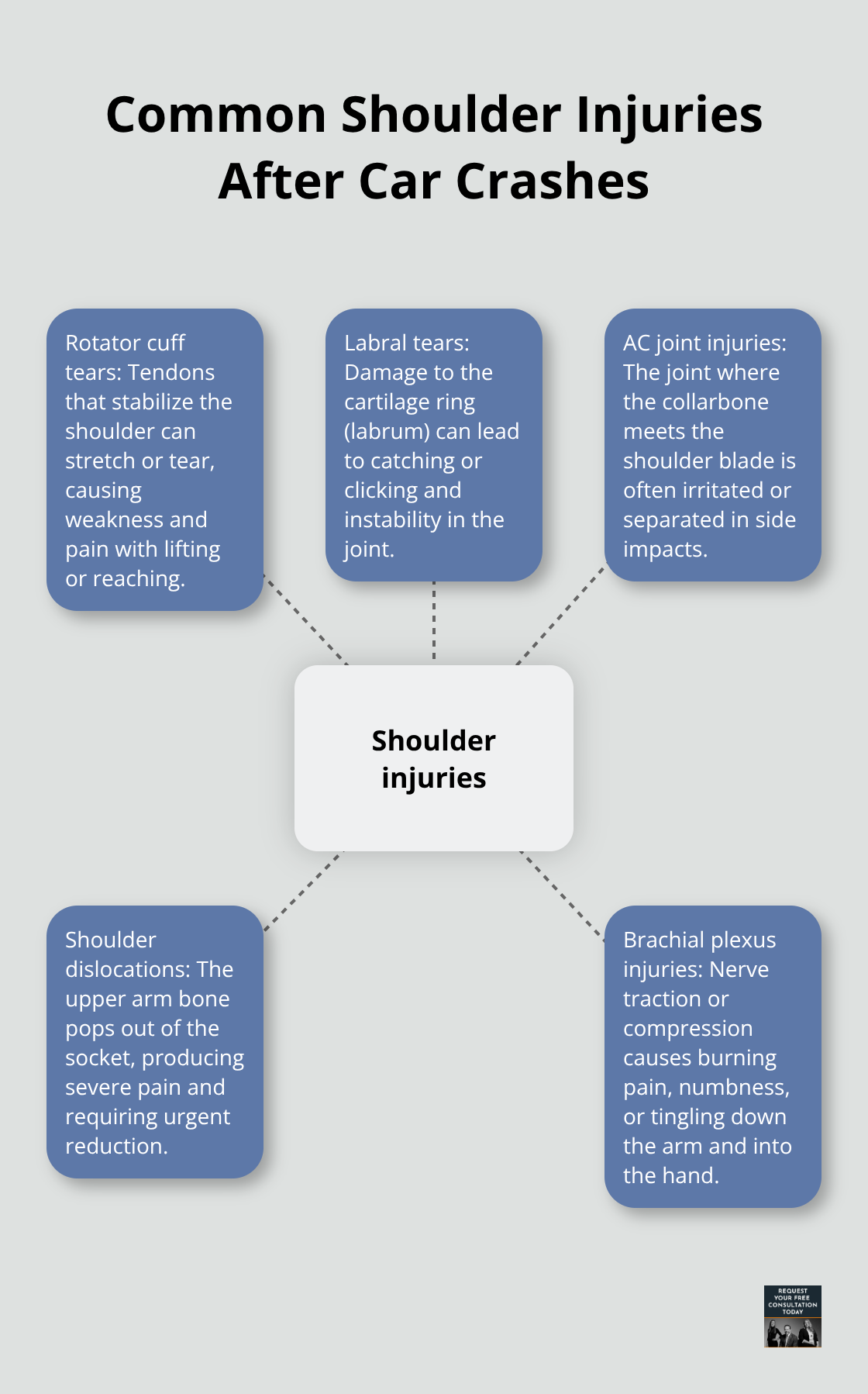
Some people also experience brachial plexus injuries, which affect the nerves running through your shoulder and down your arm.
Why Pain Appears Later, Not Right Away
The tricky part about shoulder injuries is that pain doesn’t always show up right away. You might feel fine for hours or even a day after the crash, then wake up unable to lift your arm. This delayed response happens because inflammation builds gradually, and your body’s adrenaline masks initial pain.
Symptoms You’ll Notice in the First Days and Weeks
Immediate symptoms include sharp pain when you move your arm, swelling around the shoulder joint, or visible bruising. Over the following days and weeks, you’ll likely notice stiffness that worsens in the morning, weakness when lifting objects, or a clicking sensation inside the shoulder. Some people describe a burning sensation down their arm, which suggests nerve involvement. Numbness or tingling in your fingers after a crash signals that the injury extends beyond soft tissue damage and needs urgent evaluation.
Why You Need Medical Attention Quickly
Don’t wait to see a doctor-the longer you delay treatment, the harder your recovery becomes, and the weaker your claim documentation looks to insurance companies. Medical records created immediately after your crash establish the connection between the collision and your injury, which matters significantly when you file a claim. Your doctor’s notes become critical evidence that supports your compensation request.
How to Get Treated for a Shoulder Injury
Seek Medical Evaluation Immediately
Your first step after a car crash is obtaining a proper diagnosis, and timing matters more than you might think. Head to an emergency room or urgent care within 24 hours of the collision, even if you feel okay.
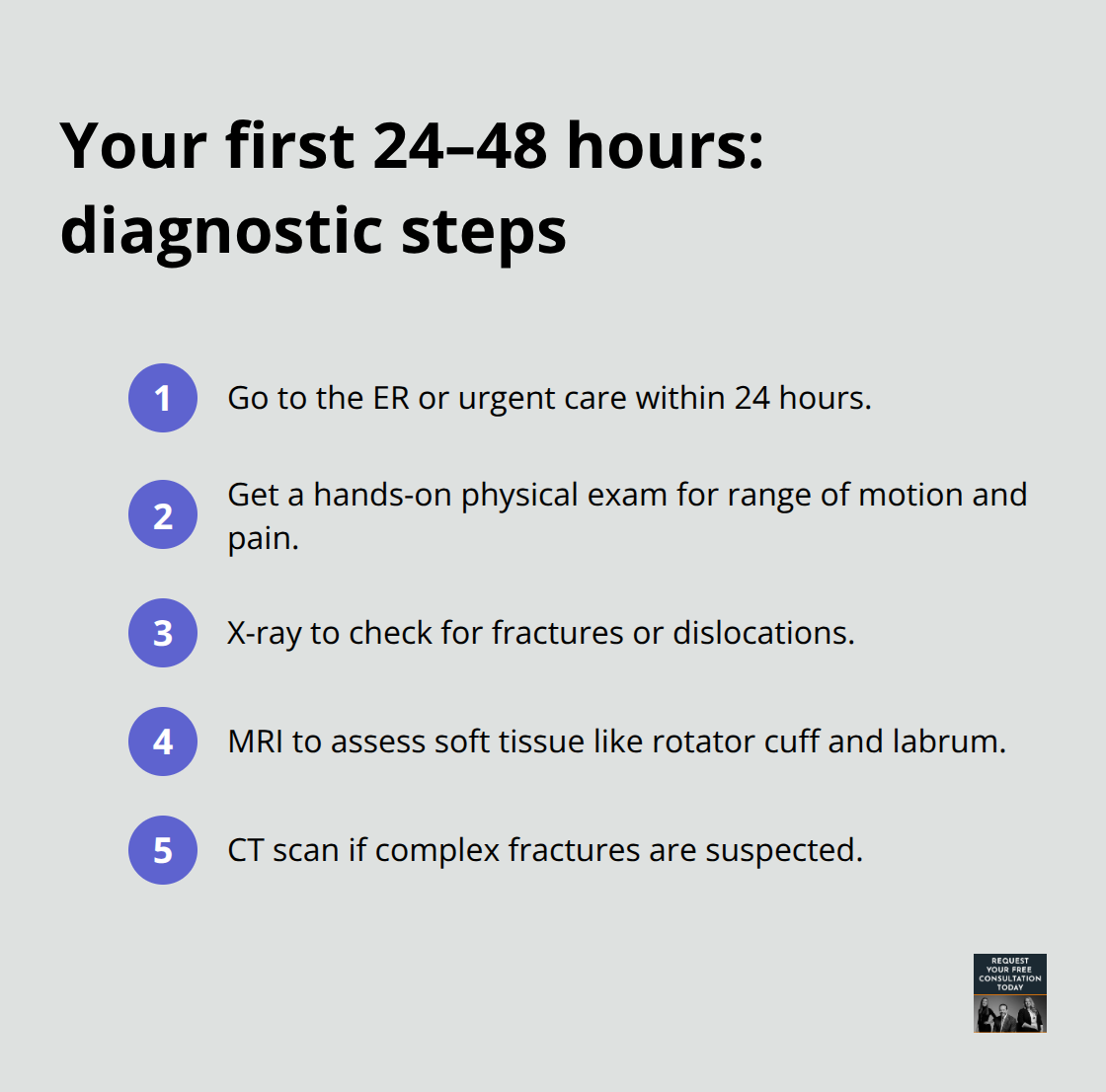
Doctors will perform a physical examination to assess your range of motion and pain levels, then order imaging tests. X-rays show bone fractures or dislocations, while MRI scans reveal soft tissue damage like rotator cuff tears or labral injuries. CT scans provide detailed images if your doctor suspects complex fractures. Your medical records from this initial evaluation become the foundation of your injury claim, so don’t skip this step even if you’re unsure about the severity.
Physical Therapy and Conservative Treatment
Physical therapy typically begins within the first two weeks and focuses on reducing inflammation and restoring movement. A physical therapist will guide you through range-of-motion exercises, gradually progressing to strengthening work as your shoulder heals. Most people see measurable improvement within 6 to 12 weeks with consistent therapy (attending sessions two to three times per week). Your therapist tracks your progress and adjusts your treatment plan based on how your shoulder responds to each phase of rehabilitation.
When Surgery Becomes Necessary
If conservative treatment doesn’t produce results after 8 to 12 weeks, or if your imaging shows severe tears, surgery becomes necessary. Arthroscopic surgery is the most common approach for rotator cuff repairs and labral tears, involving small incisions and a camera to guide the procedure. Recovery from surgery typically takes 4 to 6 months of physical therapy before you regain full strength and range of motion. The International Labour Organization reports roughly 400 million workplace accidents annually, and many shoulder injuries from vehicle collisions follow similar patterns of tissue damage requiring surgical intervention.
Document Everything for Your Claim
Throughout your entire recovery period, keep detailed records of all medical appointments, therapy sessions, and any work you miss due to treatment or pain. These records directly support your damage calculations when you file your claim with the insurance company. Your documentation creates a clear timeline that connects your shoulder injury to the collision and demonstrates the full scope of your recovery costs. With comprehensive medical records in hand, you’re ready to understand how a skilled team of legal professionals can help evaluate your damages and what compensation you can reasonably expect.
Building Your Claim in Santa Cruz County
Organize Your Medical Documentation
Your medical records form the foundation of everything that follows, so organize them immediately after your first doctor visit. Create a dedicated folder containing all imaging reports, physical therapy invoices, surgeon notes, and prescription receipts. Insurance adjusters will request these documents, and having them organized speeds up the process significantly. The faster you provide complete documentation, the faster they can evaluate your claim.
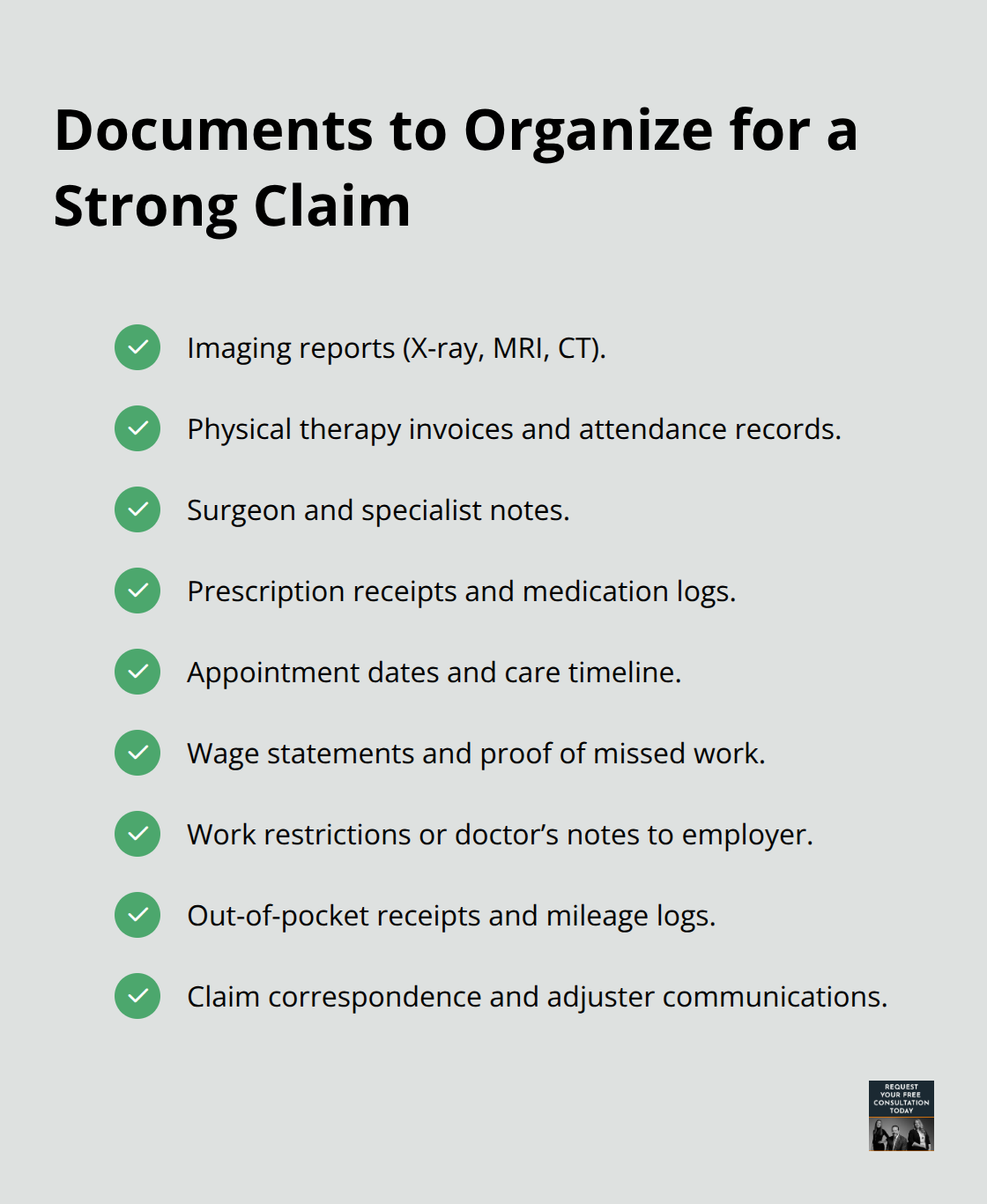
Include dates for every appointment and note which treatments relate to your shoulder injury versus any other injuries from the crash. Many people lose track of expenses scattered across multiple providers, so tracking every cost now prevents you from leaving money on the table later.
Calculate Your Total Damages
Calculating your actual damages requires adding medical expenses to lost income and accounting for ongoing treatment costs. If you missed work for appointments or couldn’t perform your job during recovery, document every hour lost and multiply by your hourly rate or daily salary. A rotator cuff repair with six months of physical therapy easily costs fifteen to twenty thousand dollars in medical bills alone, and that’s before accounting for lost wages. Insurance companies often lowball initial settlement offers, expecting you to accept less than you deserve.
We at Schaar & Silva LLP recommend refusing the first offer and providing a detailed counter-proposal that itemizes all expenses with supporting documentation. When negotiating with insurance adjusters, stick to the numbers in your records rather than emotional arguments. Adjusters respond to clear evidence that your damages are real and quantifiable. Request a written explanation if they deny any expense you’ve documented, then challenge that denial with your medical records.
Negotiate Effectively With Insurance Companies
Settlement negotiations typically take two to four months when you’re well-prepared, but can drag on much longer if your documentation is incomplete. Know your state’s statute of limitations: in California, you have two years from the date of your crash to file a lawsuit, so don’t delay in gathering evidence or pursuing your claim. Comprehensive documentation and organized claim presentation significantly improve settlement outcomes. When you present clear evidence that your damages are quantifiable and well-supported, insurance adjusters take your position more seriously and move toward fair settlements faster.
Final Thoughts
Shoulder injury Santa Cruz cases demand immediate medical attention and careful documentation from the moment the crash happens. You move through several critical stages: obtaining a quick diagnosis, following through with physical therapy or surgery, and building a claim that reflects your actual costs. Pain that appears days after the collision, medical bills that reach thousands of dollars, and lost wages during recovery all represent real damages that insurance companies must cover.
Your recovery timeline and financial impact depend on how thoroughly you document everything from day one. Medical records, therapy invoices, wage statements, and appointment dates create the evidence that supports fair compensation when you negotiate with adjusters. Insurance companies respond to organized, detailed claims backed by solid documentation, and settlement negotiations move faster when you present clear numbers with supporting records.
We at Schaar & Silva LLP help Santa Cruz residents handle the legal side of shoulder injury claims so you can focus on healing instead of paperwork. Our team connects you with resources that manage your medical expenses, evaluate your property damage claim fairly, and provide psychological support when accidents leave emotional scars. Contact us today to discuss your shoulder injury claim and learn what compensation you can reasonably expect.
