
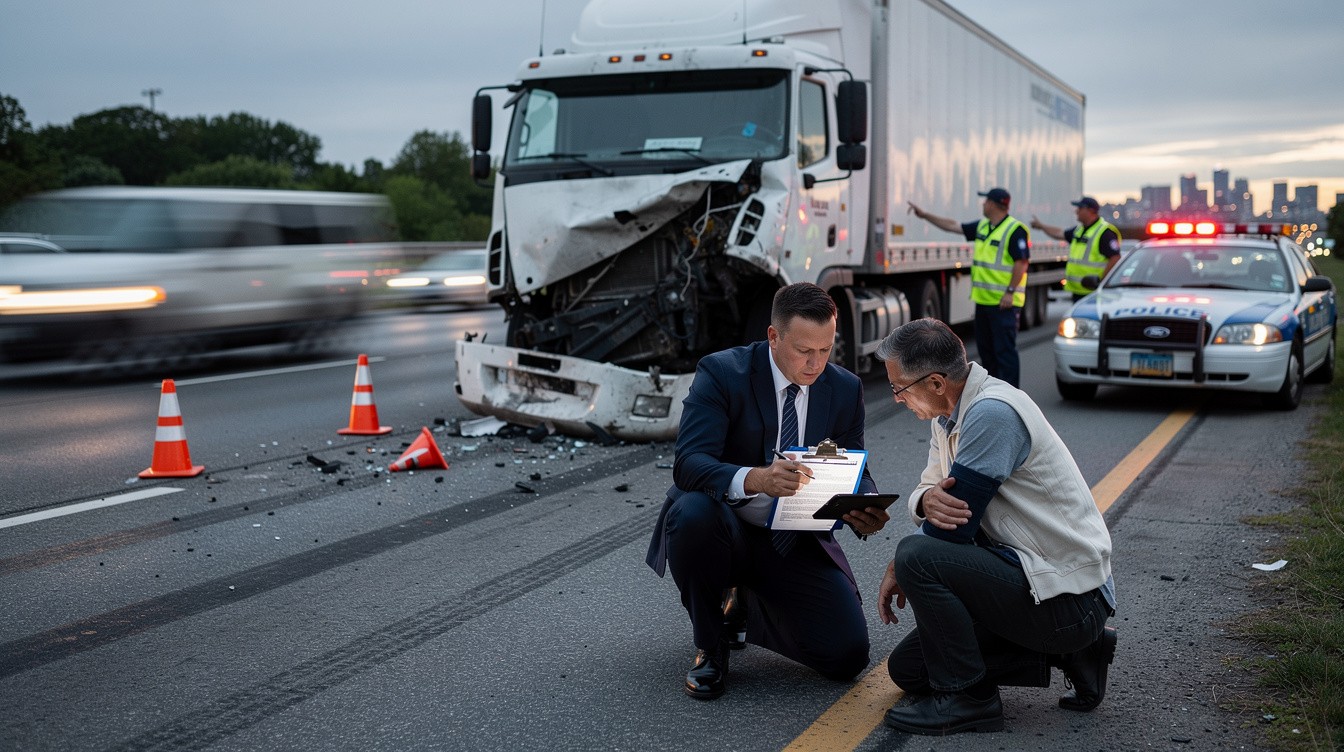
Truck accidents in California leave victims facing serious injuries, mounting medical bills, and complex legal questions. At Schaar & Silva LLP, we help accident victims understand their rights and navigate truck accident litigation in California.
This roadmap walks you through the entire process, from immediate steps after a crash to recovering the damages you deserve.
What Qualifies as a Truck Accident Claim in California
Understanding Truck Accidents in California
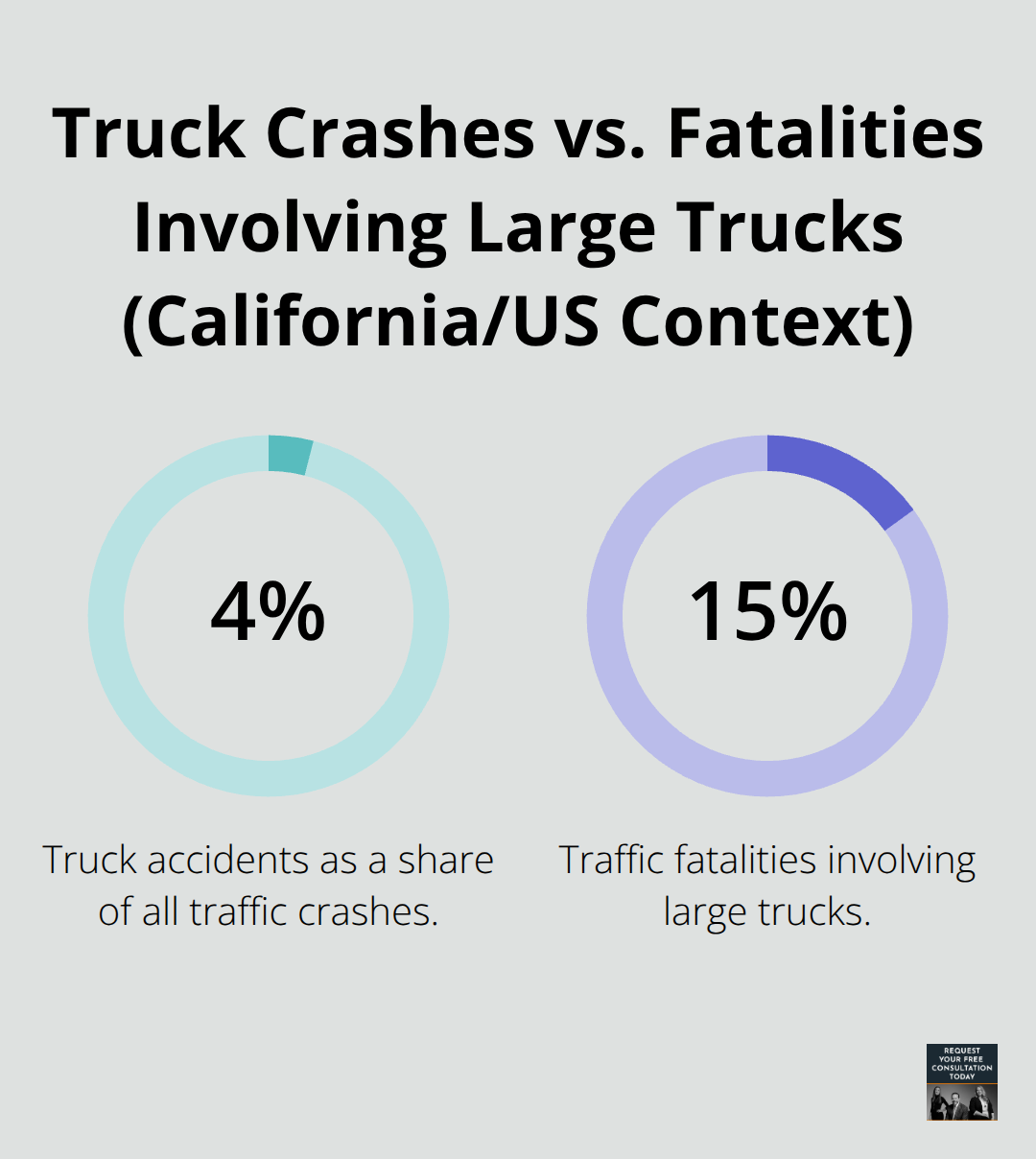
Truck accidents differ fundamentally from standard car collisions because of the vehicles involved and the severity of resulting injuries. A truck accident claim covers incidents where a commercial truck-whether a semi-truck, delivery vehicle, or dump truck-causes harm to you, your vehicle, or your property. In California, truck accidents account for roughly 4% of all traffic crashes but result in disproportionately higher injury and fatality rates due to the weight and size differential. Federal Motor Carrier Safety Administration data shows that large trucks are involved in approximately 15% of all traffic fatalities despite representing a smaller percentage of total vehicles on the road.
Common Causes of Truck Accidents
Driver fatigue remains the leading factor in commercial truck crashes. Other significant causes include improper maintenance of braking systems, overloaded cargo, distracted driving from mobile devices or logistical coordination, and violations of hours-of-service regulations that limit how long drivers can operate vehicles without rest. These factors create dangerous conditions that put you and other road users at serious risk.
Establishing Negligence in Truck Cases
Negligence in truck accident cases means the truck driver, the trucking company, or both failed to exercise reasonable care that a prudent person would exercise under similar circumstances. This might include a driver operating beyond legal hours, a company failing to maintain equipment properly, or a dispatcher pressuring drivers to meet unrealistic schedules. Establishing negligence requires showing that the defendant owed you a duty of care, breached that duty, and caused your damages directly as a result.
Types of Damages You Can Recover
You may recover several types of damages in a successful truck accident claim. Economic damages cover quantifiable losses like medical expenses, rehabilitation costs, lost wages from time away from work, and property damage to your vehicle. Non-economic damages address pain and suffering, loss of enjoyment of life, emotional distress, and permanent disability or disfigurement. In cases involving death, family members can pursue wrongful death damages, which include funeral expenses, loss of financial support, and loss of companionship. California allows punitive damages in rare cases where the truck driver or company acted with gross negligence or intentional misconduct (such as driving under the influence or operating a vehicle known to have dangerous defects). The distinction matters significantly because punitive damages can substantially increase your recovery beyond compensatory amounts.
Understanding what qualifies as a truck accident claim and what damages apply to your situation sets the foundation for the litigation process ahead. The next section walks you through the initial steps you should take immediately after a truck accident occurs.
How Truck Accident Litigation Moves Forward
Immediate Actions at the Accident Scene
The immediate hours after a truck accident shape everything that follows in your case. You should photograph the scene thoroughly, capturing vehicle damage, road conditions, traffic signals, and weather at the time of impact. Collect contact information from all witnesses, including other drivers and pedestrians who saw what happened. You must obtain the truck driver’s commercial driver’s license information, the trucking company’s details, and insurance information from the police report.
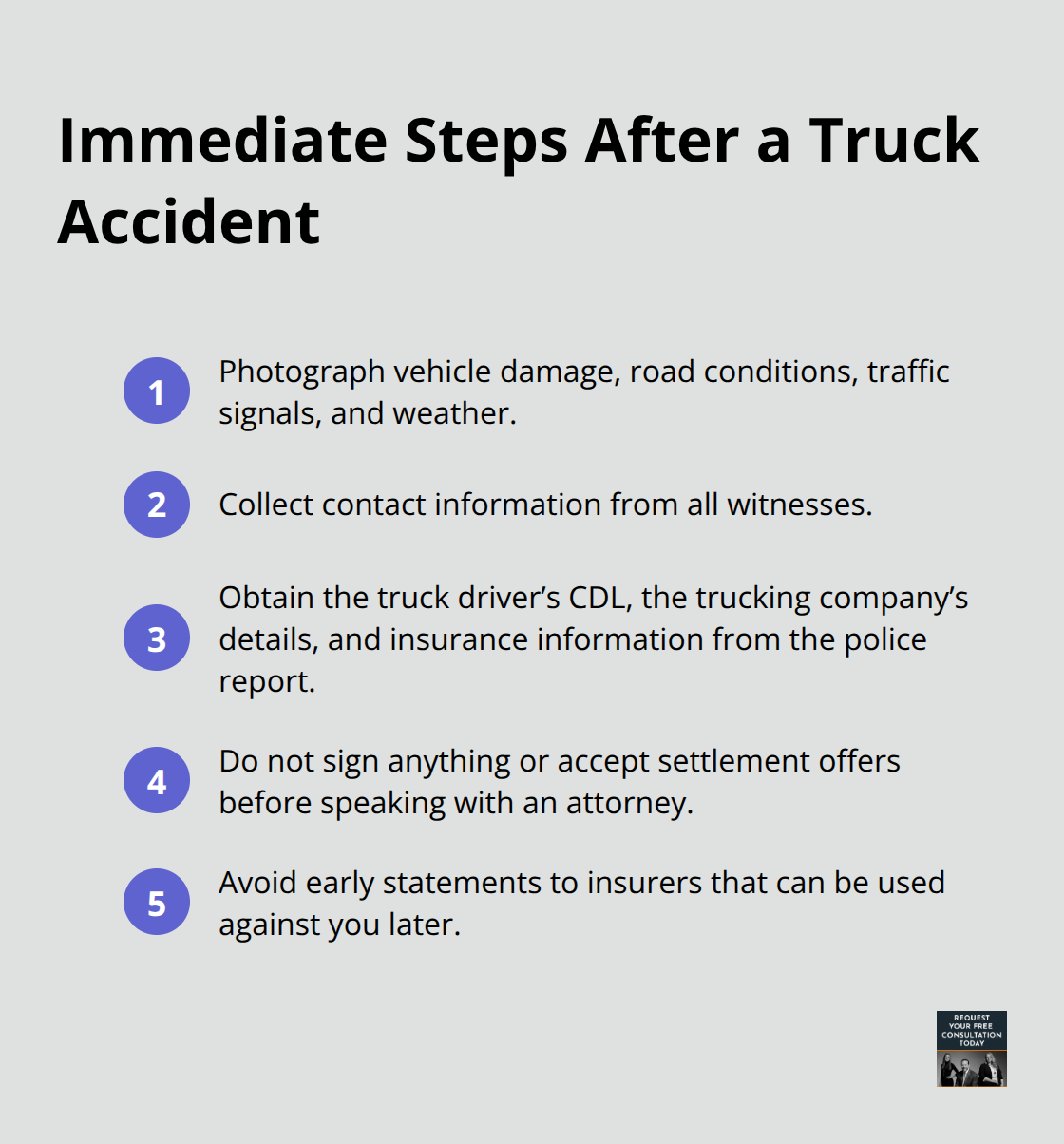
Do not sign anything from the truck driver’s insurance company or accept any settlement offer before speaking with an attorney, as insurance adjusters work to minimize payouts and early statements can be used against you later.
Securing Critical Documentation
You should request a copy of the police report within days of the accident, as it documents the officer’s initial findings about fault and creates an official record. Medical records become critical evidence immediately, so you must seek treatment even if injuries seem minor. Truck accidents often involve delayed symptoms, particularly with brain and spinal injuries that may not manifest for days or weeks after impact.
Gathering Evidence Through Investigation
Investigation in your case involves obtaining the truck’s maintenance records, which reveal whether the company failed to repair known mechanical problems like brake defects. The Federal Motor Carrier Safety Administration maintains violation histories for trucking companies, and these records show patterns of safety violations that support negligence claims. Electronic logging device data from the truck’s onboard computer proves whether the driver exceeded hours-of-service limits set by federal regulations. Cell phone records from the driver during the crash window establish distracted driving. Cargo weight documentation and bills of lading prove whether overloading contributed to the accident. Surveillance footage from nearby businesses, traffic cameras, or dash cameras provides objective evidence of how the crash occurred.
Settlement Negotiations and Case Resolution
Settlement negotiations typically begin once your injuries stabilize and medical treatment reaches a point where future costs can be reasonably estimated. Insurance companies often make initial settlement offers far below actual damages, banking on victims’ financial desperation. Your counteroffers should account for all economic damages plus non-economic damages reflecting your pain, suffering, and permanent effects. Most truck accident cases settle before trial, but only after thorough investigation establishes your damages and the defendant’s liability clearly enough that settlement becomes financially rational for the insurance company. The strength of your evidence at this stage determines whether you move toward resolution or proceed to the courtroom.
What Obstacles Stand Between You and Fair Compensation
Multiple Parties and Conflicting Interests
Truck accident cases rarely follow a straightforward path to settlement. Multiple parties often share responsibility for the crash, which complicates liability determinations and splits potential recovery across different insurance policies. A single truck accident might involve the driver, the trucking company, the vehicle manufacturer, the cargo loader, and the maintenance contractor, each with separate insurance coverage and conflicting interests. When you file a claim, you negotiate with potentially several insurers, each defending its policyholder’s interests aggressively. The trucking company’s insurer will argue the driver alone caused the crash, while the driver’s personal auto policy insurer will claim the company bears responsibility through negligent hiring or inadequate training.
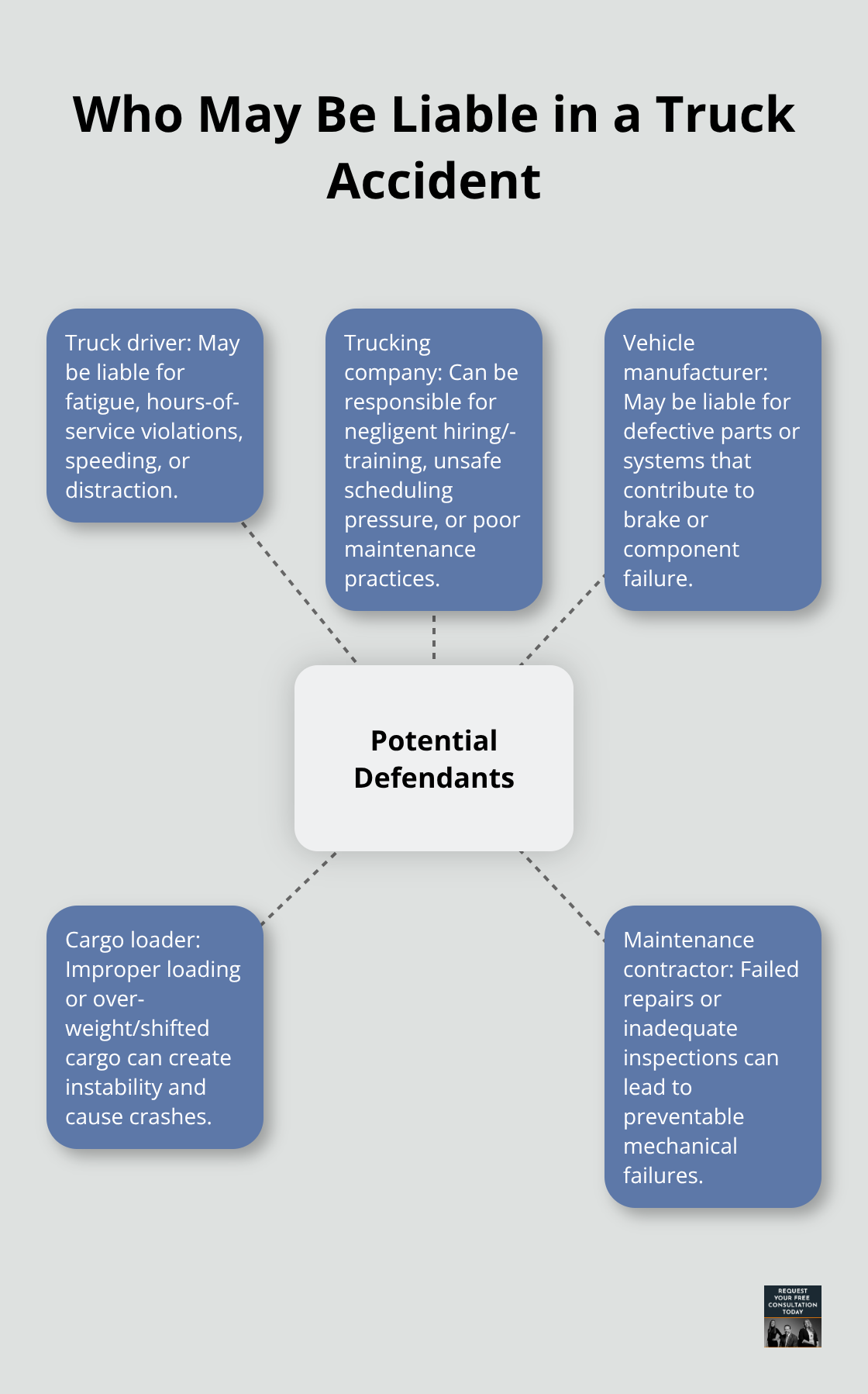
This finger-pointing delays your recovery and forces your attorney to build evidence against multiple defendants simultaneously.
Insurance Coverage Limits and Inadequate Protection
Insurance companies use complexity strategically, betting that injured victims will accept lowball offers rather than navigate multi-party litigation. The Federal Motor Carrier Safety Administration reports that trucking companies with multiple safety violations are involved in crashes at rates significantly higher than compliant operators, yet these same companies often maintain inadequate insurance limits that cap your total recovery regardless of actual damages. California law requires commercial trucks to carry minimum liability coverage, but many companies operate with bare-minimum policies that cover only a fraction of serious injury costs. When your medical bills, lost wages, and pain and suffering exceed the policy limits, you face the harsh reality that collecting full compensation becomes nearly impossible unless you pursue the defendant’s personal assets. This situation intensifies when spinal injuries or brain trauma require lifelong care costing hundreds of thousands of dollars annually.
Medical Evidence and Documentation Challenges
Medical documentation becomes your most critical asset, yet insurance adjusters routinely challenge injury severity and causation by questioning medical records, requesting independent medical examinations, and hiring their own doctors to minimize treatment necessity. You must maintain detailed medical records showing every treatment, every test result, and every specialist consultation. Gaps in treatment timelines give insurers ammunition to argue your injuries weren’t serious, even when financial hardship or transportation difficulties caused the gaps. Insurance companies exploit these gaps relentlessly, using them to reduce settlement offers or deny claims altogether. In Santa Cruz County, Schaar & Silva LLP can connect you with medical lien services that facilitate treatment payment until your case resolves, helping you avoid the gaps that insurers weaponize against you.
Final Thoughts
Truck accident litigation in California demands thorough preparation, strong evidence, and persistent advocacy to overcome the obstacles insurers place in your path. Insurance companies count on victims becoming overwhelmed by medical treatment, financial pressure, and legal complexity, hoping you’ll accept inadequate settlements rather than fight for full compensation. Your recovery depends on immediate action at the accident scene, comprehensive investigation, and strategic negotiation backed by documentation that proves both liability and damages.
Multiple parties may share responsibility for your accident, insurance limits often fall short of actual damages, and medical records form the foundation of your claim. The challenges are real, but they are not insurmountable. Victims who gather evidence systematically, maintain detailed medical documentation, and refuse lowball offers recover substantially more than those who navigate this process alone.
Contact Schaar & Silva LLP for a consultation about your truck accident litigation California case. Bring your police report, medical records, insurance information, and photographs from the accident scene, and we’ll evaluate your claim, explain your options, and begin building the evidence necessary to hold the responsible parties accountable. You deserve full compensation for your injuries and losses, and we’re here to fight for it.
