
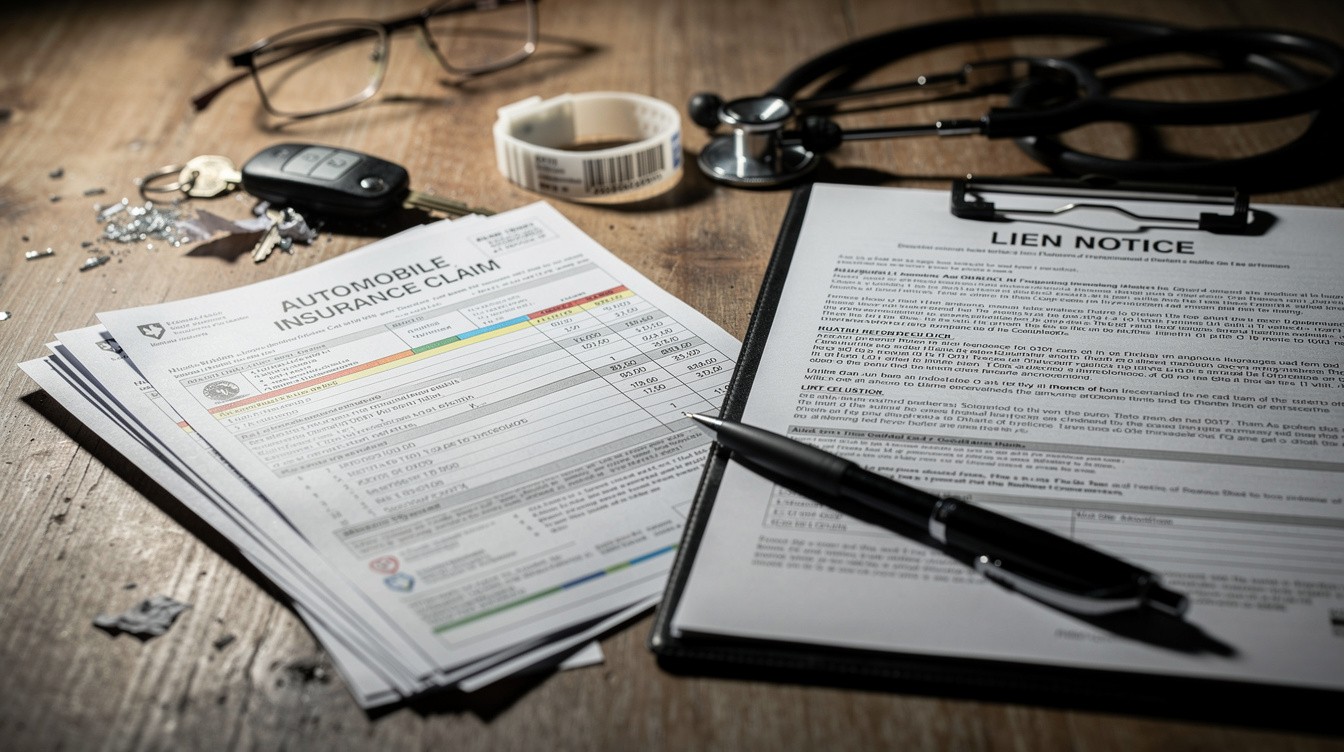
A car crash can leave you facing thousands of dollars in medical bills on top of physical pain and emotional stress. Many accident victims don’t realize they have options to manage these costs without draining their savings right away.
Medical liens and insurance negotiations can significantly reduce what you owe out of pocket. We at Schaar & Silva LLP help people in Santa Cruz County, Sacramento, and Oakland work through these financial challenges after an accident.
What Medical Bills Pile Up After a Crash
Emergency and Hospital Costs Add Up Fast
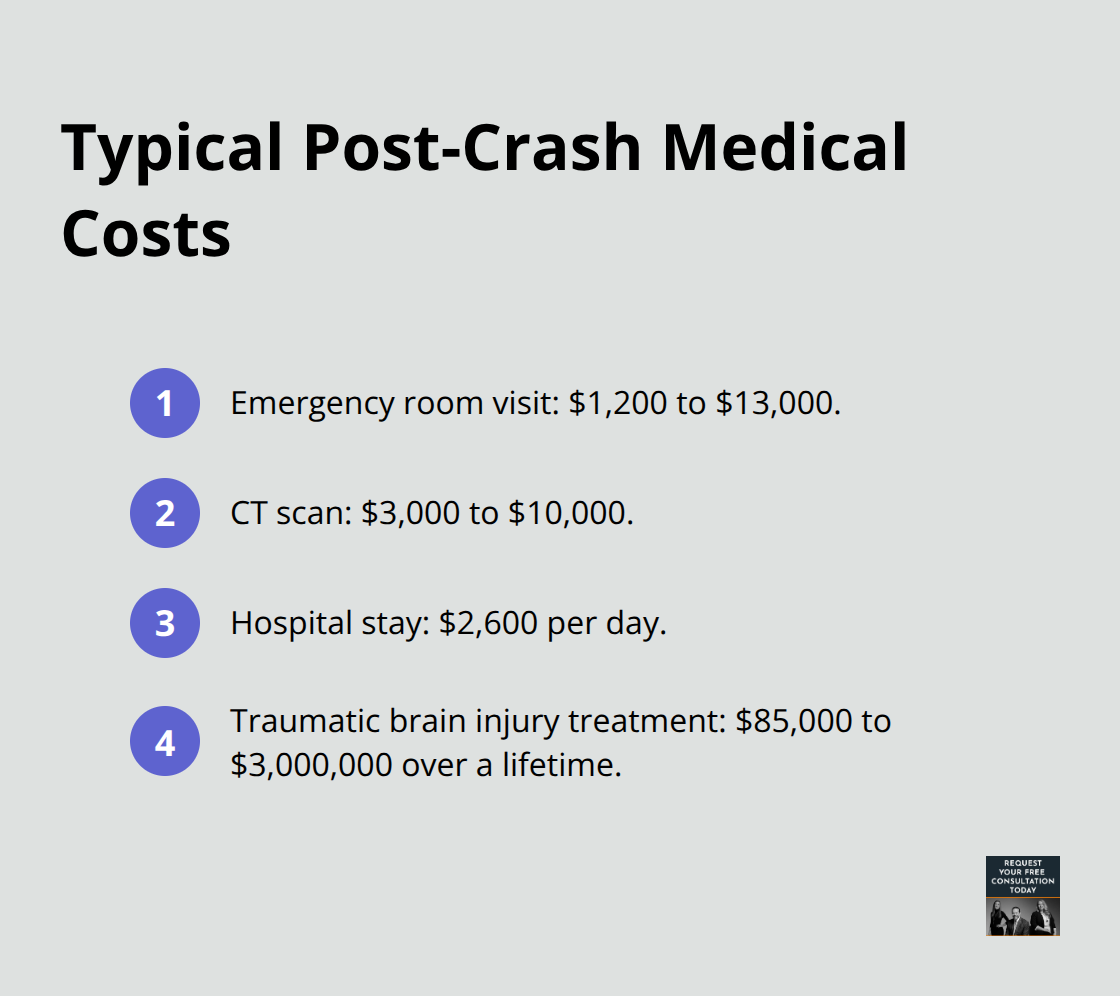
Emergency room visits, ambulance transport, imaging scans, surgery, hospital stays, physical therapy, and follow-up appointments create a cascade of charges that arrive weeks or months after your accident. The average emergency room visit costs between $1,200 and $13,000 according to the Healthcare Cost and Utilization Project, and that’s before imaging, lab work, or admission. A single CT scan runs $3,000 to $10,000. Hospital stays average $2,600 per day. If you suffered a spinal or brain injury, costs multiply dramatically-traumatic brain injury treatment averages $85,000 to $3 million over a lifetime according to the Centers for Disease Control and Prevention.
Surgeries, implants, medications, and specialized care compound these numbers quickly.
Why Bills Arrive in Fragments
What makes this worse is timing: bills arrive in fragments from different providers over months, making it nearly impossible to see the full financial picture until everything lands on your doorstep. You receive statements from the hospital, then the surgeon, then the imaging center, then the physical therapy clinic-each on its own schedule. This fragmented billing creates confusion about what you actually owe and which insurance should cover what amount.
How Your Insurance Coverage Works
Your insurance coverage determines how much you pay immediately versus what gets deferred. If you carry MedPay or Personal Injury Protection through your auto policy, those cover medical costs regardless of fault, up to your policy limit (typically $1,000 to $10,000). Once that limit exhausts, you’re responsible for remaining bills unless the at-fault driver’s liability insurance picks them up. In California, you can pursue the at-fault driver’s liability coverage, but coordination with your health insurance matters significantly because your health plan may have paid some bills already and could place a lien to recover those costs.
Medical Liens and Provider Recovery
Many people don’t realize that healthcare providers can file liens against your accident settlement to secure payment, meaning hospitals and clinics get paid first before you see any recovery money. This is where negotiation and early planning prevent bills from spiraling. Getting itemized bills immediately, auditing them for duplicate charges or coding errors, and requesting cash-pay discounts from providers can reduce what you ultimately owe. These steps take time but protect your settlement from excessive provider claims.
Understanding how medical liens function and what options exist for managing them becomes your next priority as bills accumulate.
How Medical Liens Work in Your Accident Recovery
What a Medical Lien Actually Is
A medical lien is a legal claim that a healthcare provider files against your personal injury settlement to guarantee payment for medical services they’ve already provided. When you’re injured in a car crash and can’t immediately pay your medical bills, hospitals and clinics don’t have to wait indefinitely for payment. Instead, they file a lien that attaches to any settlement or judgment you receive from the at-fault driver’s insurance company. The lien amount gets paid directly from your settlement before you receive any funds, which means the provider recovers their costs and you avoid collection agencies pursuing you for unpaid medical debt.
How Liens Protect Both Sides
This system protects both parties: providers get paid for legitimate services, and you avoid personal liability for bills while your case resolves. In California, medical liens are governed by state law, and providers must follow specific filing procedures. The lien holder typically has a deadline to file, often within a year of the last treatment, though timelines vary based on your situation. Understanding this mechanism matters because liens directly reduce the amount of settlement money you take home.
Catching Billing Errors Before Liens Attach
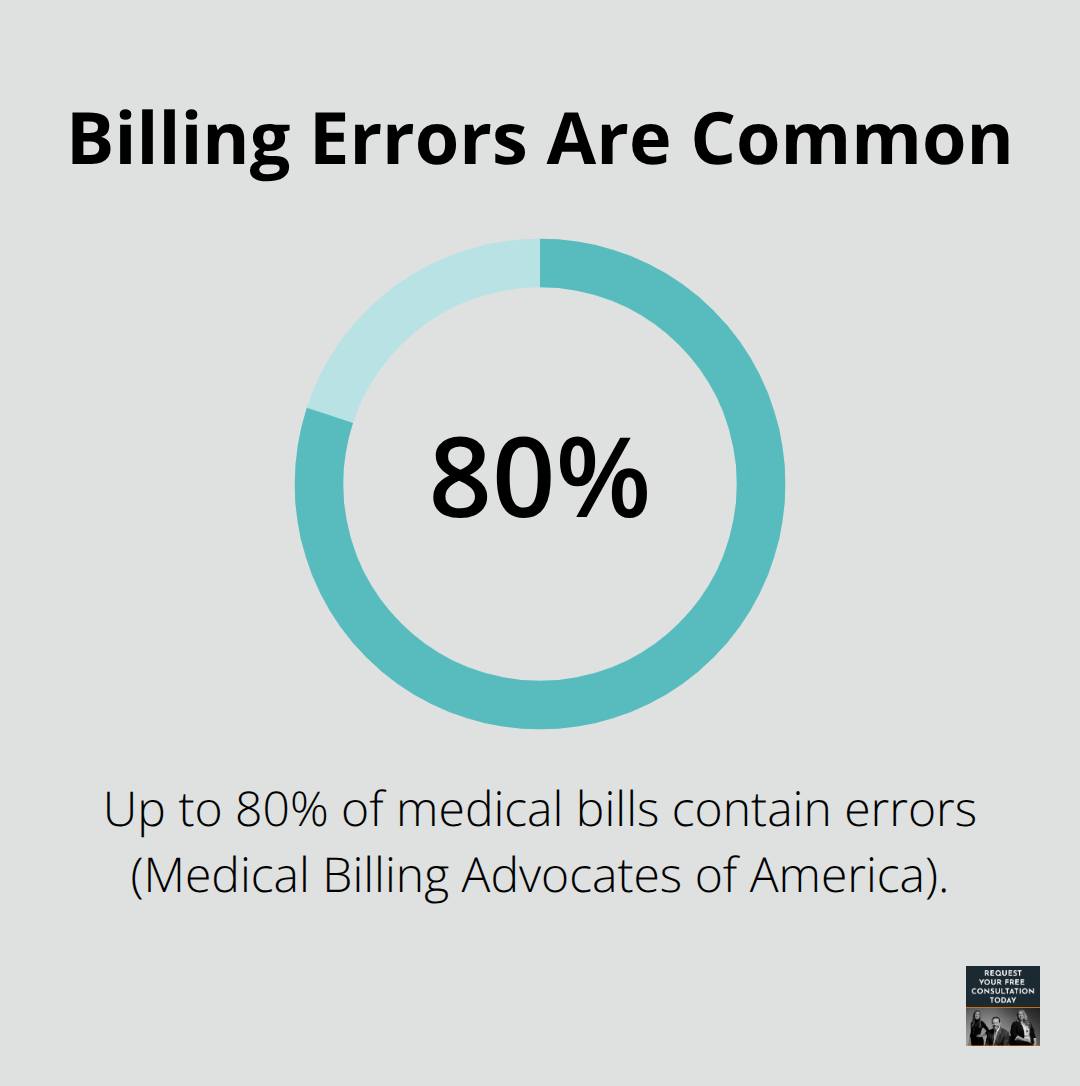
The real advantage of medical liens appears when you coordinate them strategically with your settlement negotiations. Rather than paying medical bills out of pocket while waiting for your case to resolve, the lien system allows treatment to continue without immediate payment pressure. Request itemized bills from every provider immediately after treatment, then audit those bills for duplicate charges, incorrect procedure codes, or services you didn’t receive. Research from the Medical Billing Advocates of America found that up to 80 percent of medical bills contain errors. Catching these mistakes early prevents inflated lien amounts from reducing your final recovery.
Negotiating Discounts and Building Your Records
When negotiating with providers before they file liens, ask about cash-pay discounts or reduced rates for self-pay patients. Many hospitals offer discounts ranging from 20 to 50 percent off their standard charges if you ask directly. Create a master spreadsheet tracking every bill, provider, amount, insurance payments, and lien status so nothing gets lost in the shuffle. Some providers file liens at inflated amounts, counting on injured people to accept whatever number appears. Having your own detailed record gives you concrete data to challenge excessive claims. If a lien amount seems unreasonable compared to your itemized bills, request a formal reconsideration or pursue negotiation directly with the provider’s billing department before the lien becomes finalized.
Getting Support for Lien Negotiations
Managing medical liens alongside your recovery requires coordination across multiple providers, insurers, and legal processes. We at Schaar & Silva LLP help clients in Santa Cruz County direct you to medical lien services that manage these negotiations and coordinate with your settlement to protect your recovery. The next step involves understanding how to work with your insurance company and negotiate directly with healthcare providers to further reduce what you owe.
How to Access Financial Help for Medical Bills
Contact Your Insurance Company Immediately
Contact your auto insurance company within 48 hours of your crash and ask about MedPay or Personal Injury Protection coverage limits. Most California drivers carry between $1,000 and $10,000 in MedPay, which pays medical bills regardless of fault. Request a detailed Explanation of Benefits from your insurer showing exactly what they’ve paid, what remains unpaid, and your out-of-pocket responsibility. Many people miss this step and overpay providers who claim larger amounts than what insurance actually covers.
Negotiate with Healthcare Providers Before Liens Attach
Once you understand your coverage limits, shift focus to negotiating directly with healthcare providers before liens attach to your case. Call the billing department at every facility where you received treatment-hospital, imaging center, surgeon’s office, physical therapy clinic-and ask three specific questions: What is your cash-pay discount for self-pay patients, what is your financial hardship program, and are you willing to negotiate a reduced rate before filing a lien. Hospital financial assistance programs exist in Santa Cruz County, Sacramento, and Oakland facilities and can reduce or eliminate bills entirely if you qualify based on income.
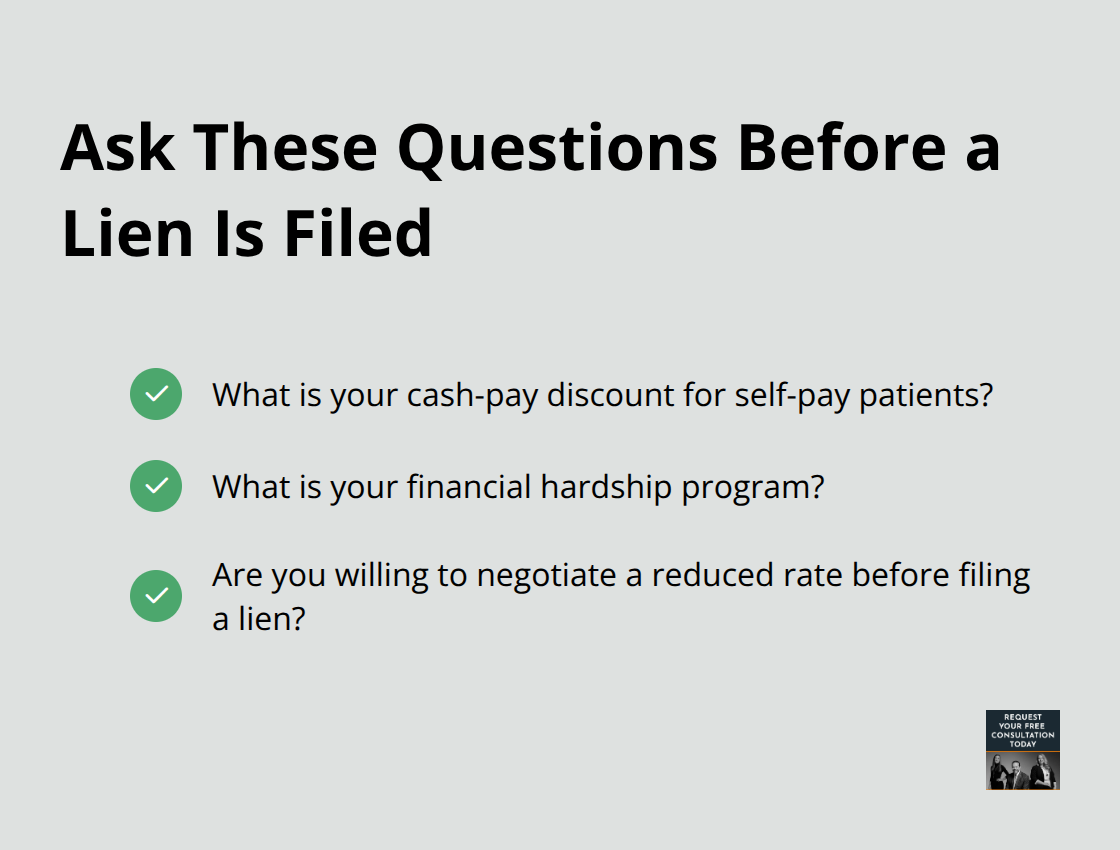
The key is asking before the lien gets filed, because once a lien attaches, your negotiating power decreases significantly.
Audit Bills for Errors and Inaccuracies
Request itemized bills from every provider, not summary statements, then audit those bills against your medical records for duplicate charges or incorrect procedure codes. The Medical Billing Advocates of America found that up to 80 percent of medical bills contain errors, so spending an hour reviewing charges can save you thousands in reduced lien amounts. Build a master spreadsheet immediately tracking provider name, service date, original bill amount, insurance payment received, remaining balance, and lien status. This single document becomes your negotiating tool when providers claim inflated amounts.
Challenge Excessive Lien Amounts
If a lien exceeds what you actually owe based on itemized bills and insurance payments, request a formal reconsideration in writing to the provider’s billing department and lien coordinator. State that you’re prepared to dispute the lien amount based on documentation and ask for a revised filing. Many providers reduce liens when confronted with evidence that their amount exceeds actual charges. For complex cases involving spinal injuries, brain injuries, or wrongful death claims where medical costs run into hundreds of thousands of dollars, Schaar & Silva LLP can direct you to medical lien services that handle these negotiations alongside your settlement. These services coordinate with hospitals, insurers, and attorneys to resolve liens efficiently so your settlement goes further toward actual recovery rather than inflated medical claims.
Final Thoughts
Managing car crash medical bills requires action across multiple fronts at once. Contact your auto insurance company within 48 hours to understand your MedPay or Personal Injury Protection limits, request itemized bills from every provider before liens attach, and audit those bills for errors. Negotiate cash-pay discounts directly with hospital billing departments, build a master spreadsheet tracking all charges and insurance payments, and challenge any lien amounts that exceed your actual bills. These steps take time but prevent inflated lien amounts from consuming your settlement.
Your recovery journey extends beyond physical healing because the financial side demands parallel attention while you focus on treatment and rehabilitation. Apply for hospital financial assistance programs if you qualify, preserve all crash-related documents including police reports and medical records, and coordinate these efforts carefully-especially for spinal injuries, brain injuries, or wrongful death claims where car crash medical bills escalate dramatically. Settlement amounts must cover both immediate bills and future medical needs, which makes early planning essential to protect your long-term recovery.
We at Schaar & Silva LLP understand that car crash medical bills create overwhelming stress when you’re already dealing with physical pain and recovery. Our team helps people in Santa Cruz County, Sacramento, and Oakland navigate these financial challenges by directing you to medical lien services that manage negotiations with providers and coordinate with your settlement. Visit our website to discuss your specific situation and learn how we can support your path forward.
