
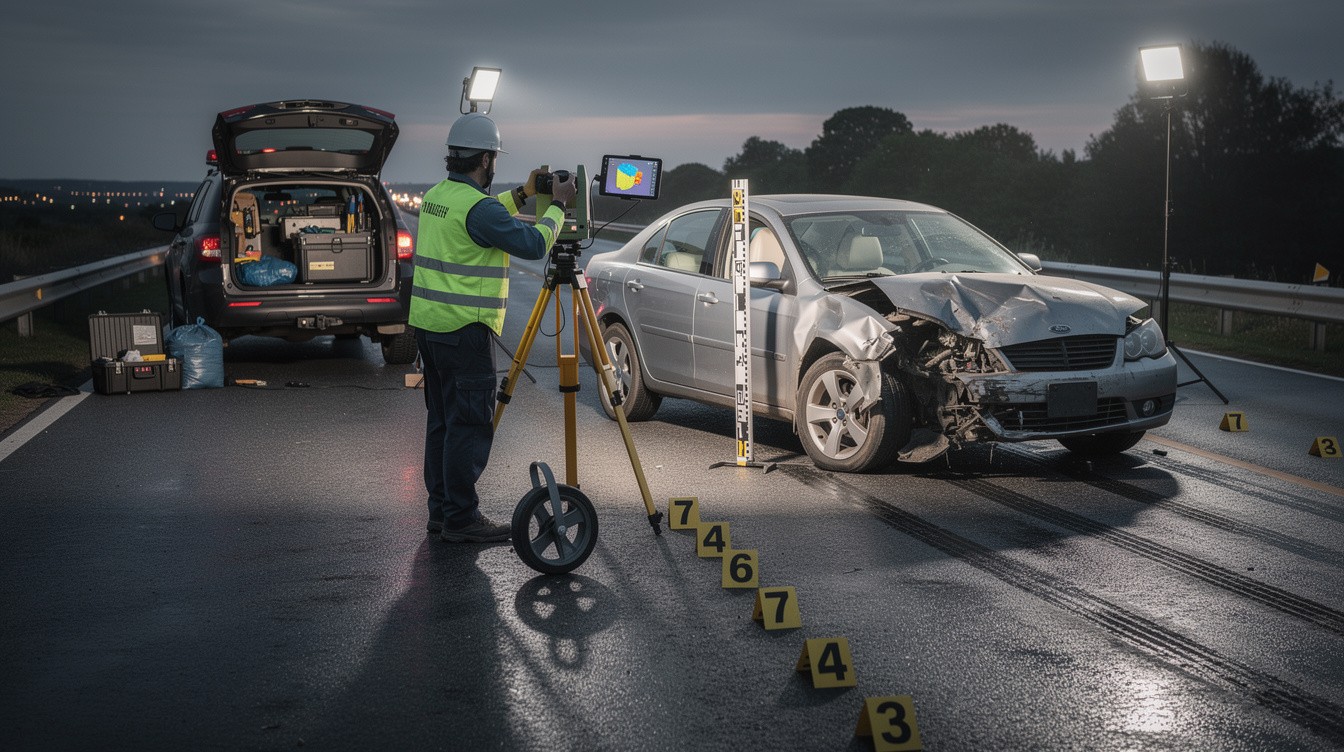
After a serious vehicle accident, insurance companies often deny liability or offer settlements far below what you deserve. A collision reconstruction expert can change the outcome of your case by providing scientific evidence that proves exactly what happened.
At Schaar & Silva LLP, we’ve seen how reconstruction evidence turns disputed claims into clear-cut cases. This professional analysis examines physical evidence, vehicle damage, and accident scene details that insurance adjusters overlook or misinterpret.
How Collision Reconstruction Professionals Examine Your Accident
Physical Evidence at the Scene
Collision reconstruction professionals work with hard data, not assumptions. They visit accident scenes and photograph everything-road conditions, skid marks, debris patterns, and vehicle final resting positions. This physical evidence forms the foundation of their analysis.
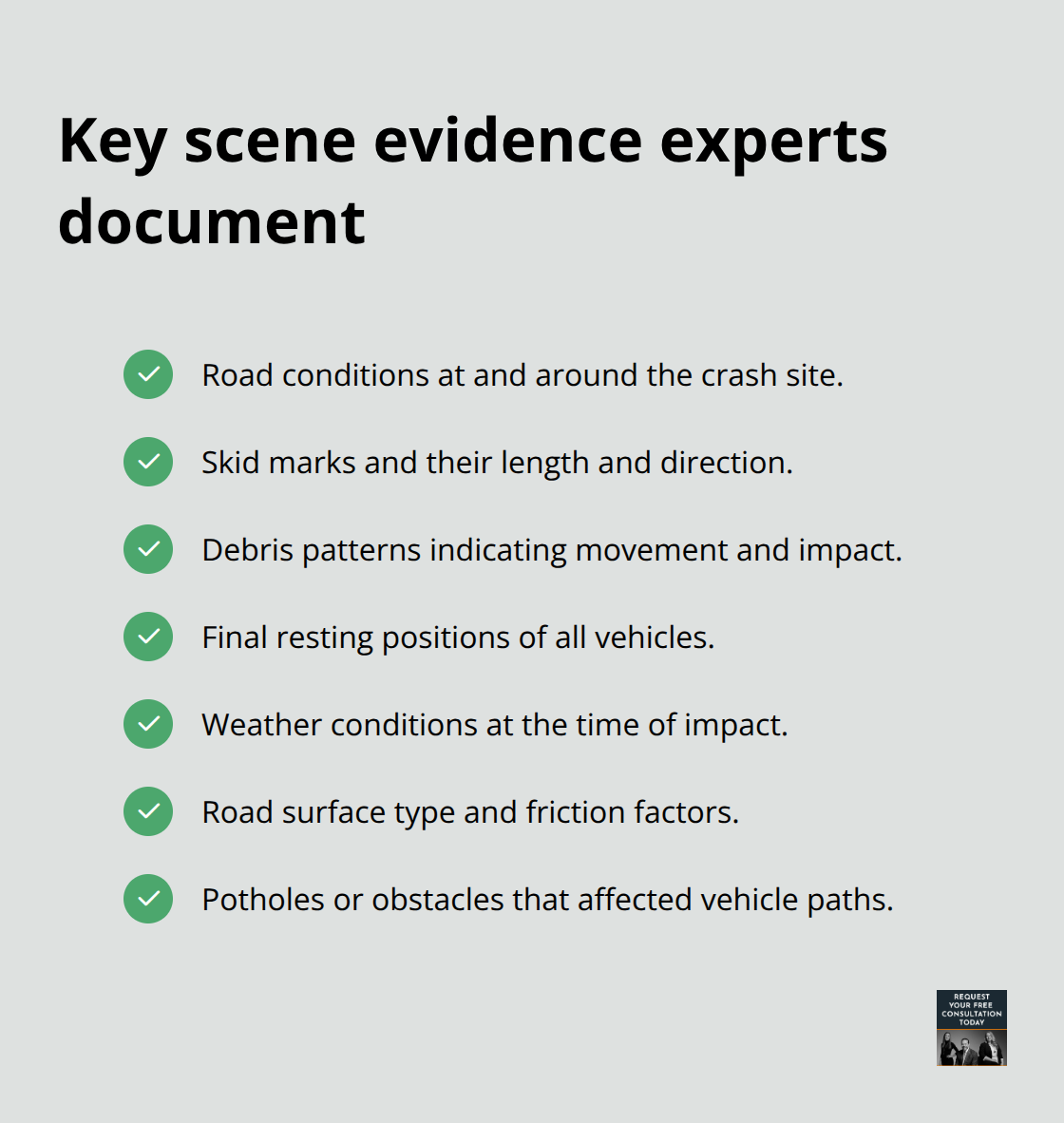
Weather conditions at the time of impact, road surface type, and even the presence of potholes or obstacles all factor into their investigation. Insurance companies often skip this step entirely, relying instead on police reports that may contain errors or incomplete information. A thorough scene analysis reveals details that change the entire narrative of what happened.
What Vehicle Damage Reveals
Vehicle damage tells a precise story that reconstruction professionals know how to read. The point of impact, the depth and direction of damage, and how metal deformed during the collision all indicate speed and angle at the moment of contact. Paint transfers, glass fragments, and fluid leaks provide additional clues about which vehicle struck which and with how much force.
Police reports frequently misidentify fault based on vehicle position alone, but professionals examine the damage patterns to determine the actual sequence of events. When damage analysis combines with police reports and witness statements, inconsistencies become obvious. A witness might claim a vehicle ran a red light, but damage patterns and skid mark evidence can either confirm or contradict that account (something insurance adjusters lack the training to catch).
Why This Evidence Matters in Your Case
Insurance adjusters lack the training to recognize contradictions between witness accounts and physical evidence. Reconstruction evidence carries significant weight in settlement negotiations and courtroom proceedings because it removes guesswork from the equation. The scientific approach protects your rights when insurance companies deny liability or lowball offers based on incomplete investigations.
This objective analysis transforms how your case moves forward. Insurance companies cannot easily dismiss evidence rooted in physics and measurable data, which makes the next step-understanding when you actually need this professional analysis-critical to your strategy.
How Reconstruction Evidence Wins Cases
Why Insurance Companies Cannot Ignore Scientific Analysis
Reconstruction evidence transforms how insurance companies evaluate your claim because it removes their ability to dismiss what happened as unclear or contested. When a collision reconstruction professional presents findings based on physics, mathematics, and measurable data, insurance adjusters face a choice: accept the scientific conclusion or explain why they reject objective analysis. This shift in power matters tremendously in settlement negotiations.
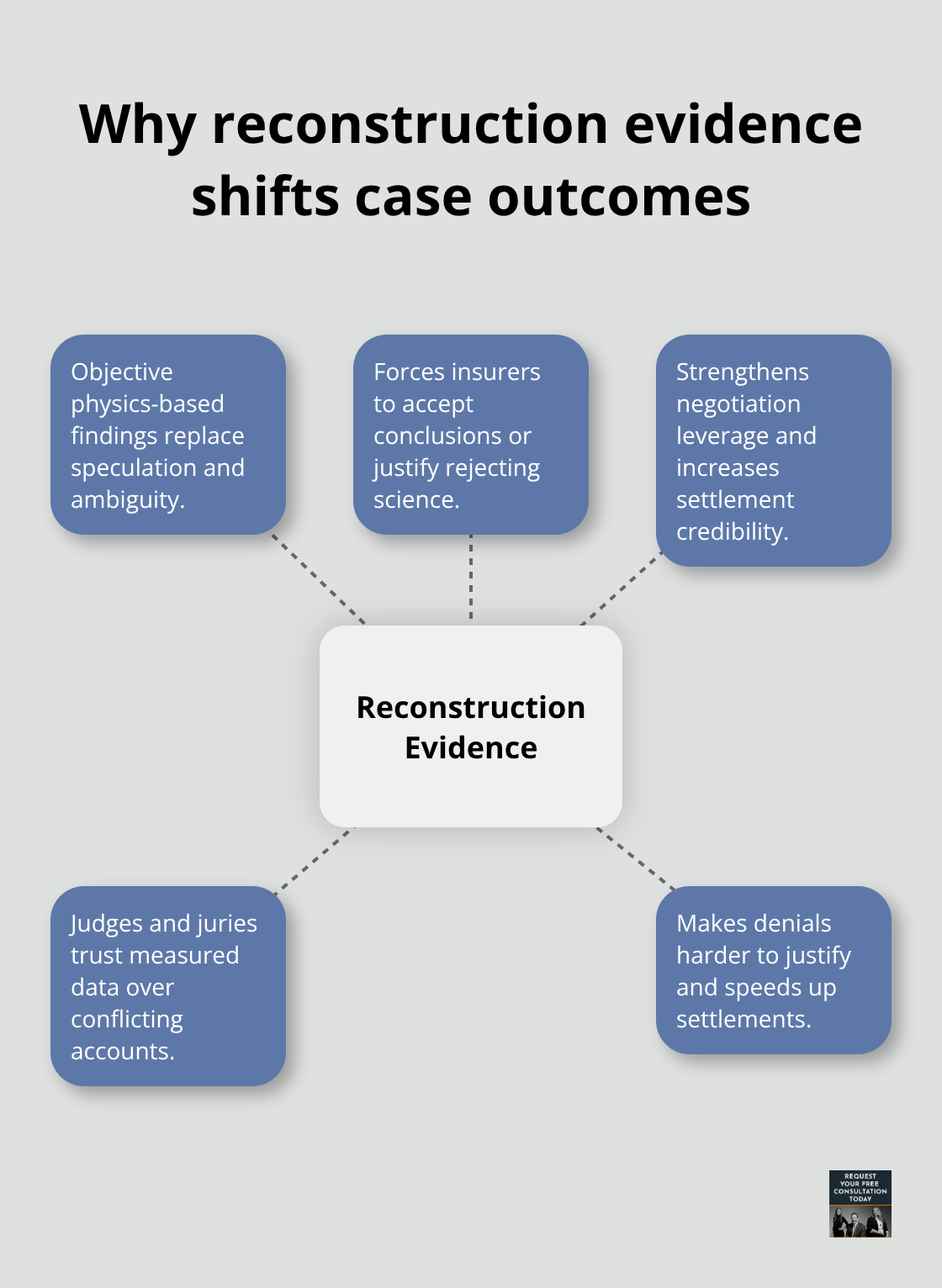
Insurance companies know that judges and juries trust reconstruction evidence far more than police reports or witness statements alone.
Cases supported by reconstruction evidence settle for significantly higher amounts than those relying solely on witness testimony. The scientific foundation makes denial harder to justify. Insurance companies recognize the risk of losing at trial when faced with credible physical evidence, which accelerates settlement discussions considerably.
How Reconstruction Evidence Contradicts Insurance Company Claims
Reconstruction professionals identify specific contradictions between what insurance companies claim happened and what the physical evidence actually shows. If an insurance adjuster argues that your vehicle caused the accident based on final resting positions alone, reconstruction evidence can prove that damage patterns, skid marks, and impact angles tell a completely different story.
This contradiction becomes powerful ammunition in your case because it demonstrates that the insurance company either failed to investigate properly or deliberately misrepresented the facts. Their argument becomes speculation against your professionally documented facts. The opposing party cannot simply present a competing narrative without scientific backing when you move toward trial.
The Advantage in High-Stakes Cases
This advantage compounds when injuries are severe or when wrongful death is involved, because juries take reconstruction evidence seriously in cases where establishing fault clearly determines whether you receive fair compensation or leave money on the table. Reconstruction professionals provide the objective foundation that protects your rights when insurance companies deny liability or lowball offers based on incomplete investigations.
The strength of this evidence means that the next step-identifying which situations actually require reconstruction analysis-directly impacts your case strategy and potential outcome.
When Reconstruction Becomes Necessary
Multi-Vehicle Accidents and Fault Disputes
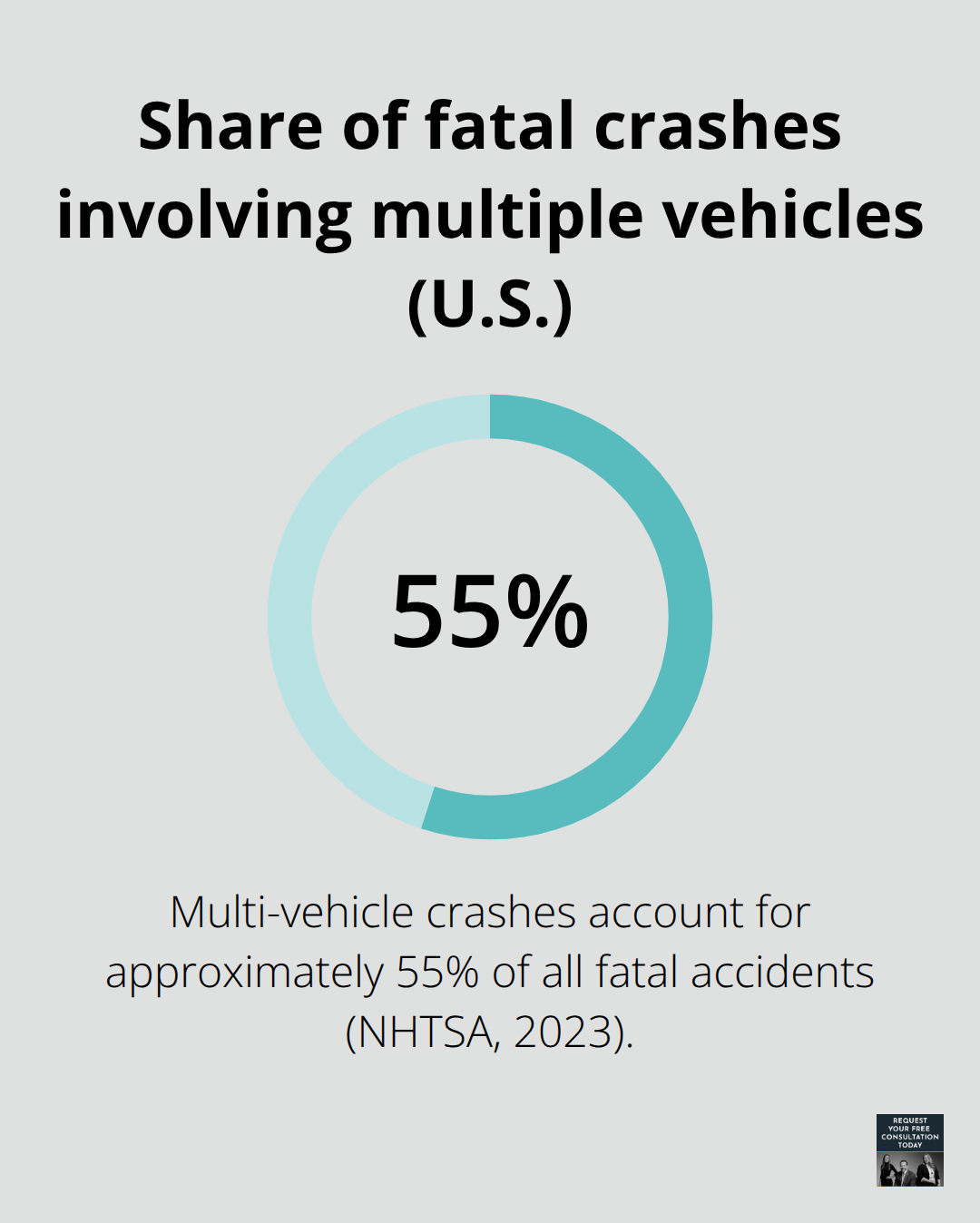
Reconstruction evidence matters most when fault remains genuinely unclear or when insurance companies actively contest liability. Multi-vehicle accidents create complicated scenarios where determining which driver caused the initial impact becomes difficult from witness accounts alone. A 2023 report from the National Highway Traffic Safety Administration found that multi-vehicle crashes account for approximately 55% of all fatal accidents, yet insurance companies frequently assign fault based on incomplete police reports rather than physical analysis. When three or more vehicles collide, witnesses often disagree on sequence and causation, making reconstruction analysis the only way to establish objective fault.
Road conditions, vehicle speeds, and impact angles become critical to proving who caused the accident. Insurance adjusters typically avoid reconstruction in these cases because the analysis often contradicts their preferred liability assignment. This is precisely when you need professional analysis to protect your rights against denial or unfair settlement offers.
Severe Injuries and Wrongful Death Claims
Severe injury and wrongful death cases demand reconstruction evidence because courts and juries expect scientific documentation when substantial compensation is at stake. Medical costs for traumatic brain injuries average $85,000 to $3 million over a lifetime according to the Brain Injury Association of America, making fault determination extraordinarily high-stakes. Insurance companies know that juries distrust cases lacking physical evidence in high-damage scenarios, so reconstruction analysis becomes your foundation for credibility.
Commercial Truck Accidents
Commercial truck accidents require specialized reconstruction knowledge because trucks operate under different physics than passenger vehicles, and trucking companies employ aggressive defense strategies backed by their own reconstruction professionals. When you face a well-resourced defendant, your reconstruction evidence must match or exceed theirs in rigor and detail.
High-Speed Impact Cases
High-speed impact cases similarly demand reconstruction because speed estimation from witness observation is notoriously unreliable, yet speed directly determines negligence and damages. Reconstruction professionals use vehicle damage, skid mark length, and final resting positions to calculate actual impact speed with measurable accuracy. Without this analysis, insurance companies will argue lower speeds and reduced liability in your case.
Final Thoughts
Reconstruction evidence fundamentally transforms your accident case by shifting you from fighting insurance company denials to presenting objective facts that support fair compensation. We at Schaar & Silva LLP have watched a collision reconstruction expert’s analysis turn cases where liability seemed uncertain into clear victories for our clients. Cases backed by reconstruction evidence settle for significantly higher amounts than those relying on witness testimony alone, and insurance companies recognize that judges and juries trust scientific analysis far more than police reports or adjuster opinions.
A collision reconstruction expert provides the documentation that makes insurance company denials much harder to justify when these companies reject claims based on incomplete investigations or misinterpretations of police reports. When an adjuster claims your vehicle caused the accident based solely on final resting positions, reconstruction evidence can prove that damage patterns and impact angles tell a completely different story. This contradiction forces insurance companies to reconsider their position and move toward reasonable settlements rather than risk trial losses.
We at Schaar & Silva LLP understand that accident recovery involves more than legal strategy-we assist with medical bill support through lien services, help evaluate property damage claims fairly, and connect you with psychological support specialists who address the emotional trauma that accidents create. If you’ve been injured in a vehicle accident in Santa Cruz County, Sacramento, or Oakland, contact us to discuss how reconstruction evidence can strengthen your case and protect your rights against insurance denials.
