

A whiplash injury from a car accident can cause pain that lingers for months or even years. Many victims in Santa Cruz don’t realize how much their whiplash settlement should actually cover.
We at Schaar & Silva LLP have helped accident victims understand what their cases are worth and how to get fair compensation. This guide walks you through the settlement process step by step.
Understanding Whiplash Injuries and Their Impact
What Happens Inside Your Body After Whiplash
Whiplash occurs when your neck suddenly jerks backward and forward during a collision, stretching soft tissues beyond their normal range. The National Highway Traffic Safety Administration reports that rear-end collisions cause approximately 1.7 million whiplash injuries annually in the United States. Your neck contains seven vertebrae stacked on top of each other, separated by discs filled with gel-like material that absorbs shock. When impact happens, these discs can bulge or herniate, ligaments tear, and muscles become inflamed. Some victims in Santa Cruz don’t feel pain until hours or days after the accident. This delayed onset makes whiplash particularly tricky because you might initially think you’re fine, then suddenly experience severe symptoms when inflammation develops.
Pain That Extends Far Beyond Your Neck
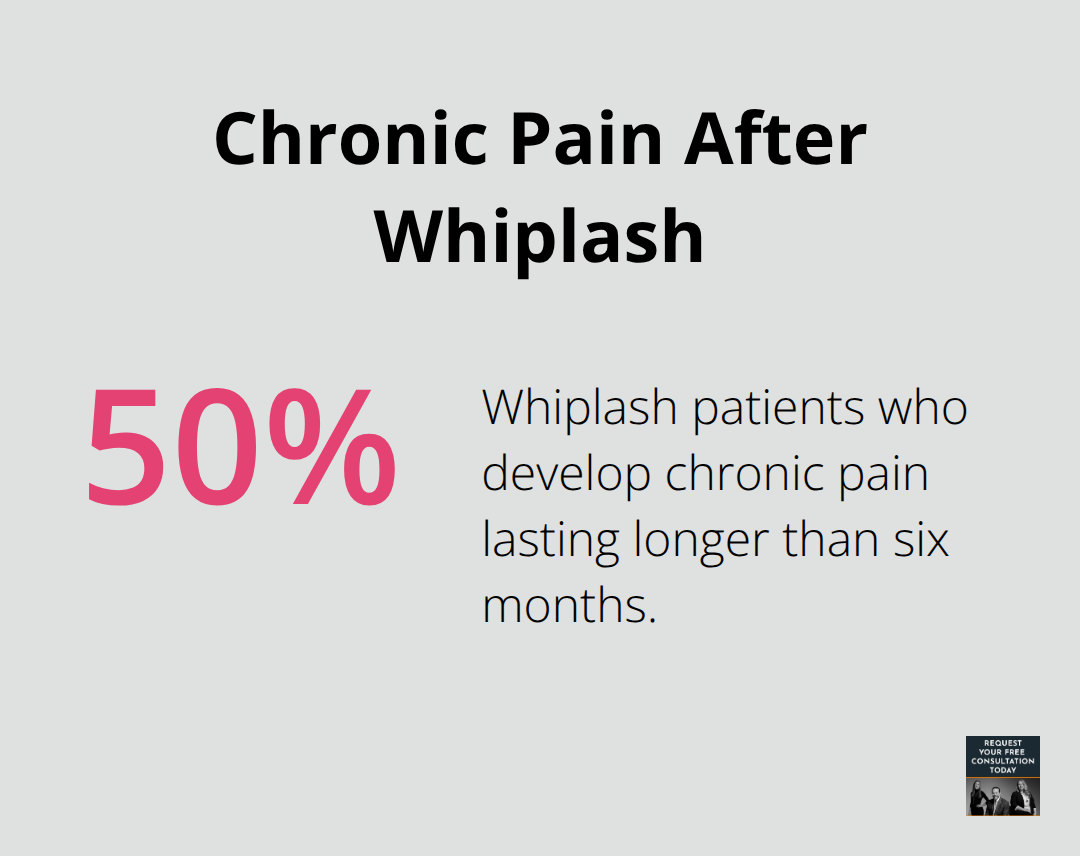
Most people assume whiplash only affects the neck, but the injury radiates throughout your body. Common symptoms include headaches at the base of your skull, shoulder pain, arm numbness, and lower back pain. According to research from the Journal of Orthopaedic Surgery and Research, approximately 50 percent of whiplash patients develop chronic pain lasting longer than six months. You might experience dizziness, difficulty concentrating, memory problems, or sleep disruption-these neurological symptoms stem from nerve irritation and inflammation.
Some victims report jaw pain or difficulty chewing because the trauma affects the temporomandibular joint. Whiplash settlements should account for these widespread effects, not just neck pain alone.
Why Whiplash Differs From Other Neck Injuries
Whiplash stands apart from other neck injuries because acceleration-deceleration forces (rather than direct impact or degenerative disease) typically cause it. A herniated disc from a work injury or arthritis develops gradually, but whiplash happens instantaneously. This sudden mechanism means your body has no time to brace itself, resulting in more extensive soft tissue damage. Whiplash also presents unique challenges for documentation-unlike fractures visible on X-rays, soft tissue injuries don’t always show up clearly on imaging studies. Insurance companies sometimes undervalue whiplash claims because the injury lacks obvious visual evidence. When you pursue your settlement, understanding this distinction matters significantly because it explains why your injury deserves appropriate compensation even without dramatic medical imaging results.
The amount you receive for your whiplash settlement depends on several factors that go well beyond the initial medical diagnosis.
Factors That Influence Whiplash Settlement Amounts in Santa Cruz
Medical Costs and Treatment Expenses
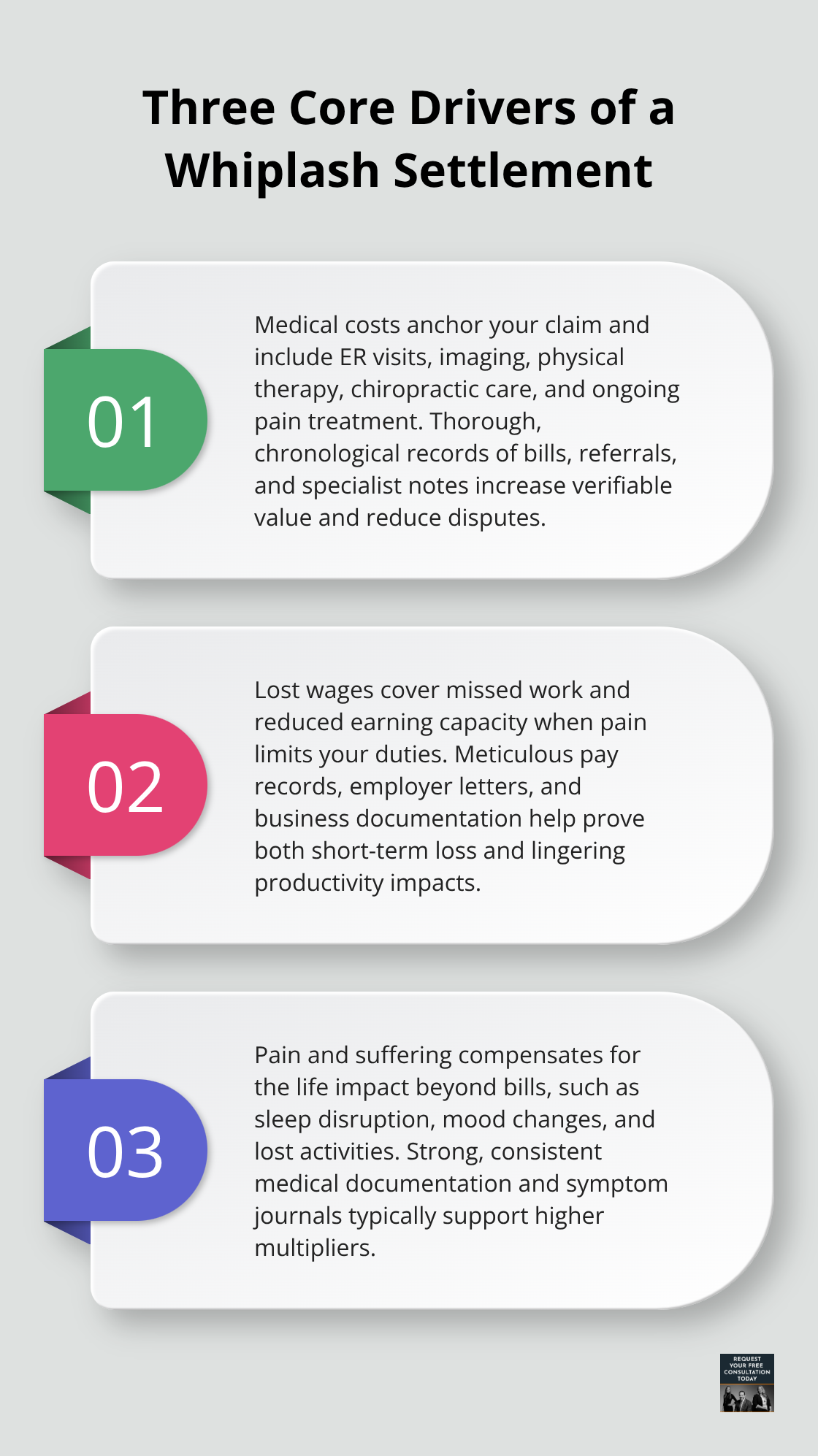
Medical expenses form the foundation of any whiplash settlement, and Santa Cruz victims often underestimate what they should claim. Your medical bills include immediate emergency room visits, diagnostic imaging like MRIs or CT scans, physical therapy sessions, chiropractic care, and ongoing treatment for chronic pain. The average cost for whiplash treatment in California ranges from $10,000 to $25,000 over the first year, according to data from the American Medical Association. However, many victims stop treatment prematurely because insurance pressures them to close their cases quickly. This mistake costs you significantly because insurance companies calculate settlements based on documented medical expenses, not potential future costs.
If you discontinue physical therapy after three months when your therapist recommends six months, your settlement reflects only three months of treatment. You must document every medical appointment, every prescription, every imaging study, and every specialist consultation. Keep receipts, billing statements, and medical records organized chronologically. Insurance adjusters scrutinize medical expenses closely, so comprehensive documentation strengthens your position considerably.
Lost Wages and Income
Lost income from whiplash injuries extends beyond the obvious missed work days immediately after your accident. Many victims experience reduced earning capacity for months because they cannot perform their previous job duties. If you earn $60,000 annually and miss eight weeks of work, that represents approximately $9,200 in lost wages before taxes.
However, your settlement should also account for reduced productivity when you return to work while still experiencing pain or taking pain medication. Self-employed individuals and freelancers face particular challenges proving lost income, so maintaining detailed business records and client communications becomes critical. Insurance companies want concrete evidence of your income loss, not estimates or assumptions.
Pain and Suffering Compensation
Pain and suffering compensation represents the most subjective component of your settlement, yet it often comprises 50 to 75 percent of the total award. California courts recognize that whiplash causes genuine physical and emotional suffering that extends beyond measurable medical expenses. Chronic pain affecting your sleep quality, inability to participate in hobbies, relationship strain from irritability caused by pain, and depression from reduced mobility all factor into pain and suffering calculations.
Insurance companies typically apply a multiplier ranging from 1.5 to 5 times your medical expenses, depending on injury severity and documentation quality. The stronger your medical records and the longer your treatment extends, the higher your multiplier typically becomes. This is where the quality of your evidence matters most-detailed medical records and consistent treatment demonstrate the genuine impact whiplash has had on your life.
Understanding these three settlement components positions you to evaluate any offer you receive. The next step involves navigating the actual settlement process, which requires careful attention to documentation and strategic decisions about when to pursue legal action.
Navigating the Settlement Process After a Car Accident
Documenting Your Injury and Treatment
Getting your whiplash settlement right requires meticulous attention to documentation from the moment the accident happens. Photograph your vehicle damage, the accident scene, and any visible injuries immediately after the collision, even if you feel fine. Request a copy of the police report within days of the accident and verify all details are accurate, since insurance adjusters reference this document heavily.
Medical documentation becomes your strongest evidence, so visit a healthcare provider promptly even if symptoms appear minor. The Insurance Information Institute reports that delays in seeking medical treatment often result in settlement reductions of 20 to 40 percent because insurance companies question the injury’s severity. Create a detailed injury journal that tracks daily pain levels, activities you cannot perform, sleep disruption, and medication side effects. Take this journal to every medical appointment and share relevant entries with your healthcare provider, who can then document these impacts in your medical records.
Keep all receipts, billing statements, medical reports, and prescription records in one organized folder (either physical or digital). Insurance adjusters move quickly through cases, typically within 30 to 90 days, so having comprehensive documentation ready accelerates your settlement timeline significantly.
Working With Insurance Companies
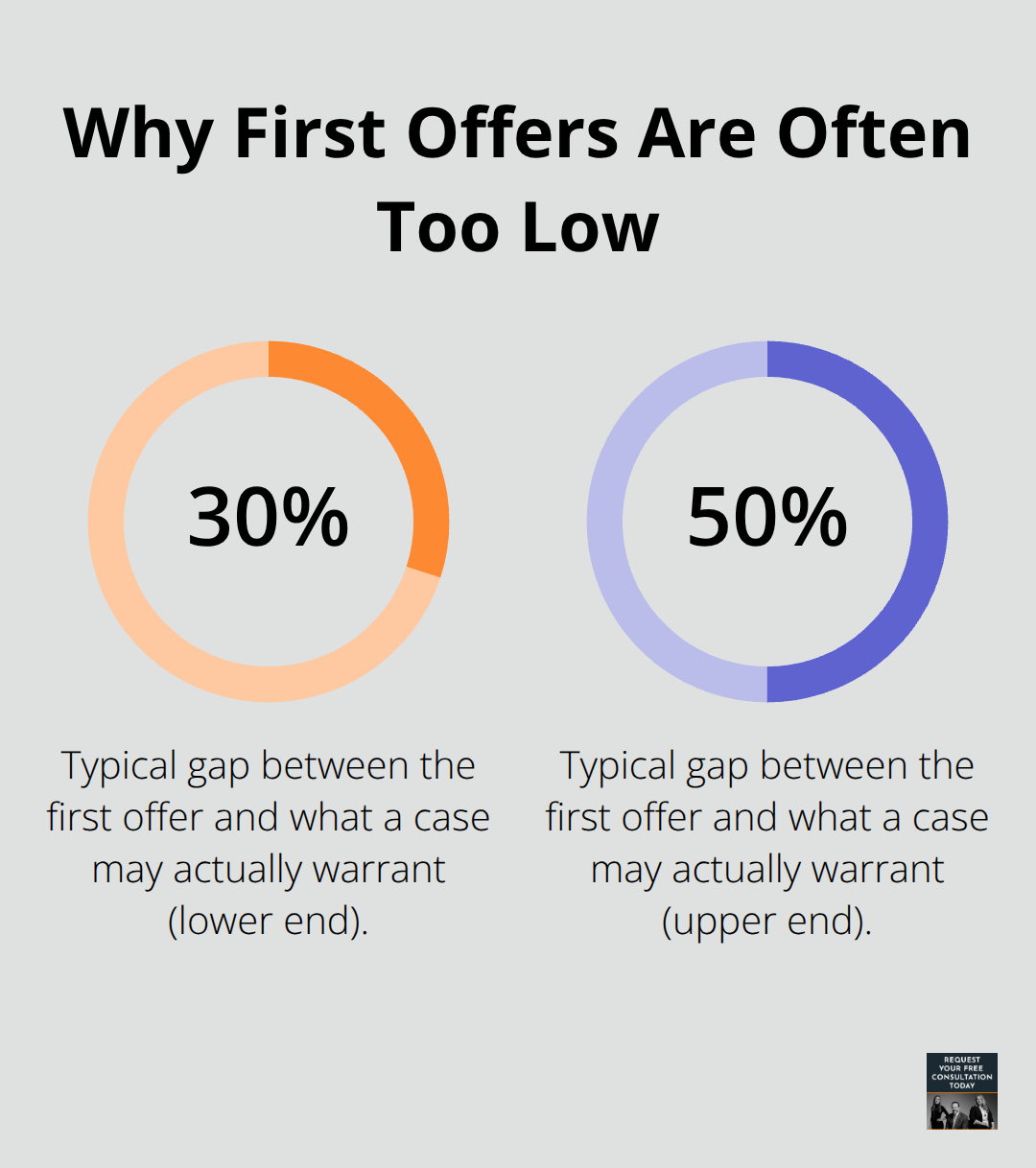
Communicating with insurance companies requires strategic restraint and clarity about your position. Never accept the first settlement offer, as initial proposals typically fall 30 to 50 percent below what your case actually warrants. Document every conversation with insurance representatives by noting the date, time, person’s name, and specific statements made.
Provide only factual information without exaggeration or emotional language, which undermines your credibility. When the insurance adjuster requests a recorded statement, decline politely and offer to provide written responses instead (this gives you time to ensure accuracy). Stick to what you can verify with medical records and receipts rather than estimates or assumptions.
When to Pursue Legal Action
If settlement negotiations stall after 60 days or the insurance company’s offer remains substantially below your documented medical expenses and lost wages, pursuing legal action becomes the appropriate next step. Many accident victims wait too long to consult with an attorney, missing critical filing deadlines, so contacting a personal injury attorney within the first few months after your accident protects your rights and strengthens your negotiating position considerably.
The legal team at Schaar & Silva LLP stands out for its dedicated client service and in-depth legal knowledge in personal injury cases. We handle the legal complexities while you focus on recovery. Our team can help direct you to medical lien services that facilitate payment of your bills until your case is resolved, and we assist in evaluating property damage claims to help you receive fair valuation for your loss.
Final Thoughts
Whiplash injuries from car accidents create real financial and physical consequences that extend far beyond the initial collision. Your settlement should reflect the full scope of your medical treatment, lost income, and the genuine pain affecting your daily life. The documentation you gather immediately after your accident-medical records, receipts, injury journals, and communication logs-directly determines whether you receive fair compensation or accept an inadequate offer.
Many Santa Cruz accident victims settle too quickly because they underestimate their case value or feel pressured by insurance companies. Taking time to build a comprehensive record of your injury and its impact positions you to negotiate from strength. If settlement discussions stall or the insurance company’s offer falls significantly below your documented expenses and lost wages, consulting an attorney within the first few months protects your rights and strengthens your negotiating position.
Your whiplash settlement Santa Cruz case deserves attention from someone who understands both the medical realities of your injury and the legal strategies that maximize your compensation. Contact Schaar & Silva LLP to discuss your situation and learn how we can support your recovery and claim.
