

A head injury from a car crash can change your life in seconds, even if you feel fine immediately after the accident. Many people don’t realize they’ve suffered a serious injury because symptoms appear hours or days later.
We at Schaar & Silva LLP help accident victims understand their injuries and fight for fair compensation. This guide walks you through what to watch for, when to seek medical care, and how to protect your legal rights.
Recognizing Head Injury Symptoms After a Car Crash
Immediate Physical Signs to Watch For
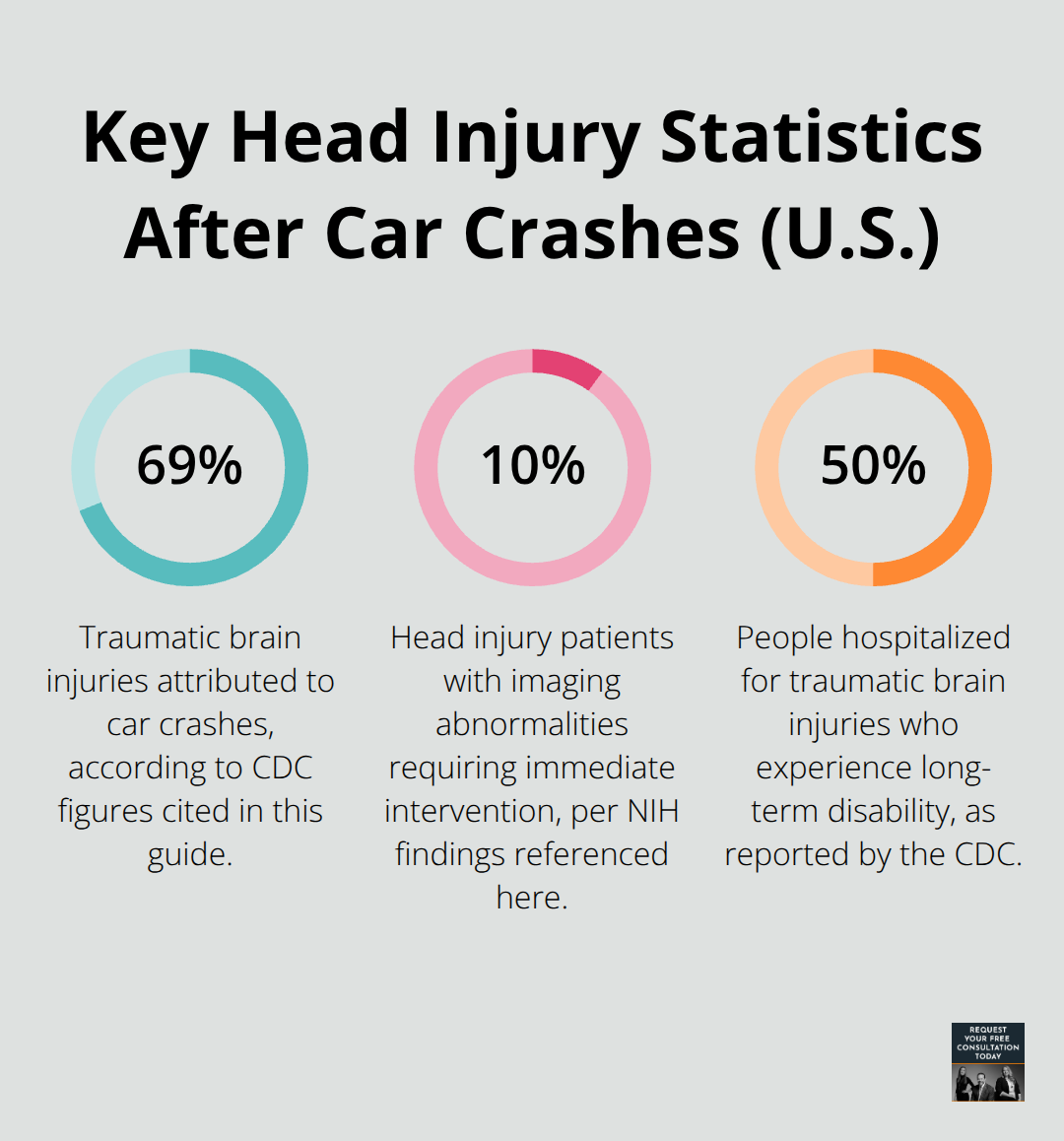
The first hours after a car crash are deceptive. You might walk away feeling mostly okay, then wake up the next morning with a pounding headache, nausea, or confusion. According to the Centers for Disease Control and Prevention, about 69% of traumatic brain injuries result from car crashes, and many victims don’t seek immediate medical attention because their symptoms seem minor. This is a serious mistake. Loss of consciousness, vomiting, clear fluid from the nose or ears, or severe headaches demand emergency care right away.
These signs indicate a significant impact that requires professional evaluation and treatment.
Delayed Symptoms That Appear Days or Weeks Later
The injuries that appear hours or days after impact are just as serious and often get overlooked. Dizziness, sensitivity to light or noise, memory problems, difficulty concentrating, mood changes, and sleep disturbances frequently emerge 24 to 72 hours after the accident. Some people experience neck stiffness, balance problems, or vision changes that weren’t present at the accident scene. Many people attribute these delayed symptoms to stress or fatigue rather than recognizing them as signs of a head injury that needs medical evaluation. This misinterpretation can delay treatment and worsen your condition.
Differences Between Mild and Severe Head Injuries
Not all head injuries are equal, and the distinction matters for your treatment and legal claim. A mild traumatic brain injury, often called a concussion, can still produce significant symptoms like headaches, confusion, or memory lapses that last weeks or months. A severe head injury involves loss of consciousness lasting more than 30 minutes, inability to remember the accident, or persistent neurological symptoms. The National Institute of Neurological Disorders and Stroke reports that repeated head impacts, even mild ones, can lead to long-term cognitive decline. This means a crash that seems minor initially could have lasting effects on your ability to work or function.
The danger lies in underestimating mild injuries. Many people with concussions return to normal activities too quickly, which can worsen symptoms or trigger post-concussion syndrome. You need medical imaging and professional assessment to determine severity, not your own judgment about how you feel. Document every symptom you experience, no matter how small, and get a medical evaluation within 48 hours of the crash. When you file a claim, this documentation becomes vital evidence of your injury’s impact on your life. Understanding what happened to your body sets the foundation for both your recovery and your legal case, which is why the next step-seeking proper medical care-cannot wait.
Medical Care and Treatment Options
When to Seek Emergency Medical Attention
Seeking medical attention immediately after a car crash is non-negotiable, regardless of how you feel. The American College of Emergency Physicians reports that head injury patients who receive CT scans within the first few hours have significantly better outcomes than those who delay imaging. Head injuries worsen when left untreated, and what seems like a minor symptom can mask serious internal damage.
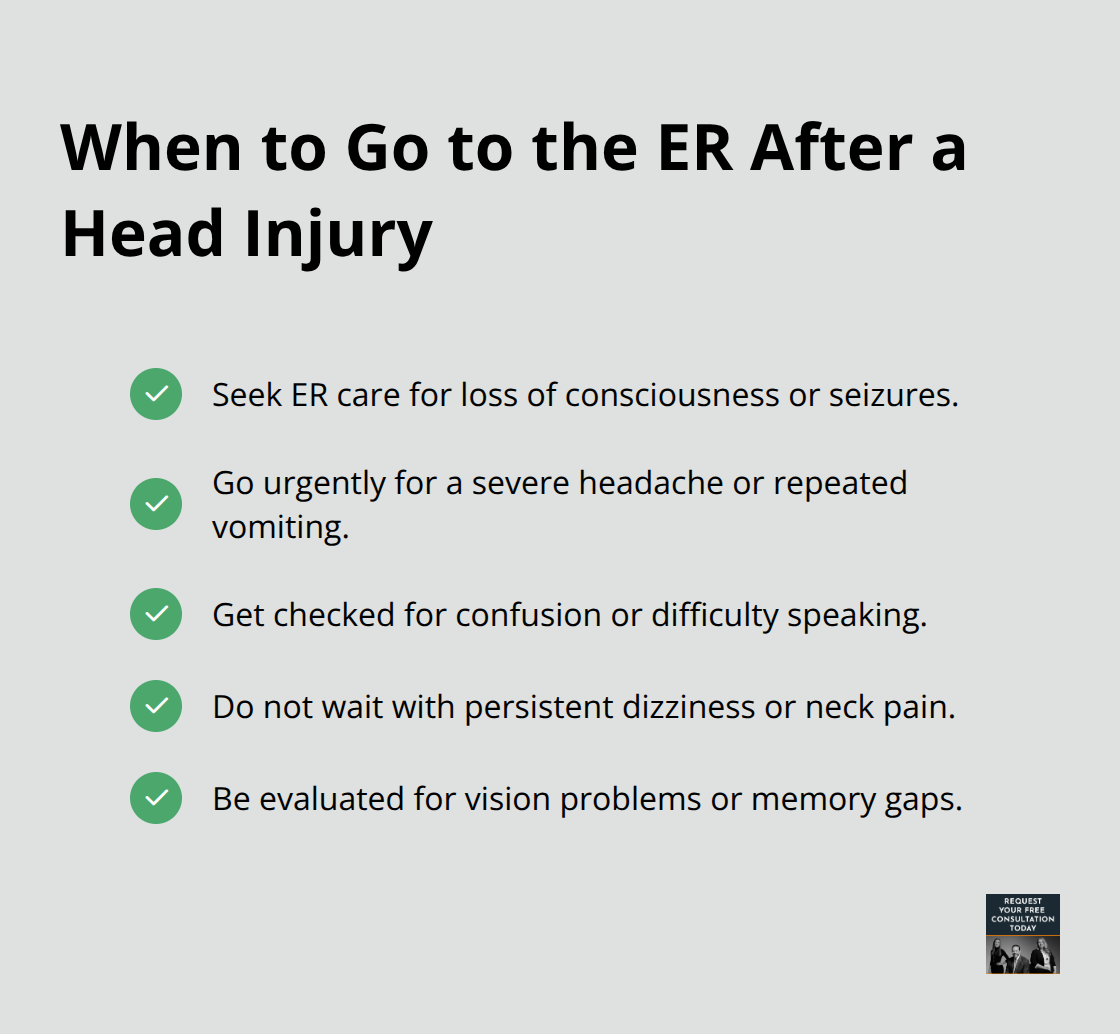
Go to an emergency room if you experience any loss of consciousness, severe headaches, repeated vomiting, confusion, difficulty speaking, or seizures. Even if these dramatic signs aren’t present, get evaluated within 24 hours if you have persistent dizziness, neck pain, vision problems, or memory gaps.
Emergency room doctors perform a Glasgow Coma Scale assessment to measure your neurological function and determine whether imaging is necessary. This initial evaluation creates a medical record that protects both your health and your legal case.
Diagnostic Tests and Imaging Procedures
Diagnostic testing typically includes CT scans or MRI imaging to identify bleeding, swelling, or structural damage inside your skull. A CT scan takes minutes and can reveal life-threatening injuries immediately, while an MRI provides more detailed images but takes longer and costs more. The National Institutes of Health found that about 10% of people with head injuries show abnormalities on imaging that require immediate intervention.
Your doctor may also order baseline cognitive testing to measure your memory, concentration, and processing speed, which becomes important if symptoms persist. These tests establish a baseline that helps track your recovery progress over weeks or months.
Recovery Timeline and Rehabilitation
Recovery timelines vary dramatically depending on injury severity. Mild concussions typically improve within two to three weeks, though some people experience persistent symptoms lasting months. Moderate to severe traumatic brain injuries can require months or years of rehabilitation involving physical therapy, occupational therapy, and speech therapy.
The CDC reports that about 50% of people hospitalized for traumatic brain injuries experience long-term disability. Rehabilitation focuses on regaining lost functions through structured exercises and cognitive retraining, often requiring multiple sessions per week. Medical bills from head injury treatment average $45,000 to $110,000 depending on severity and length of hospitalization (which means tracking expenses matters significantly for your case).
Document every appointment, test result, and therapy session with dates and costs. This documentation directly supports your compensation claim and provides a clear picture of your injury’s financial impact. As your medical treatment progresses, the expenses and medical records you accumulate become the foundation for calculating fair compensation, which brings us to the next critical step in protecting your rights.
Filing a Claim for Head Injury Damages
Documenting Medical Records and Expenses
Collecting the right documentation immediately after your head injury diagnosis transforms a vague injury claim into a concrete case with measurable damages. Start gathering medical records from every provider who treats you, including emergency room reports, CT scan results, MRI images, neuropsychological testing, and rehabilitation notes. Request itemized bills rather than summaries, because insurance companies scrutinize charges and your attorney needs exact figures to calculate total damages. The American Journal of Public Health found that head injury victims who maintained detailed medical records received settlements 40% higher on average than those with incomplete documentation.
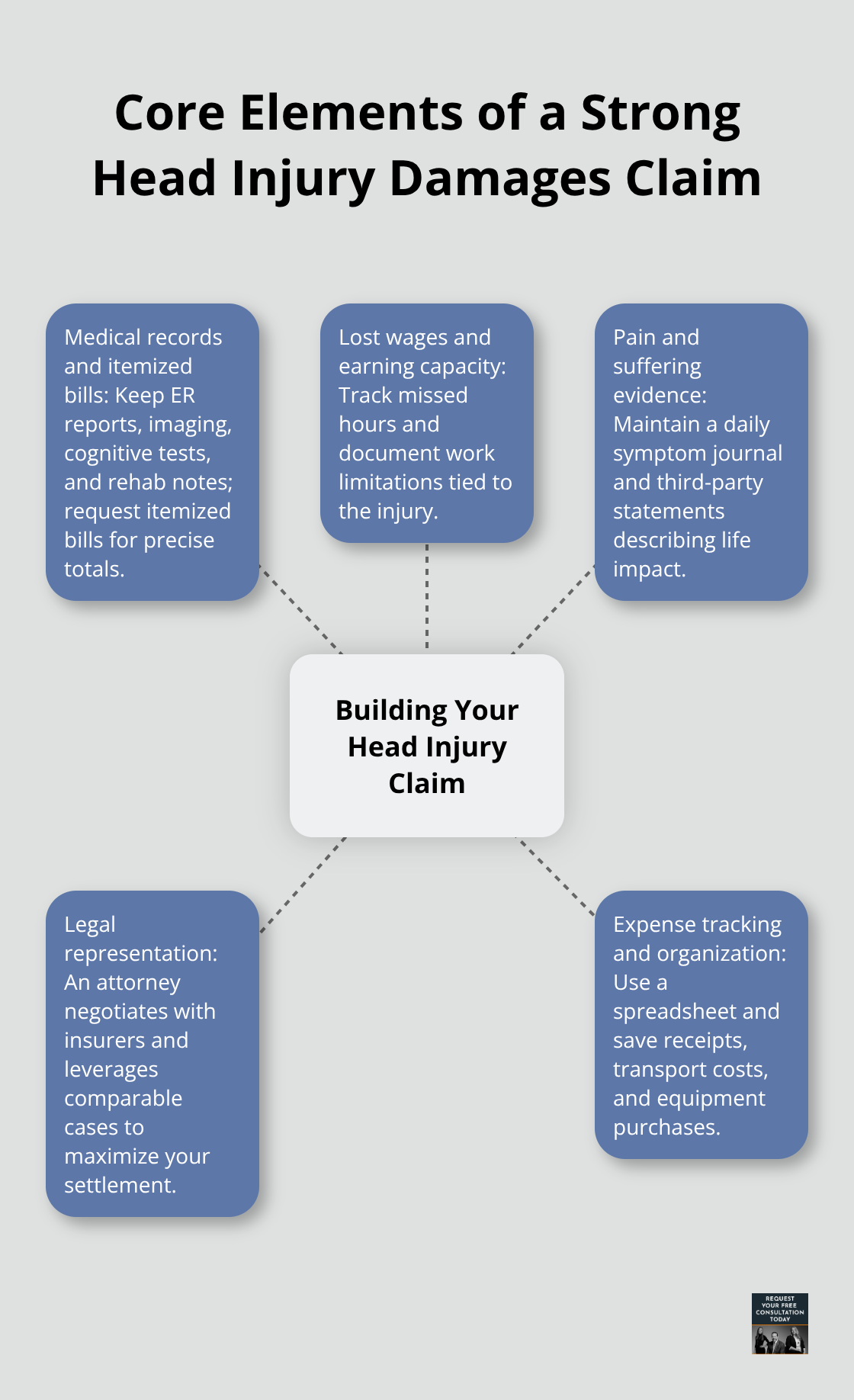
Create a spreadsheet that tracks every medical expense, appointment date, provider name, and cost as it occurs. Include transportation costs to appointments, pharmacy receipts for medications, and any adaptive equipment you purchased. Photograph your medical bills and test results, then store copies digitally and physically. This organized approach prevents missing expenses that add up significantly over months of treatment.
Calculating Lost Wages and Income Impact
Lost wages from missed work often exceed medical bills for head injury victims, yet many people underestimate this component when negotiating settlements. Calculate your lost income by multiplying your hourly rate or daily salary by every work hour you missed due to medical appointments, symptoms preventing work, or disability. If your head injury caused permanent cognitive changes affecting your earning capacity, you can claim future lost wages based on your reduced ability to perform your previous job.
The Bureau of Labor Statistics data shows that workers with traumatic brain injuries earn approximately 35% less annually than before their injuries. This reduction in earning power justifies compensation that extends beyond your current medical bills and lost time. Document this impact through performance reviews, employer statements, or job termination letters that show how your injury affected your employment status.
Addressing Pain and Suffering Damages
Pain and suffering compensation addresses the non-financial impact of your injury, including chronic headaches, sleep disturbance, anxiety, memory problems, and reduced quality of life. Courts in California consider the severity of your symptoms, their duration, how they affect daily activities, and whether you developed post-concussion syndrome. Document this impact through a daily symptom journal noting headache intensity, cognitive difficulties, mood changes, and activity limitations.
Include statements from family members, employers, or friends describing observable changes in your behavior or capabilities. Insurance adjusters often minimize pain and suffering claims, which is why this documentation protects you during negotiations. The more specific your records about how symptoms interfere with work, relationships, and daily functioning, the stronger your claim becomes.
Working With Legal Representation
When you handle negotiations alone, adjusters treat you as someone unfamiliar with typical settlement values and often make lowball offers that don’t reflect your actual damages. The Insurance Research Council reports that injured people represented by attorneys receive settlements 3.5 times larger than unrepresented claimants with similar injuries.
An attorney handles the communication with insurance companies, evaluates settlement offers against your documented damages, and prepares your case for litigation if necessary. At Schaar & Silva LLP, we serve Santa Cruz County and can connect you with medical lien services that help cover your treatment costs while your case resolves, eliminating the pressure to accept inadequate settlements because medical bills are mounting. Your attorney reviews every medical record, calculates damages accurately using comparable cases, and presents your claim professionally to insurance adjusters who understand that represented clients will pursue court action if needed. This leverage typically results in significantly better outcomes than attempting solo negotiations.
Final Thoughts
A head injury from a car crash demands immediate attention and careful documentation. The symptoms you experience in the first hours and days after impact determine your medical trajectory and your ability to recover fully. Ignoring these warning signs or delaying treatment puts your health at risk and weakens any legal claim you might file later.
Your recovery involves two parallel paths that cannot be separated: medical treatment addresses your physical and cognitive healing, while legal action protects your financial interests during that recovery period. Many accident victims focus only on getting better without realizing that insurance companies exploit this focus by offering settlements far below what their injuries actually cost. You need both proper medical care and proper legal representation to emerge from this situation with your health restored and your finances protected.
At Schaar & Silva LLP, we understand that a head injury car crash creates overwhelming stress on top of your physical symptoms. We serve Santa Cruz County and help accident victims navigate both recovery and compensation. Contact Schaar & Silva LLP to discuss your case and learn how we can help you recover both physically and financially.
