
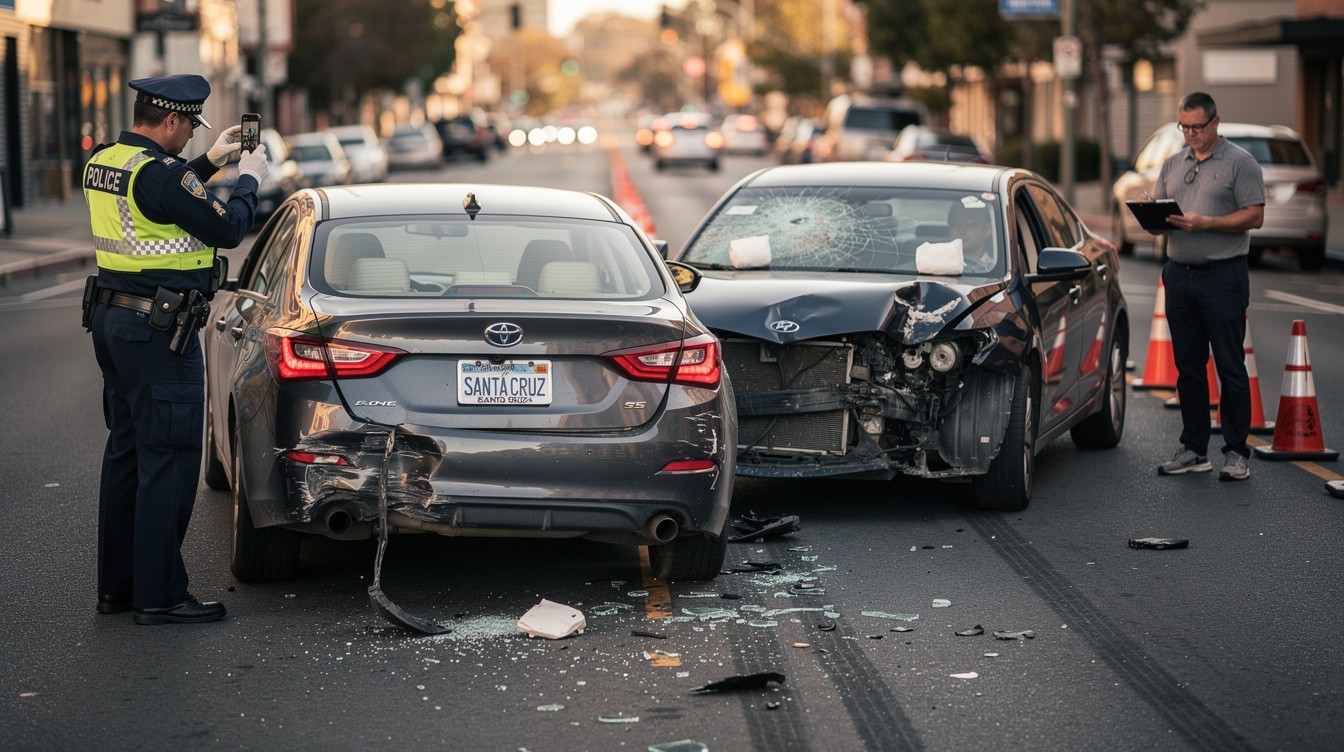
Rear end collisions in Santa Cruz happen in seconds, but the aftermath can last months or years. If you’ve been hit from behind, you’re likely facing medical bills, vehicle damage, and lost income.
We at Schaar & Silva LLP help accident victims understand what they’re entitled to recover and how to build a strong case. This guide walks you through fault rules, the damages you can claim, and the steps that protect your rights.
What Causes Rear End Collisions and Who’s Legally Responsible
Rear end collisions in Santa Cruz happen because a driver fails to maintain safe following distance or doesn’t react in time to stop. Distracted driving remains the leading cause. The National Highway Traffic Safety Administration reports that distracted driving claimed 3,308 lives in 2022 alone, with many of those deaths stemming from rear impact crashes. Texting, checking phones, eating, or adjusting infotainment systems all create the lag time that turns a simple brake application into a collision.
How Speed and Weather Amplify Rear End Risk
Speeding compounds the problem dramatically-a driver traveling at 45 mph needs significantly more distance to stop than one going 35 mph, yet many Santa Cruz drivers underestimate how quickly closing speeds develop on our coastal highways and residential roads. Weather conditions like fog, which blankets our region frequently, also trigger rear end crashes because visibility drops and reaction times extend.
California Law Presumes the Rear Driver Is at Fault
California law presumes the rear driver is at fault in rear end collisions. This isn’t arbitrary-it reflects a fundamental traffic rule that drivers must maintain safe distance and speed relative to the vehicle ahead. You cannot legally hit someone from behind and claim they caused it. Insurance companies operate from this assumption, and courts consistently uphold it. The only question becomes whether the rear driver’s negligence was 100% responsible or shared with the front driver, which affects settlement amounts.
Rare Exceptions Where the Front Driver Bears Partial Responsibility
Exceptions exist where the front driver bears partial responsibility. If the front driver suddenly reverses without warning, cuts off the rear vehicle from an adjacent lane, or has non-functional brake lights that violate California Vehicle Code Section 24250, courts may assign some fault to them. A completely dark vehicle stopping in a traffic lane at night without hazard lights activated presents a genuine visibility problem. Similarly, if the front driver parks illegally in a travel lane or their vehicle has mechanical failure that makes normal stopping impossible, the liability calculation shifts.
These exceptions are genuinely uncommon. Even when exceptions apply, comparative negligence rules mean you can still recover damages if you are less than 50% at fault under California law. Understanding whether your case involves shared liability affects how much compensation you ultimately receive-which is why the next section covers the specific damages you can claim.
What Damages Can You Recover
Rear end collisions generate four distinct categories of damages, and understanding each one determines how much compensation you actually receive.
Medical Expenses Form Your Claim’s Foundation
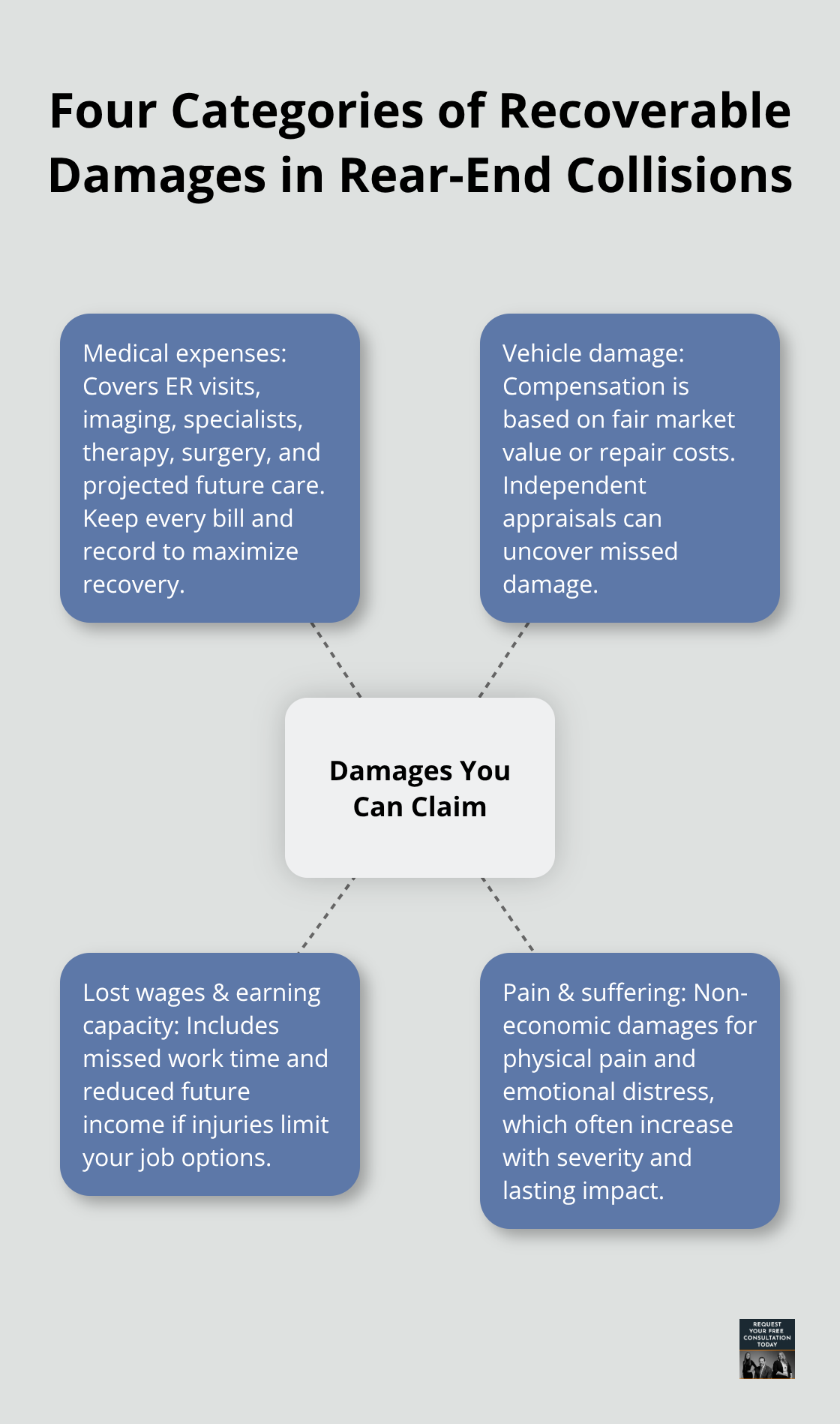
Medical expenses form the foundation of most claims. After a rear end impact, you’ll face immediate costs like emergency room visits, diagnostic imaging, and specialist consultations. Physical therapy for whiplash injuries often runs $3,000 to $5,000 depending on severity and duration. If you required surgery or ongoing treatment, costs escalate rapidly-spinal fusion procedures average $100,000 to $150,000 when accounting for hospital fees, surgeon costs, and anesthesia. You should document every medical expense, including future treatment costs that your doctor projects. Many victims underestimate their medical claims because they fail to include follow-up appointments, medication costs, and preventive care their doctor recommends to prevent long-term complications.
Vehicle Damage Requires Independent Valuation
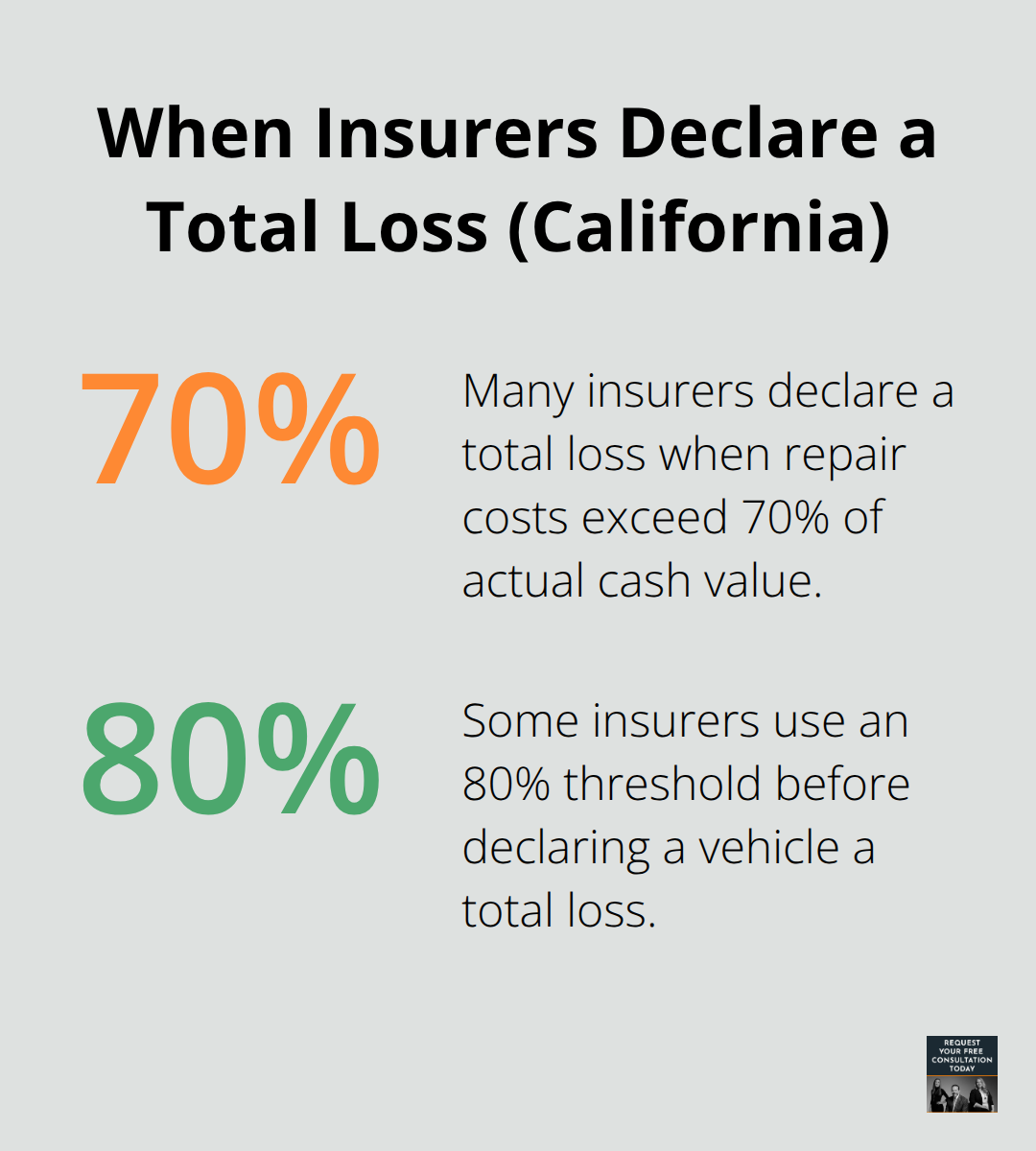
Vehicle damage claims require precise valuation, not the insurance company’s first offer. If your car suffered moderate damage, repair costs typically range from $5,000 to $15,000 depending on the vehicle model and damage extent. Total loss occurs when repair costs exceed 70% to 80% of the vehicle’s actual cash value-California law varies slightly by insurer but this threshold is standard. You’re entitled to the fair market value of your vehicle immediately before the collision, not the depreciated value the insurance adjuster initially quotes.
Get independent appraisals from certified mechanics; they often reveal damage the insurance company’s estimate missed.
Lost Wages and Reduced Earning Capacity
Lost wages represent income you couldn’t earn while recovering or attending medical appointments. You should document every hour missed from work, every medical visit that pulled you away from your job, and every day your doctor ordered you to rest. If your injury permanently reduces your earning capacity-for example, a back injury prevents you from returning to physically demanding work-you can claim the difference between your previous income and what you’ll earn in a less physically demanding role going forward.
Pain and Suffering Compensation Reflects Your Injury’s Impact
Pain and suffering compensation addresses the physical agony and emotional distress from your injury. California allows these non-economic damages without a set cap in most cases. Courts consider injury severity, recovery timeline, and permanent effects when calculating fair compensation. A rear end collision causing chronic pain lasting years justifies significantly higher pain and suffering awards than a minor soft tissue injury. The specific damages you claim directly influence the settlement amount you receive, which makes the next section-the immediate steps you take after the collision-absolutely vital to protecting your rights.
What to Do Right After Your Rear End Collision
Secure the Scene and Document Everything
The first 30 minutes after a rear end collision determine whether you build a strong case or leave money on the table. Your immediate actions create the evidence that supports your damage claims and establishes fault beyond dispute. Move your vehicle to safety if possible and if you’re physically able-staying in traffic risks additional collisions. Turn on hazard lights, set up warning triangles if you have them, and position yourself away from moving traffic.
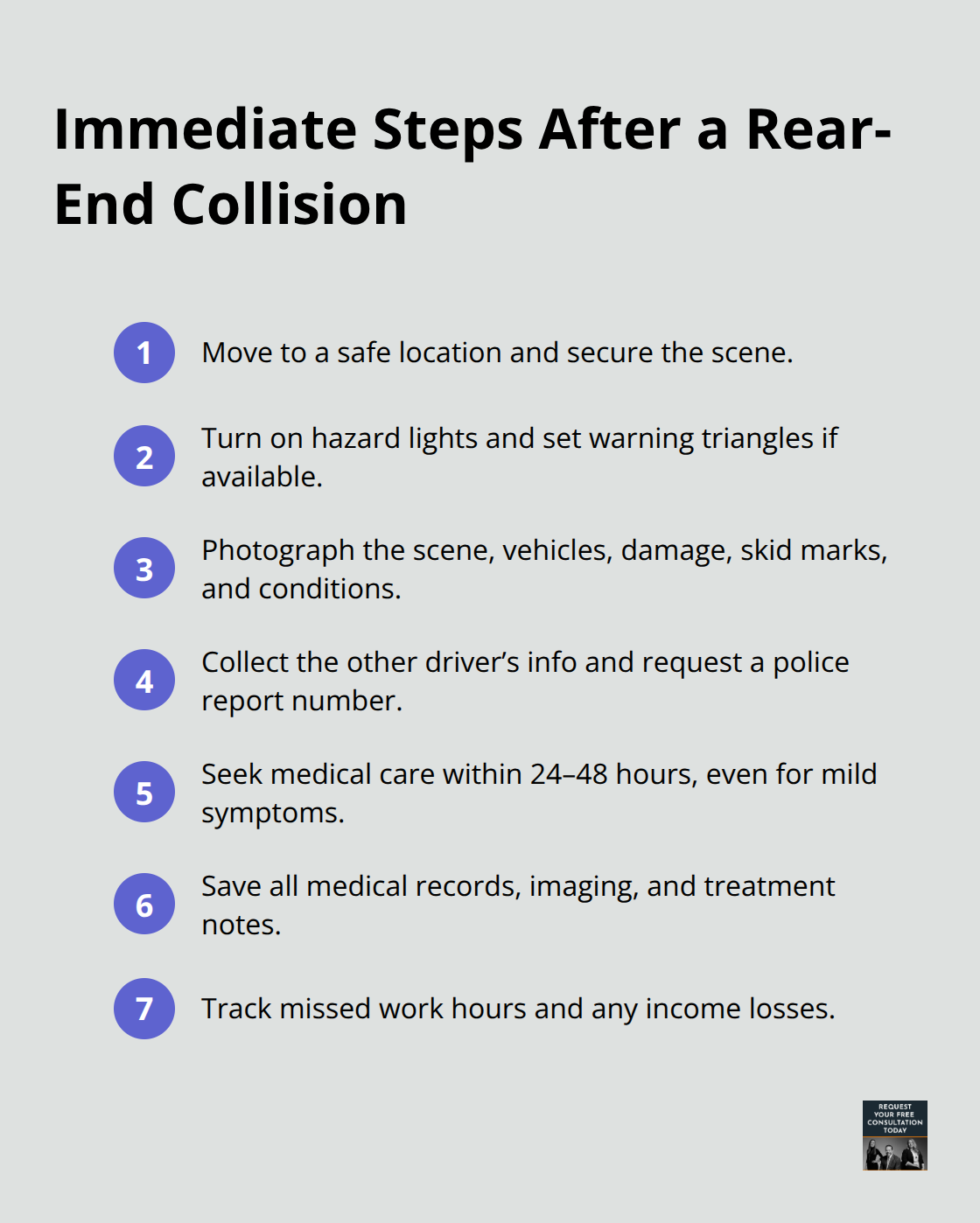
Pull out your phone and photograph everything before anyone moves vehicles or clears debris. Take wide shots showing the accident scene, the position of both vehicles, visible damage to your car, the other vehicle’s damage, skid marks on the pavement, traffic signals, street signs, and weather conditions. Photograph the other driver’s license plate, driver’s license, and insurance card-capture the full details legibly.
Collect Critical Information from the Other Driver
Get the other driver’s name, phone number, address, vehicle make and model, license plate number, insurance company name, and policy number. Request a police report number before leaving the scene; California Highway Traffic Patrol or local Santa Cruz police will document the collision officially, and that report becomes critical evidence in your claim. Do not admit fault, apologize, or make statements suggesting you caused the accident-insurance companies use your own words against you later.
Seek Medical Attention Within 24 to 48 Hours
Medical attention within 24 to 48 hours after your collision strengthens your claim significantly because it creates a documented connection between the accident and your injuries. Rear end collisions cause delayed injuries that appear hours or even days after impact; whiplash symptoms, back pain, and headaches frequently emerge after initial adrenaline wears off. Visit an emergency room or urgent care facility immediately if you experience any pain, stiffness, dizziness, or vision changes-even minor symptoms warrant medical evaluation.
If you feel fine initially but develop symptoms within the following week, schedule an appointment with your primary care physician or a specialist immediately and tell them the injury resulted from the collision. Keep copies of every medical record, imaging result, and treatment note because these documents form the foundation of your damages claim.
Preserve Records of Medical Costs and Lost Income
Insurance companies deny or minimize claims when medical records show delays between the accident and treatment, so don’t wait hoping symptoms resolve on their own. Document missed work hours due to medical appointments or injury-related restrictions your doctor imposes. Medical bills and lost wages multiply quickly after rear end collisions, and the documentation you gather now directly determines the compensation you ultimately receive from the insurance settlement or court judgment. If you need assistance navigating medical bills and property damage claims, the legal team at Schaar & Silva LLP can help direct you to resources that support your recovery while your case moves forward.
Final Thoughts
Rear end collisions in Santa Cruz leave victims with medical bills, vehicle damage, lost income, and ongoing pain that extends far beyond the initial impact. California law presumes the rear driver bears fault, which simplifies liability in most cases, but the damages you recover depend entirely on the evidence you gather and the claims you file. Medical expenses, vehicle repair costs, lost wages, and pain and suffering compensation form the foundation of what you’re entitled to receive, yet insurance companies routinely undervalue these claims when victims lack proper documentation or legal guidance.
The steps you take immediately after your collision determine whether you build a strong case or settle for far less than you deserve. Photographing the scene, collecting the other driver’s information, seeking medical attention within 24 to 48 hours, and preserving all records of costs and lost income create the evidence that supports your full claim. Many victims make critical mistakes in those first hours by failing to document properly or by making statements that insurance companies later use against them.
Contact Schaar & Silva LLP to discuss your rear end collision Santa Cruz case and learn what damages you can claim. We handle the legal complexities of your case while you focus on recovery, and we work on a contingency basis so you pay nothing unless we recover money for you. Your next step is straightforward: reach out to our team for professional guidance on your claim.
