
After a collision in Santa Cruz County, understanding vehicle damage valuation becomes your first step toward fair compensation. Insurance companies use specific methods to calculate what your vehicle is worth, and knowing how they work puts you in a stronger position.
We at Schaar & Silva LLP help accident victims navigate this process and challenge undervalued settlements. This guide walks you through the assessment methods, documentation strategies, and negotiation tactics that protect your financial recovery.
How Insurance Adjusters Value Your Vehicle After a Collision
The Physical Inspection Process
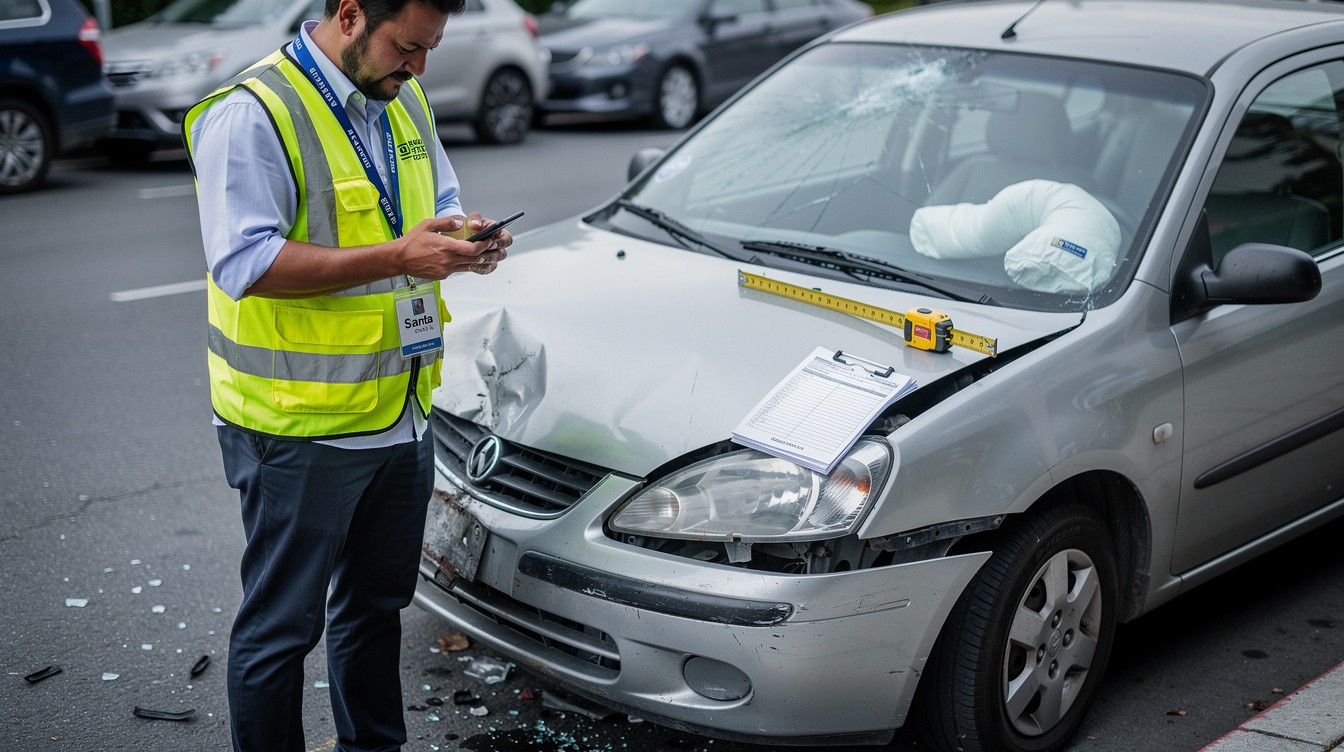
Insurance adjusters in Santa Cruz County follow a standardized process when they arrive at your accident scene, and understanding this process helps you spot undervaluation immediately. The adjuster’s first step involves a physical inspection where they photograph damage from multiple angles, measure impact points, and document the vehicle’s overall condition. They examine the severity of structural damage, whether the frame is bent, and if airbags deployed-this inspection typically takes 30 to 90 minutes depending on damage complexity.
The adjuster will also check your maintenance records and service history because a well-maintained vehicle commands higher valuation than one with neglected repairs. If your vehicle had recent brake work, new tires, or engine service, mention these immediately because they directly impact the final assessment.
Database Valuations and Local Market Conditions
After the physical inspection, adjusters cross-reference repair estimates against databases like NADA Guides and Kelley Blue Book to establish your vehicle’s actual cash value. Here’s where most Santa Cruz accident victims lose money: adjusters often use only one estimate or rely heavily on database values that don’t account for local Santa Cruz market conditions.
The market in Santa Cruz County runs differently than national averages. Vehicles with beach-related wear, salt air damage, or mountain road accident patterns may have different repair costs than the national databases suggest. Demand that the adjuster obtain at least two estimates from local repair shops in Santa Cruz County because regional pricing matters significantly.
Mileage, History, and Depreciation Calculations
The adjuster will also factor in your vehicle’s mileage, accident history, and whether it had pre-existing damage. If your car had 80,000 miles versus 120,000 miles, that difference can mean $2,000 to $4,000 in valuation. They’ll deduct depreciation based on age and condition, but they shouldn’t deduct for damage that occurred in your accident.
Some adjusters incorrectly apply depreciation to accident damage itself, which is a red flag worth challenging. Local Santa Cruz shops will quote repair costs that reveal whether the adjuster’s valuation aligns with reality-and when those numbers don’t match, you have grounds to push back on the settlement offer.
Building Your Documentation Before the Adjuster’s Offer
Your phone becomes your most valuable tool the moment after your collision in Santa Cruz County. Photograph your vehicle from at least six different angles-front, rear, both sides, and close-ups of each damaged area. Include photos of the accident scene itself, showing road conditions, traffic signals, and the position of both vehicles.
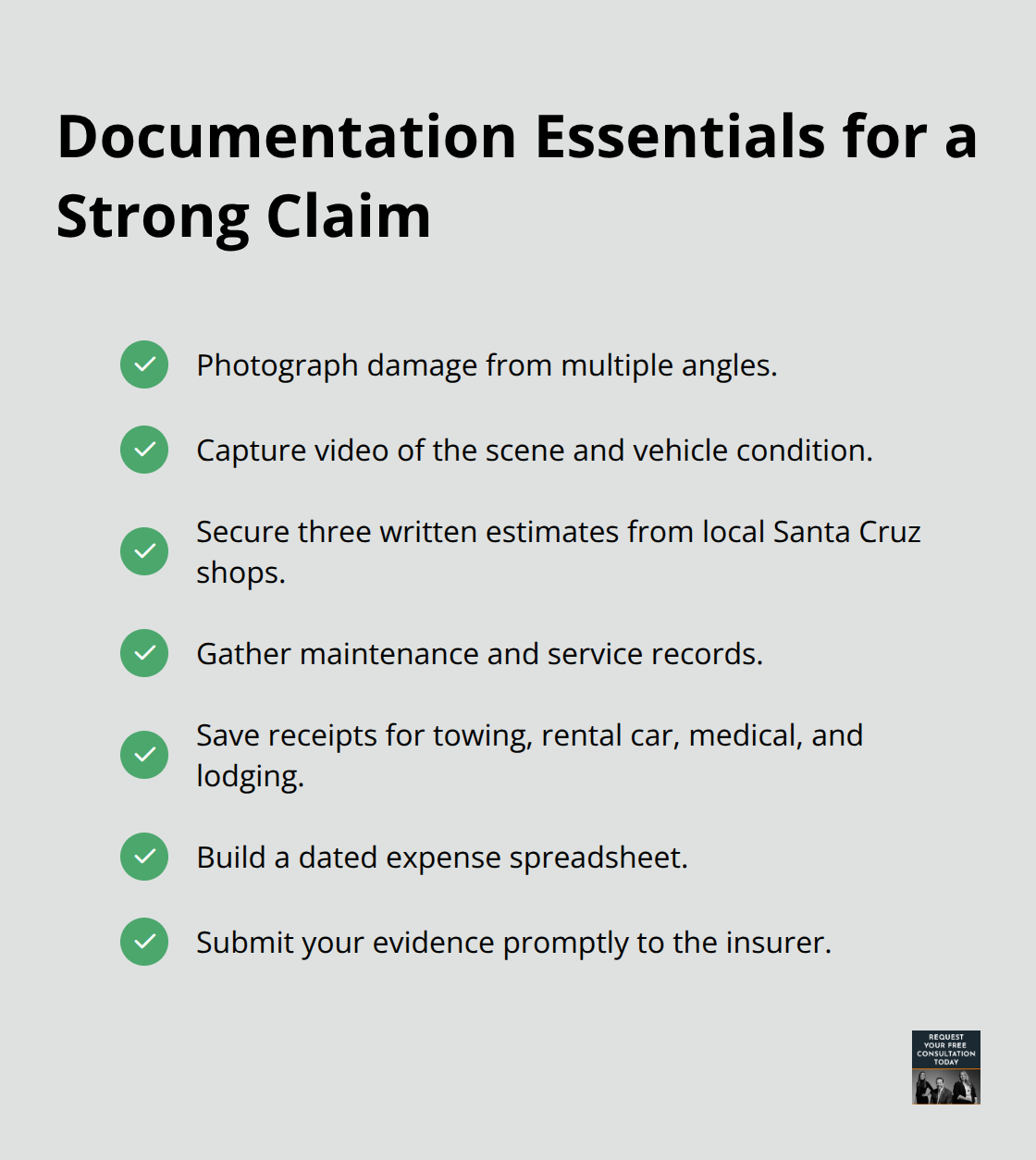
Video footage captures the full context of damage severity better than still photos. Insurance adjusters in Santa Cruz often lowball initial offers when they lack comprehensive visual documentation, so you must document everything while the damage is fresh and lighting conditions are clear. Submit your own photos and video to the insurance company immediately after reporting the accident rather than waiting for the adjuster to schedule their inspection.
Contact Local Repair Shops for Written Estimates
Contact at least three body shops and collision repair centers in Santa Cruz County for written estimates. This step separates accident victims who receive fair settlements from those who accept inadequate offers. Request detailed estimates that break down labor costs, parts pricing, and paint matching expenses separately-generic estimates that lump everything together hide the true cost of repairs. When the adjuster’s valuation arrives, compare it directly against these three local estimates. If your estimates average $8,500 but the adjuster offers $7,200, that $1,300 gap is worth fighting.
Track Every Accident-Related Expense
Keep every receipt related to your accident: towing bills, rental car charges, medical appointments, pharmacy receipts for pain medication, and hotel costs if you needed temporary lodging. Create a spreadsheet listing each expense with the date, vendor name, and amount. The National Association of Insurance Commissioners reports that organized claim documentation increases settlement offers by an average of 18 to 22 percent.
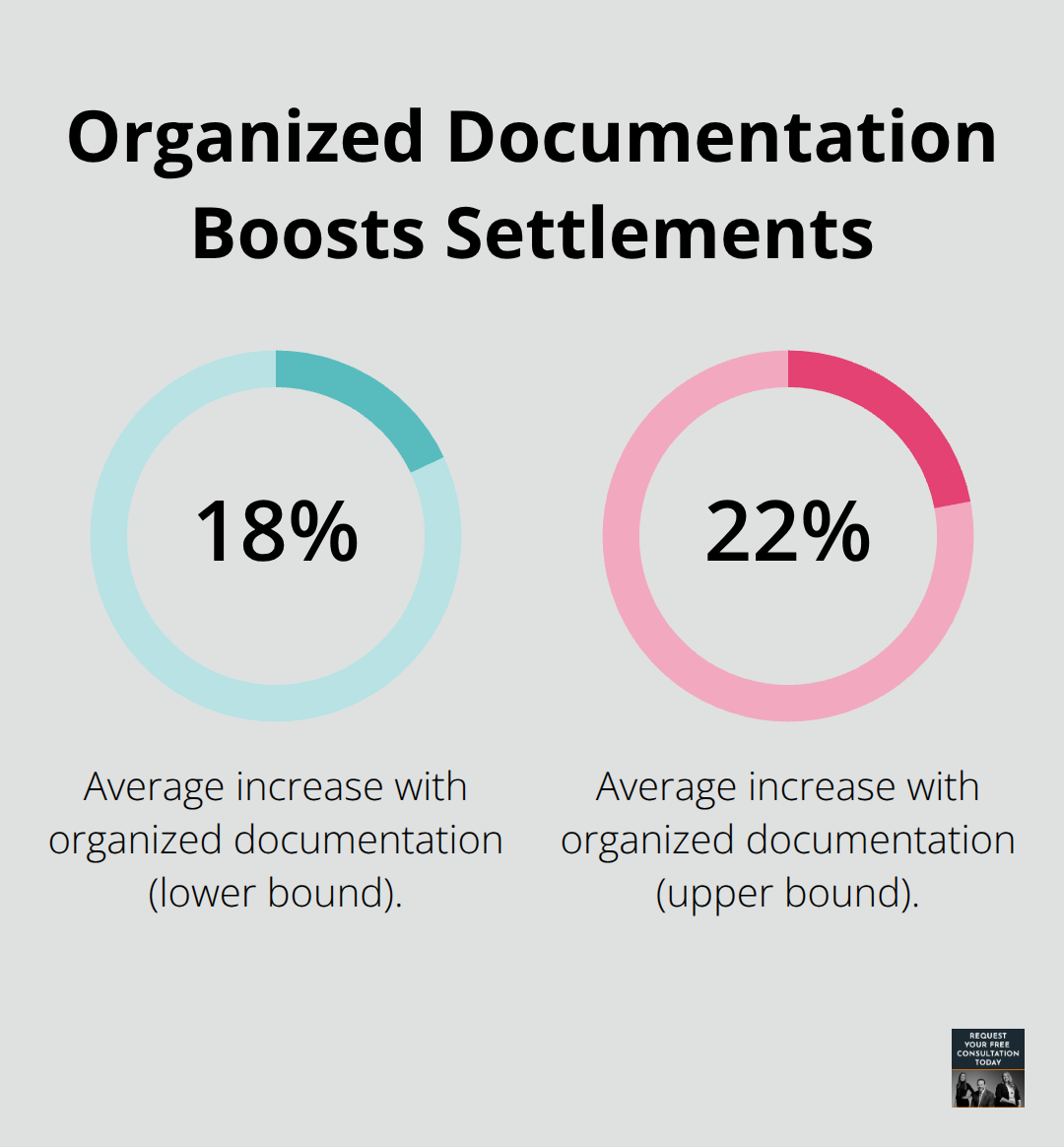
When you challenge a low settlement offer, this documentation transforms a vague complaint into a specific, numbered argument that insurance companies cannot ignore.
Use Documentation to Challenge Undervaluation
Your compiled photos, estimates, and expense records form the foundation for negotiating fair compensation. Insurance adjusters respond to evidence far more readily than to verbal complaints. The documentation you gather now determines whether you accept an inadequate settlement or push back with concrete numbers. With this material in hand, you’re positioned to move forward into the negotiation phase where your evidence becomes your leverage.
How to Fight Back Against Low Settlement Offers
Insurance companies in Santa Cruz County count on accident victims accepting their first offer without question. The initial settlement they present often falls 15 to 40 percent below what your vehicle damage actually costs to repair, according to data from the National Association of Insurance Commissioners. Your documentation from the previous phase now becomes your negotiating weapon.
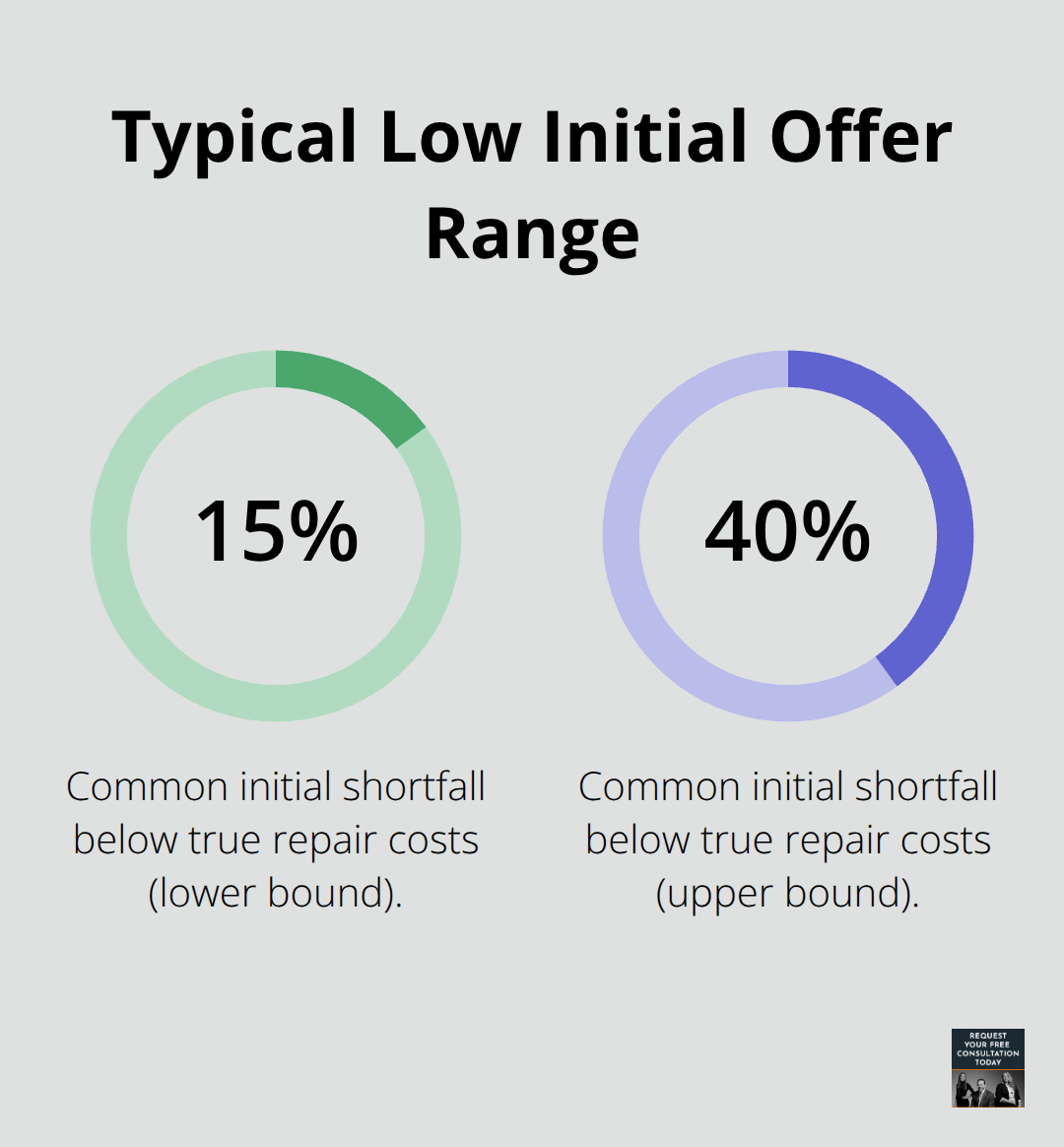
When the adjuster’s valuation arrives significantly lower than your three local repair estimates, you have legitimate grounds to reject it immediately. Do not accept any settlement offer within 48 hours of receiving it. This pause gives you time to organize your evidence and decide whether to negotiate or escalate the claim.
Why Actual Cash Value Differs from Real Repair Costs
Insurance companies calculate actual cash value using national databases that ignore Santa Cruz County’s specific market conditions. A vehicle worth $12,000 according to Kelley Blue Book might cost $13,200 to repair at a local Santa Cruz body shop because regional labor rates and parts availability vary significantly from national averages. The adjuster will argue that they only owe you the actual cash value, not the full repair cost if repair costs exceed that value.
This is where you push back hard. If your vehicle is economically repairable, the insurance company must pay what repairs actually cost in Santa Cruz County, not what a database suggests. Demand that the adjuster obtain fresh estimates from local Santa Cruz shops rather than relying on outdated pricing models. When local estimates consistently exceed the database valuation by $1,000 or more, that gap represents money the insurance company owes you.
Using Your Documentation to Demand Fair Settlement
Present your three repair estimates to the insurance company in writing, listing each estimate separately with the shop name, contact information, and itemized breakdown. Request a written response explaining why their valuation differs from local market pricing. Insurance adjusters respond differently when they know you have organized evidence and understand the valuation process.
Your spreadsheet of accident expenses matters here too. If you incurred $400 in towing fees, $600 in rental car costs, and $200 in medical expenses, these documented losses add to your claim value and strengthen your negotiating position. Many Santa Cruz accident victims overlook secondary expenses, but they accumulate quickly and are fully recoverable with proper documentation.
When to Seek Legal Assistance
When the insurance company refuses to increase their offer despite your evidence, a skilled team of legal professionals can evaluate whether your claim warrants formal action. We assist in evaluating the extent of property damage and ensure you receive a fair valuation for your loss. An attorney’s involvement often prompts insurance companies to reconsider their positions because they recognize the potential cost of litigation exceeds what they initially offered.
Final Thoughts
The process of vehicle damage valuation in Santa Cruz requires you to challenge insurance company offers with concrete evidence rather than accept their initial proposals. You’ve learned how adjusters calculate vehicle worth, why local market conditions matter more than national databases, and how your documentation transforms settlement negotiations. The three repair estimates you obtain, the photos you take, and the expense records you maintain give you real leverage when insurance companies attempt to underpay your claim.
Insurance companies count on accident victims accepting inadequate offers without question, but your organized evidence changes that dynamic entirely. The gap between what adjusters initially offer and what your vehicle damage actually costs to repair in Santa Cruz County frequently exceeds $1,500, and that money belongs to you. When you present local repair estimates alongside your accident documentation, you force adjusters to justify why their valuation differs from what Santa Cruz shops actually charge.
Contact Schaar & Silva LLP to discuss your vehicle damage claim and learn whether your settlement offer reflects actual repair costs in Santa Cruz County. We assist in evaluating the extent of your property damage and help you receive fair valuation for your loss. Our team handles the legal complexities while you focus on moving forward after your collision.
