

A car accident can leave you with injuries that affect your body and your finances. Pain after a crash often requires months of treatment, and medical bills pile up quickly.
At Schaar & Silva LLP, we help accident victims understand how compensation covers these costs and supports real recovery. This guide walks you through the types of injuries you might face, how compensation works, and what fair payment looks like for your situation.
Types of Pain and Injuries Following a Car Accident
Whiplash and Neck Injuries
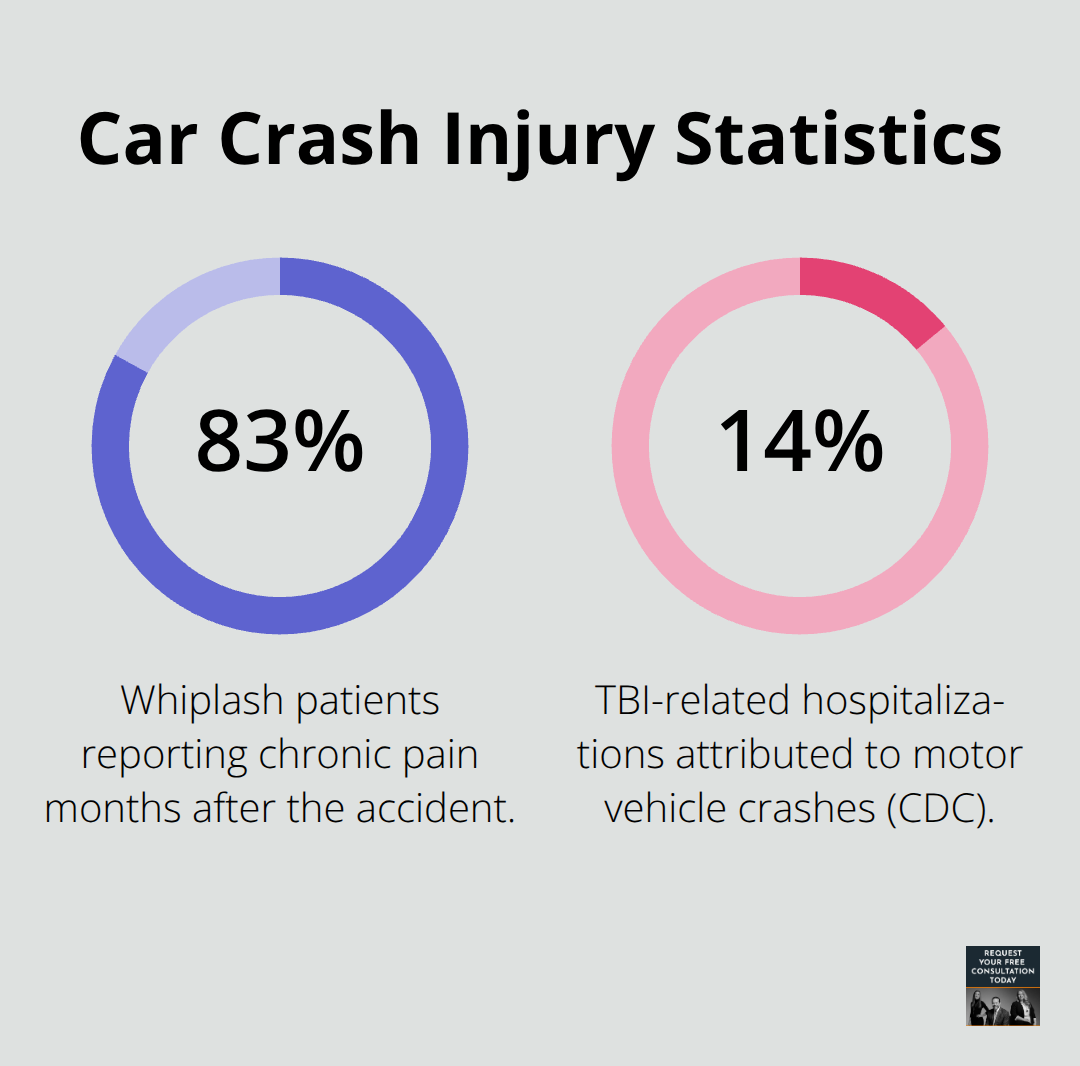
Whiplash ranks among the most common injuries we see after car accidents, yet victims and insurance companies frequently underestimate its severity. When your head snaps forward and backward during impact, the soft tissues in your neck stretch beyond their normal range, causing pain that starts immediately or develops over days. Research from the Journal of Orthopaedic Surgery and Research shows that roughly 83% of whiplash patients experience chronic pain months after their accident.
Neck injuries typically require physical therapy sessions that cost between $3,000 and $12,000 for a complete treatment course. The pain radiates down your shoulders and arms, making everyday activities like driving or working at a desk nearly impossible. This ongoing discomfort affects your ability to earn income and maintain your quality of life.
Back and Spinal Cord Injuries
Back and spinal cord injuries present far more serious concerns than whiplash. These injuries range from herniated discs to fractures, and they often require imaging studies like MRIs that cost $1,200 to $2,500 per scan. Spinal injuries cause chronic pain lasting years, and some victims need ongoing injections or surgical interventions costing upward of $50,000.
The financial burden extends far beyond initial treatment because spinal damage frequently leads to reduced work capacity and long-term disability. You may find yourself unable to return to your previous job or perform physical tasks you once handled without difficulty. This loss of earning potential compounds the medical expenses you already face.
Traumatic Brain Injuries and Concussions
Traumatic brain injuries and concussions represent the most unpredictable injuries from crashes. The Centers for Disease Control and Prevention reports that motor vehicle crashes account for 14% of all traumatic brain injury-related hospitalizations. Symptoms range from immediate headaches and dizziness to delayed cognitive problems that emerge weeks later.
Concussion treatment typically involves cognitive rest and neurological evaluations costing $2,000 to $5,000, but severe cases require months of rehabilitation costing far more. Brain injuries present a particular challenge because their effects aren’t always visible on initial medical exams, yet they can permanently affect your memory, concentration, and ability to work. Many accident victims don’t realize they’ve sustained a brain injury until symptoms worsen, which is why post-accident medical evaluation matters.
These injuries create substantial medical expenses and lost income that compensation must address. Understanding what you’ve sustained helps you recognize the full scope of your recovery needs and the financial support required to cover them.
How Compensation Covers Medical Treatment and Recovery
Emergency Care and Hospitalization Costs
Medical bills from a car accident stack up fast, and most accident victims have no idea what compensation should realistically cover. The truth is straightforward: compensation should cover every medical cost tied to your accident, from the ambulance ride to years of physical therapy.
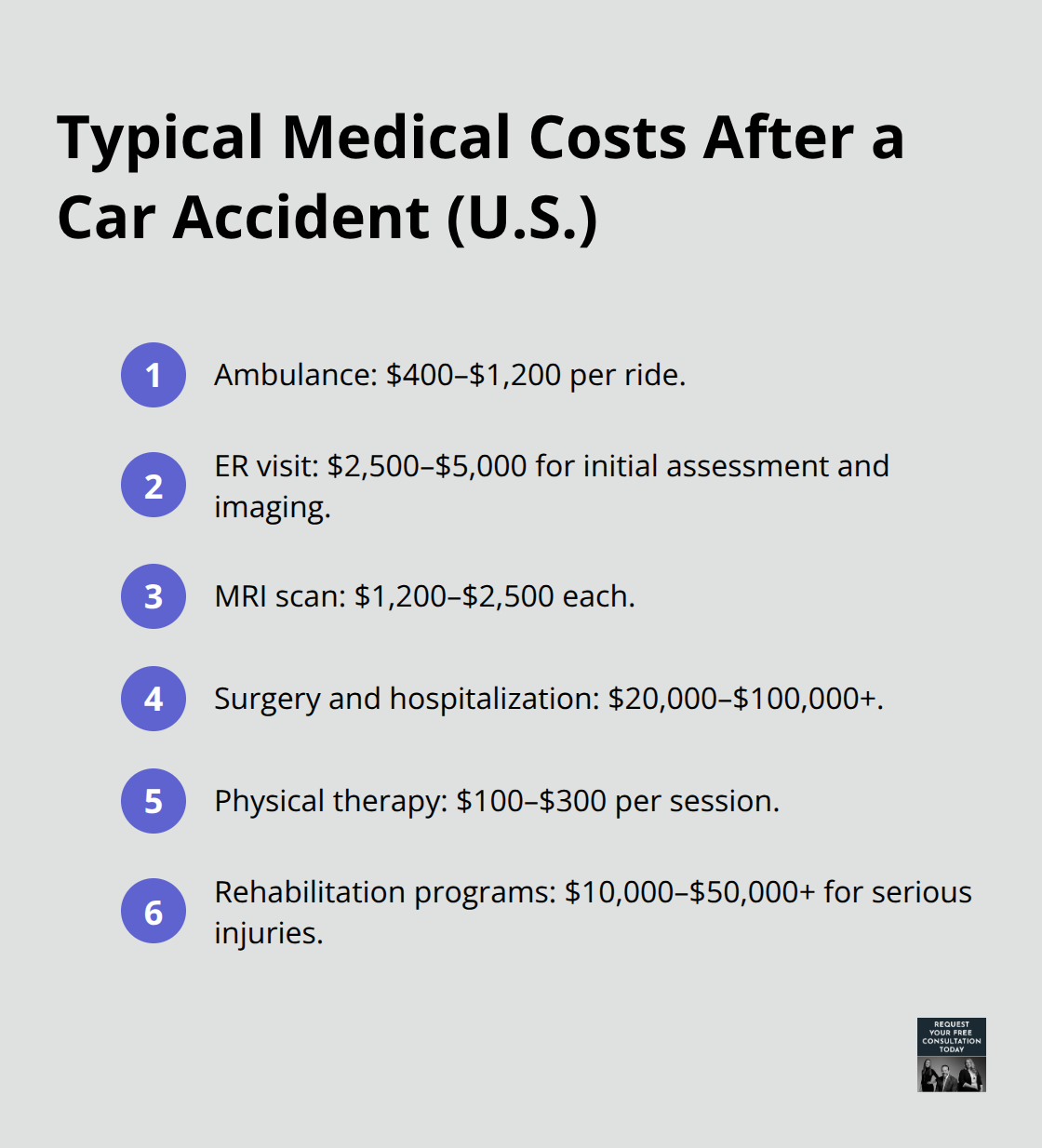
An ambulance ride alone costs $400 to $1,200 depending on distance and whether paramedics provide advanced life support. Hospital emergency room visits average $2,500 to $5,000 just for initial assessment and imaging, before any treatment begins. If you need surgery for spinal injuries or internal bleeding, hospitalization costs climb to $20,000 to $100,000 or more.
Your compensation must cover these bills entirely, and most people underestimate how quickly these charges accumulate. Many insurance adjusters try to minimize emergency care costs in their settlement offers, but your compensation should reflect the actual invoices your hospital sends, not what an adjuster thinks you should have paid.
Physical Therapy and Rehabilitation Services
Physical therapy and rehabilitation services typically run $100 to $300 per session, and effective recovery often requires 12 to 24 sessions over several months. For serious spinal or brain injuries, rehabilitation costs can reach $10,000 to $50,000 or higher if you need inpatient programs.
The American Physical Therapy Association reports that structured rehabilitation significantly improves outcomes for accident victims, yet insurance companies frequently deny coverage for the full course of treatment you actually need. Documentation matters enormously-your treating therapist should outline exactly how many sessions your recovery requires, and compensation should cover every one.
Ongoing Medical Treatment and Medication Expenses
Accident victims often need follow-up doctor visits, imaging studies like MRIs costing $1,200 to $2,500 each, and long-term medication management for pain or neurological symptoms. Some people need injections or other interventions months after their accident once initial swelling subsides and doctors can better assess underlying damage.
These delayed treatments are frequently missed in early settlement offers because they haven’t occurred yet, which is why settling too quickly leaves you financially exposed. Medical treatment can be facilitated through lien services so you don’t have to choose between treatment and financial survival during recovery.
Understanding what compensation covers sets the foundation for recognizing what you actually deserve. The next step involves calculating exactly how much your pain and suffering warrants in financial terms.
Calculating Fair Compensation for Your Pain and Suffering
Understanding Economic Damages
Economic damages form the foundation of your claim because they’re objective and documented. Your medical bills, ambulance costs, emergency room visits, physical therapy sessions, imaging studies, medications, and future treatment all count as economic damages. Most accident victims make a critical mistake: they only count expenses that have already occurred. Insurance adjusters love this approach because it undervalues your claim significantly.
You need compensation for treatment you haven’t received yet but will need based on your doctor’s recommendations. If your orthopedic surgeon states you need 24 physical therapy sessions but you’ve only completed 8, your settlement should cover the remaining 16 sessions at the documented rate your therapist charges. Many victims settle after just a few weeks of treatment when they’re still in acute pain and haven’t completed rehabilitation. This creates a financial trap where you pay for months of additional treatment from your own pocket because your settlement was finalized too early.
Evaluating Non-Economic Damages
Non-economic damages are where most victims leave money on the table. These damages compensate you for pain, suffering, reduced quality of life, lost earning capacity, and permanent limitations. Insurance companies use crude formulas to calculate these, typically multiplying your medical bills by a factor of 1.5 to 5 times depending on injury severity. This approach is fundamentally flawed because it doesn’t account for the actual impact on your life.
A 35-year-old construction worker with a herniated disc that prevents heavy lifting has lost decades of earning potential in their primary profession. A parent with chronic neck pain from whiplash can no longer play with their children or perform household tasks. A person with a traumatic brain injury experiences cognitive changes that affect every relationship and job opportunity moving forward. These losses deserve compensation far exceeding a simple multiplication formula.
Factors That Influence Compensation Amounts
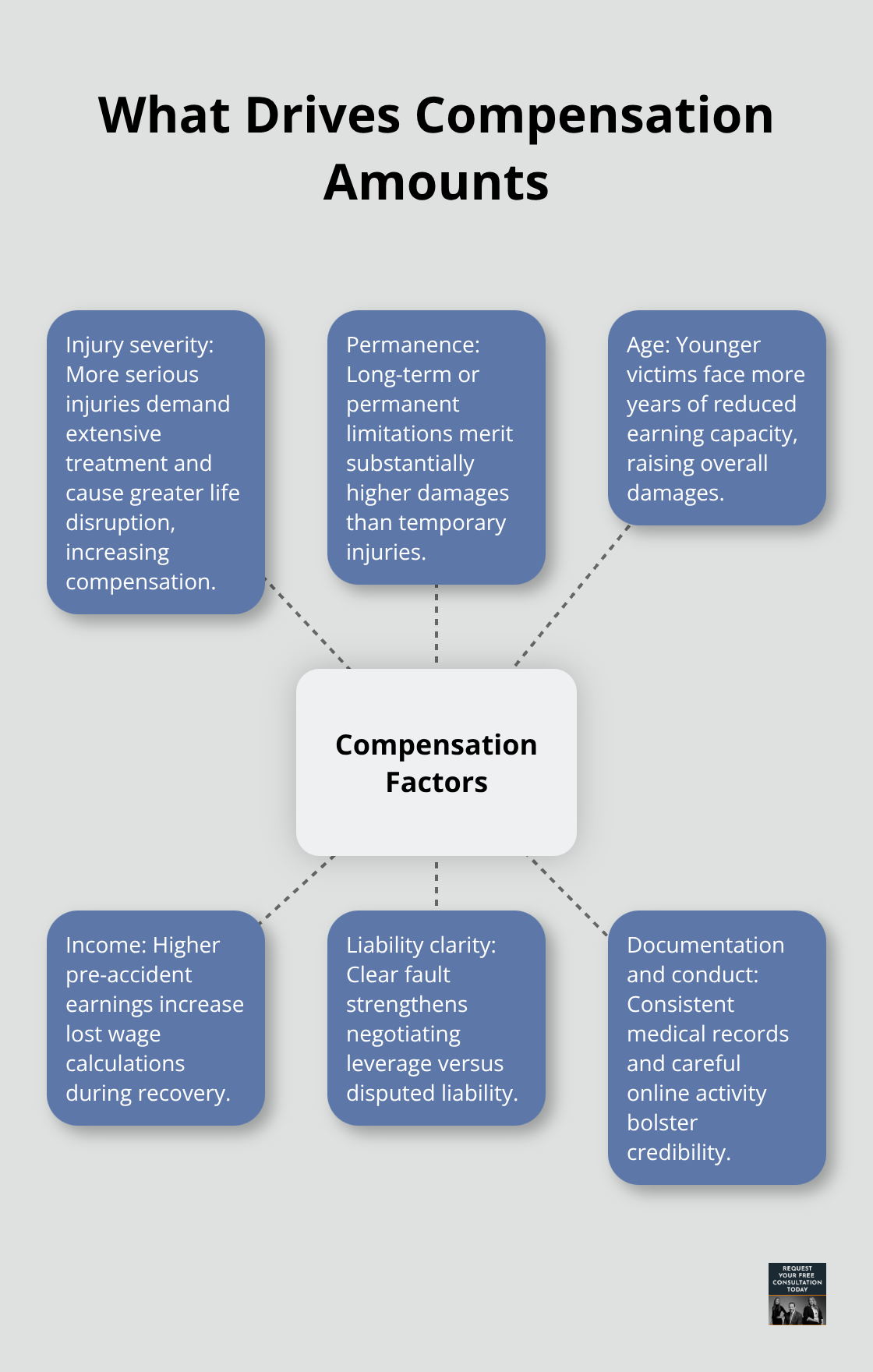
Injury severity drives compensation amounts upward because serious injuries require more treatment and cause greater life disruption. Permanent injuries deserve substantially more than temporary ones because you’ll live with limitations indefinitely. Your age matters enormously: a 28-year-old with a permanent back injury faces 40 years of reduced earning capacity, while a 65-year-old faces fewer working years ahead.
Your pre-accident income directly impacts lost wage calculations. Someone earning $80,000 annually loses more from a one-year recovery period than someone earning $35,000. The clarity of liability also influences what you can recover-cases with obvious fault command stronger settlements than disputed liability situations.
Documentation strengthens your position significantly. Medical records showing your treatment, your doctor’s notes about limitations, imaging results confirming structural damage, and wage statements proving lost income all build a credible damages claim. Text messages or social media posts showing you’ve returned to normal activities before full recovery undermine your claim, which is why your conduct during recovery matters. Insurance adjusters scrutinize your online presence and statements to accident witnesses, so consistency between what you claim and what you post publicly becomes essential to your case’s credibility.
Final Thoughts
Pain after a crash extends far beyond your initial hospital visit, stretching across months or years while medical bills accumulate and lost wages compound your financial strain. Insurance companies count on you to settle quickly when you’re still in acute pain and haven’t completed treatment, which leaves substantial money on the table. The gap between their initial offers and what you actually deserve remains significant because your full recovery costs stay hidden until months pass.
We at Schaar & Silva LLP handle negotiations while you focus on healing, and our team understands exactly how insurance adjusters undervalue claims and what documentation strengthens your position. We connect you with medical lien services that cover your treatment costs until your case resolves, so you don’t face the impossible choice between getting healthy and staying financially stable. We also evaluate property damage claims and connect you with psychological support for the emotional trauma that accompanies serious injuries.
Contact us to discuss your accident and what fair compensation looks like for your specific injuries and circumstances. We serve Santa Cruz County, Sacramento, and Oakland, and we work on contingency, meaning you pay nothing unless we recover compensation for you.