

A car accident can turn your life upside down in seconds. Between managing injuries, dealing with insurance companies, and understanding your rights, the process feels overwhelming.
We at Schaar & Silva LLP have helped hundreds of accident victims navigate car accident claim processing in Santa Cruz County, Sacramento, and Oakland. This guide walks you through each step so you know exactly what to expect and how to protect your interests.
What You Must Do Right After Your Accident
Prioritize Safety and Call for Help
The first hours after a car accident determine how strong your claim becomes. Most people make critical mistakes immediately after impact that weaken their position later. Your priority is safety first, then documentation. Call 911 if anyone is injured or if there’s significant vehicle damage. Once you’re in a safe location, start gathering information at the scene.
Collect Information at the Scene
Get the other driver’s name, phone number, address, driver’s license number, and insurance information. Take photos of vehicle damage from multiple angles, the accident scene, road conditions, and any visible injuries. Note the exact time, date, and weather conditions. If witnesses are present, collect their names and contact information before they leave.
Police will file a report for accidents involving injuries or significant damage, which becomes a valuable document for your claim. Request the report number from the officer and follow up with the police department within a few days to obtain a copy. Do not discuss fault or apologize at the scene, as these statements can be used against you later. Even saying you’re fine can hurt your claim if injuries develop afterward.
Seek Medical Attention Quickly
Seek medical attention within 24 to 48 hours, even if you feel okay. Many injuries like whiplash or internal trauma appear days later. Medical records create a direct link between the accident and your injuries, which insurance companies scrutinize heavily.
Document Everything Thoroughly
Create a detailed accident journal immediately, recording everything you remember while it’s fresh. Include the sequence of events, what you saw, heard, and felt. Keep all medical records, bills, and receipts related to the accident and treatment. Take photos of your injuries as they heal, showing progression over time. Insurance adjusters often undervalue pain and suffering claims, so visual evidence matters.
Preserve all communication with the other driver, insurance companies, and medical providers. When you contact your insurance company, stick to facts and avoid speculation. Many people inadvertently minimize their injuries during initial calls, which insurers use as the baseline for their settlement offer. File your claim promptly, typically within 30 days, as delays can complicate the process. Request a copy of the police report and provide it with your claim. This official documentation carries weight that your word alone doesn’t. Keep receipts for every accident-related expense (including transportation to medical appointments, medication, and property damage repairs). Insurance companies deny claims worth thousands because people fail to document seemingly minor costs.
With your documentation in place, you’re ready to navigate how insurance companies actually evaluate your claim and what tactics they use to minimize what you receive.
What Insurance Companies Actually Do With Your Claim
How Adjusters Evaluate Your Claim
Insurance adjusters don’t evaluate claims the way most people think they do. They’re not neutral parties trying to find the truth. Their job is to protect the company’s bottom line, which means they minimize payouts whenever possible. According to the National Association of Insurance Commissioners, the average claim settlement is 40% lower than the actual value when the claimant lacks legal representation. Adjusters follow specific protocols designed to find reasons to deny or reduce your claim. They request your medical records looking for pre-existing conditions, search social media for anything that contradicts your injury claims, and pressure you to accept quick settlements before you understand your injuries’ full extent.
When an adjuster contacts you, they record the conversation and analyze every word. If you mention feeling better one day or doing a minor activity, they use that as evidence your injuries aren’t serious. They know most accident victims are emotionally drained and financially desperate, making you more likely to accept lowball offers just to end the stress.
Tactics Insurance Companies Use to Reduce Payouts
Insurance companies deploy specific tactics to undervalue your claim, and understanding these strategies protects you from accepting inadequate compensation. They offer quick settlements before you finish medical treatment, betting you won’t know how severe your injuries are later. They claim your medical bills are excessive and request you accept a reduced amount. They argue that some injuries are pre-existing rather than caused by the accident. They suggest that video evidence of you doing normal activities proves your injuries are exaggerated. They delay responding to documentation requests, hoping you’ll give up or accept less out of frustration.
How to Counter Lowball Offers
The best counter-tactic is refusing to accept their first offer and demanding a detailed explanation for how they calculated the settlement amount. Request documentation showing how they valued your pain and suffering, how they determined your lost wages, and how they assessed your future medical needs. If their numbers don’t add up, push back with specific counterarguments supported by your medical records and bills. Many accident victims increase their settlements by 50% to 75% simply by refusing the initial offer and providing detailed rebuttals to the adjuster’s valuation.
Document everything in writing through email so you have a record of all communications. Never accept a settlement without understanding exactly what you’re giving up, especially regarding future claims related to the same accident. If negotiations stall or the adjuster’s valuation seems unreasonably low, legal representation can review your case before you sign anything and help you understand whether the offer truly reflects your damages.
Do You Need a Lawyer for Your Accident Claim
Most accident victims wait too long to hire legal representation, and that delay costs them thousands in lost compensation. Insurance adjusters count on you handling everything alone, making mistakes they can exploit later. The reality is straightforward: if the insurance company’s offer feels low, if your injuries are serious, or if the other driver disputes fault, you need a lawyer involved before you sign anything.
What the Numbers Show About Legal Representation
Studies from the American Bar Association show that accident victims with legal representation receive settlements averaging 3.5 times higher than those negotiating alone. The difference isn’t luck-it’s knowing what your claim is actually worth and refusing to accept less. Insurance companies have teams of adjusters, nurses, and investigators working to minimize your payout. You shouldn’t face that alone, especially while managing pain, medical appointments, and lost income.
Clear Signs You Need a Lawyer
Serious injuries, significant medical bills, or disputed liability signal that you need legal help immediately. If you’ve had surgery, ongoing physical therapy, or any hospitalization related to the accident, hire a lawyer before the insurance company pressures you into a settlement. Permanent injuries, chronic pain conditions, or injuries affecting your ability to work demand professional evaluation of your long-term damages.
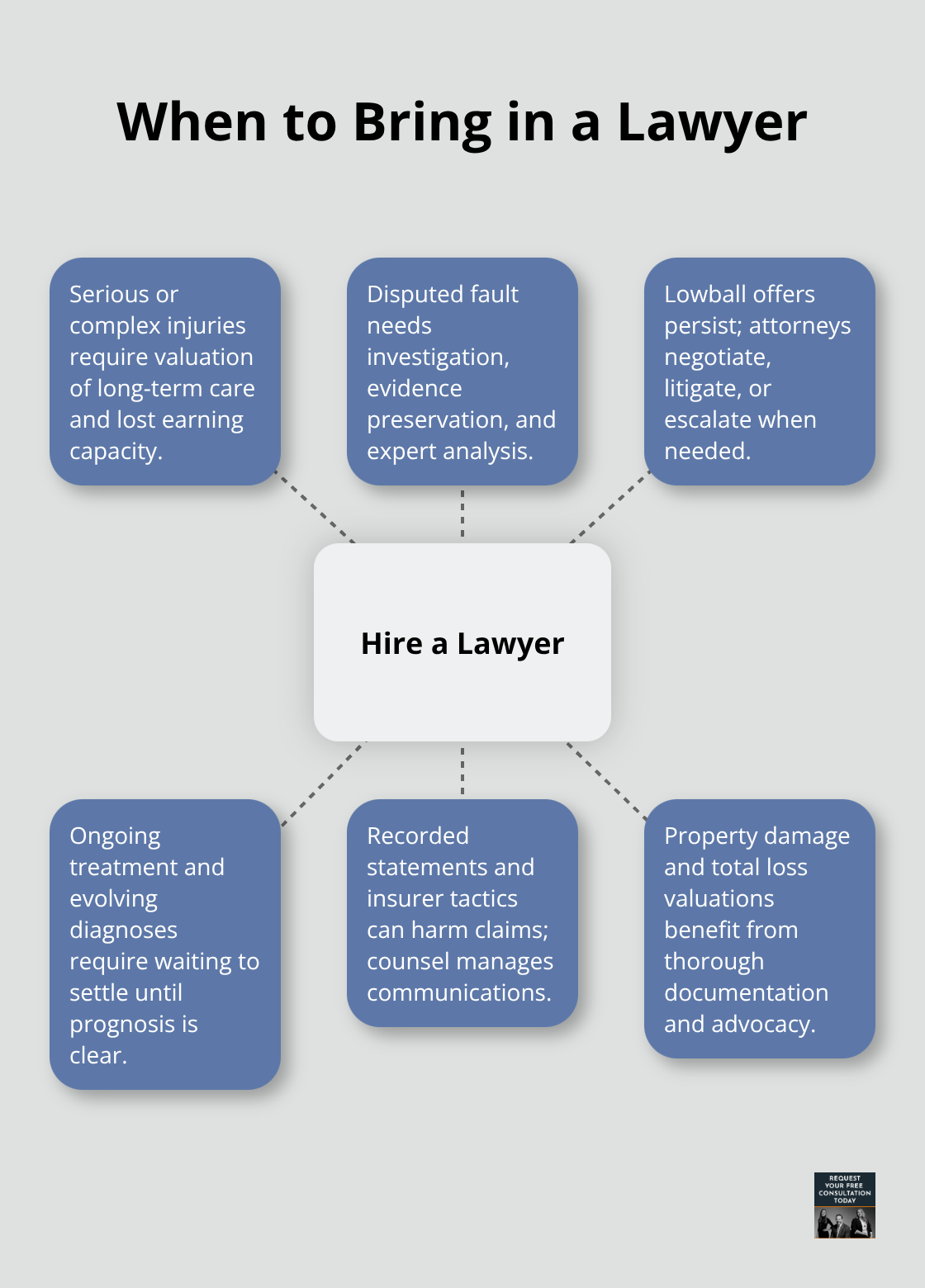
Disputed fault situations are particularly risky without representation-the other driver’s insurance company will argue their client wasn’t responsible, and without proper investigation and legal strategy, you’ll struggle to prove otherwise. In Santa Cruz County, Schaar & Silva LLP handles these complex liability disputes and connects you with medical lien services that facilitate payment of your bills until your case resolves, meaning you’re not forced to choose between medical care and financial survival.
How Legal Representation Protects Your Interests
Working with legal representation means the insurance company can’t use recorded statements against you, can’t pressure you into quick settlements, and can’t claim your injuries are exaggerated without facing documented medical evidence. Your attorney requests the insurer’s detailed claim calculations, challenges lowball valuations with specific counterarguments, and knows exactly when to walk away from inadequate offers.
The process takes longer with legal help, but you’ll receive substantially more compensation-often enough to cover the attorney’s fees and leave you with significantly more than you would have accepted alone. Your lawyer also evaluates property damage thoroughly and ensures fair valuation for your loss (something insurance companies routinely undervalue when you negotiate solo). The financial outcome speaks for itself: most accident victims who hire representation early recover far more than those who wait until negotiations have already stalled.
Final Thoughts
Car accident claim processing demands attention to detail at every stage, from the moment impact occurs through final settlement. The steps you take immediately after the accident determine how strong your position becomes when negotiating with insurance companies, and insurance adjusters will pressure you to accept inadequate offers. Understanding their tactics and refusing lowball settlements protects your financial recovery while you focus on healing.
Legal representation changes the outcome significantly-accident victims with lawyers receive settlements averaging 3.5 times higher than those negotiating alone. If your injuries are serious, your medical bills are substantial, or fault is disputed, hiring a lawyer before accepting any settlement offer is the right decision. You shouldn’t face insurance company tactics and complex negotiations while managing pain and recovery.
Contact Schaar & Silva LLP to discuss your situation and understand whether your current settlement offer is fair. Our team helps accident victims throughout Santa Cruz County navigate car accident claim processing and handles the legal complexities while you recover.