
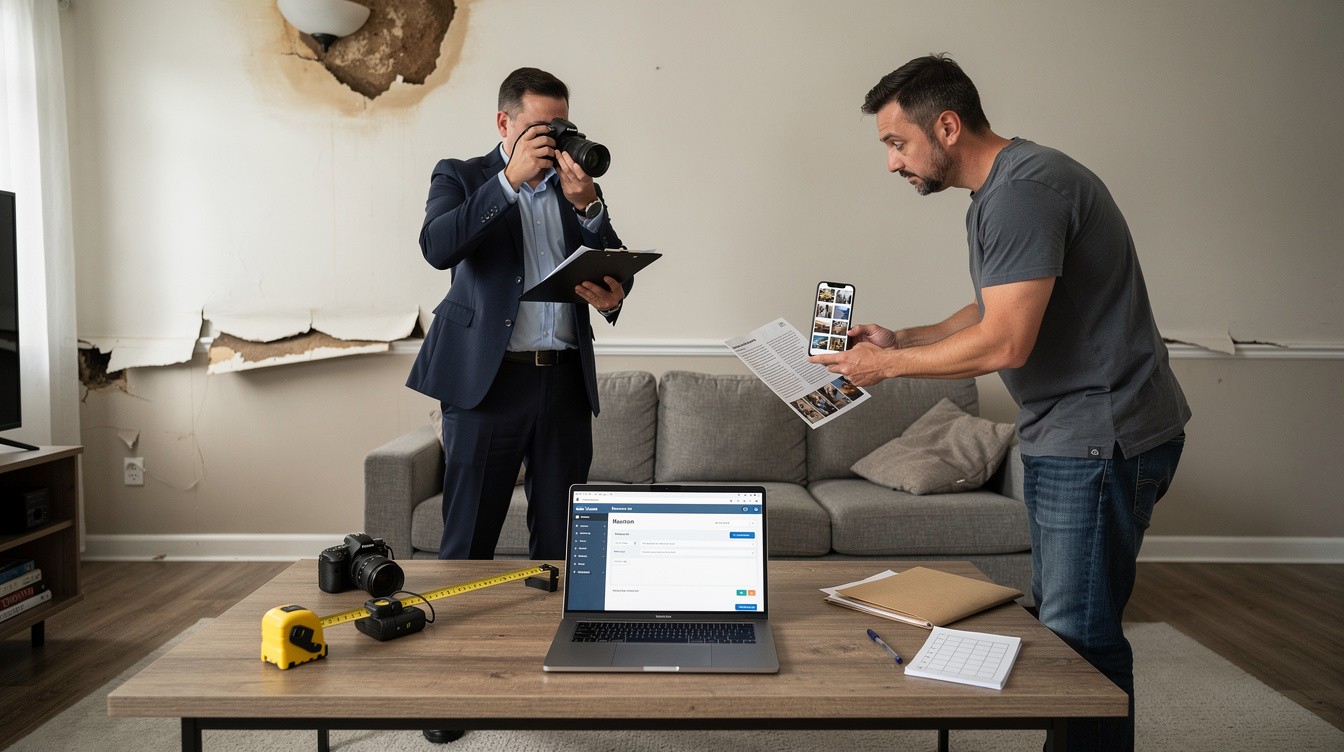
Property damage claims can feel overwhelming when you’re dealing with the aftermath of an accident. Insurance companies often undervalue damage, delay payments, or deny claims altogether.
We at Schaar & Silva LLP help people navigate the property damage claims process every day. This guide walks you through filing your claim, overcoming common obstacles, and securing fair compensation.
Filing Your Property Damage Claim
Report the Damage Immediately
Speed matters when you file a property damage claim. You must notify your insurance company within the timeframe specified in your policy, which typically ranges from 24 to 72 hours after an accident. Delays in reporting give insurers grounds to deny your claim. Contact your insurance agent or the claims department directly and document the date and time of your call.
Most insurance companies now offer online claim filing through their apps or websites, which creates an immediate timestamp of your report. This timestamp protects you if the insurer later claims you filed late.
Gather Documentation Before Repairs Begin
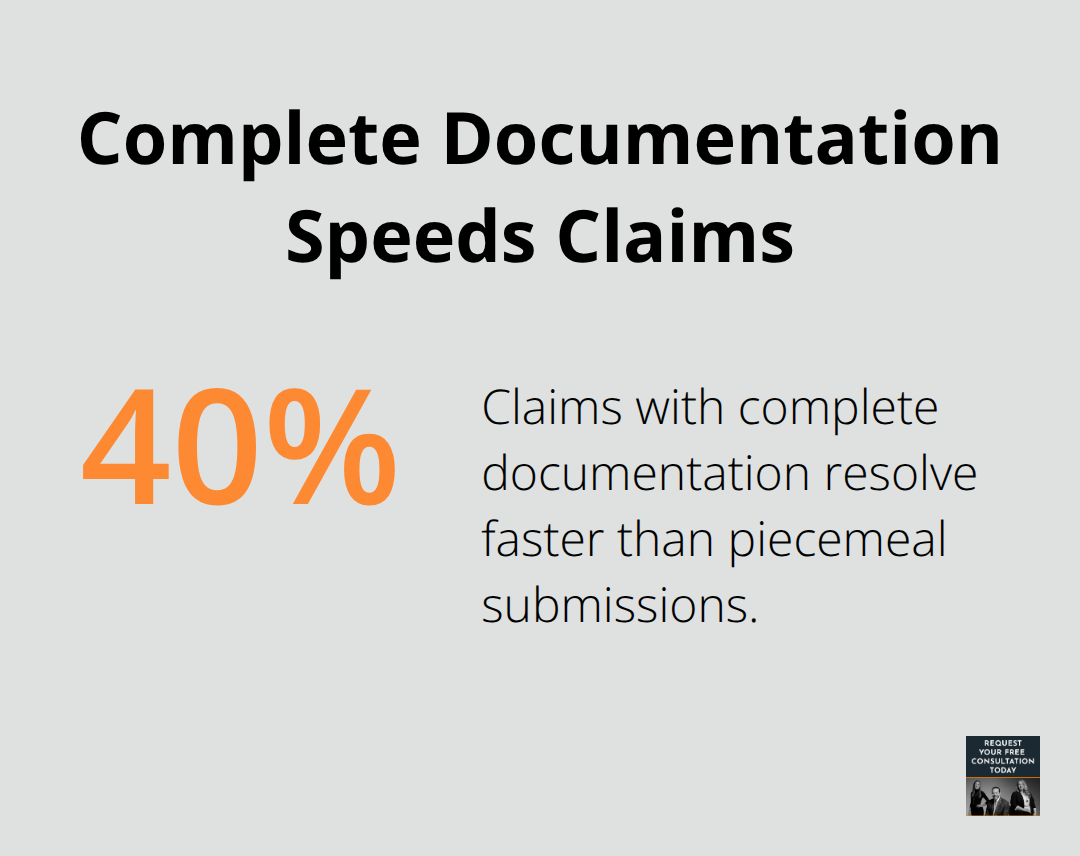
Take photos of all vehicle damage from multiple angles before any repairs start, and photograph the accident scene if it’s safe to do so. Collect contact information from witnesses, police reports, and any other drivers involved. Claims with complete documentation are resolved 40% faster than those submitted piecemeal.
Understand the Adjuster’s Role and Limitations
Your insurance company assigns a claims adjuster who inspects the damage and estimates repair costs. This is where many property damage claims go wrong. Insurance adjusters often use software like Xactimate or Colossus to generate low initial estimates, sometimes 15–25% below actual market repair costs in California.
You should obtain an independent repair estimate from a certified body shop in your area before accepting the adjuster’s valuation. Most reputable shops provide written estimates at no charge. If the adjuster’s estimate differs significantly from your independent quote, request a written explanation for the discrepancy.
Document Everything in Writing
Document every communication with your insurance company in writing, whether through email or certified mail, and keep copies of all repair estimates, photos, and correspondence in one organized file. The typical timeline for property damage claim resolution ranges from two weeks for straightforward cases to several months if disputes arise over causation or repair scope.
When insurers undervalue or deny your claim, the obstacles multiply-and that’s when you need to know your options for fighting back.
Common Obstacles in Property Damage Claims
Insurance Companies Systematically Undervalue Damage
Insurance companies build undervaluation into their standard operating procedures. They deploy adjusters trained to minimize payouts, and they know most people won’t push back. According to the National Association of Insurance Commissioners, property damage claims valued under $5,000 are approved at rates 22% higher than those exceeding $10,000, suggesting systematic lowballing on larger claims.
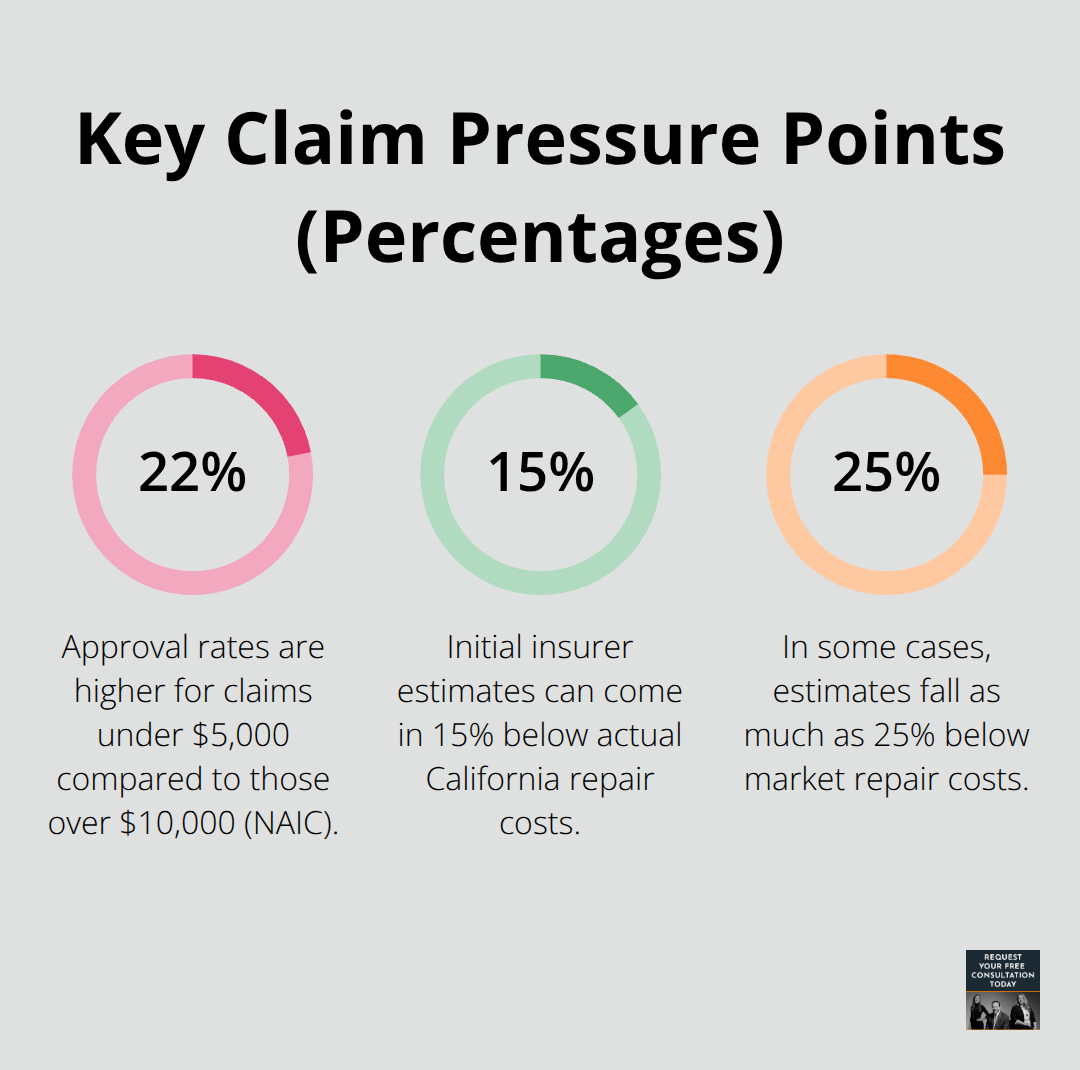
Adjusters use automated software like Xactimate to generate estimates that frequently fall 15–25% below actual repair costs in California markets. When your adjuster’s estimate arrives, it’s rarely their opening position-it’s their negotiating position. Obtain an independent repair estimate from a certified body shop before responding to any adjuster valuation. Request detailed written explanations for any discrepancies between estimates.
Causation Disputes Delay Your Settlement
Disputes over causation create another layer of delay. Insurers argue that pre-existing damage, wear and tear, or maintenance failures caused the loss rather than the accident itself. They request additional inspections, hire their own engineers, and demand documentation you may not have.
Meanwhile, your vehicle sits in a repair shop, and you’re without transportation. These disputes can stretch claim resolution from weeks into months. Document every phone call, email, and communication with your insurer to build a clear record of the accident’s cause and the resulting damage.
Denials and Reductions Follow Procedural Gaps
Delayed settlements and outright denials follow when insurers claim insufficient documentation, missed filing deadlines, or policy exclusions. The Insurance Information Institute reports that 12% of property damage claims face some form of denial or significant reduction. Most people accept the first offer because the process exhausts them-that’s exactly what insurers count on.
When the insurer denies your claim or undervalues it by more than 10%, you have options beyond acceptance. Negotiation with the insurance company often produces better results than passive compliance, and formal dispute resolution processes exist to challenge unfair valuations.
How to Get More Money From Your Insurance Company
Use Independent Repair Estimates as Your Negotiation Tool
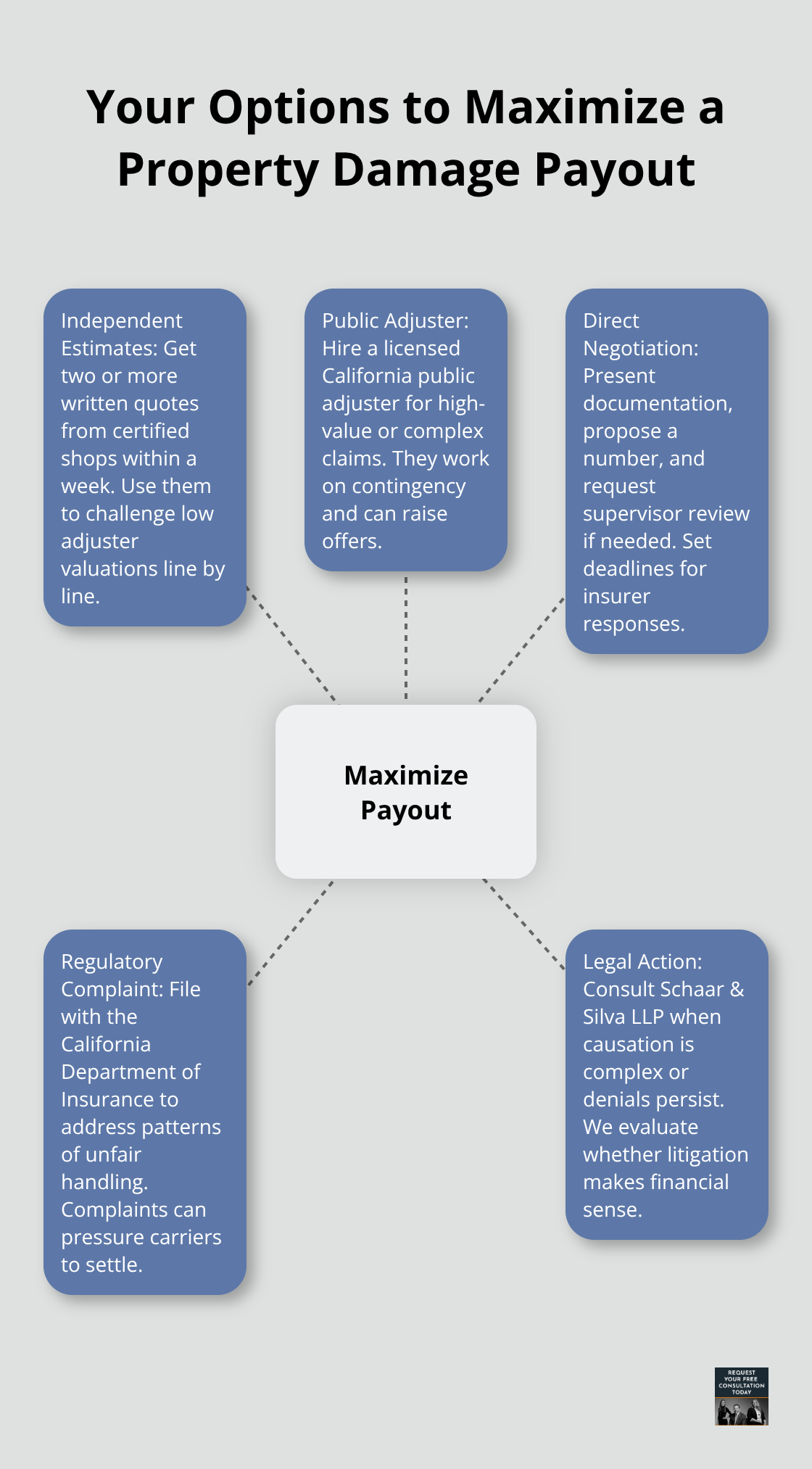
Independent repair estimates represent your most powerful negotiation tool against insurance company lowballing. When an adjuster submits an estimate, obtain written quotes from at least two certified body shops in your area within one week. California repair shops must provide estimates in writing at no charge, and shops certified by AAA or the National Institute for Automotive Service Excellence carry more weight in disputes.
If your independent estimates exceed the adjuster’s valuation by more than 10%, request a detailed written explanation for each line item discrepancy. Adjusters often reduce estimates for labor costs, parts markup, or paint matching procedures that certified shops actually charge. Document this comparison in writing and send it to your claims adjuster with a specific deadline for response, typically five to seven business days. This shifts the burden back to the insurer to justify their lower figure rather than leaving you scrambling to prove yours.
Hire a Public Adjuster for High-Value Claims
Public adjusters represent your interests in property damage disputes and charge between 5% and 15% of your final settlement, paid only if they secure additional money. Hire a public adjuster when your claim exceeds $10,000 or when the insurer’s estimate differs from yours by more than 15%. Public adjusters conduct independent investigations, hire engineers for causation disputes, and negotiate directly with insurers on your behalf.
The American Society of Public Adjusters reports that claims handled by public adjusters settle for an average of 24% higher than initial insurer offers. Verify that any adjuster you hire holds a California Department of Insurance license and carries errors and omissions insurance. This protects you if the adjuster mishandles your claim or fails to meet deadlines.
Negotiate Directly With Your Insurance Company
Negotiating directly with insurers often works when you have documentation backing your position. Contact your claims adjuster in writing with your independent estimate, explain the discrepancies point by point, and propose a settlement figure based on your documentation. If the adjuster refuses to budge, request escalation to a supervisor or file a complaint with the California Department of Insurance, which tracks complaint patterns and can pressure insurers to settle fairly.
When disputes involve significant money or complex causation issues, we at Schaar & Silva LLP can evaluate your claim and advise whether pursuing formal legal action makes financial sense.
Final Thoughts
Most property damage claims resolve through negotiation when you present solid documentation and independent repair estimates. Public adjusters work effectively for claims exceeding $10,000 or when discrepancies between your estimate and the insurer’s exceed 15%. The California Department of Insurance tracks complaint patterns and can pressure insurers when they act unfairly.
Legal assistance becomes necessary when causation disputes involve complex engineering questions, when insurers deny your claim outright, or when the claim value justifies the cost of formal action. We at Schaar & Silva LLP evaluate property damage claims and help determine whether pursuing legal remedies makes financial sense for your situation. Our team works to secure fair valuations for your loss.
If you’re in Santa Cruz County and facing a property damage claims process dispute, contact Schaar & Silva LLP to discuss your options. The initial consultation helps clarify whether negotiation, public adjuster representation, or legal action offers the best path forward for your claim.