
After a car accident, calculating your pain and suffering claim feels overwhelming. Insurance companies use specific methods to assign dollar amounts to your physical recovery, emotional trauma, and lost quality of life.
We at Schaar & Silva LLP help accident victims in Santa Cruz County, Sacramento, and Oakland understand exactly how these calculations work. This guide breaks down the formulas insurers use and shows you what documentation strengthens your claim.
What Counts as Pain and Suffering
Physical Pain and Recovery Time
Pain and suffering in an auto accident claim covers far more than just the cost of your medical bills. It includes compensation for the physical agony you experience during recovery, the emotional toll of trauma, and the activities you can no longer enjoy. Insurance companies must assign monetary value to these intangible losses, which is why understanding what qualifies matters for your claim.
Physical pain from broken bones, whiplash, or spinal injuries directly extends your compensation timeline. According to data from the National Highway Traffic Safety Administration, approximately 4.5 million people receive medical treatment for crash injuries annually in the United States, and recovery periods vary dramatically based on injury severity. A simple soft tissue injury might resolve in weeks, while traumatic brain injuries can affect quality of life for years. The longer your treatment continues and the more invasive your procedures, the stronger your argument for higher pain and suffering damages. Medical records documenting your pain levels, medication changes, and functional limitations become your strongest evidence here.
Emotional Distress and Psychological Impact
Psychological harm from accidents is equally valid but often undercompensated. Many accident victims experience anxiety, sleep disturbance, or post-traumatic stress that persists long after physical healing. Courts recognize that emotional distress is a legitimate injury component, yet insurance adjusters frequently minimize this aspect without proper documentation.
Loss of Enjoyment of Life
You lose enjoyment of life when you cannot return to hobbies, sports, or social activities you previously engaged in regularly. Someone who can no longer run, play with children, or work in their chosen field has suffered measurable diminishment of life quality. Keeping a detailed personal journal documents your daily struggles, emotional state, and activity restrictions, creating tangible proof of these losses. This documentation transforms vague claims about suffering into concrete evidence that adjusters cannot easily dismiss.
If your accident occurred in Santa Cruz County, Sacramento, or Oakland, we at Schaar & Silva LLP can connect you with psychological support services to document your emotional recovery formally. Understanding what counts as pain and suffering sets the foundation for your claim, but insurance companies evaluate these losses through specific calculation methods that determine your actual compensation amount.
How Insurance Companies Calculate Pain and Suffering Damages
The Multiplier Method
Insurance companies multiply your economic damages-medical bills, lost wages, property damage-by a number between 1.5 and 5, depending on injury severity. A broken arm with $8,000 in medical costs multiplied by 3 yields $24,000 in pain and suffering damages. This method ties your compensation directly to documented financial losses, which means higher medical expenses can substantially increase your final award. The multiplier approach works well for severe injuries with extensive treatment records but often undercompensates victims whose suffering exceeds what their medical bills suggest.
The Per Diem Method
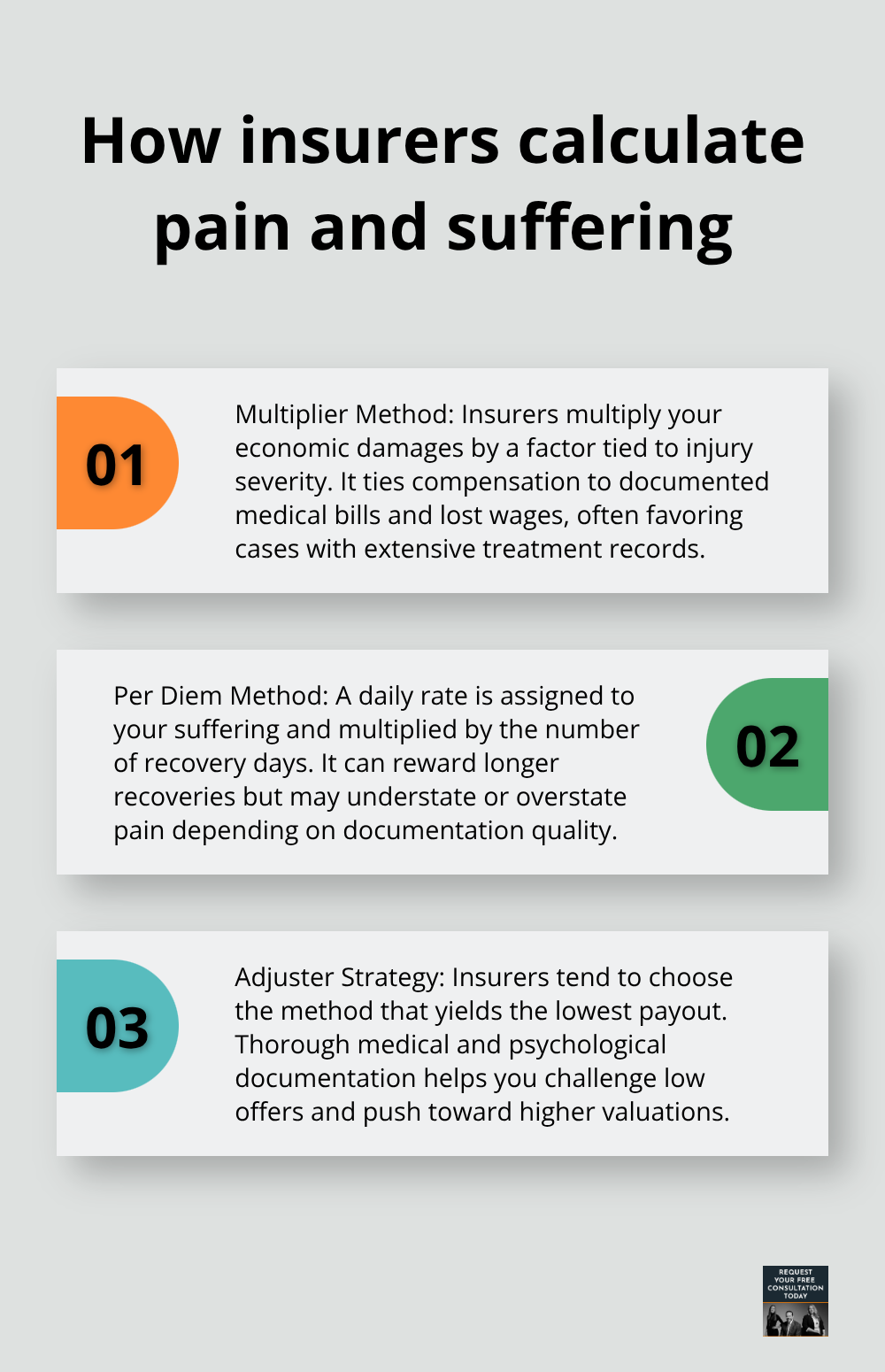
The per diem method assigns a daily rate to your suffering, typically ranging from $100 to $500 per day, then multiplies that rate by your recovery period in days. If your recovery takes 6 months and the adjuster assigns $200 daily, you receive $36,000. This approach rewards longer recovery periods but can artificially inflate minor claims where treatment concludes quickly. Insurance companies prefer whichever method produces the lowest payout in your specific situation, which means you need concrete evidence to challenge their chosen approach.
Factors That Influence Compensation Amounts
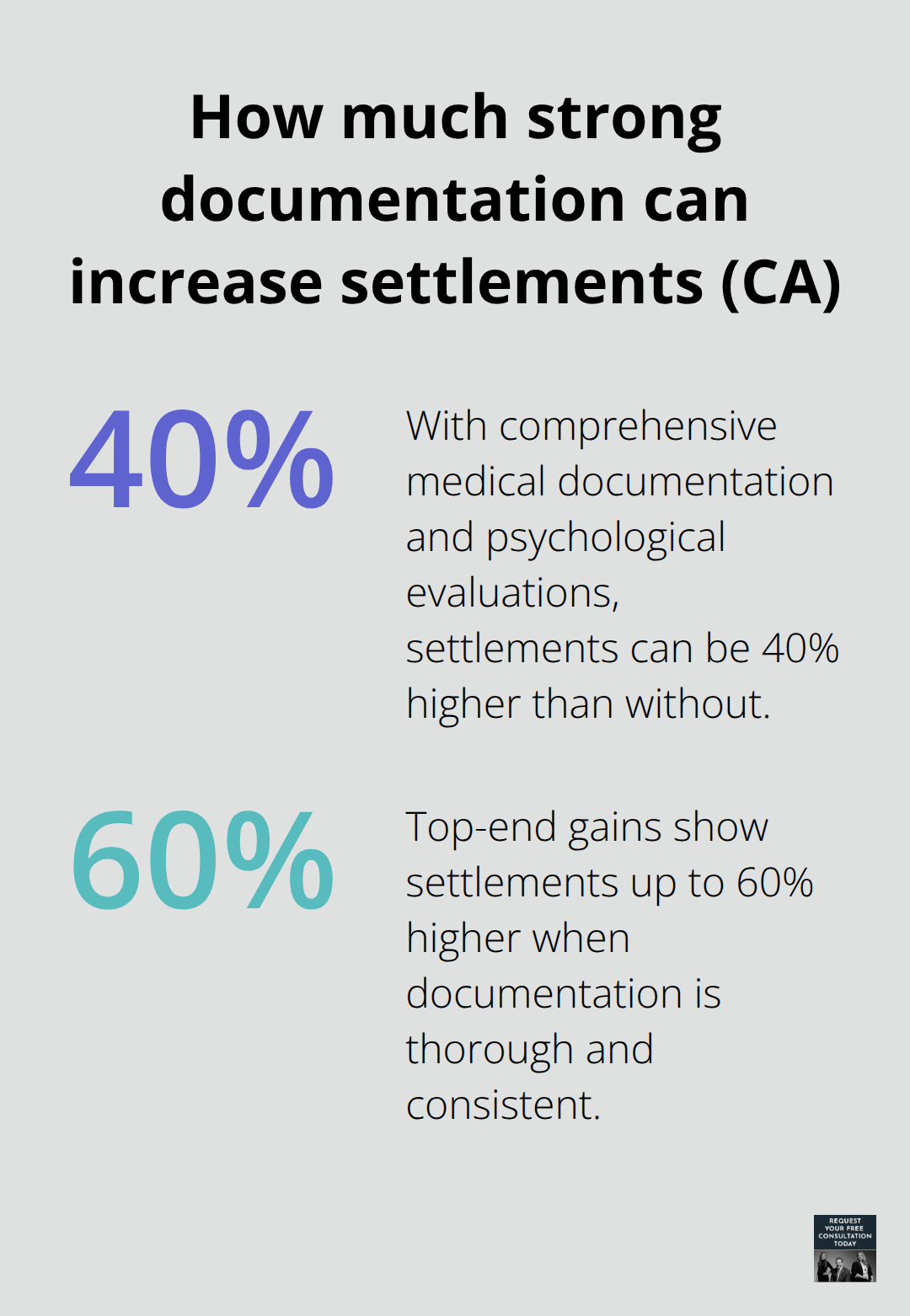
Adjusters weight medical treatment duration, procedure invasiveness, and documented functional limitations most heavily. A victim requiring surgery, physical therapy, and ongoing pain management receives substantially higher multipliers than someone with minor soft tissue injuries. According to the Insurance Research Council, the average auto injury settlement in California reached approximately $16,500 in recent years, yet victims with comprehensive medical documentation and psychological evaluations consistently received settlements 40 to 60 percent higher than those without.
Your medical records must detail pain levels using standardized scales, medication dosages, and specific restrictions your doctor imposed. If your doctor notes you cannot lift over 10 pounds or work full-time, that documentation becomes leverage against low settlement offers. Psychological evaluations from licensed therapists documenting anxiety, sleep disorders, or post-traumatic stress symptoms dramatically strengthen your claim’s value under either calculation method (and often push adjusters toward higher multipliers). In Santa Cruz County, we at Schaar & Silva LLP connect accident victims with specialists who can formalize this psychological documentation, ensuring your emotional recovery receives appropriate compensation weight.
The documentation you gather now directly determines which calculation method works in your favor and how aggressively adjusters defend their initial offers. Your next step involves understanding exactly what evidence transforms vague suffering claims into numbers insurance companies cannot ignore.
Documentation and Evidence Needed to Support Your Claim
Medical Records Create Your Foundation
Medical records form the foundation of any credible pain and suffering claim, and their completeness directly determines settlement amounts. Your treatment documentation must include specific pain ratings using the 0-10 numerical scale, which adjusters recognize as objective measurement. Each visit note should describe your functional limitations in concrete terms: can you lift your child, return to work, or sleep through the night? Generic descriptions like feeling worse accomplish nothing, but detailed entries stating you cannot lift more than five pounds or experience sharp pain when turning your head create undeniable evidence.
Request copies of all imaging reports, surgical summaries, and physical therapy progress notes immediately after each appointment, then organize them chronologically in a single folder. Insurance adjusters reviewing fragmented or incomplete medical files consistently offer lower settlements because gaps suggest your injuries were minor or treatment inconsistent. The Journal of the American Medical Association found that detailed medical documentation increased settlement values by an average of 35 percent compared to sparse records, making this organizational work worth the effort.
Healthcare Provider Statements Strengthen Your Position
Healthcare providers who document your treatment progression carry substantial weight with adjusters, particularly when they note specific restrictions or complications. Ask your treating physicians to write a detailed narrative letter addressing your current functional status, expected recovery timeline, and any permanent limitations you may face. This letter should quantify what you cannot do: if your doctor states you cannot work full-time for six months or require ongoing pain management, that becomes powerful evidence supporting higher multipliers.
Physical therapists who document your range of motion improvements or plateaus create measurable proof of your recovery journey. These clinical records (combined with your personal observations) establish a comprehensive picture of your healing process that adjusters cannot easily dismiss or undervalue.
Personal Documentation Captures Daily Impact
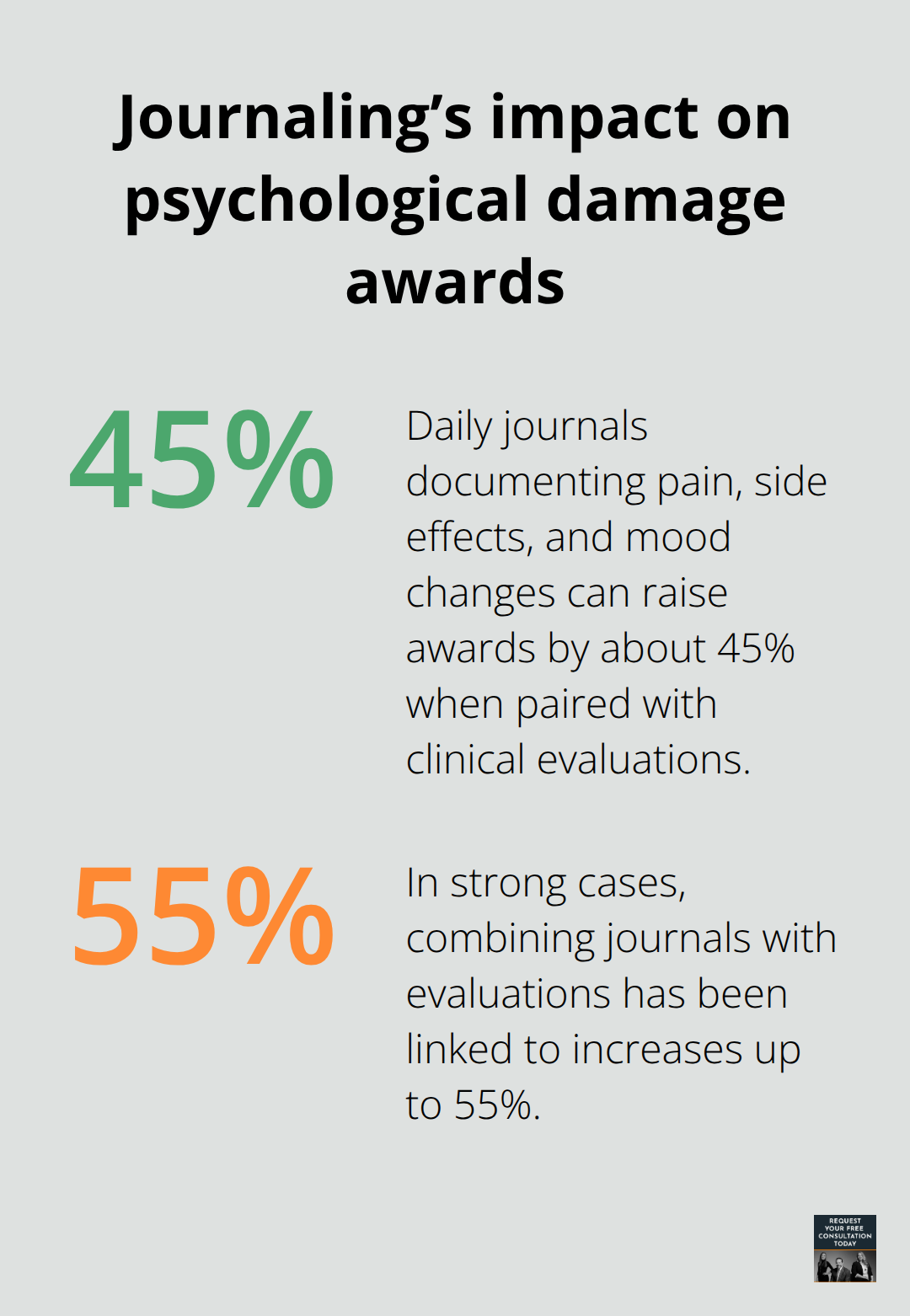
Maintain a personal journal detailing your daily struggles, emotional state, and activities you’ve abandoned since the accident. One study from the American Psychological Association showed that daily journals documenting pain levels, medication side effects, and mood changes increased psychological damage awards by 45 to 55 percent when presented alongside clinical evaluations. Photograph any visible injuries, scars, or swelling with consistent lighting and dates, then add these images to your organized records.
This combination of medical evidence, provider statements, and personal documentation (photographs included) transforms vague suffering claims into numbers insurance companies cannot ignore. Accident victims in Santa Cruz County can work with our team at Schaar & Silva LLP, which connects you with medical professionals who understand how to document injuries in ways adjusters cannot dismiss, ensuring your suffering receives appropriate monetary recognition.
Final Thoughts
Insurance companies use two primary calculation methods to assign dollar amounts to your pain and suffering claim, but the actual compensation you receive depends entirely on the documentation you gather. The multiplier method ties your damages to medical expenses, while the per diem approach assigns daily rates to your recovery period. Neither method works in your favor without comprehensive evidence showing the true extent of your physical pain, emotional trauma, and lost quality of life.
Your medical records, healthcare provider statements, and personal journals transform vague suffering into numbers adjusters cannot dismiss. Detailed pain ratings, functional limitations documented by your doctors, and photographs of injuries create the foundation for higher settlements. Accident victims who organize this evidence thoroughly receive settlements 40 to 60 percent higher than those with incomplete documentation, making the effort of gathering and organizing records directly worth thousands of dollars.
We at Schaar & Silva LLP help accident victims throughout Santa Cruz County navigate your pain and suffering claim while ensuring your documentation receives proper weight with insurance companies. Contact Schaar & Silva LLP to discuss your case and connect with medical professionals who document injuries in ways adjusters cannot undervalue. You focus on healing while our team handles the legal complexities of securing fair compensation for your injuries and losses.
