

A trial verdict against you doesn’t mean your case is over. At Schaar & Silva LLP, we know that appellate accident cases offer a real path forward when legal errors have affected your outcome.
The appeal process is technical and time-sensitive, but understanding your options matters. This guide walks you through when appeals make sense and how they actually work.
What Mistakes at Trial Can Get Your Case Overturned
Appeals Focus on Trial Errors, Not New Evidence
An appeal does not give you a second trial or a chance to present new evidence. Instead, it focuses on whether the trial itself was conducted fairly and legally. Trial errors directly affect verdicts, and those mistakes become the foundation for appeal arguments. The most common grounds involve procedural missteps, inadequate jury instructions, or decisions that lacked support from the evidence presented. California Code of Regulations title 10, sections 2509.43 through 2509.49, govern how these appeals must be filed, but the heart of any appeal rests on identifying what went wrong during the trial.
Common Grounds for Overturning a Verdict
If the judge failed to properly instruct the jury on the law, or if instructions contradicted how damages should be calculated in your auto accident case, that constitutes grounds for reversal. Insufficient evidence means the verdict does not match what was actually proven at trial-for example, if the other driver’s liability was never clearly established but the jury still found you responsible. Judicial misconduct or opposing counsel’s unethical behavior, such as presenting false testimony or making improper statements to the jury, also provides legitimate appeal grounds. The California Department of Insurance confirms that written decisions from insurers or the Workers’ Compensation Insurance Rating Bureau must address each issue raised before any appeal can proceed, and that same principle applies to trial verdicts.
Building a Strong Appellate Record
Not every unfavorable verdict contains reversible error. You must show that the trial court made a mistake that affected the outcome, not simply that you disagree with the result. This is why the appellate record-including trial transcripts, exhibits, and the judge’s rulings-must be complete and well-organized. If you objected to a ruling during trial and that objection was overruled, you have preserved the issue for appeal.
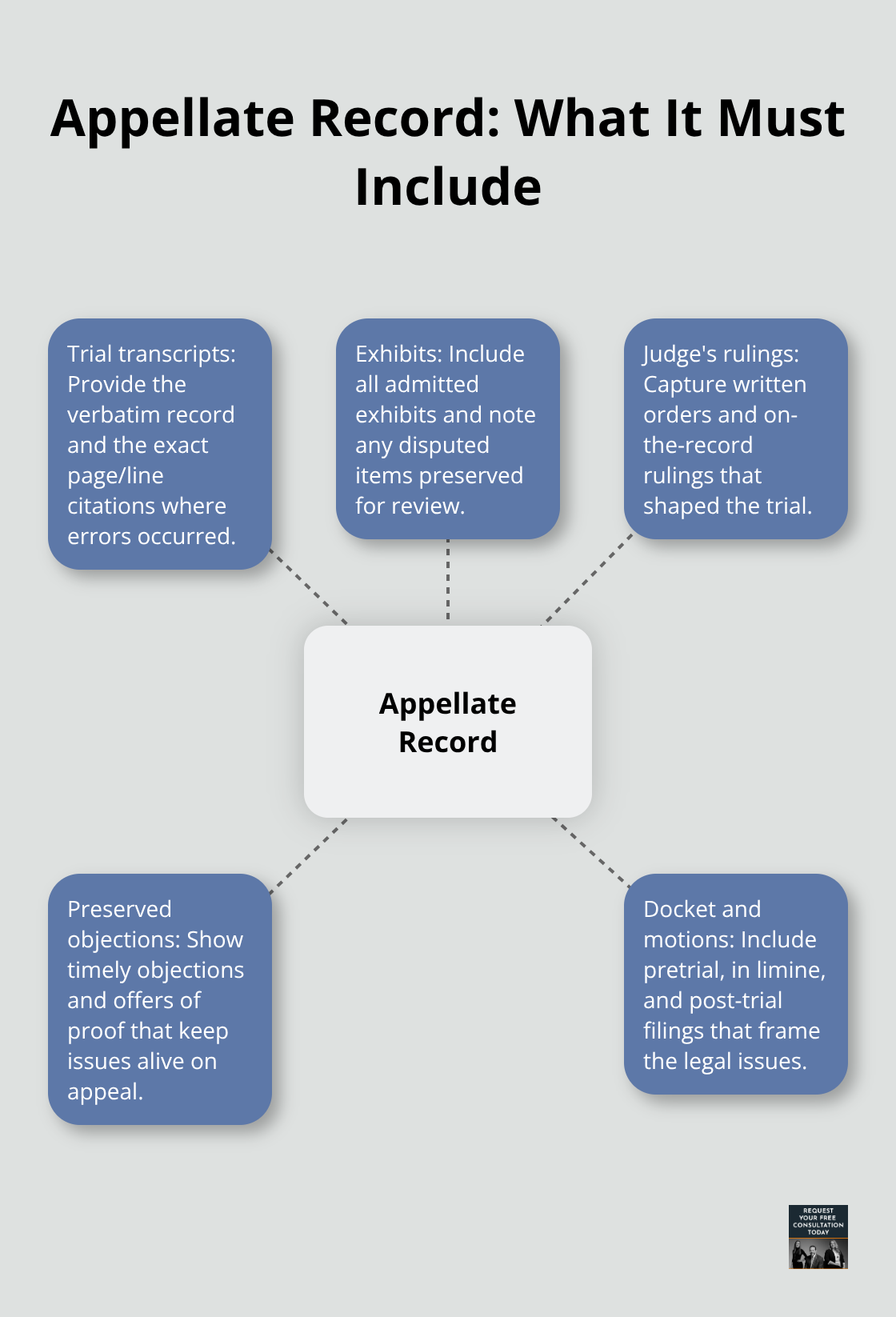
If you failed to object at the time, you generally cannot raise it later unless it involves a fundamental error that does not require preservation. Many cases lose on appeal because the record does not clearly show what happened or why the error mattered.
Meeting Deadlines and Preserving Your Rights
The appeal deadline in California is approximately 30 days after judgment, though filing a motion for a new trial within that window can extend it. Gathering trial transcripts early is essential, as delays in obtaining them can consume your filing window. Courts rarely overturn verdicts based on sympathy or new arguments; they overturn them based on documented legal mistakes that changed the result. The strength of your appeal depends on how well you preserved objections during trial and how clearly the record demonstrates the error. Understanding these requirements now positions you to take the right steps forward as you move into the actual appeal process.
How to Move Forward After Judgment
File Your Notice of Appeal Within 30 Days
After the judge signs the judgment, you have approximately 30 days to file a Notice of Appeal with the court. This deadline is firm, and missing it closes the door on appellate review entirely. If you file a motion for a new trial within those 30 days, the clock extends, giving you additional time to prepare.
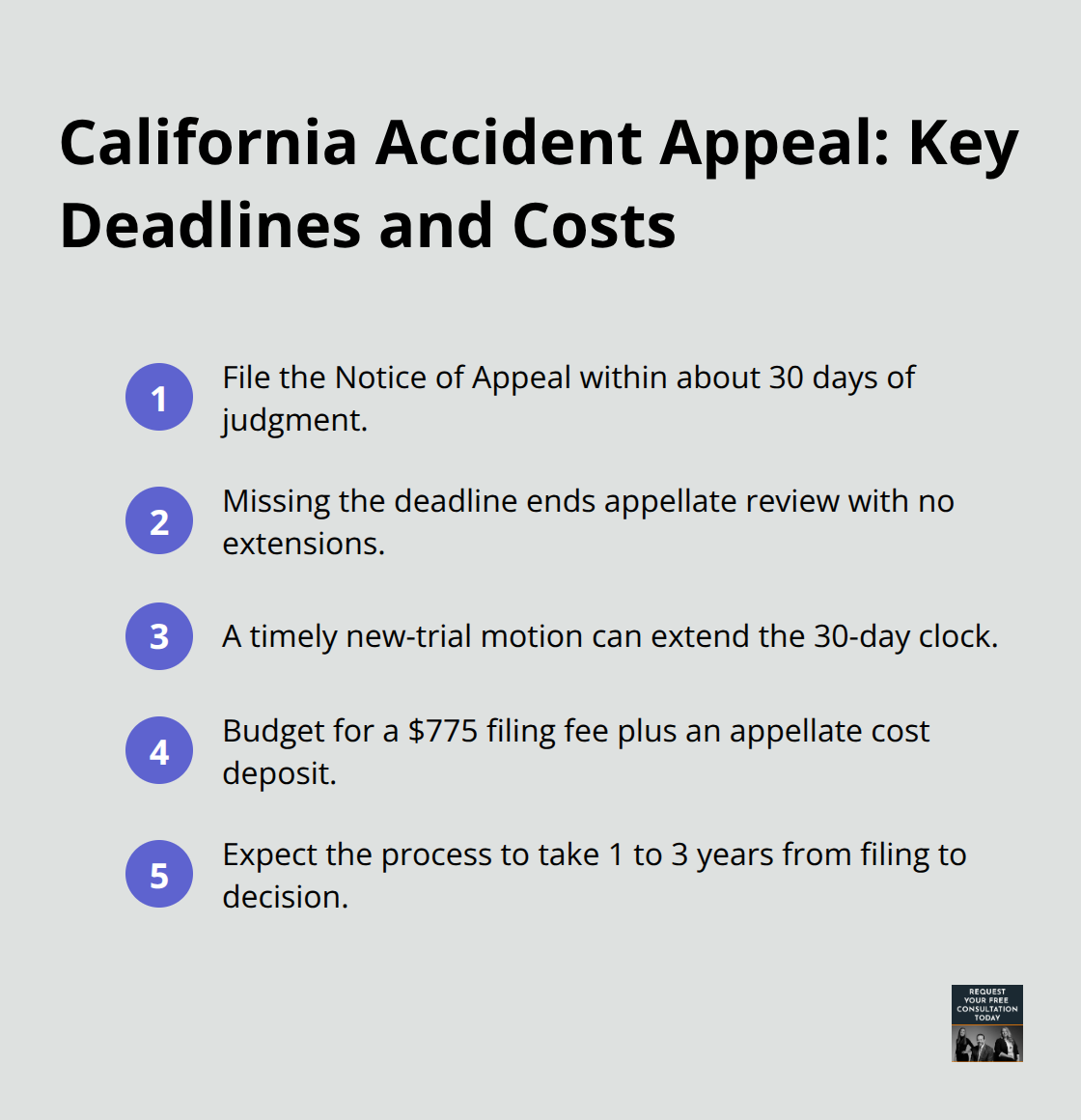
The Notice of Appeal itself is a straightforward form that tells the court you intend to challenge the verdict, but it requires proper service on the opposing party at the same time you file it with the court. California courts do not grant extensions for missed deadlines. Starting immediately matters.
Budget for Filing Fees and Costs
You will need to pay a $775 filing fee plus a deposit for appellate costs. Plan your finances accordingly, as these expenses arrive upfront and cannot be deferred. The deposit covers the cost of preparing and filing documents with the appellate court.
Obtain Your Trial Transcripts and Records
Preparing your appellate record is where the real work begins. You must obtain the trial transcripts, which can take weeks or months depending on the court’s backlog. You also need every exhibit, the judge’s rulings, and any motions filed during trial. The appellate brief is your written argument to the court explaining what legal errors occurred and why they changed the outcome.
Prepare Your Appellate Brief
Your brief must reference specific pages in the trial record and cite applicable California law or statutes. The brief typically runs 15 to 20 pages and must follow strict formatting requirements set by the California Court of Appeal. If oral arguments are scheduled, you will appear before a three-judge panel to answer their questions about the issues raised in your brief.
Understand the Timeline and Common Pitfalls
The entire appellate process typically takes 1 to 3 years from filing to decision. Many car accident cases lose on appeal not because the trial was actually fair, but because the appellant failed to clearly document the error or did not preserve objections properly during trial. The strength of your appeal rests on how well you documented legal mistakes and whether you objected to rulings when they occurred. Understanding these procedural requirements now positions you to identify whether your case contains the kind of reversible error that justifies the time and expense of an appeal-and what factors will actually strengthen your chances of success. Structured legal support can help transform the complexity of appellate work into a clear path forward.
What Makes an Appeal Actually Winnable
Documented Legal Errors Trump General Complaints
The difference between a failed appeal and a successful one often comes down to specificity. General complaints about losing do not persuade appellate judges; documented legal errors do. Appellate courts examine trial records for concrete mistakes that changed the outcome. The most compelling appeals rest on objections you made during trial that the judge then overruled. If you objected to a jury instruction and the judge ignored your objection, that creates a preserved issue the appellate court will review. If you failed to object at trial, you have lost the right to raise most issues on appeal unless they involve fundamental errors so serious they require no prior objection. This is why trial strategy and appellate strategy must work together from day one.
How Trial Transcripts Reveal Reversible Errors
Courts overturn verdicts when the trial transcript clearly shows the judge misapplied the law, gave wrong instructions about liability or damages, or allowed evidence that should have been excluded. California appellate courts do not second-guess the jury’s credibility findings or reweigh testimony; they only review whether the trial process itself was legally correct. Your appellate brief must point to specific pages in the trial transcript where the error occurred and explain exactly how that error changed the result.
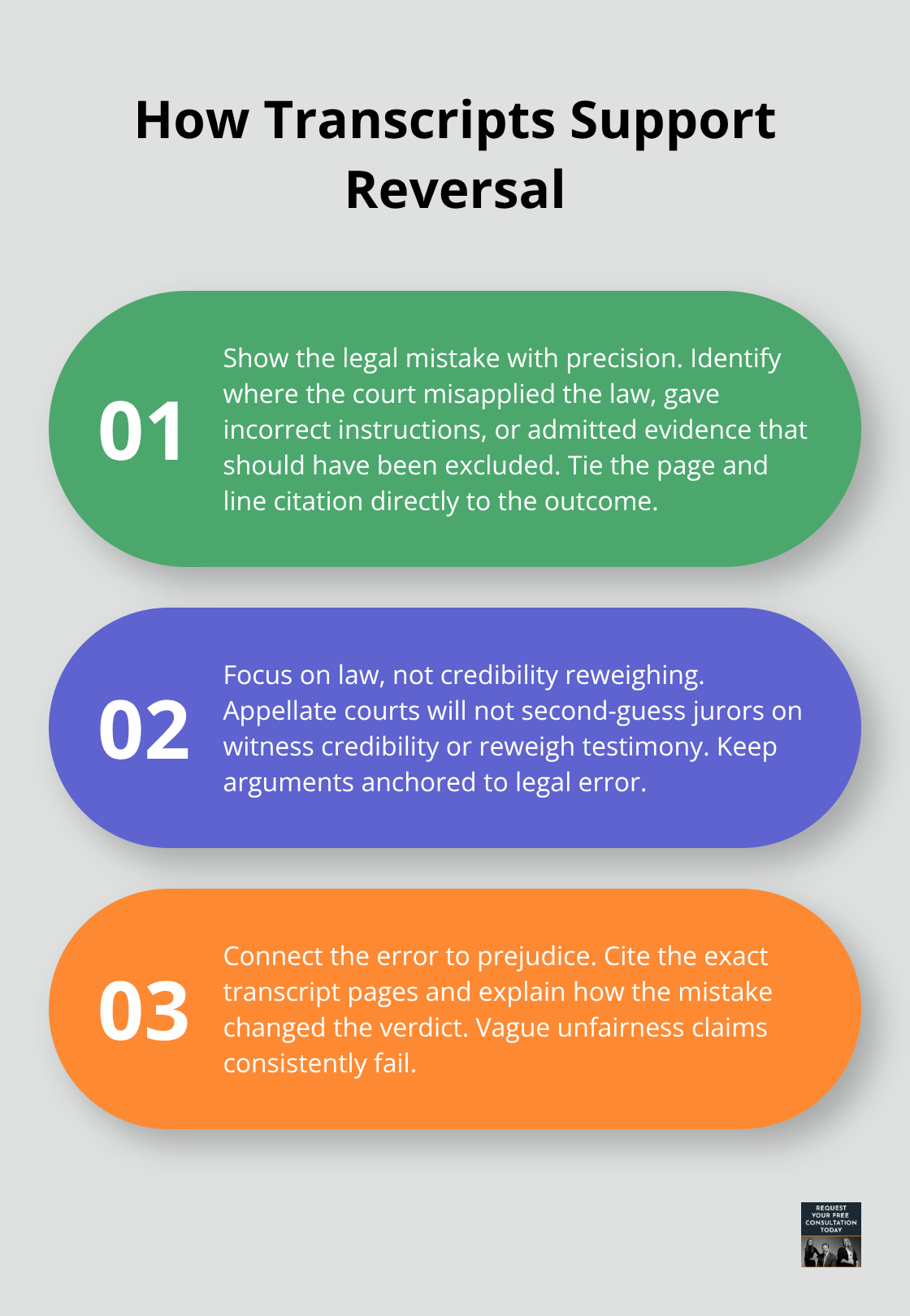
Vague arguments about unfairness lose consistently. The appellate record (trial transcripts, exhibits, and rulings) must clearly demonstrate the judge made a specific legal mistake that mattered to the outcome.
Why New Evidence Cannot Save Your Appeal
New evidence cannot save an appeal, and this reality eliminates a common misconception. Appellate courts work only with the record created at trial, which means witness testimony, exhibits, and rulings that already exist in the court file. If you discover new evidence after judgment, you would file a motion for a new trial within 30 days of judgment, not an appeal. That motion is separate from the appeal process and has different standards.
Inconsistent Rulings as Appellate Ammunition
Inconsistencies in how the judge ruled throughout the trial can strengthen an appeal if those inconsistencies show bias or misapplication of law. If the judge allowed certain evidence from the other driver but excluded identical evidence from you, that pattern of inconsistent rulings becomes powerful ammunition in your brief. Similarly, if the judge made contradictory statements about how damages should be calculated in jury instructions, that creates reversible error. Courts take seriously when trial judges apply different legal standards to different parties or when their rulings contradict earlier statements about the law (especially in auto accident cases where damages calculations directly affect your recovery).
Preservation of Objections Determines Your Options
The strength of your appeal ultimately depends on how thoroughly you preserved objections during trial and how clearly the appellate record documents that the judge made a specific legal mistake. Without preserved objections, most issues cannot be raised on appeal. With them, you have a foundation to challenge the verdict on solid legal grounds.
Final Thoughts
Appeals demand careful financial planning and realistic expectations about what appellate courts actually do. An appellate accident case costs money upfront-filing fees, transcript preparation, and attorney time add up quickly. Before committing to an appeal, calculate whether the potential recovery justifies the expense and the 1 to 3 years the process typically takes. If your verdict was small or the legal errors are weak, an appeal may drain resources better spent elsewhere.
However, if documented trial errors directly affected a substantial verdict, the investment often makes sense. Most appeals fail because appellants cannot point to specific legal mistakes preserved during trial or documented in the record. Even when errors exist, courts sometimes find them harmless, meaning the error did not change the outcome. Success rates vary, but realistic odds matter when deciding whether to proceed.
Moving forward starts with gathering your trial transcripts and having an honest conversation about your options. If you believe the judge made legal errors that changed your result, contact Schaar & Silva LLP for a consultation. We can review your trial record, identify preserved issues, and tell you whether an appeal makes financial and legal sense for your situation.
