
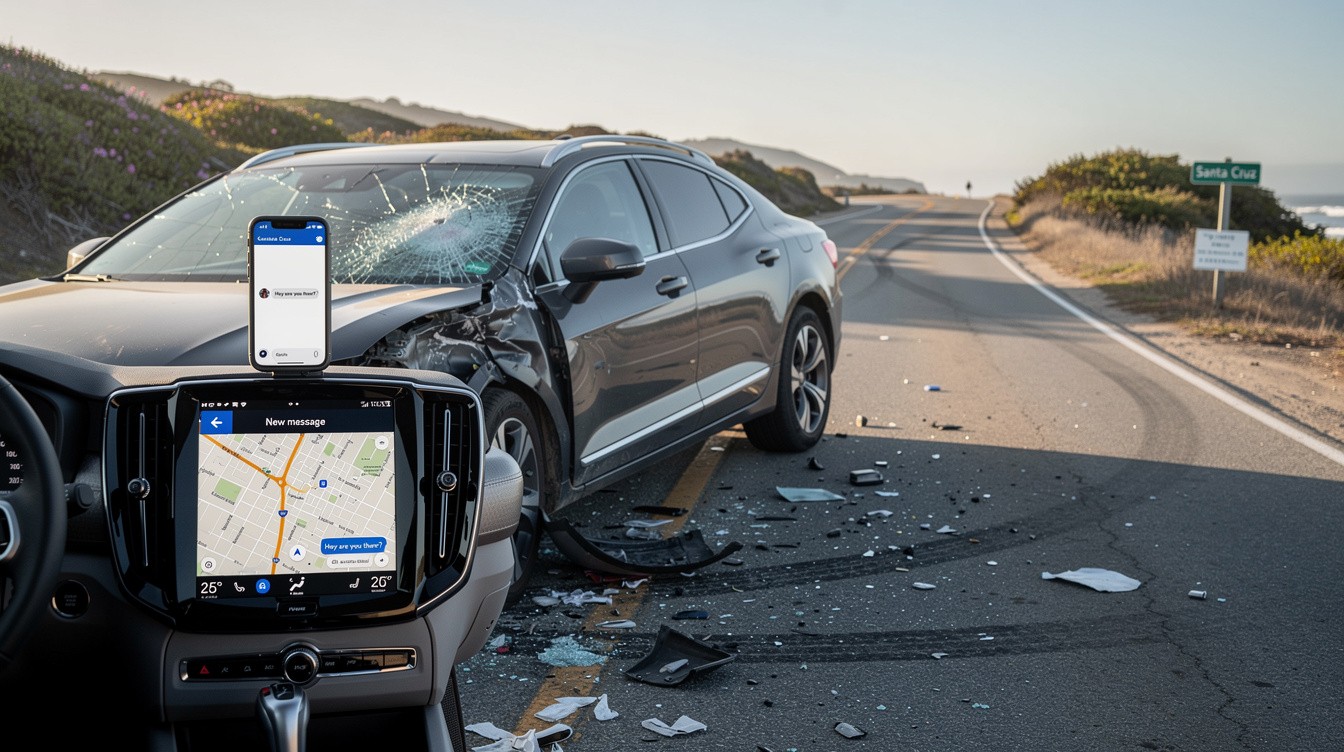
Your car’s infotainment system promises convenience, but it’s becoming a serious safety problem on Santa Cruz roads. Distraction technology accidents are climbing as drivers interact with touchscreens, navigation apps, and voice commands while behind the wheel.
We at Schaar & Silva LLP have seen firsthand how these in-vehicle distractions lead to collisions, injuries, and complicated insurance disputes. This post breaks down the real risks and shows you how to protect yourself.
Why Infotainment Systems Take Your Eyes and Mind Off the Road
Touchscreens Demand Constant Visual Attention
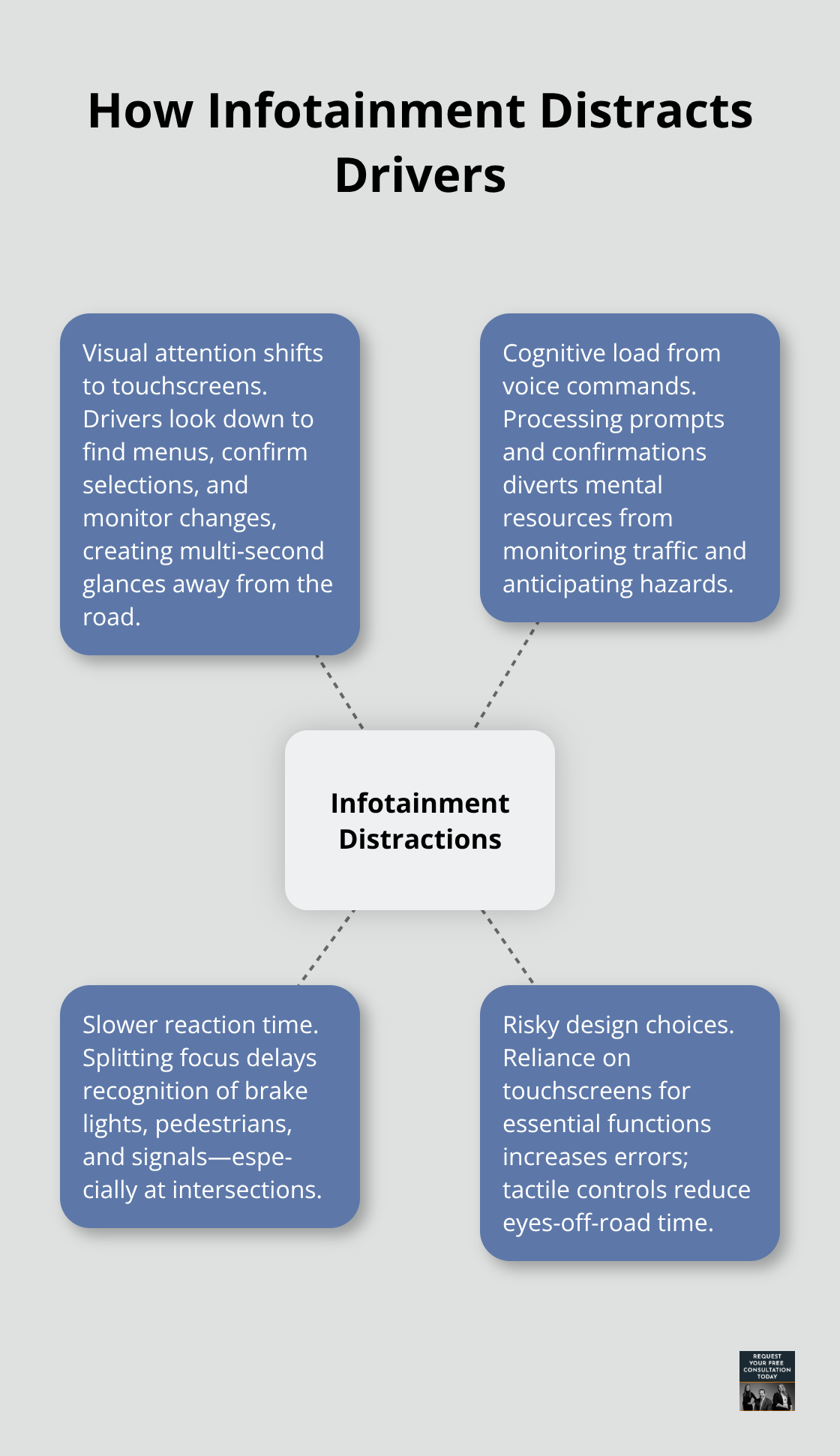
Touchscreen interfaces pull your eyes away from the road in ways that physical buttons never do. When you reach for a climate control knob, your hand finds it without looking. When you tap a touchscreen to adjust temperature, your eyes leave the road to locate the menu, confirm the selection, and watch the adjustment happen. According to the National Highway Traffic Safety Administration, texting while driving takes your eyes off the road for 5 seconds. At 55 mph, that equals the length of a football field. Infotainment systems create similar or longer distraction windows.
Navigation apps force you to glance down to confirm directions or adjust routes. Entertainment systems demand attention to find songs, podcasts, or audiobooks. Hyundai made a strong statement about this risk by committing to keep physical buttons in its vehicles because touchscreen controls are dangerous, according to The Drive. The automaker recognized that essential functions like climate control and audio should use tactile controls that don’t require eyes off the road.
Voice Commands Create Cognitive Overload
Voice commands introduce a false sense of safety. Your hands stay on the wheel and your eyes stay forward, but your cognitive attention shifts away from driving. Processing a voice command response, confirming the system understood you, and waiting for it to execute takes mental resources that should focus on the road. Your brain cannot simultaneously monitor traffic, anticipate other drivers’ movements, and react to road hazards while handling infotainment tasks.
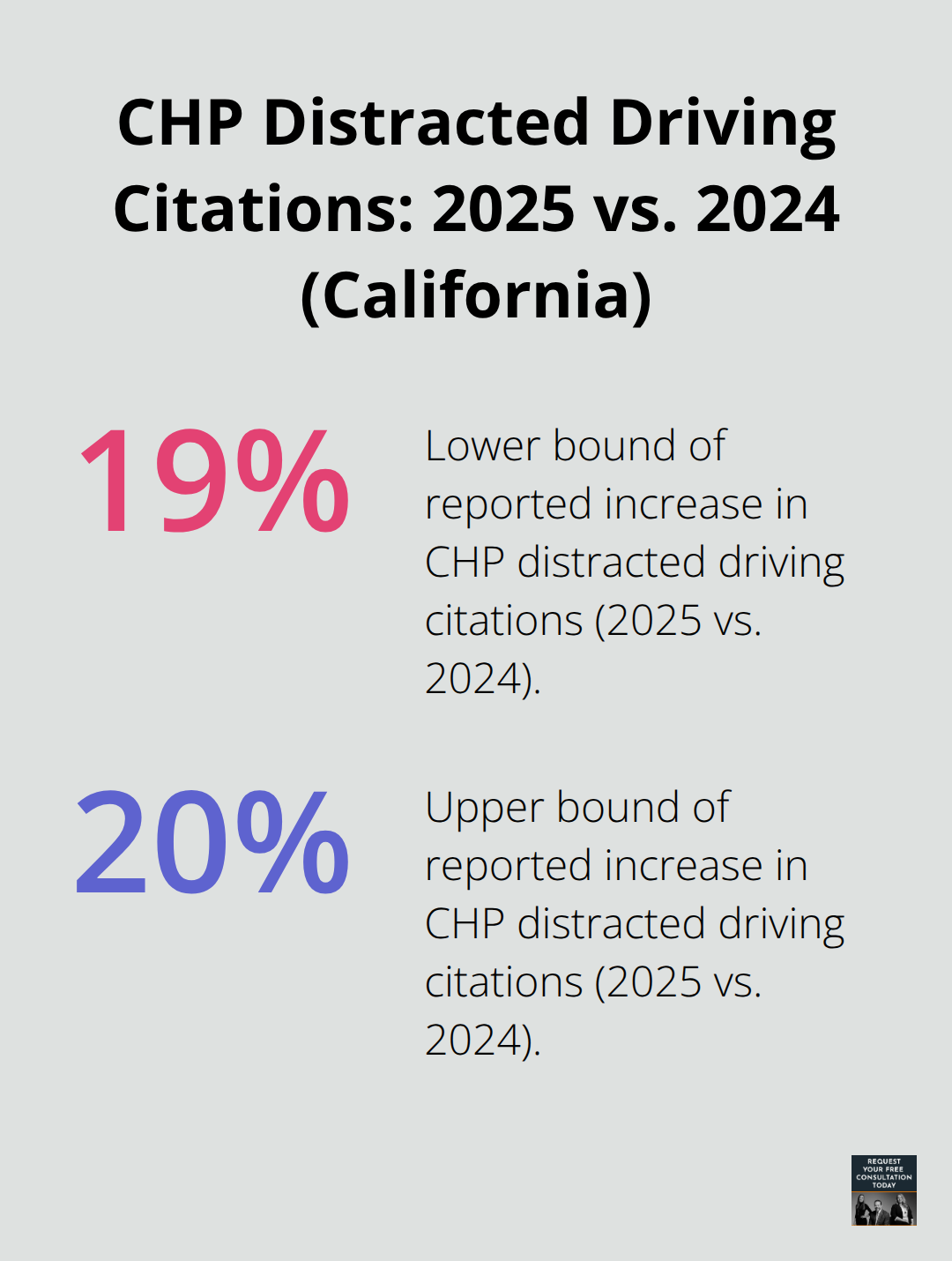
This mental load competes directly with safe driving. The California Highway Patrol issued over 111,700 citations for distracted driving in 2025, roughly 19 to 20 percent more than 2024. That climbing number reflects drivers interacting with in-vehicle technology while operating vehicles.
Reaction Times Suffer When Your Brain Splits Focus
Reaction time suffers measurably when your brain processes infotainment tasks. A driver adjusting navigation while approaching an intersection has delayed recognition of a pedestrian or red light. A driver confirming a voice command has slower response to sudden braking from the car ahead. These delays show up in collision data and insurance claims across Santa Cruz County.
The risk compounds in heavy traffic or poor weather conditions, when drivers need maximum mental capacity for the road. Infotainment systems steal that capacity at the worst possible moments. Understanding how these systems distract you is the first step toward protecting yourself-and the next section shows you what the accident data actually reveals about infotainment-related crashes in our county.
What the Data Reveals About Infotainment Accidents in California
Distracted Driving Citations Spike Across the State
Distracted driving from in-vehicle technology climbs measurably across California, and Santa Cruz County sits squarely in that trend. The California Highway Patrol issued over 111,700 citations for distracted driving in 2025, representing a 19 to 20 percent increase from 2024. That jump tracks directly with the rise of infotainment systems in newer vehicles. The National Highway Traffic Safety Administration reports that in 2024, distracted driving caused 3,208 deaths and injured 315,167 people nationwide. Those numbers include crashes triggered by touchscreen interactions, navigation adjustments, and voice command failures.
How Insurance Companies Now Handle Infotainment Claims
Santa Cruz County residents who have been in accidents increasingly cite infotainment distractions as a contributing factor, and insurance adjusters now flag these cases separately from traditional distracted driving claims. When a police report documents that a driver adjusted climate controls or confirmed a navigation route at the moment of impact, liability questions become more complex. Insurance companies scrutinize whether the vehicle’s design-particularly reliance on touchscreens for essential functions-contributed to the collision.
This creates a secondary liability layer that drivers and accident victims must understand. If another driver hit you while distracted by their infotainment system, that distraction strengthens your claim and may increase the settlement value significantly. Conversely, if you caused an accident while using infotainment features, your insurer may argue that you failed to operate the vehicle safely, potentially reducing your coverage or raising your premiums.
The Shift in Accident Patterns Before and After Infotainment Adoption
The pattern before and after infotainment became standard reveals a troubling shift in accident causation. Vehicles manufactured before 2015 had fewer touchscreen-dependent systems, and distracted driving citations focused primarily on phone use. Today, accident data shows a broadening range of in-vehicle distractions that did not exist a decade ago. Drivers now navigate complex menus, adjust multiple climate zones, and manage entertainment systems while driving. This expanded interaction window creates more opportunities for accidents.
Manufacturers’ design choices significantly impact accident frequency in Santa Cruz County. If another driver’s infotainment system played a role in your accident, document what you observed-whether the driver looked down at a screen, appeared confused by voice commands, or reached toward the dashboard. That observation becomes evidence in your case and influences how liability gets assigned and damages are calculated. Understanding these patterns helps you recognize when infotainment distraction contributed to your accident, which directly affects your legal options and recovery potential.
Protecting Yourself When Infotainment Systems Cause Accidents
Disable Distractions Before You Drive
The safest approach to infotainment systems treats them as dangerous distractions that demand your attention before you start driving, not while you’re moving. Disable notifications on your phone, set your navigation route and destination before shifting into gear, and adjust climate controls, audio, and seat positions while parked. The California Highway Patrol issued over 111,700 distracted driving citations in 2025, representing a 19 to 20 percent increase from 2024-a clear signal that drivers continue to interact with in-vehicle technology at alarming rates.
You cannot eliminate the risk entirely, but you can reduce your exposure significantly by completing all infotainment tasks during your pre-drive routine. If your vehicle requires touchscreen interaction for essential functions like climate control, that design flaw becomes a liability issue if another driver’s infotainment use causes an accident that injures you.
Document What You Observe at the Scene
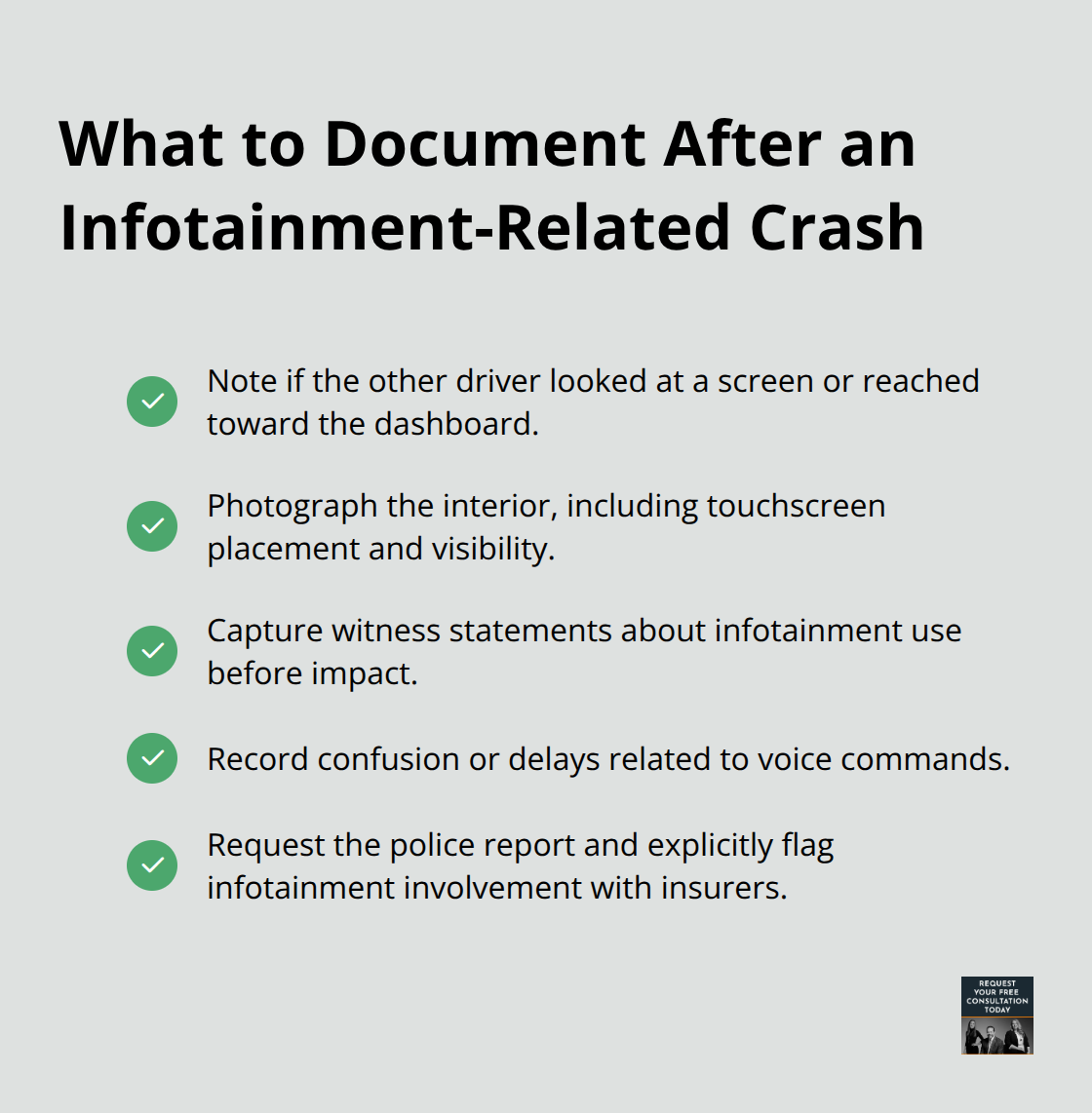
Document exactly what you observed when the accident occurs-whether the other driver looked down at a screen, reached toward the dashboard, or appeared confused by voice commands. That evidence directly strengthens your claim for damages. Photograph the interior of the other driver’s vehicle if possible, capturing touchscreen placement and visibility. Collect witness statements from anyone who saw the other driver interacting with their system before impact.
These observations transform a generic distracted driving claim into a specific infotainment liability case. Insurance adjusters and judges take documented evidence far more seriously than vague recollections. The more detail you capture at the scene, the stronger your position becomes in settlement negotiations or court proceedings.
Handle Insurance and Police Reports Strategically
Request the police report immediately and note any mention of driver distraction or the other vehicle’s infotainment system. When speaking with insurance adjusters, explicitly state that the other driver’s infotainment system contributed to the collision-do not let this detail get buried in a generic distracted driving claim. Insurance companies scrutinize whether the vehicle’s design (particularly reliance on touchscreens for essential functions) contributed to the collision, and your clear communication about infotainment involvement influences how they evaluate liability.
Infotainment-related accidents complicate liability determinations and settlement valuations in Santa Cruz County. The legal team at Schaar & Silva LLP can help you identify whether the other driver’s vehicle design and infotainment choices contributed to your accident, which often increases your recovery potential significantly. We assist in evaluating property damage, directing you to medical lien services for bill assistance, and connecting you with specialists who can offer psychological support as you recover.
Final Thoughts
Infotainment systems pose a measurable safety threat on Santa Cruz roads, and the data backs this up. California Highway Patrol issued over 111,700 distracted driving citations in 2025, a 19 to 20 percent jump from 2024. Nationally, distracted driving caused 3,208 deaths and 315,167 injuries in 2024, with distraction technology accidents now representing a distinct category that insurance companies and courts recognize separately from traditional phone-based distraction.
Your immediate responsibility is straightforward: complete all infotainment tasks before you start driving. Set navigation, adjust climate controls, and disable notifications while parked so you eliminate most of your exposure to these hazards. If you observe another driver interacting with their infotainment system before or during a collision, document what you saw-photograph the vehicle’s interior, capture witness statements, and note the specific actions the other driver took, as this evidence transforms a generic distracted driving claim into a targeted infotainment liability case.
If you have been in an accident involving infotainment distraction, the team at Schaar & Silva LLP can help you navigate the complexities and understand what your case could be worth. We assist in evaluating property damage, directing you to medical lien services for bill assistance, and connecting you with professionals who can offer psychological support as you recover.
