

After a car crash, medical bills pile up fast. At Schaar & Silva LLP, we see accident victims struggle with these costs while their cases move forward.
Medical bills lien services let healthcare providers wait for payment until your settlement comes through. This means you don’t drain your savings on medical care right now.
<character_count>318</character_count>
How Medical Liens Work After a Car Crash
A medical lien is straightforward: a healthcare provider treats you after a car crash and places a legal claim on your future settlement to guarantee payment. California Civil Code 3045.2 requires hospital liens to be filed within 20 days of learning about your injury-missing this deadline makes the lien invalid. When you settle, the lien gets paid from settlement funds before you receive your net proceeds, which directly reduces what lands in your pocket.
What Providers Can Claim
Emergency departments, hospitals, chiropractors, physical therapy centers, ambulance services, and imaging facilities commonly file liens after car crashes. California Civil Code 3045.3 caps hospital liens at what the hospital reasonably would accept from insurance, aligning them with Medicare pricing rather than inflated chargemaster rates. Chargemaster rates run 2.5 to 10 times higher than Medicare payments for identical services according to CMS data, so this cap matters significantly. Private health insurers can also file liens if they paid your medical bills upfront.
The key point: lien amounts are negotiable. Many providers will cut liens by 20 to 40 percent to reduce litigation risk and secure faster payment, so accepting the initial amount is a mistake.
Timeline From Treatment to Settlement
Lien notices typically arrive 30 to 90 days after treatment and remain active throughout your case. You should request written payoff statements from every provider 30 to 60 days before settlement to prevent last-minute surprises. Obtaining itemized bills and cross-checking them against your medical records catches duplicates and upcoding that often yield 20 to 40 percent reductions.
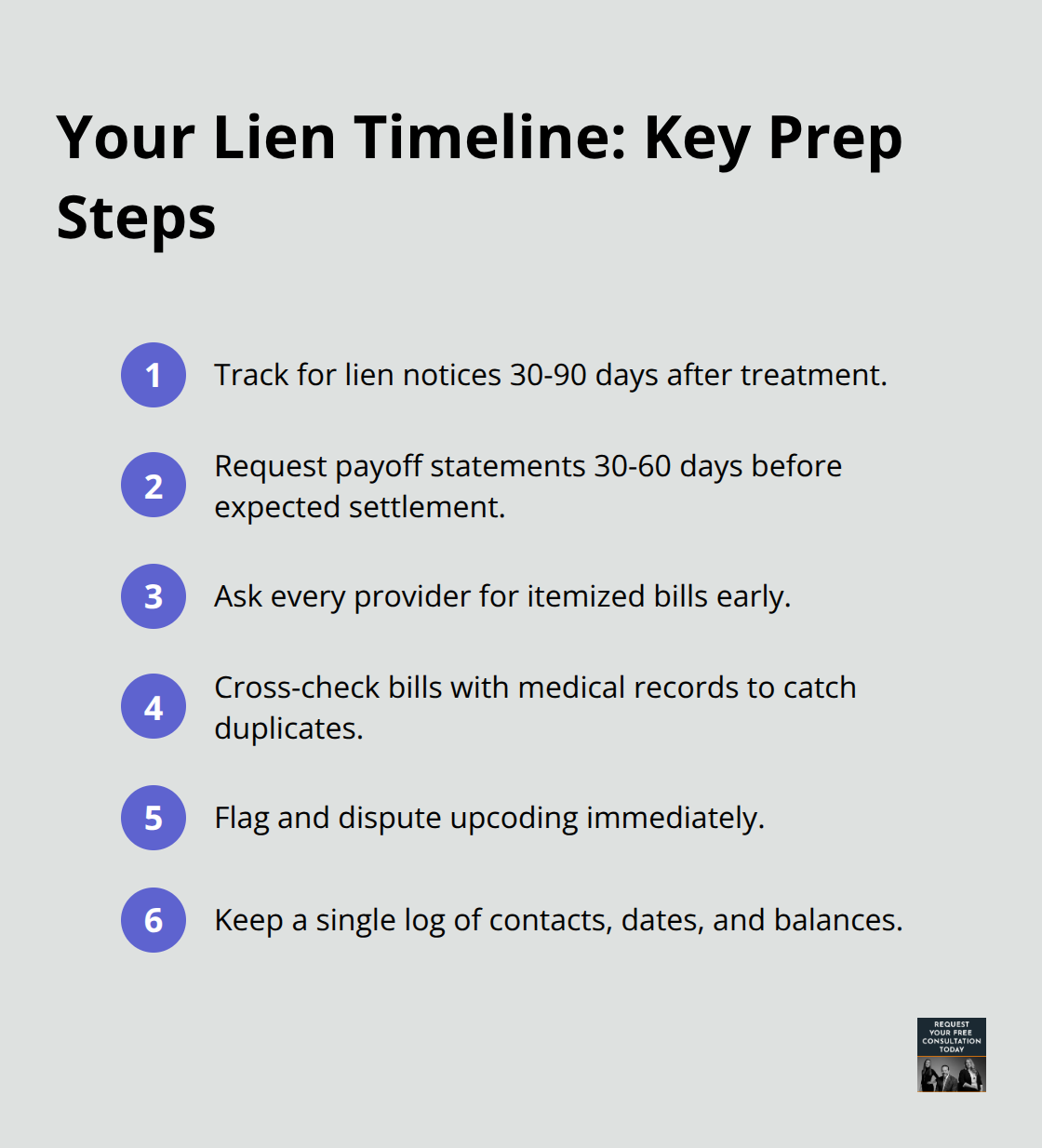
Start lien identification early because longer case timelines keep liens active longer. Faster resolution means quicker access to your funds. Coordinate closely with your attorney, providers, and any lien funding services to prevent billing errors that compound over time and erode your settlement value.
Taking Action on Lien Reduction
You have the right to challenge charges that don’t match your medical records or settlement math. Request itemized bills for every service and audit them thoroughly. Present Medicare pricing data to push liens toward Medicare rates instead of chargemaster rates-many providers will concede 20 to 40 percent reductions when they see reduced litigation risk.
Maintaining thorough documentation throughout your recovery prevents gaps that lien holders could exploit and gives you solid evidence for negotiations. These steps position you to protect more of your settlement before moving into the resolution phase.
Why Medical Liens Keep You Out of Debt During Recovery
The Trap Medical Liens Solve
Without medical lien services, you face an impossible choice after a car crash: drain your savings on medical bills or skip treatment and weaken your case. Medical liens eliminate this trap. Healthcare providers agree to wait for payment until your settlement arrives, meaning you receive emergency care, surgery, physical therapy, and imaging without paying a dime upfront. This matters because the average car crash victim in California faces $15,000 to $50,000 in medical costs depending on injury severity. You keep your savings intact while healing, and your providers get paid when your case resolves.
Access to Care Without Upfront Costs
Same-day or next-day appointments are available through medical lien networks across Santa Cruz County, Sacramento, and Oakland, covering chiropractors, orthopedic surgeons, pain management doctors, physical therapists, and imaging centers. You don’t wait weeks for care while your injury worsens. Providers accept liens across multiple specialties, so you access the treatment you need immediately rather than postponing care until you can afford it.
Negotiating Liens Protects Your Net Recovery
The real financial advantage emerges when you negotiate lien amounts before settlement. Many providers will reduce liens by 20 to 40 percent when presented with Medicare pricing data and clear evidence of billing errors. If you accept a $30,000 lien without negotiation on a $100,000 settlement, you pocket $70,000. If you negotiate that lien down to $18,000 through proper documentation and challenge, you keep $82,000 instead.
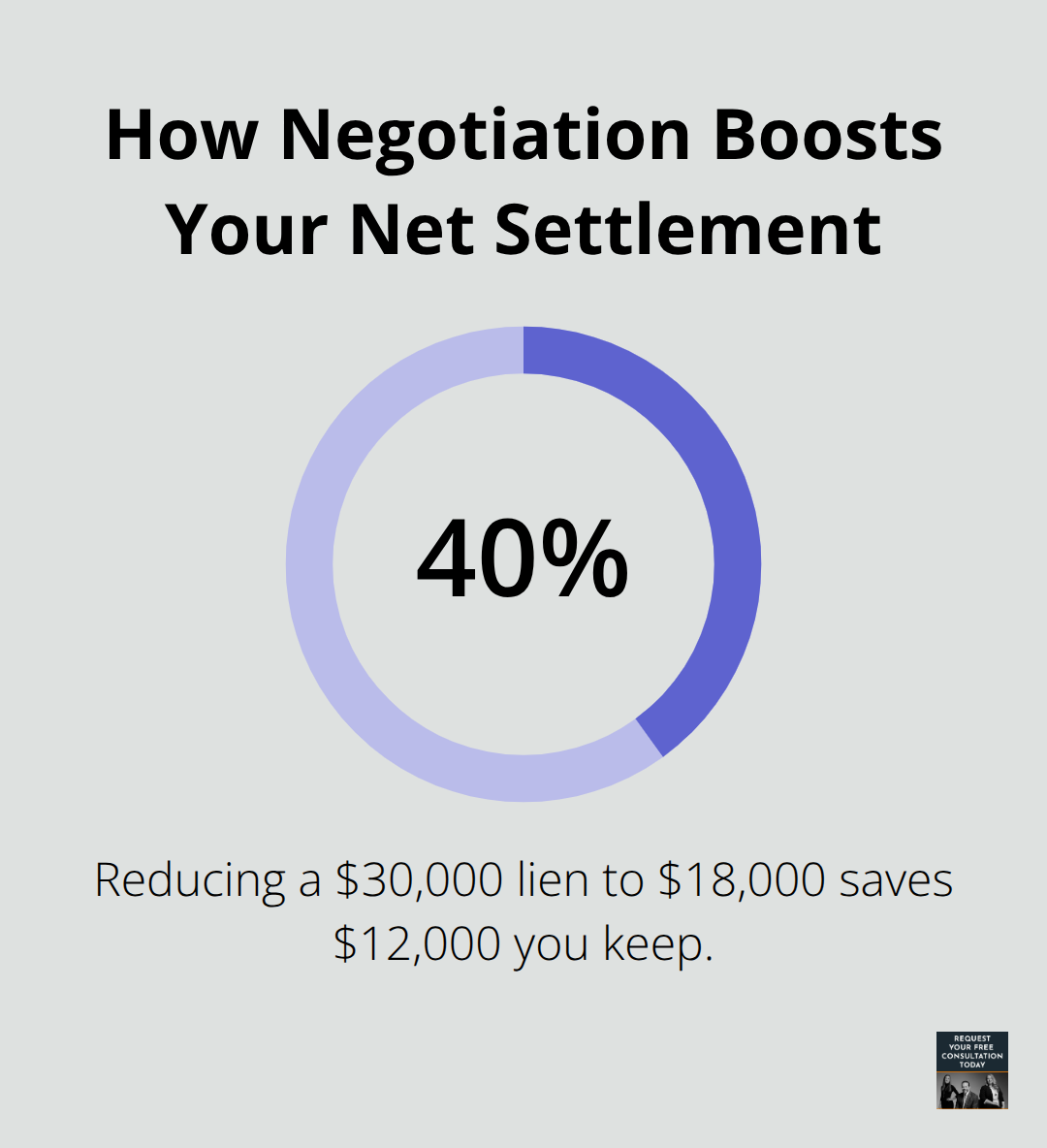
That $12,000 difference covers rent, lost wages, and living expenses while you recover.
Private health insurers typically accept lien reductions of 30 to 50 percent when your attorney applies the Common Fund Doctrine, a legal principle that reduces insurer claims on your settlement. Government programs like Medicare and Medi-Cal see reductions around 15 to 25 percent with proper hardship arguments and documentation.
Auditing Bills Catches Hidden Overcharges
Start requesting itemized bills and payoff statements 30 to 60 days before settlement to identify billing errors and duplicates that often account for 20 to 40 percent of inflated charges. Cross-check every bill against your medical records, spot upcoding where providers bill for services you didn’t receive, and request corrections immediately. This audit work directly protects your net recovery and prevents liens from consuming funds meant for your living expenses during the months after your case closes.
Moving Forward With Lien Strategy
Thorough documentation throughout your recovery prevents gaps that lien holders could exploit and gives you solid evidence for negotiations. These steps position you to protect more of your settlement. With liens properly managed and reduced, you transition from financial survival mode into planning how your settlement funds address the broader impacts of your accident-lost income, ongoing care needs, and the path forward.
Common Misconceptions About Medical Liens
Liens Don’t Delay Your Settlement
Many accident victims believe medical liens slow down settlement, but this misconception costs them money and peace of mind. Liens operate independently from the legal process. Your attorney negotiates your claim against the at-fault driver’s insurance while healthcare providers file liens in parallel. These two processes happen simultaneously, not sequentially.
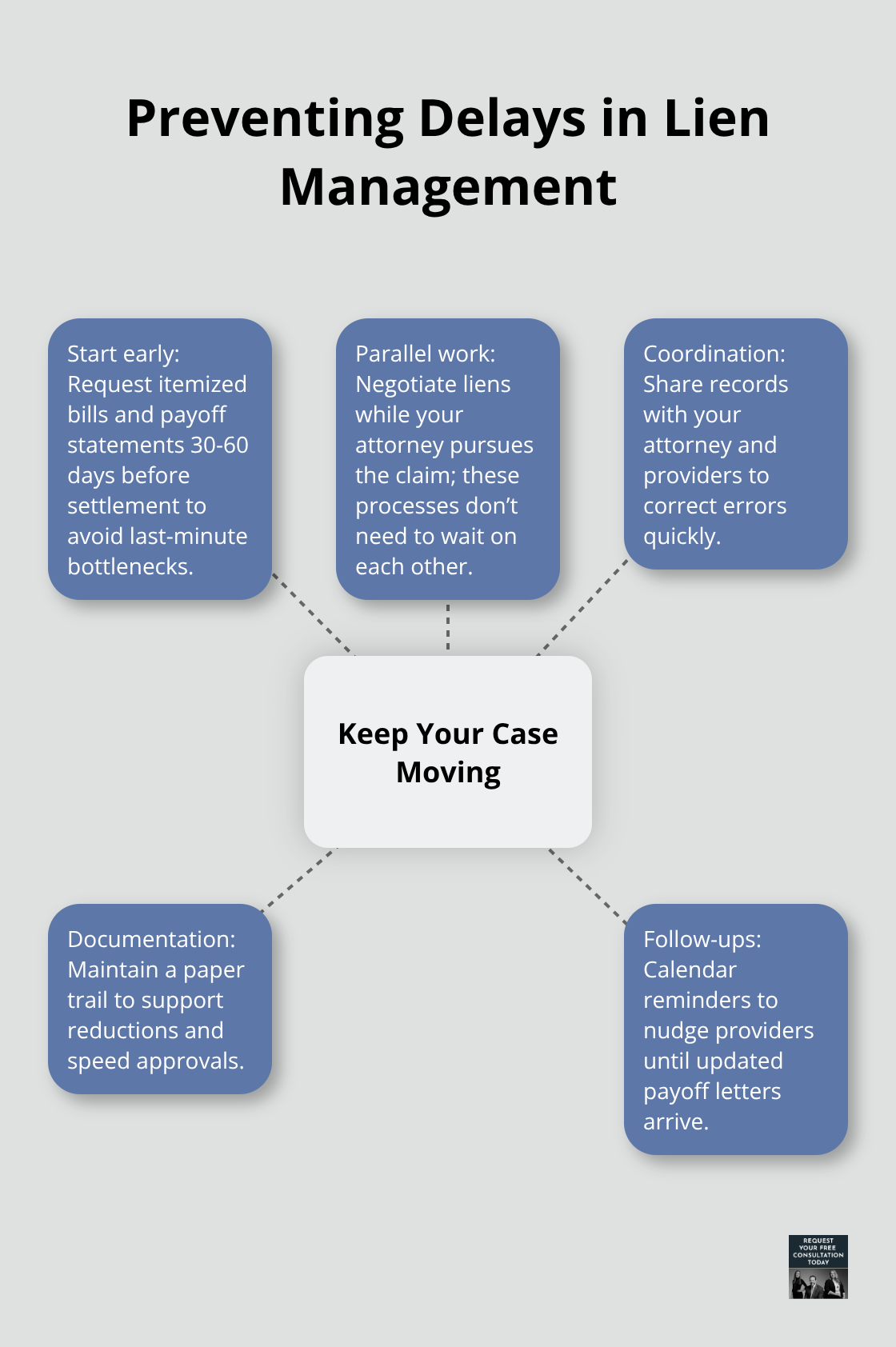
A hospital filing a lien in month two doesn’t extend your case by a single day.
What actually matters is how thoroughly you document and negotiate those liens before settlement arrives. This coordination takes weeks of focused work, not months of delay. The real timeline pressure comes from waiting too long to request itemized bills and payoff statements. If you wait until settlement negotiations conclude to start gathering this information, you’ll face rushed decisions and accept inflated lien amounts because time is running out. Starting lien reduction work 30 to 60 days before anticipated settlement prevents this trap. You control the pace of lien management through early action, not through the settlement process itself.
You Maintain Complete Control Over Your Settlement
A second critical misconception is that liens override your control over legal representation and settlement decisions. You maintain complete authority over whether to accept or reject any settlement offer, and your attorney works for you, not the lien holders. Healthcare providers cannot force you to settle or accept terms you reject.
What liens create is a financial obligation once you settle-the lien amount gets paid from your proceeds before you receive net funds. This is a payment priority, not a loss of control. Private health insurers typically accept reductions of 30 to 50 percent under the Common Fund Doctrine when your attorney applies proper legal arguments, while government programs like Medicare and Medi-Cal see reductions around 15 to 25 percent with hardship documentation. You decide which providers to negotiate with, which bills to challenge, and what settlement terms satisfy your needs. The lien simply means providers have a claim against those settlement funds.
Medical Liens Apply Across All Accident Types
Medical liens apply broadly across accident types-car crashes, truck accidents, pedestrian incidents, and even wrongful death cases can trigger liens when medical treatment occurs. This universality means understanding lien mechanics protects you regardless of your accident circumstances in Santa Cruz County, Sacramento, or Oakland. Whether you face emergency room bills, surgery costs, or ongoing physical therapy charges, the same lien principles and negotiation strategies apply to your situation.
Final Thoughts
Medical liens transform how accident victims access care after a crash. Instead of choosing between draining savings and skipping treatment, you receive immediate medical attention with payment deferred until settlement. Liens are negotiable, and most providers will reduce claims by 20 to 40 percent when presented with Medicare pricing data and documented billing errors-this negotiation directly increases your net settlement.
Start lien reduction work early by requesting itemized bills and payoff statements 30 to 60 days before settlement. Audit every charge against your medical records to catch duplicates and upcoding. Challenge liens that don’t match your records or settlement math, and coordinate closely with your attorney to prevent billing errors that compound over time.
If you’re recovering from a car crash in Santa Cruz County, Sacramento, or Oakland, we at Schaar & Silva LLP can guide you through medical bills lien services and lien negotiation. Our team handles the legal complexities while you focus on healing. Contact us to discuss your situation and learn how we protect your financial recovery.
