

A car accident can shake you to your core, leaving emotional scars that linger long after physical injuries heal. Many accident victims in Santa Cruz County, Sacramento, and Oakland experience anxiety, depression, and post-traumatic stress that disrupts their daily lives.
At Schaar & Silva LLP, we understand that car accident emotional trauma deserves real support-both through mental health care and legal action. This guide shows you how to access the help you need and recover the compensation you’re entitled to.
What Happens to Your Mind After a Car Accident
Car accidents trigger immediate psychological reactions that many people don’t expect or understand. Within hours or days of a crash, you might experience intense fear, anger, or numbness.
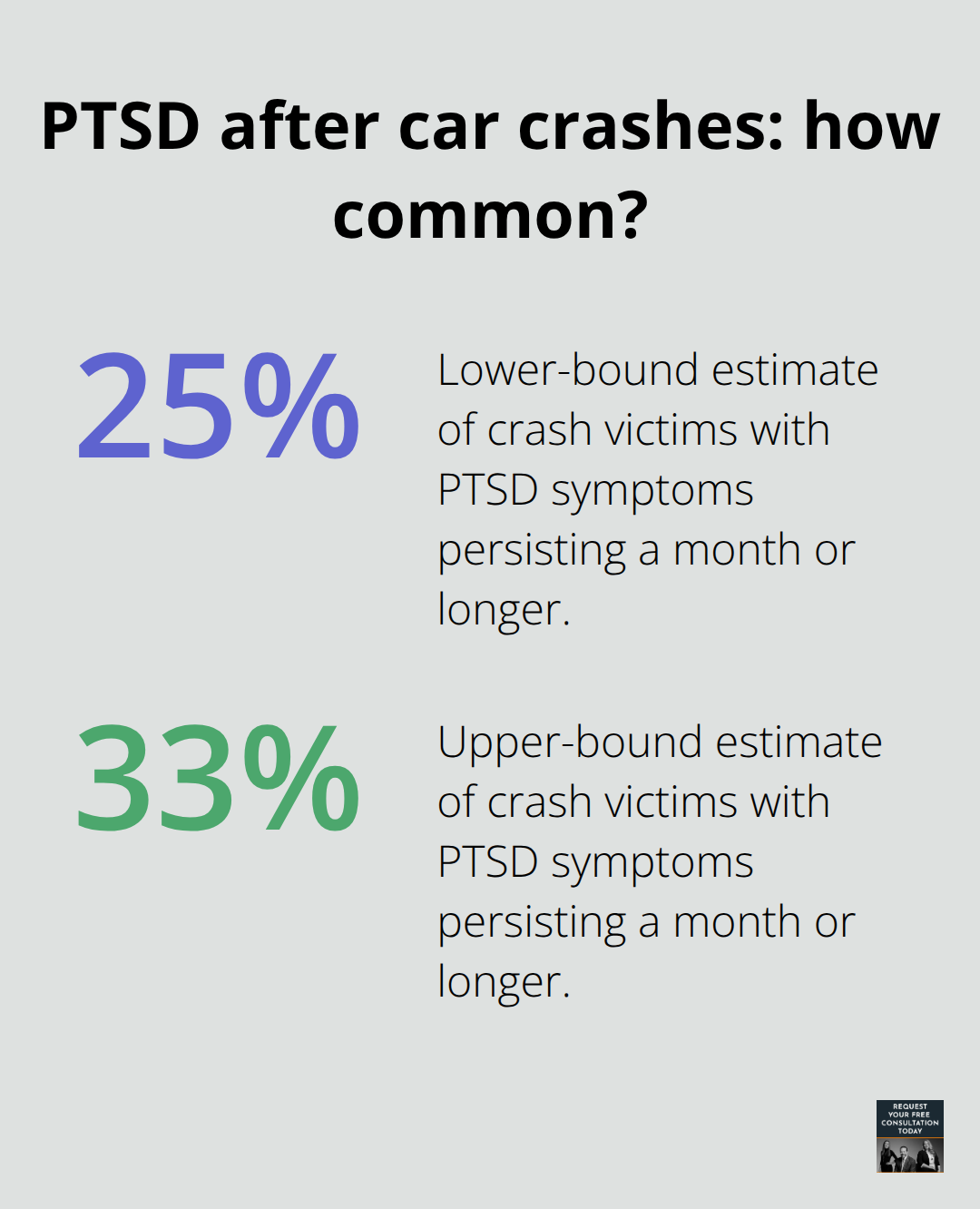
Around 25 to 33 percent of crash victims develop post-traumatic stress disorder symptoms that persist a month or longer after the collision, according to research from the American Psychological Association. This isn’t weakness or overreaction-it’s your nervous system responding to a genuine threat to your safety. Some people feel hypervigilant while driving or riding in cars, constantly scanning for danger. Others experience intrusive memories of the crash that appear without warning, disrupting work, sleep, or conversations. Anxiety can spike during certain times of day if the accident occurred at that hour, or when you encounter similar road conditions, weather, or vehicle types involved in the collision. These reactions happen because your brain categorized the accident as a serious survival threat and now treats similar situations as dangerous.
Short-term responses that need attention
In the first weeks after an accident, emotional reactions often overshadow physical pain. You might find yourself unable to concentrate at work, struggle to make decisions, or become irritable with family members. Sleep disturbances are common-either insomnia or nightmares about the crash. Appetite changes, muscle tension, and headaches frequently accompany the psychological impact. Some people avoid talking about the accident entirely, while others replay it constantly. These immediate reactions intensify if the crash involved serious injuries, high-speed impact, or fatalities. The National Highway Traffic Safety Administration recommends seeking medical evaluation within 72 hours of any accident, but this should include mental health screening alongside physical examination. Your doctor can identify whether anxiety or depression is developing and connect you with appropriate support before symptoms become entrenched.
Long-term effects that reshape your life
Beyond the first month, unaddressed trauma can develop into chronic conditions affecting your career, relationships, and independence. Some people develop specific phobias about driving or riding in vehicles, limiting their ability to work or maintain social connections. Depression often emerges as the initial shock fades, bringing feelings of hopelessness about recovery. Concentration problems and memory issues can persist, making it difficult to perform job duties or manage finances. Relationship strain occurs when partners and family members don’t understand why you’re withdrawn or reactive. Physical symptoms like chronic pain, digestive issues, and weakened immune function can develop alongside psychological effects. If you delay mental health treatment, these long-term patterns become harder to reverse. Early intervention through therapy-whether cognitive behavioral therapy, mindfulness-based approaches, or medication-significantly improves outcomes and prevents symptoms from becoming permanent features of your life.
Why professional support matters now
The path forward requires more than time alone. Mental health professionals can help you process what happened and develop coping strategies that work for your specific situation. Therapy addresses the root causes of your symptoms rather than just masking them temporarily. Treatment options vary widely, and what works for one person may not work for another. The sooner you connect with a mental health provider, the sooner you can begin rebuilding your sense of safety and control. Your recovery depends on taking action today, not waiting for symptoms to resolve on their own. Finding the right support in Santa Cruz County, Sacramento, or Oakland is the first step toward reclaiming your life after the accident.
Where to Find Mental Health Care After a Car Accident
Accessing trauma-informed mental health care in Santa Cruz County, Sacramento, and Oakland requires knowing what’s available and how to connect quickly. The American Psychological Association recognizes motor vehicle accidents as the leading cause of PTSD among civilians, which means therapists and counselors in your area have experience treating exactly what you’re experiencing. When you search for a provider, look for those trained in evidence-based trauma therapies like cognitive behavioral therapy, mindfulness-based cognitive therapy, dialectical behavior therapy, or acceptance and commitment therapy. These approaches have documented success rates for accident-related trauma.
Finding providers in your area
LifeStance operates multiple locations across California with telehealth options, allowing you to schedule appointments without traveling if driving triggers anxiety. Many providers offer online matching tools that connect you with trauma-informed clinicians within days rather than weeks. The National Highway Traffic Safety Administration recommends mental health screening within 72 hours of an accident, so contact providers immediately rather than waiting for symptoms to worsen.
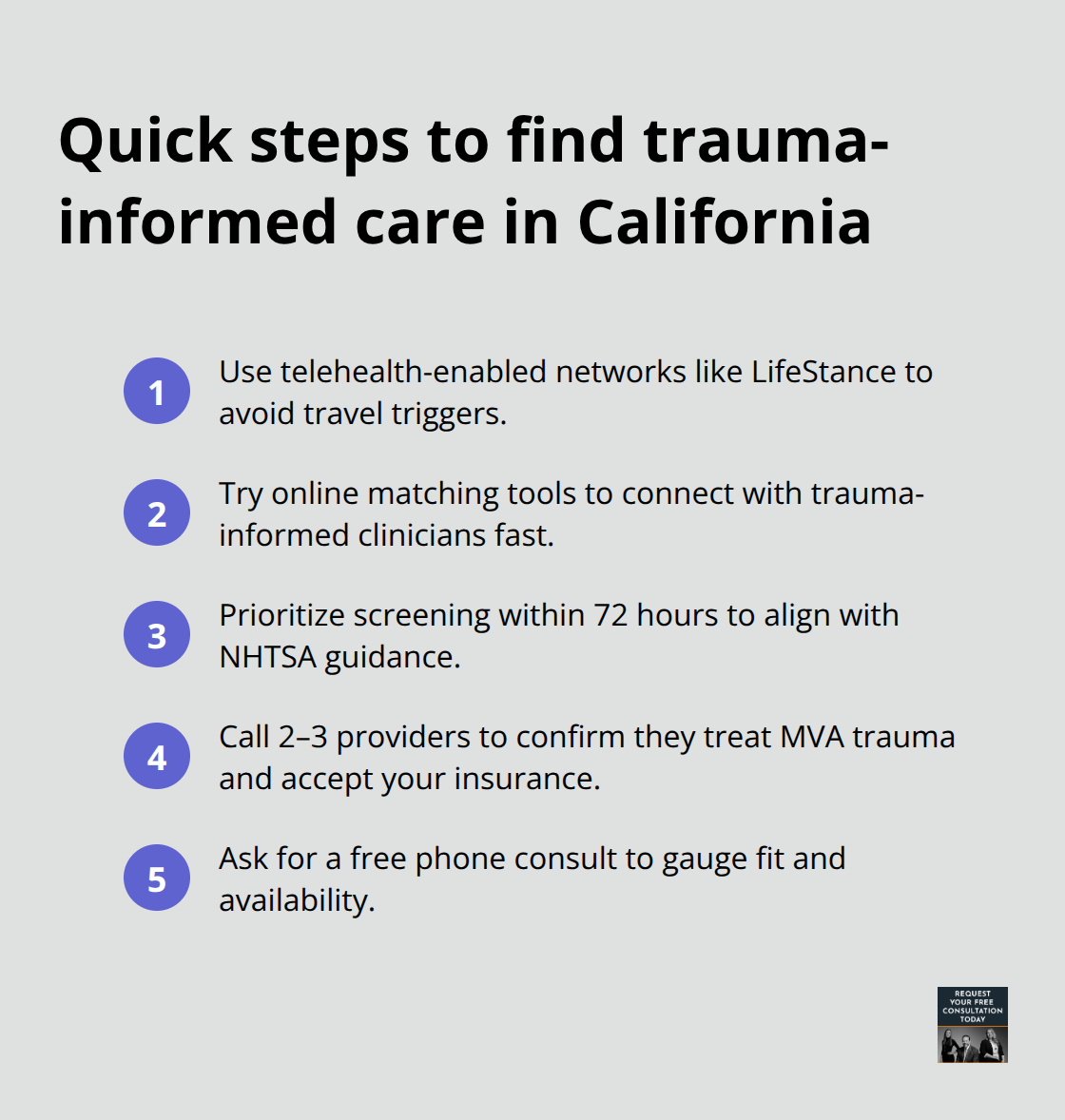
Your first step involves calling 2–3 providers to ask if they treat motor vehicle accident trauma and accept your insurance. Many mental health clinics provide free phone consultations to assess whether they’re the right fit.
What to expect during your first appointment
During your initial call, ask about their experience with PTSD specifically, their treatment approach, and availability. Some providers offer same-week appointments for accident victims, recognizing the urgency of early intervention. When you schedule intake, bring documentation of the accident and any medical records from your initial evaluation. During your first session, the therapist will assess your symptoms, discuss your accident experience, and explain which therapy type suits your situation. Treatment typically involves weekly sessions ranging from 8 to 16 weeks, though some people benefit from longer-term care.
Documentation that strengthens your recovery and claim
Psychological testing services are available to formally diagnose trauma symptoms and document cognitive effects, which strengthens both your recovery and any compensation claim. Request itemized invoices and medical records after each session, as you’ll need these documents for any personal injury claim. Keep receipts for transportation to appointments, medications prescribed during treatment, and any supplemental services like group therapy. A patient portal through your provider’s office allows secure access to medical records and provider messaging, making it easy to document your ongoing care and treatment progress without relying on paper records.
Managing insurance and treatment costs
Insurance coverage varies significantly, so contact your health plan before scheduling to understand copays, deductibles, and whether the provider requires pre-authorization. Many providers accept multiple insurance plans and offer sliding-scale fees if you’re uninsured or underinsured. The No Surprises Act protects you from unexpected out-of-network charges at in-network facilities, so ask providers about this protection upfront. Group therapy sessions addressing anxiety, anger, and stress management cost less than individual therapy while providing peer support from others recovering from accidents. Medication management is often available through the same providers offering therapy, streamlining your care and reducing the number of appointments needed.
Once you’ve connected with a mental health provider and begun treatment, the next critical step involves documenting how your emotional trauma affects your ability to work and live independently-information that directly impacts the compensation you can recover.
Turning Emotional Trauma Into a Recoverable Claim
Emotional trauma from a car accident is not a soft injury that insurance companies dismiss easily-it’s a legitimate damage category that generates substantial compensation when properly documented and presented. The American Psychological Association identifies motor vehicle accidents as the leading cause of PTSD among civilians, which means insurers in California recognize that psychological injuries are real and often severe. However, proving emotional trauma requires a fundamentally different approach than proving a broken leg or whiplash. Insurance adjusters cannot see anxiety or depression on an X-ray, which is why your documentation strategy determines whether you receive fair compensation or get lowballed by an insurer betting you’ll accept whatever they offer.
Understanding Economic and Non-Economic Damages
The distinction between economic damages (medical bills, lost wages) and non-economic damages (pain and suffering, emotional distress) matters significantly in California. Economic damages are straightforward to calculate because receipts prove their value. Non-economic damages require evidence that links your diagnosed condition directly to the accident and demonstrates how that condition disrupted your life. Statutes of limitations in California typically allow two to three years to file a claim, but waiting longer weakens your case because memories fade, medical records become harder to obtain, and the connection between the accident and your symptoms becomes less convincing to a judge or jury.
Building an Ironclad Paper Trail for Your Claim
Start documenting immediately after your accident. Schedule a mental health evaluation within 72 hours, following the National Highway Traffic Safety Administration’s recommendation. Request that your therapist or psychologist provide a formal diagnosis in writing, linking your condition specifically to the motor vehicle accident rather than other life stressors.
Collect every receipt related to treatment: therapy sessions, medications prescribed for anxiety or depression, transportation costs to appointments, and any diagnostic testing performed. Your mental health provider can order psychological testing or neuropsychological testing to formally assess trauma symptoms and cognitive effects, creating clinical evidence that strengthens your claim substantially.
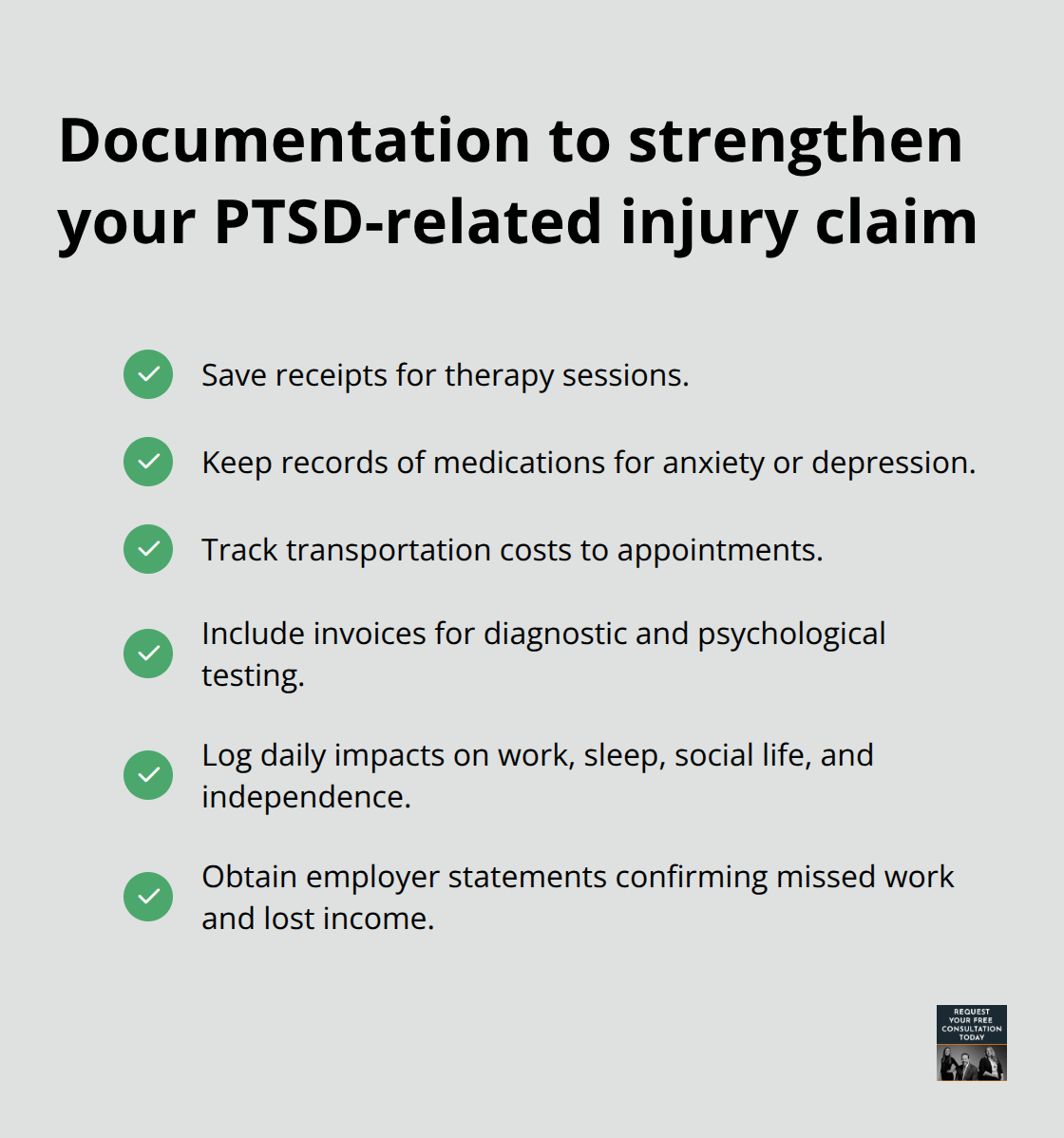
Keep detailed records of how your symptoms affect daily functioning-document concentration problems that impact work performance, sleep disruption that forces you to call in sick, social withdrawal that strains relationships, or avoidance behaviors that limit your independence.
If the accident caused you to miss work or prevented overtime opportunities, obtain written statements from your employer confirming these impacts and lost income. Insurance companies scrutinize PTSD claims more heavily than physical injury claims, so the more specific and contemporaneous your documentation, the stronger your negotiating position. Maintain a simple log noting symptom severity on difficult days, triggering situations, and treatment responses, as this real-time record carries more weight than recollections months later.
Working with Legal Representation to Recover Fair Compensation
Insurance companies undervalue emotional trauma claims because they lack the visibility of physical injuries. An attorney handles the crash investigation to establish negligence, documents your diagnosis and treatment needs comprehensively, gathers evidence that connects your psychological injuries to the accident, and values your case based on treatment costs, lost income, and the severity of your symptoms. Many accident victims attempt to negotiate with insurers alone and accept settlements that cover only medical expenses while ignoring the long-term impact of PTSD on earning capacity and quality of life.
An attorney handles communications with insurance adjusters, preventing you from making statements that undermine your claim, and pursues litigation if the insurer refuses fair compensation. Your legal representative connects you with mental health providers who understand how to document trauma for legal purposes, ensuring your treatment records support your claim rather than creating gaps that adjusters exploit. Expert testimony from your mental health provider becomes powerful evidence in settlement negotiations or trial, particularly when your therapist can explain how crash-related trauma specifically caused your symptoms and what ongoing treatment you’ll need. The cost of proper representation pays for itself through increased settlement values that account for your actual damages rather than the low figures insurers initially propose.
Final Thoughts
Car accident emotional trauma demands action on two fronts at once. Mental health treatment addresses the psychological damage directly, helping you process what happened and rebuild your sense of safety, while legal action secures compensation that reflects the true cost of your injuries, including lost wages, treatment expenses, and ongoing impact on your quality of life. These paths reinforce each other-when you work with a mental health provider, you create documentation that strengthens your legal claim, and when you pursue compensation through an attorney, you gain resources to afford the ongoing therapy your recovery requires.
The window for action closes quickly in California (statutes of limitations typically allow two to three years to file a claim). Insurance companies count on accident victims delaying treatment or handling claims alone, which results in settlements that undervalue emotional trauma significantly. Your first step involves scheduling a mental health evaluation within 72 hours of your accident, even if you feel relatively stable, because early intervention prevents short-term reactions from becoming chronic conditions.
If you’ve been injured in a car accident in Santa Cruz County, Sacramento, or Oakland, contact us for a free consultation. We at Schaar & Silva LLP understand that car accident emotional trauma deserves comprehensive support, and we handle the investigation, evidence gathering, and negotiations that secure fair compensation while connecting you with mental health providers who document your condition for legal purposes.
