
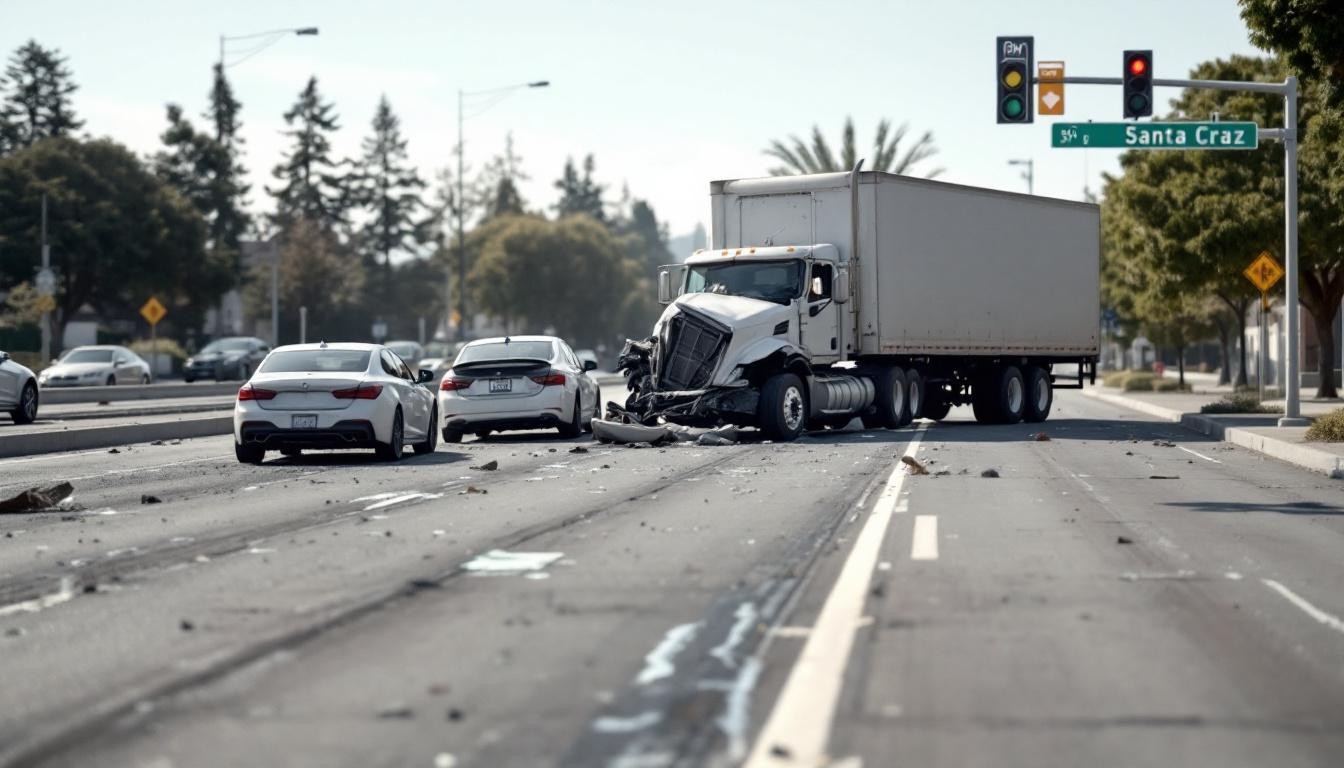
Truck accidents in Santa Cruz carry far more complexity than typical car collisions. Multiple parties-drivers, carriers, maintenance contractors, and cargo handlers-can share responsibility, making liability difficult to establish without expert guidance.
We at Schaar & Silva LLP know that proving fault requires understanding commercial regulations, black box data, and local transport challenges unique to our region. This guide walks you through the evidence and legal steps needed to protect your rights.
Why Truck Crashes Demand Different Liability Strategies
Federal Regulations Create Clear Standards for Negligence
Truck accidents operate under an entirely different legal and regulatory framework than passenger vehicle collisions. The Federal Motor Carrier Safety Administration sets strict Hours of Service limits that require drivers to rest after 11 hours of driving within a 14-hour window, and violations of these rules create automatic evidence of negligence. When a truck driver causes a crash after exceeding these limits, the carrier bears direct liability. Vehicle maintenance regulations require documented inspections and repairs, meaning a carrier that fails to maintain brake systems, tires, or other critical components faces liability for mechanical failures that cause accidents. Cargo loading laws mandate proper securing and weight distribution, so overloaded trucks or shifting cargo that causes loss of control point directly to the loading company or carrier. This regulatory structure means Santa Cruz truck accident victims have concrete standards to measure against, unlike typical car accidents where liability rests primarily on general negligence concepts.
Electronic Logging Devices Provide Objective Evidence
Electronic Logging Devices installed on commercial trucks record speed, acceleration, braking patterns, and hours-of-service compliance continuously, creating an objective record of what happened in the seconds before impact. This data typically remains on the truck for 30 days or less unless legally preserved, making immediate action critical after a crash. A preservation letter sent to the trucking company creates a legal duty to maintain this evidence, and failure to preserve it can result in court-ordered sanctions. Specialized technicians extract and analyze this data to establish what the driver did in those final moments before collision.
Multiple Defendants Complicate Liability Determination
Multiple parties create complexity absent in regular accidents: the driver may have violated Hours of Service rules, the carrier may have failed maintenance obligations, the truck manufacturer may have supplied defective brakes, and the cargo loader may have overloaded the vehicle. Determining which party bears primary responsibility requires investigating each defendant’s specific violations of federal regulations and industry standards.
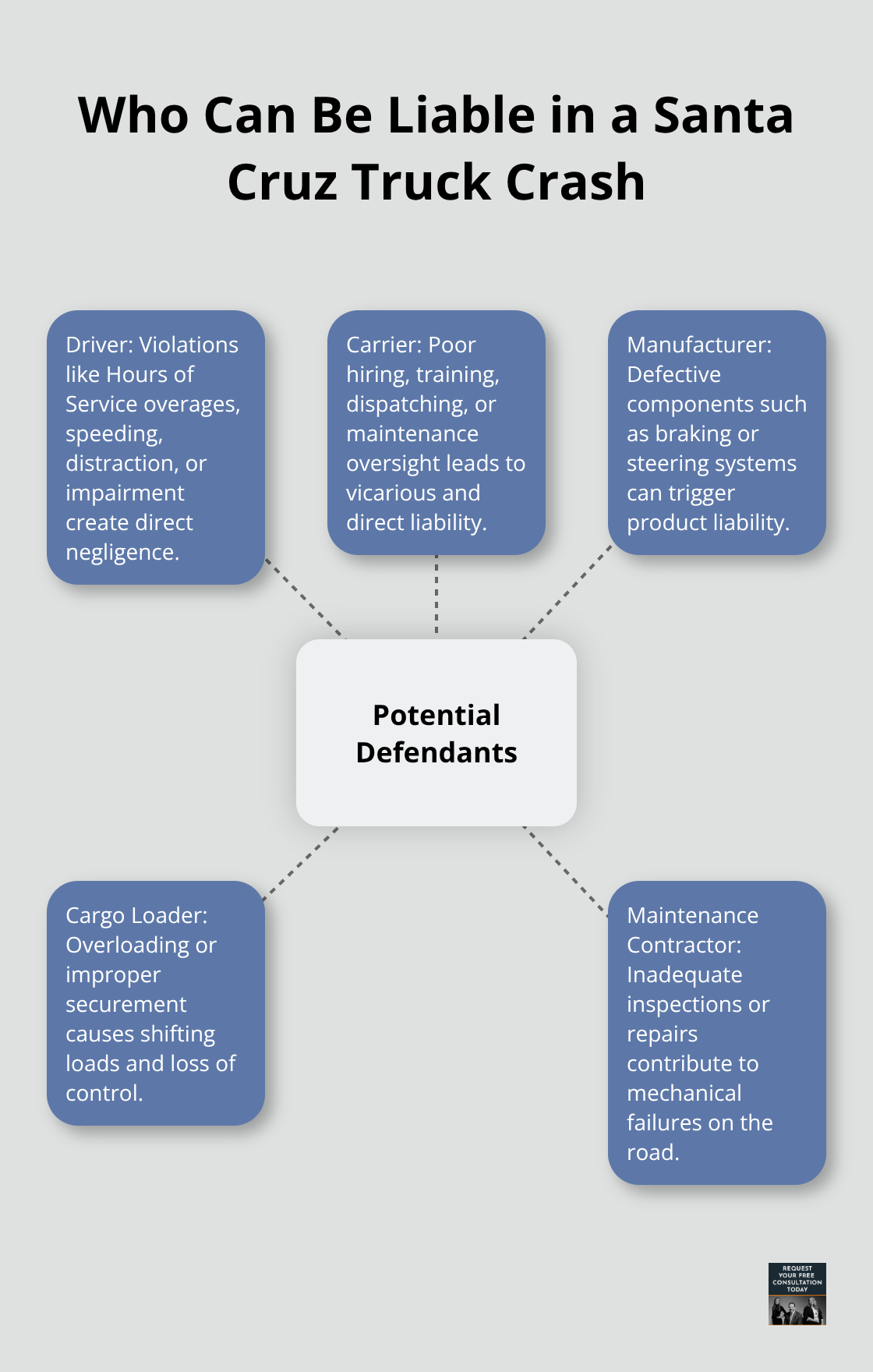
This multi-party structure demands aggressive evidence collection and technical expertise to hold all responsible parties accountable for your injuries. Understanding how port operations and regional traffic patterns in Santa Cruz affect commercial vehicle movement becomes essential when establishing liability in these complex cases.
What Proves Fault in Santa Cruz Truck Accidents
Hours of Service Violations and Driver Fatigue
Negligence in truck accidents centers on whether a driver or carrier failed to exercise reasonable care under federal and state standards. The FMCSA Hours of Service regulations prohibit drivers from operating vehicles for more than 11 hours after 10 hours off duty, and violations create presumptive evidence of negligence. Electronic logging device data showing HOS violations paired with crash timing provides direct proof of fatigue-induced negligence. When you compare this objective data against the accident timeline, the carrier’s liability becomes undeniable.
Speed, Reaction Time, and Driver Behavior
Speeding represents a critical negligence marker, and black box data captures exact speeds in the seconds before impact, which you can measure against posted limits and road conditions at the time. Event data recorders often reveal reaction time delays that indicate driver distraction or impairment, and these objective measurements defeat carrier arguments that weather or road conditions alone caused the crash. Driver qualification failures also establish negligence: if a driver lacked a valid commercial driver’s license, current medical certification, or required hazmat endorsements for the cargo being transported, the carrier faces direct liability regardless of how the crash occurred.
Brake Failures and Maintenance Negligence
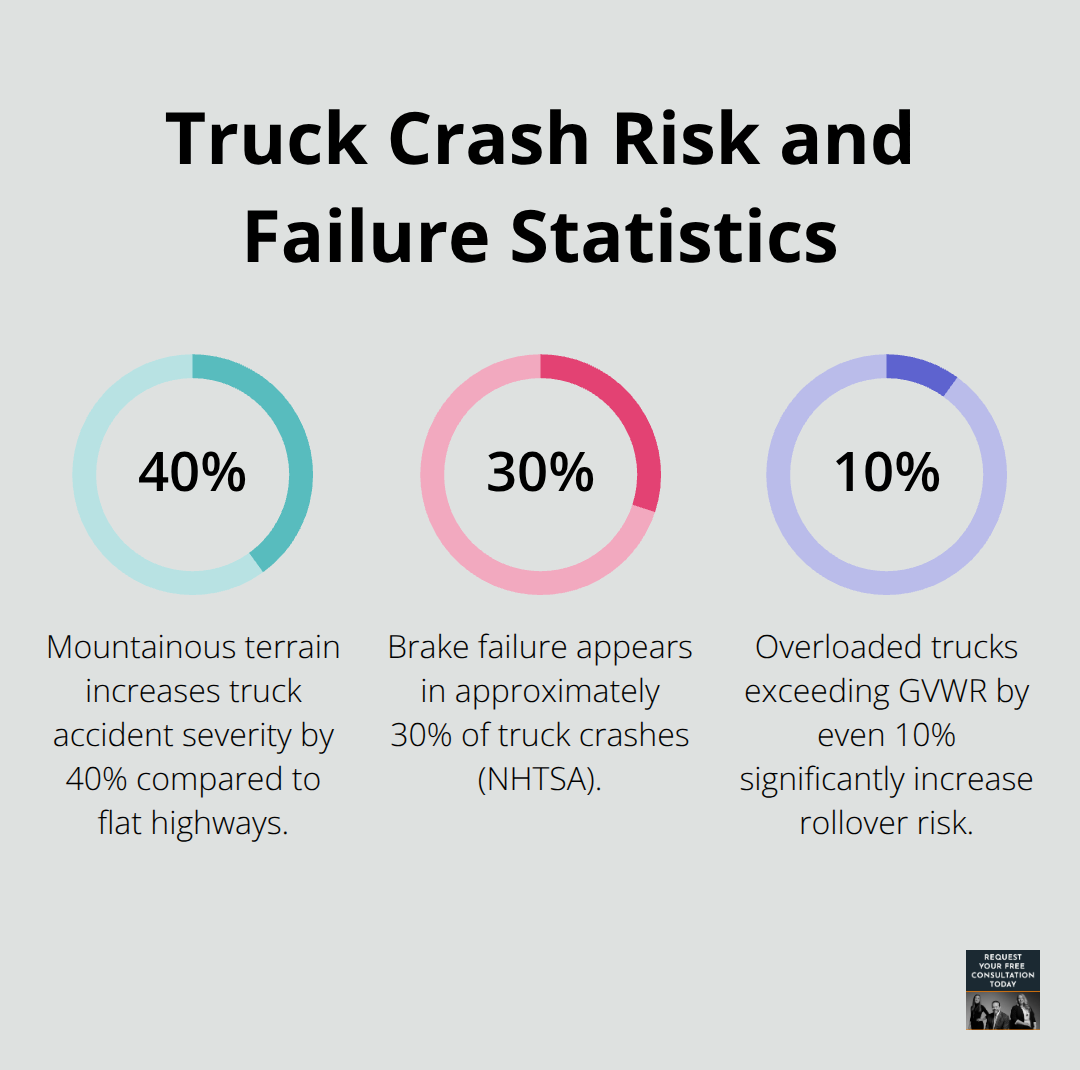
Vehicle maintenance failures shift liability from the driver to the carrier and maintenance contractors. FMCSA regulations mandate documented pre-trip and post-trip inspections, and carriers must maintain records proving brake systems, tires, lighting, and steering components meet federal standards. Brake failure appears in approximately 30% of truck crashes according to the National Highway Traffic Safety Administration, and maintenance records showing deferred repairs or missed inspections become devastating evidence against the carrier.
Cargo Loading and Weight Distribution
Cargo loading and weight distribution violations create loss-of-control scenarios that courts trace directly to the loader’s negligence. Federal regulations limit gross vehicle weight rating, and overloaded trucks exceeding these limits by even 10% significantly increase rollover risk, particularly on Santa Cruz’s winding Highway 17 segments. Improperly secured cargo that shifts during transport causes drivers to lose steering control, and photographs of spilled cargo at accident scenes combined with loading documentation establish clear causation. Independent technical experts should analyze vehicle maintenance records and cargo documentation early in your case, as insurance investigators often underestimate these mechanical and loading factors.
Building Your Evidence Strategy
The evidence you collect immediately after a crash determines your ability to prove fault against multiple defendants. Police reports, eyewitness statements, dashcam footage, and photographs of the scene all support your negligence claim.
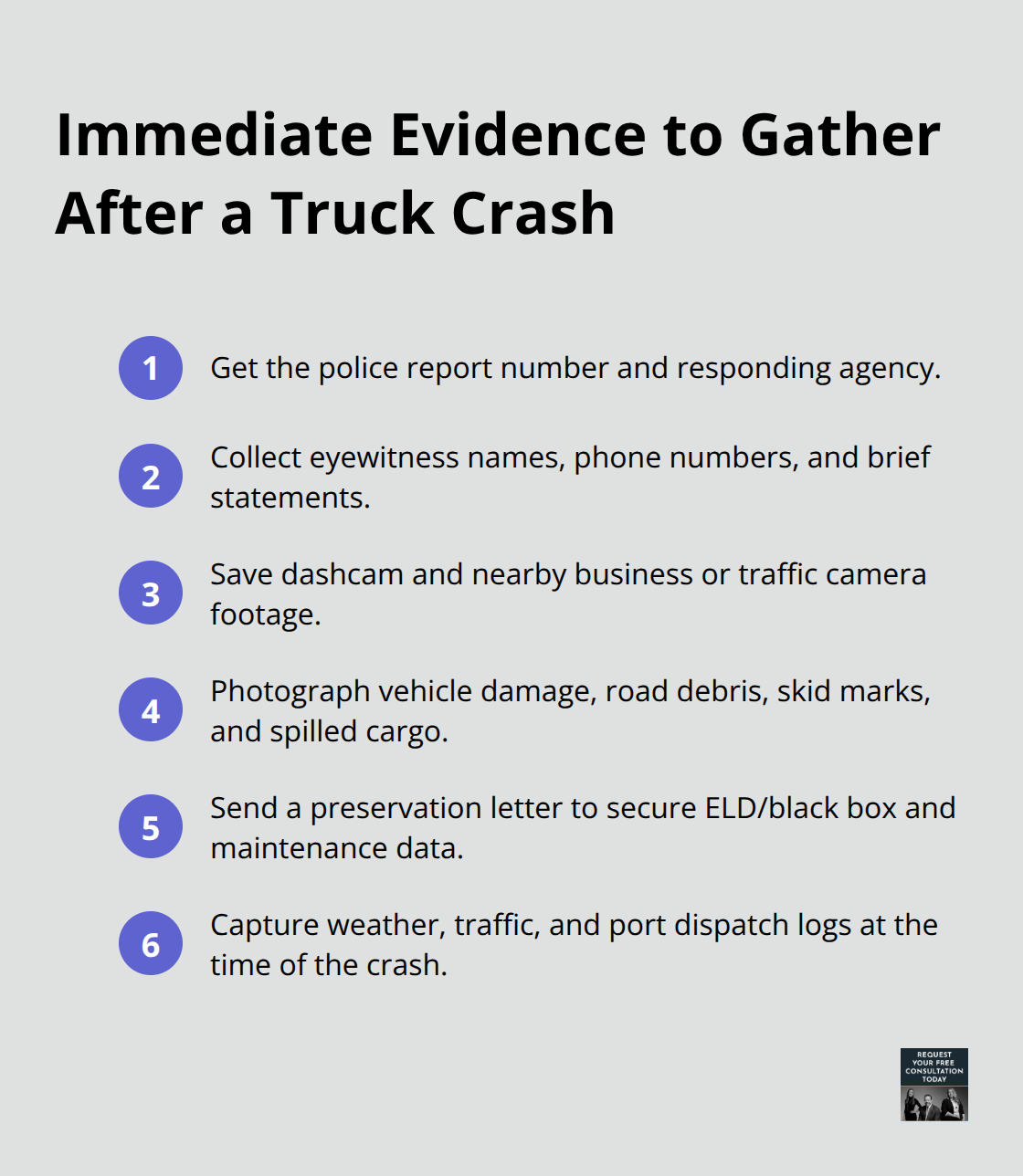
Black box data extraction requires prompt legal action to preserve the evidence before the truck’s systems overwrite the critical information. Santa Cruz’s unique port operations and regional traffic patterns create additional liability considerations that affect how commercial vehicles operate in our area.
How Santa Cruz’s Port and Highway System Creates Unique Truck Accident Risks
Highway 17’s Terrain Amplifies Crash Severity
Santa Cruz’s geographic position as a regional port hub combined with Highway 17’s notorious traffic patterns creates accident conditions fundamentally different from inland California routes. Highway 17 connects Santa Cruz to San Jose and the Bay Area, forcing commercial trucks through a mountain corridor with sharp curves, steep grades, and weather-dependent visibility that amplifies collision risk. The American Trucking Associations reports that mountainous terrain increases truck accident severity by 40% compared to flat highways, and Highway 17’s 4,000-foot elevation changes demand precision driving that fatigue-impaired drivers cannot maintain.
Port operations at Santa Cruz generate constant commercial vehicle movement, with trucks entering and exiting the facility during peak shipping hours when traffic congestion forces drivers into aggressive lane changes and speed variations that increase crash probability.
Port Operations and Weight Restrictions
Port operations create specific negligence markers that distinguish Santa Cruz cases from standard truck accidents. Cargo destined for international shipment often exceeds standard weight limits, and port authorities sometimes issue temporary permits allowing heavier loads that increase rollover risk on Highway 17’s curves. Drivers working port-to-warehouse routes frequently operate under compressed timelines to meet shipping deadlines, incentivizing Hours of Service violations that regulatory data shows correlate directly with crash frequency.
Coastal Weather and Visibility Hazards
Weather conditions unique to Santa Cruz’s coastal location compound these risks significantly. Fog rolling inland from the Pacific Ocean reduces visibility to dangerous levels during morning hours when port operations peak, and rain-swollen winter conditions make Highway 17’s grades treacherous for vehicles with inadequate brake maintenance. These environmental factors establish carrier negligence in dispatching vehicles under conditions their drivers cannot safely navigate, regardless of individual driver competence.
Systemic Operational Pressures and Liability
Your accident investigation must capture environmental factors and operational pressures because they establish carrier negligence in creating dangerous conditions through poor planning and inadequate safety protocols. Insurance carriers defending trucking companies often minimize these systemic operational factors, so documenting weather conditions, port dispatch records, and traffic patterns at the time of your crash becomes essential evidence that proves the carrier created dangerous conditions. The combination of port operations, Highway 17’s challenging terrain, and coastal weather patterns means liability analysis in Santa Cruz truck accidents must account for regional factors that don’t exist in most other California jurisdictions.
Final Thoughts
Proving liability in a Santa Cruz truck accident requires understanding how federal regulations, black box data, and regional transport conditions intersect to establish fault. Hours of Service violations documented through electronic logging devices, maintenance failures recorded in carrier inspection logs, cargo loading violations captured in photographs and shipping documents, and driver behavior data extracted from event data recorders each strengthen your case independently. Together, these pieces of evidence create an undeniable narrative of negligence that holds responsible parties accountable.
Port operations and Highway 17’s challenging terrain mean Santa Cruz truck accidents involve complexities that standard car accident claims never encounter. Insurance companies defending trucking carriers deploy aggressive strategies to minimize liability and reduce settlement offers, relying on the assumption that victims lack the technical expertise to challenge their investigations. An attorney experienced in truck accident litigation understands how to preserve black box data before it disappears, how to interpret maintenance records that reveal systemic negligence, and how to counter insurance company arguments that blame weather or road conditions rather than carrier negligence.
We at Schaar & Silva LLP handle truck accident cases throughout Santa Cruz County and understand the specific operational pressures and environmental factors that create crash risk in our region. Our team connects you with medical specialists for your injuries, assists with property damage claims, and helps navigate the medical bill process while your case develops. Contact us for a consultation to discuss your rights and the compensation you deserve.
