

A concussion from an auto accident can have lasting effects on your health and finances. Oakland concussion claims require solid medical evidence and expert documentation to succeed.
We at Schaar & Silva LLP know that many accident victims underestimate the long-term impact of brain injuries. This guide walks you through the documentation, specialists, and legal steps needed to protect your claim.
Building Your Medical Evidence After an Oakland Auto Accident
Act Immediately After Your Accident
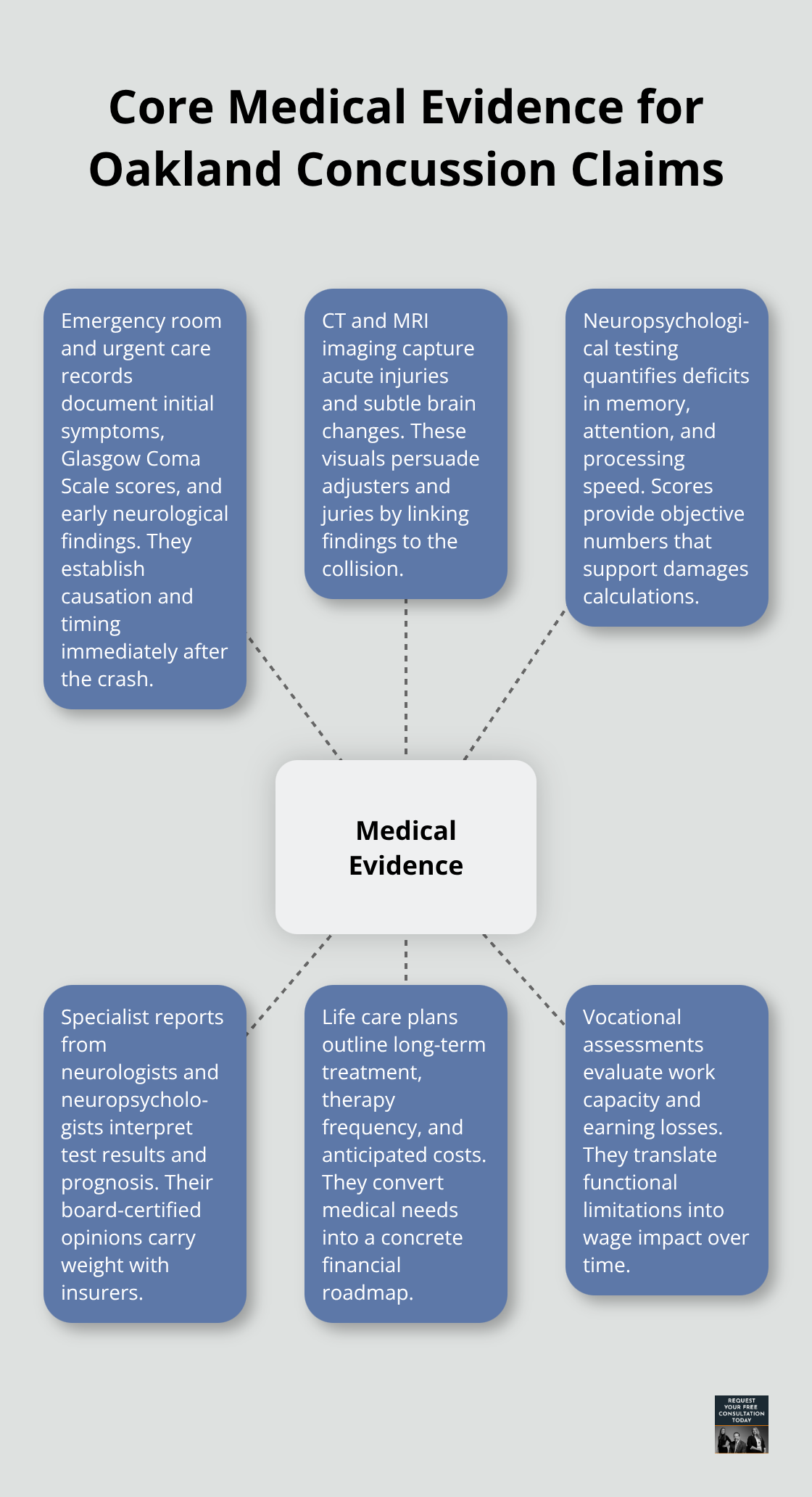
The moment you seek emergency care after an auto accident is the moment your claim begins. Within the first 24 to 48 hours, your medical records establish the foundation for everything that follows-causation, injury severity, and damages. Many Oakland accident victims wait days or weeks before seeing a doctor, and this delay becomes ammunition for insurance companies to argue that your injury wasn’t serious or wasn’t caused by the crash. You must reach an emergency room or urgent care immediately, even if symptoms feel mild. The Glasgow Coma Scale score, initial CT imaging, and neurological assessments recorded in those first hours create objective proof that links your symptoms directly to the accident. Without this documentation, proving that the concussion came from the collision rather than a pre-existing condition becomes nearly impossible.
Diagnostic Imaging and Neuropsychological Testing
Diagnostic imaging and neuropsychological testing form the backbone of a credible claim. A CT scan captures skull fractures or bleeding, while an MRI reveals subtle brain tissue damage that CT misses. These images provide visual evidence that persuades claim adjusters and, if needed, juries. Neuropsychological testing quantifies cognitive deficits in memory, attention, and processing speed with numerical results that support your damages calculation.
You should collect medical records from every provider who treats you-emergency departments, neurologists, physical therapists, psychiatrists-and organize them chronologically. Request release forms from each facility and maintain digital copies.
Avoiding Documentation Pitfalls
Common pitfalls undermine many claims. Gaps in treatment (missing weeks or months between appointments weakens your case), inconsistent records from different providers, and failure to distinguish new symptoms from pre-existing conditions all create vulnerabilities. If you had prior head injuries or neurological issues, your medical history must clearly separate those from the current injury.
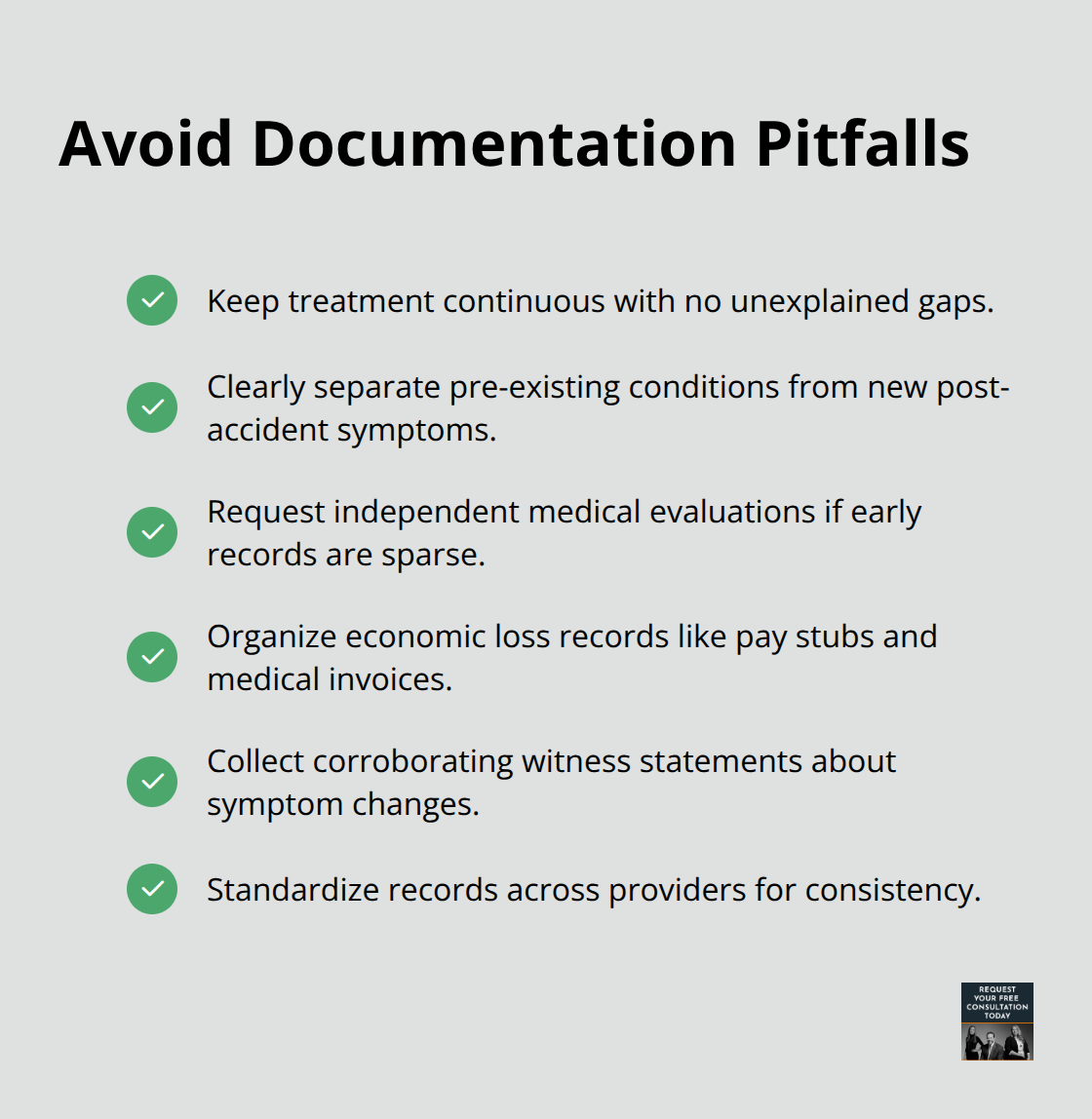
Independent medical evaluations can fill gaps when initial records are sparse, offering objective assessment that supplements clinical findings. Life care plans and vocational assessments quantify future medical costs and lost earning capacity, projecting long-term financial impact beyond immediate treatment bills. You should document economic losses with pay stubs, medical invoices, and expense records tied to the injury. Witness statements corroborating visible symptom changes-a coworker noting memory problems, a family member describing personality shifts-reinforce the credibility of your claim and demonstrate real-world functional impact that medical tests alone cannot capture.
What Specialists in Oakland Can Provide
The strength of your medical evidence depends on the specialists who evaluate and treat you. Neurologists, neuropsychologists, and brain injury specialists in the Oakland area bring clinical expertise that transforms raw medical data into persuasive evidence. These experts can articulate how your specific test results translate into functional limitations and long-term prognosis. Their detailed reports explain the connection between your accident and your symptoms in language that claim adjusters and courts understand. The next section explores how to find qualified specialists in Oakland and how their involvement strengthens your case.
Working with Specialists in Oakland
How Neurologists Strengthen Your Concussion Claim
A neurologist or brain injury specialist transforms your medical records from a collection of test results into a compelling narrative of injury and impact. Neurologists diagnose concussions through clinical assessment, review imaging findings, and interpret neuropsychological test results in the context of your accident. They document how your brain function changed after the collision. A board-certified neurologist carries weight with insurance adjusters because their opinion reflects years of training and established clinical standards.
When you select a specialist, verify they have experience with post-accident concussion evaluation, not just general neurology practice. Your specialist should produce a detailed report that connects your test abnormalities to specific functional losses-memory problems that affect your job performance, concentration difficulties that prevent you from driving safely, or sleep disruption that compounds your injury. This specificity matters because claim adjusters reject vague conclusions. They respond to reports that state your neuropsychological scores fell in the bottom 5 percent for your age group, or that your processing speed declined measurably compared to baseline testing.
Finding Qualified Specialists in Oakland
Finding qualified specialists in Oakland requires intentional research rather than accepting the first provider your primary care physician recommends. Search for neurologists with fellowship training in traumatic brain injury, board certification from the American Board of Psychiatry and Neurology, and published work or involvement with concussion research. Contact local hospital neurology departments and ask which specialists they refer for complex post-accident cases.
Piedmont Neuroscience Center in Oakland offers dedicated traumatic brain injury services and concussion baseline testing, providing the type of focused expertise that strengthens claims. Your medical records should include evaluations from at least a neurologist and a neuropsychologist; this combination provides both clinical diagnosis and quantified cognitive testing that supports damages calculations.
Building a Multidisciplinary Medical Team
The specialist’s role extends beyond diagnosis; they project your recovery timeline and identify whether you face permanent cognitive deficits or chronic symptoms that require ongoing treatment. A vocational expert becomes essential if your injury affects your ability to work-they assess whether you can return to your previous job or face permanent earning capacity loss.
Specialist reports strengthen your case because they provide independent medical opinions that insurance companies cannot easily dismiss. When your neurologist states that your concussion severity warrants six months of cognitive rehabilitation, that opinion becomes evidence supporting your claim for future medical costs. When your neuropsychologist documents that your memory deficits persist beyond the typical three-month recovery window, that finding justifies compensation for long-term disability. The strongest claims include multiple specialist perspectives that agree on injury severity and prognosis, creating a medical consensus that adjusters struggle to challenge.
These specialist evaluations form the foundation for understanding your long-term medical needs and calculating the full scope of your damages-topics we address in the next section.
Long-Term Impact and Claim Deadlines
Concussions Extend Beyond Initial Recovery
Concussions from auto accidents rarely resolve in weeks. Many Oakland victims face months or years of ongoing treatment, cognitive rehabilitation, and specialist care that extends far beyond the initial emergency room visit. Your claim must account for this extended recovery timeline and the full financial burden it creates. California law gives you two years from your injury date to file a personal injury lawsuit, but this deadline arrives faster than most people realize, especially when symptoms develop gradually or when treatment spans many months. Waiting to pursue your claim until you fully understand your long-term prognosis often means losing critical time. Medical documentation during the first months after your accident becomes the foundation for projecting future costs. If you delay filing until month eighteen or later, gathering comprehensive medical records and specialist evaluations becomes rushed and incomplete, weakening your damages calculations and forcing settlement negotiations under time pressure.
Calculating Documented Future Medical Costs
Your damages calculation must include documented ongoing treatment costs, not theoretical expenses. If your neurologist recommends twelve months of cognitive rehabilitation at $150 per session twice weekly, that totals approximately $15,600 in documented future medical costs. Life care plans prepared by rehabilitation specialists quantify long-term needs with specificity that claim adjusters cannot dismiss as speculation.

Your Oakland specialists should project whether you face permanent cognitive deficits, chronic headaches, sleep disturbance, or mood changes that require ongoing medication and therapy beyond the initial recovery phase.
Understanding Insurance Coverage and Vocational Impact
California’s auto insurance system covers post-acute rehabilitation services, but these benefits have limits and eligibility requirements that vary by case. Vocational assessments determine whether you can return to your previous job or face permanent earning capacity loss, translating lost income into a concrete damages figure. The strongest Oakland brain injury claims include detailed life care plans that project costs across decades, not just the first year of treatment.
Building Specific Line-Item Damages
Insurance adjusters push back against round numbers and vague projections, but they accept specific calculations tied to documented specialist recommendations and established treatment rates in your area. Your claim should include separate line items for neurological follow-up care, neuropsychological retesting to track recovery progress, medication management, mental health counseling if your injury triggers depression or anxiety, and any assistive technology or home modifications required for cognitive compensation.
Final Thoughts
Oakland concussion claims succeed when you act decisively in the weeks and months following your accident. Seek immediate medical evaluation, gather comprehensive documentation from every provider, and work with qualified specialists who articulate your injury’s severity and long-term impact. Delays in any of these areas weaken your position and hand advantages to insurance adjusters who profit from incomplete medical records and vague symptom descriptions.
Your medical evidence must be specific and organized-emergency room records, diagnostic imaging, neuropsychological test results, and specialist reports transform your claim from a subjective complaint into objective proof. Life care plans and vocational assessments quantify your future costs with precision that claim adjusters cannot dismiss. Without this documentation, you face settlement offers that underestimate your actual damages and leave you responsible for years of ongoing treatment costs.
Legal representation matters because brain injury claims involve complex medical interpretation, insurance coverage analysis, and damages calculations that most accident victims cannot navigate alone. Contact Schaar & Silva LLP to discuss your Oakland concussion claims and learn how an experienced personal injury attorney protects your rights and maximizes your compensation.
