

Motorcycle accidents in Sacramento leave riders facing serious injuries and complex legal battles. We at Schaar & Silva LLP understand the physical and financial toll these crashes inflict on victims and their families.
This guide covers helmet laws, common injuries, and the medical resources available to you. We’ll also explain how to protect your rights after a Sacramento motorcycle accident.
What Sacramento Riders Need to Know About Helmet Laws
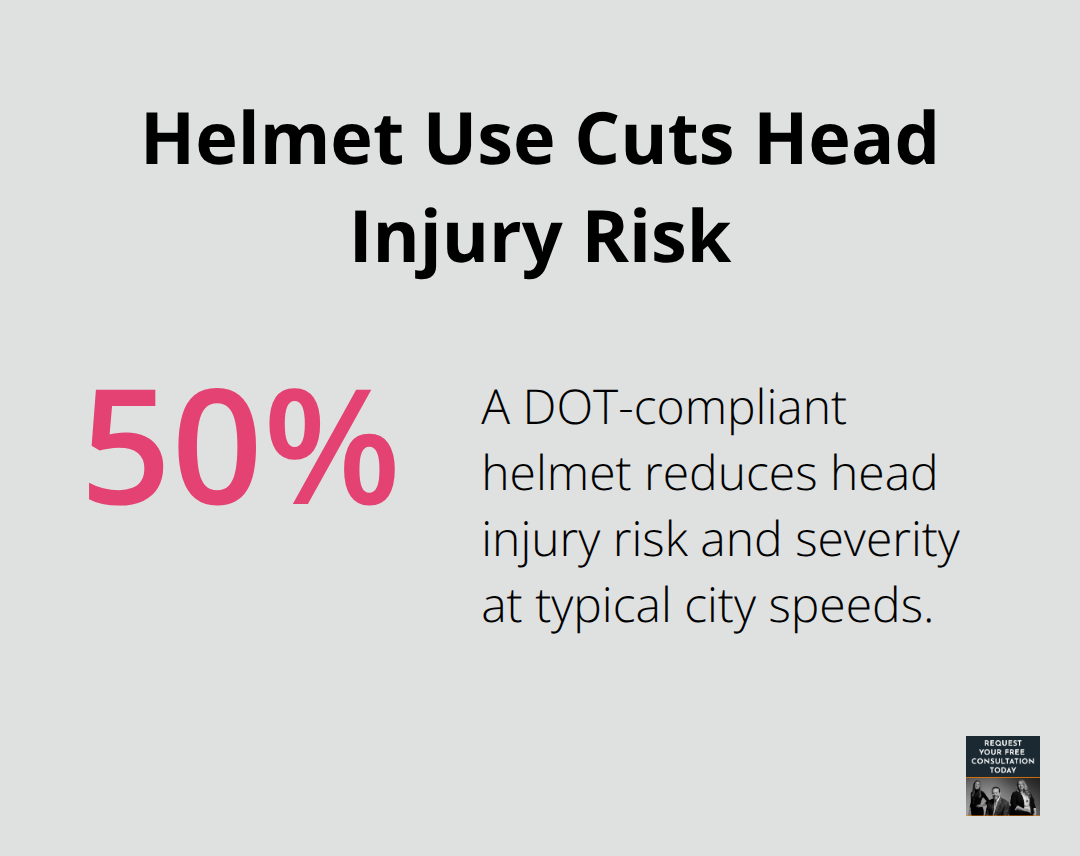
California law mandates that all motorcycle riders and passengers wear a U.S. DOT-compliant helmet certified under Federal Motor Vehicle Safety Standard 218, according to California Vehicle Code section 27803. This isn’t a suggestion or a guideline-it’s a legal requirement with real consequences. A DOT helmet reduces head injury risk and severity by about 50 percent in crashes at typical city speeds, making compliance both a legal and practical safety measure.
Spotting Real Protection vs. Novelty Helmets
Many riders mistakenly believe that novelty helmets or non-DOT helmets provide adequate protection because they look legitimate. They don’t. Non-DOT helmets fail to meet the structural and impact-absorption standards that protect your brain during a crash. To verify compliance, check the DOT marking on the back of any helmet before purchasing. The three main helmet styles available are half-shell, three-quarter, and full-face designs. Full-face helmets with a secure visor offer the best coverage and protection, particularly for facial and jaw injuries that commonly occur in Sacramento motorcycle accidents.
Fit and Integrity Matter More Than You Think
A helmet only works if it fits properly and remains intact. Your helmet must fit snugly without excessive movement, show no cracks or damage to the shell or padding, and remain securely fastened while riding. Many riders purchase the right helmet but wear it incorrectly, which undermines its protective value. Beyond the helmet itself, California law requires shatter-resistant eye protection through a face shield or goggles-windshields alone don’t satisfy this requirement. Your eye protection should be scratch-free, impact-resistant, provide a clear side view, fasten securely, and ideally be anti-fog. Tinted eye protection reduces visibility in low-light conditions, so avoid it at night.
Protective Gear Reduces Injury Risk Substantially
Protective clothing substantially reduces injury risk. Wear a jacket with armor, long pants, over-the-ankle boots, and full-finger gloves. Reflective or bright-colored gear increases visibility to other motorists, which matters since most motorcycle crashes occur at speeds under 30 miles per hour on trips under five miles. This combination of proper helmet fit, eye protection, and protective clothing creates your best defense against serious injury.
Non-Compliance Carries Real Legal Consequences
Non-compliance with helmet laws carries penalties, but more importantly, failing to wear a DOT-compliant helmet can negatively impact liability claims. Insurance companies and courts view helmet non-compliance as negligence, which can reduce your compensation even if another driver caused the accident. Understanding these legal implications becomes critical when you face the medical aftermath of a crash.
What Injuries Do Sacramento Motorcycle Riders Actually Face
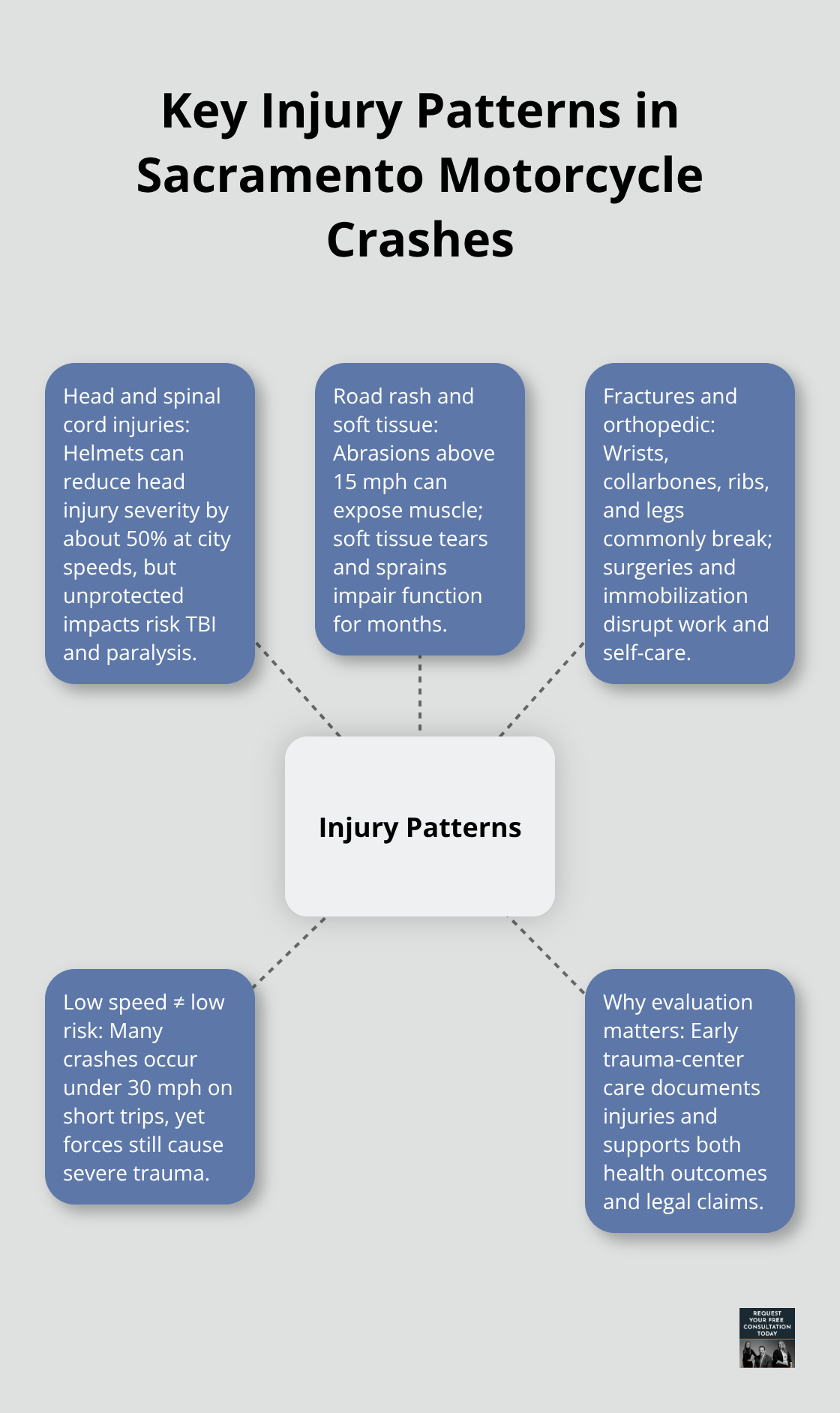
Motorcycle accidents in Sacramento produce predictable injury patterns because physics doesn’t negotiate. Most crashes happen at speeds under 30 miles per hour on short trips under five miles, according to California DMV data, yet these low-speed collisions still generate severe injuries. Head injuries dominate motorcycle crash outcomes because the human skull cannot withstand impact forces that a car’s crumple zone absorbs.
Head and Spinal Cord Injuries
A DOT-compliant helmet reduces head injury severity by about 50 percent at typical city speeds, meaning riders without proper helmets face catastrophic brain damage even in minor collisions. Traumatic brain injuries range from concussions that cause weeks of cognitive disruption to diffuse axonal injuries that result in permanent disability or death. Spinal cord injuries frequently accompany head trauma because the spine absorbs rotational forces during crashes. Paralysis from thoracic or lumbar spine damage eliminates work capacity and demands lifetime medical care, which transforms an accident claim into a decades-long financial battle.
Road Rash and Soft Tissue Damage
Road rash, the abrasion injury from sliding across pavement, causes far more damage than most riders anticipate. Asphalt removes skin at speeds above 15 miles per hour, exposing muscle and connective tissue to infection risk and permanent scarring. Deep abrasions require aggressive cleaning under anesthesia to remove embedded debris-a procedure that itself causes significant pain and medical expense. Soft tissue damage extends beyond visible road rash to include muscle tears, ligament sprains, and tendon ruptures that impair function months after the crash.
Fractures and Orthopedic Injuries
Fractures represent the third major injury category, with wrists, collarbones, ribs, and legs breaking at predictable rates. Rib fractures create particular problems because they prevent deep breathing, increasing pneumonia risk during recovery and complicating physical therapy. Orthopedic injuries often require surgery followed by months of immobilization, during which riders cannot work or perform basic self-care. Long-term costs of these injuries extend years beyond the crash date because most riders focus on immediate pain rather than lasting consequences. Understanding these injury patterns helps explain why prompt medical evaluation at a trauma center matters for both your health and your legal claim.
Where to Get Emergency Care After a Sacramento Motorcycle Crash
Sacramento’s trauma center network provides specialized care for motorcycle crash injuries, but knowing which facility to reach and what to expect matters more than most riders realize. UC Davis Medical Center operates as a Level I trauma center for both adults and children, meaning it handles the most severe injuries with the highest concentration of specialists and surgical capabilities. Level I designation requires a trauma program medical director, trauma nurse coordinator, emergency department specialists, staff trauma surgeons, and pediatric trauma capabilities. When you arrive at UC Davis with a head injury, spinal cord damage, or severe burns from a motorcycle crash, you access immediate CT imaging, neurosurgery, orthopedic specialists, and burn care without transfer delays. The facility’s research and teaching hospital status means your care involves physicians trained in the latest trauma protocols.
Level II Trauma Centers Serve as Effective Alternatives
If UC Davis reaches capacity or operates outside your immediate area, Level II trauma centers including Kaiser Permanente South Sacramento Medical Center, Mercy San Juan Medical Center, and Sutter Roseville Medical Center provide comparable surgical and specialist resources with slightly different operational criteria. These facilities maintain full trauma teams and handle serious motorcycle injuries effectively. Your location in Sacramento County determines which trauma center you can reach fastest, so knowing these options prevents critical delays in receiving care.
Medical Documentation Builds Your Accident Claim
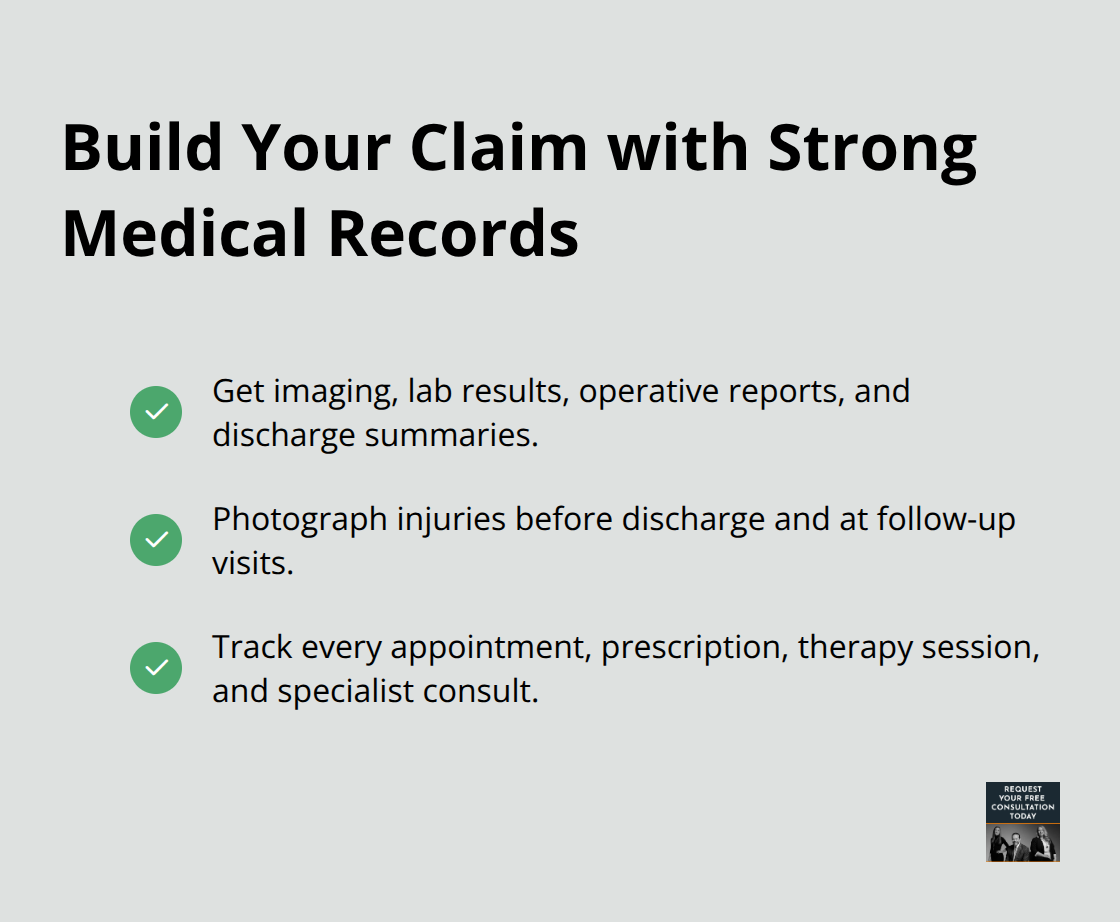
Medical documentation from your emergency visit becomes the foundation of your accident claim. Request copies of all imaging, lab results, operative reports, and discharge summaries before you leave the hospital. Photograph your injuries at the hospital and track every subsequent medical visit, prescription, physical therapy session, and specialist consultation because insurance companies calculate damages based on treatment records, not your pain descriptions.
Follow-Up Care Protects Both Your Health and Your Claim
Follow-up care at orthopedic clinics, neurologists, or physical therapy facilities requires documentation with provider names, visit dates, and treatment descriptions. Many riders skip follow-up appointments to save money, which destroys claim value by creating gaps in treatment records that insurers exploit. If you cannot afford ongoing medical care, discuss medical lien options with your healthcare provider, which allows treatment to proceed while your case resolves and the settlement covers the bill.
Conclusion
A Sacramento motorcycle accident leaves you facing medical bills, lost income, and insurance companies determined to minimize your payout. Legal representation transforms your claim from a reactive scramble into a strategic process where we at Schaar & Silva LLP handle medical bill assistance, property damage valuation, and connections to specialists who address both physical and psychological recovery. The contingency-fee model we use means you pay nothing unless we recover compensation for your claim.
Our 24/7 availability and multiple office locations across Sacramento County and surrounding areas (El Dorado, Placer, San Joaquin, Solano, Yolo, and Yuba counties) enable rapid response when you need it most. We’ve earned membership in the Million Dollar Advocates Forum and the National Association of Distinguished Counsel by securing substantial settlements for clients facing motorcycle injuries. Your recovery and your rights deserve protection from a team that understands both the medical realities of motorcycle crashes and the legal strategies that maximize your compensation.
Contact Schaar & Silva LLP for your free consultation today. We serve the Sacramento region with local expertise and bring experienced legal counsel to your case without upfront costs.
