

A car accident changes everything in an instant. Beyond the physical injuries, the emotional aftermath can be overwhelming-anxiety, depression, and trauma often linger long after the crash.
Car accident emotional support isn’t a luxury; it’s a necessary part of healing. We at Schaar & Silva LLP understand that your recovery involves both your body and your mind, which is why we’ve created this guide to help you access the mental health care and financial compensation you deserve.
What Happens to Your Mind After a Car Crash
Your Nervous System in Crisis
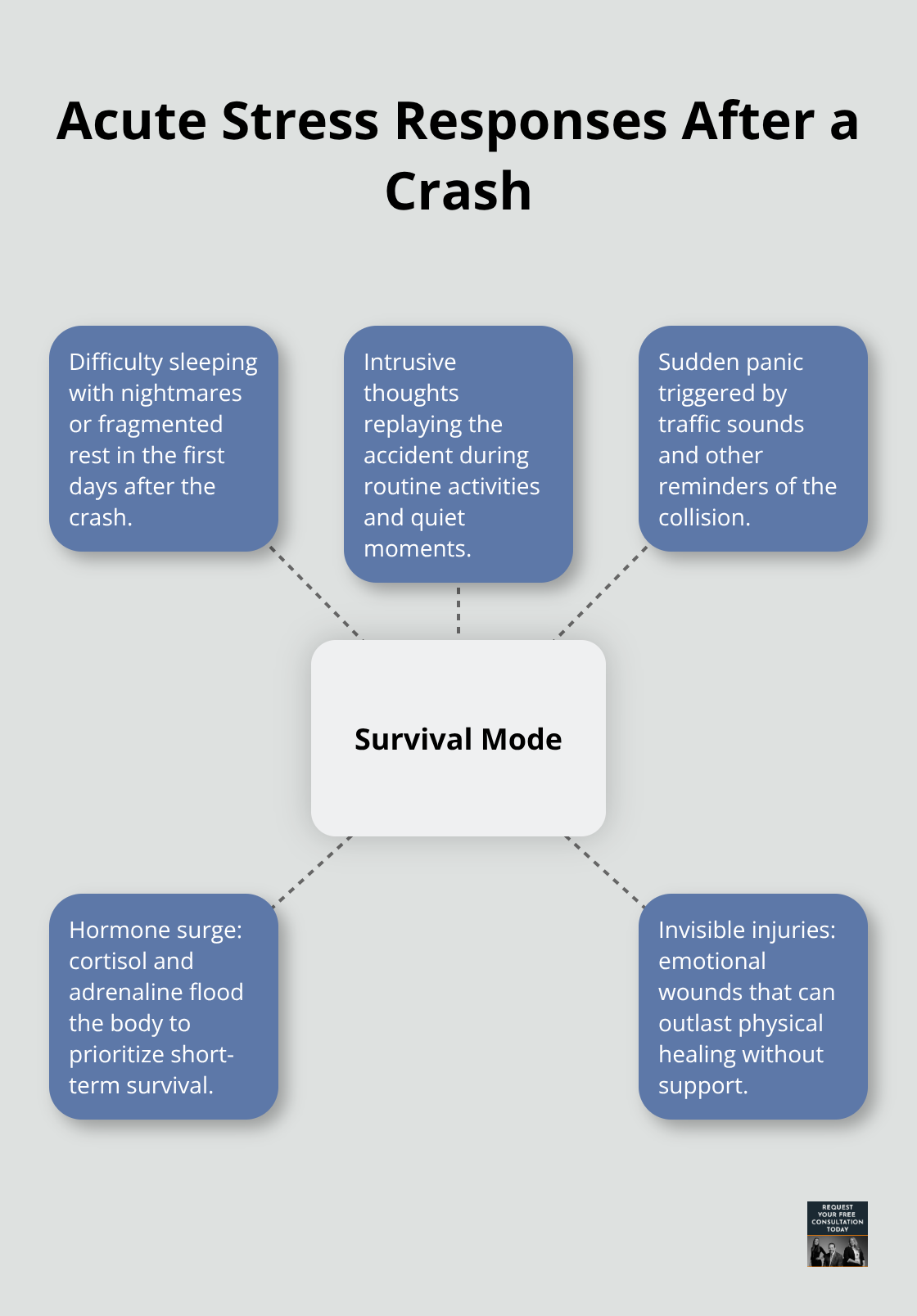
A car accident triggers a cascade of neurological and emotional responses that most people don’t anticipate. Your nervous system shifts into survival mode, flooding your body with stress hormones like cortisol and adrenaline. In the hours and days following the crash, many accident victims experience acute stress reactions-difficulty sleeping, intrusive thoughts about the accident, or sudden panic when they hear traffic sounds. California Highway Patrol data shows that 3,904 fatal crashes occurred statewide in 2020, and countless more non-fatal accidents leave survivors struggling with invisible injuries to their mental health.
Trauma as a Normal Response
The trauma isn’t weakness; it’s a normal physiological response to an abnormal event. Some people develop post-traumatic stress disorder within weeks, while others notice symptoms emerging months later. You might find yourself avoiding driving, experiencing flashbacks during routine activities, or feeling a constant state of hypervigilance. These reactions can persist for months without proper intervention, making daily life feel unbearable and recovery seem impossible.
How Untreated Trauma Derails Your Recovery
The emotional toll directly impacts your physical healing and financial recovery. When anxiety and depression take hold, you fail to attend therapy appointments, follow medical treatment plans, or engage with your legal case-all of which weakens your position when seeking compensation. Studies on accident survivors show that untreated psychological trauma extends recovery timelines and increases medical costs. Seeking support immediately after an accident isn’t optional if you want a complete recovery. Your brain needs professional help to process what happened, and your claim needs documented evidence of your emotional injuries to receive fair compensation for all your losses (medical expenses, lost wages, and pain and suffering). We at Schaar & Silva LLP connect you with specialists who understand trauma and can provide the care you need while we handle the legal side of your claim. The path forward requires both mental health treatment and legal action working together to restore your life.
Where to Find Mental Health Care After Your Accident
Accessing Therapy Through Your Insurance and Doctor
Finding a qualified mental health professional who understands accident trauma requires persistence, and waiting lists in Santa Cruz County can stretch weeks or months. Start by contacting your primary care doctor, who can provide referrals to therapists and counselors experienced in treating post-accident anxiety and PTSD. If your insurance covers mental health services, call the number on your card to request in-network providers; most plans cover 6 to 20 therapy sessions annually, though some require a copay between $20 and $50 per visit.
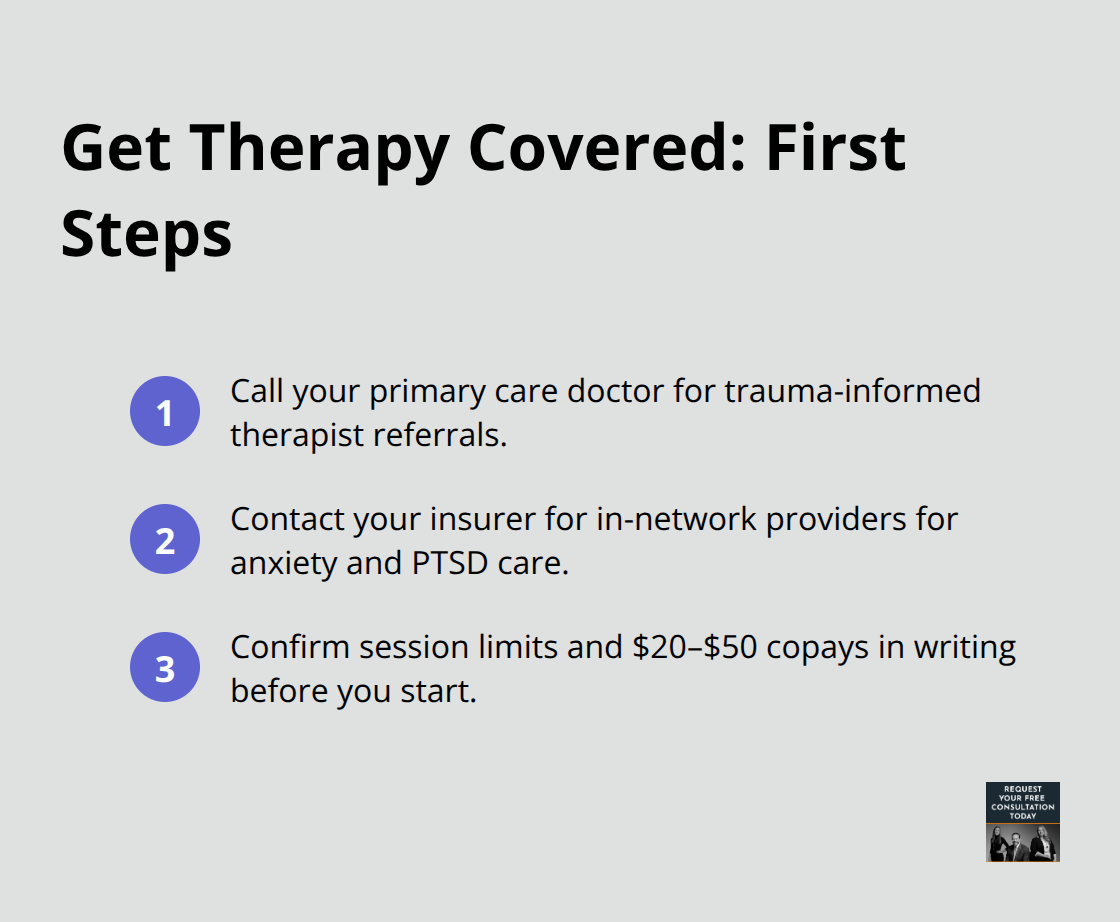
The California Department of Insurance reported over 41,000 consumer complaints in 2021, many related to coverage denials, so read your policy carefully and ask your insurer in writing if trauma counseling is covered before starting treatment.
Low-Cost and Free Mental Health Resources
If cost becomes a barrier, the Legal Aid Foundation of Los Angeles and Neighborhood Legal Services of LA County offer low-cost or free mental health referrals, and community mental health centers in Santa Cruz County typically charge on a sliding fee scale based on income. These organizations connect you with qualified professionals who understand accident trauma and can provide the psychological support you need. Your treatment expenses become part of your compensation claim, which means documenting all sessions and costs matters for your case.
Finding Strength in Support Groups
Support groups provide something therapy alone cannot: connection with others who’ve survived similar crashes. Mothers Against Drunk Driving operates chapters throughout California and offers both emotional support and guidance on navigating insurance claims if impaired driving caused your accident. The Brain Injury Association of California provides advocacy and community resources if your accident resulted in a traumatic brain injury, connecting you with both emotional support and information about rehabilitation facilities across the state. Local hospitals in Santa Cruz County often host support groups for accident survivors; contact your nearest emergency department to ask about ongoing groups. Attending even one meeting can shift your mindset from isolation to solidarity, and many participants report that hearing others’ recovery stories accelerates their own healing.
Building Your Complete Recovery Plan
Combining professional therapy with group support creates a foundation for healing that addresses both your immediate emotional needs and your long-term recovery. When you add legal representation to this mix, you gain someone who documents your psychological treatment and fights for compensation that reflects your full losses. The next step involves understanding how that financial recovery directly supports your emotional healing and removes barriers to the care you deserve.
How Compensation Removes Barriers to Healing
Financial Stress Blocks Your Recovery Path
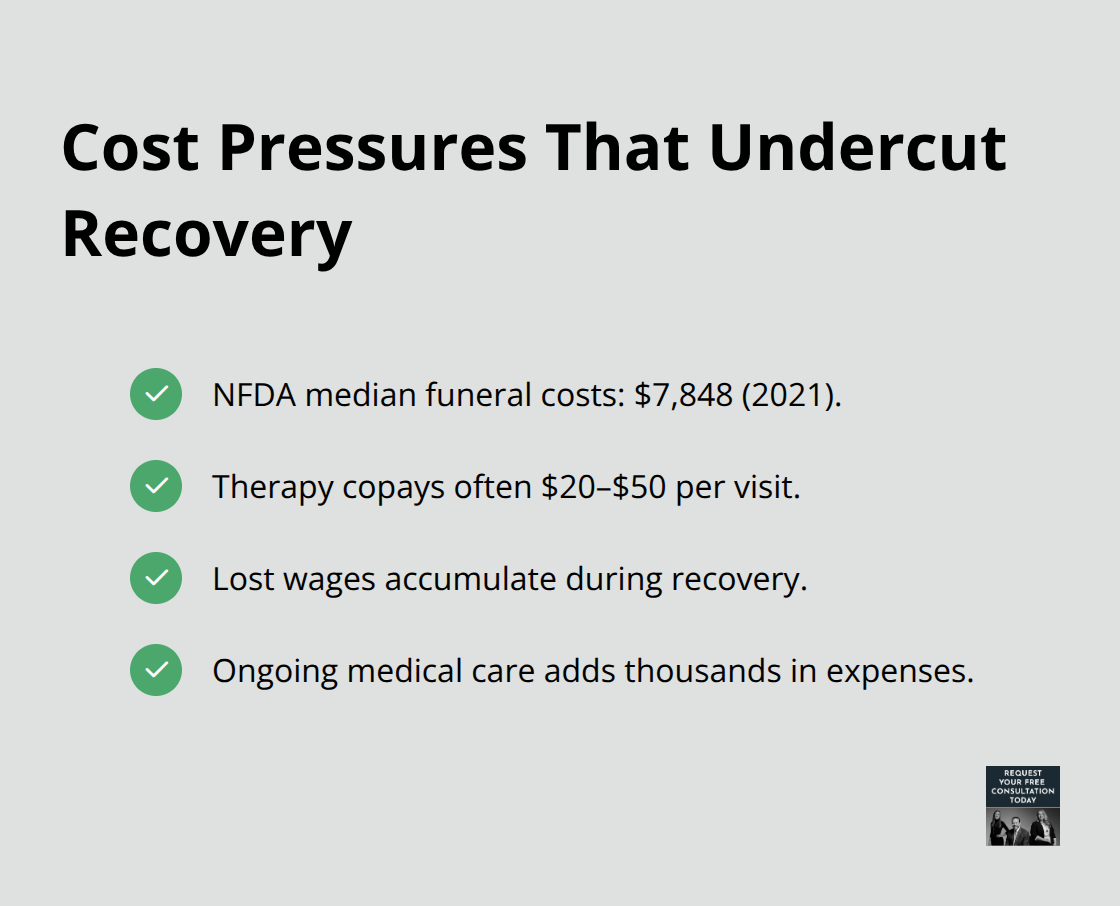
Financial stress after a car accident suffocates your ability to recover emotionally. When medical bills pile up and you cannot work, anxiety spikes, sleep deteriorates, and therapy feels like a luxury you cannot afford. This is precisely why pursuing compensation matters-it’s about reclaiming your mental health. The National Funeral Directors Association reported median funeral costs at $7,848 in 2021, and that’s only one category of expenses accident survivors face. Add therapy sessions at $20 to $50 per visit, lost wages during recovery, and ongoing medical care, and you’re looking at thousands of dollars that drain your resources and derail your healing.
How Legal Claims Transform Your Expenses Into Recovery
A legal claim transforms these expenses from personal financial burden into documented losses that the at-fault driver’s insurance must cover. When you have representation, the other party’s insurer cannot lowball your claim or deny coverage for legitimate mental health treatment. The two-year statute of limitations in California means your window to file a wrongful death or personal injury claim closes quickly, and waiting costs you money. Every month you delay is a month of unpaid medical expenses, lost wages, and documented psychological treatment that strengthens your claim.
Maximizing Your Compensation Under California Law
When you pursue compensation through a legal claim rather than hoping insurance will do the right thing, you recover damages that cover not only your past medical bills but also future therapy costs, lost earning capacity, and pain and suffering. California’s pure comparative negligence system means even if you’re partially at fault, you can still recover damages reduced by your percentage of fault-a protection that requires solid legal strategy to maximize. Schaar & Silva LLP can direct you to medical lien services that handle your therapy and medical bills until your case resolves, removing the immediate financial pressure that prevents you from seeking the care you need.
Connecting Treatment With Legal Strategy
Schaar & Silva LLP connects you with specialists who understand trauma treatment while simultaneously documenting every therapy session, diagnosis, and treatment plan as evidence of your emotional injuries. This dual approach-professional mental health care combined with aggressive legal representation-ensures your compensation reflects the full scope of your losses and removes the financial obstacles that prevent healing.
Final Thoughts
Recovery after a car accident demands action on two fronts at once. Your emotional healing requires professional mental health support, and your financial recovery requires legal representation that documents your psychological treatment as part of your damages claim. Waiting to address either one weakens your position and extends your suffering.
The path forward starts with scheduling that first therapy appointment with a mental health professional who understands accident trauma. Simultaneously, contact Schaar & Silva LLP to discuss your case and learn how medical lien services can remove the financial barrier preventing you from seeking care. Your two-year window to file a claim closes faster than you realize, and every month of delay means lost documentation of your emotional injuries and mounting unpaid medical expenses.
Car accident emotional support works best when you combine professional mental health treatment with legal representation that values your psychological injuries. Schaar & Silva LLP connects you with trauma-informed therapists while handling the legal complexities of your claim, managing medical bills through lien services, and fighting for compensation that reflects your full losses. Contact us for a free consultation about your rights and the compensation you deserve.
