
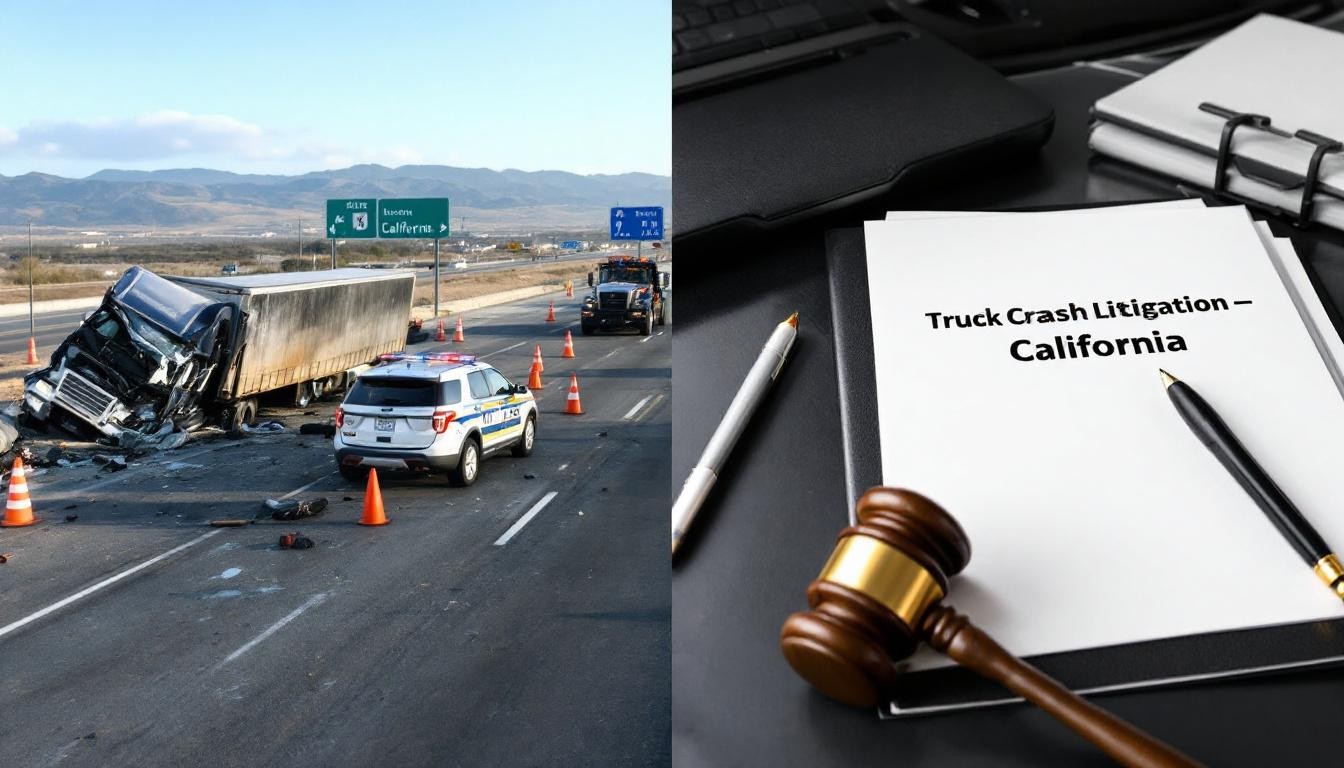
Truck crashes in California cause serious injuries and financial losses that can overwhelm victims and their families. Understanding your rights and the legal process is the first step toward getting fair compensation.
We at Schaar & Silva LLP have helped many Santa Cruz County residents navigate truck crash litigation California and recover what they deserve. This guide walks you through liability, damages, and the claim process so you know exactly what to expect.
Who’s Liable When a Truck Crashes
Multiple Parties Share Responsibility
Truck crashes involve multiple parties, and California law holds each one accountable based on their actions. The driver bears responsibility for operating the vehicle safely, but the trucking company, cargo loaders, maintenance teams, and even vehicle manufacturers can share liability when their negligence contributes to the crash.
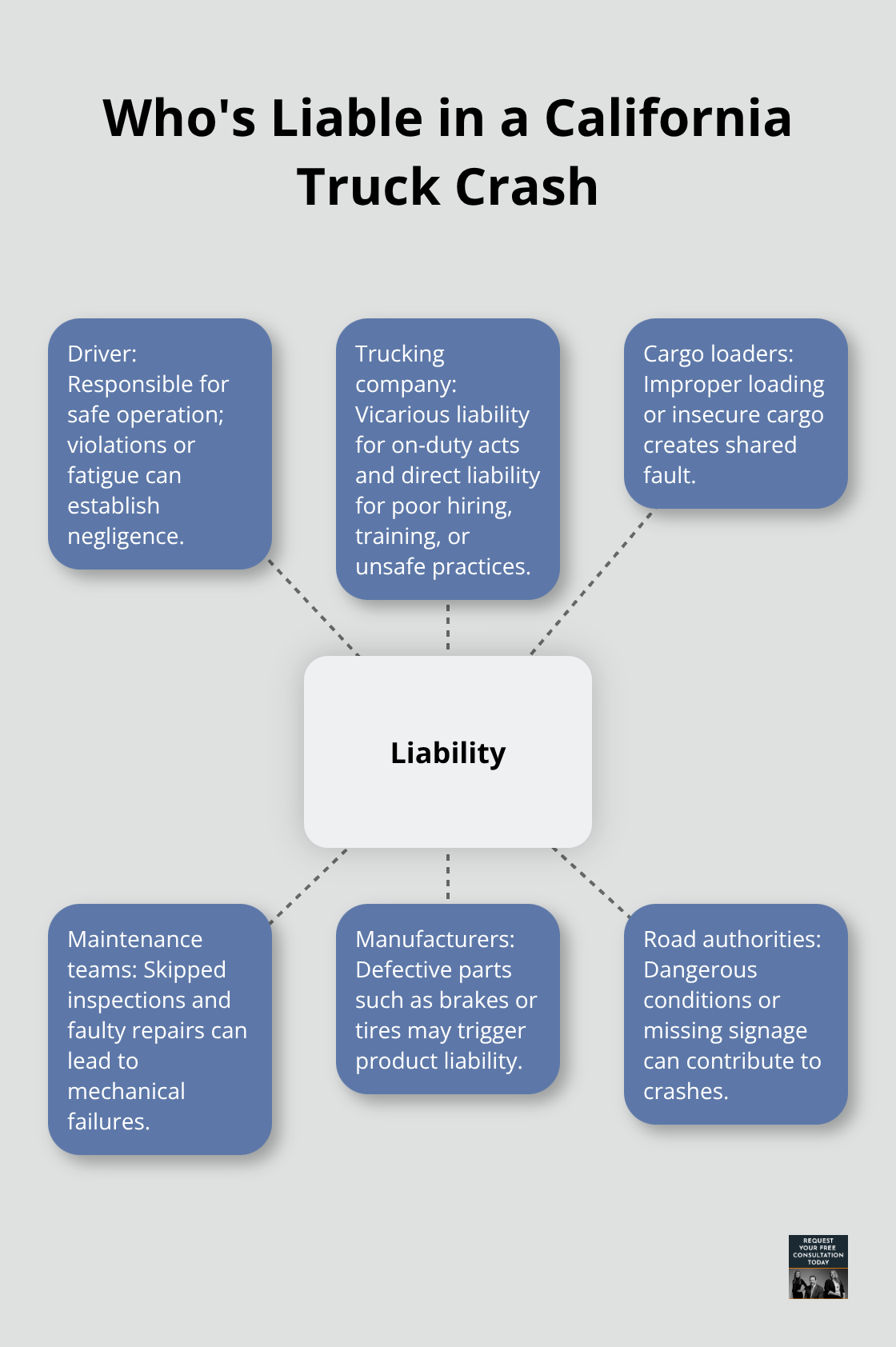
California law recognizes vicarious liability, which means the employer can be held responsible for a driver’s negligent actions that occur during work. Additionally, trucking companies face direct liability when they fail to hire qualified drivers, provide adequate training, or enforce safe operational practices.
Hours-of-Service Violations and Fatigue
The Federal Motor Carrier Safety Administration sets Hours-of-Service rules that cap driving at 11 hours within a 14-hour period, require 10 consecutive hours off-duty, and mandate a 30-minute break after 8 hours of driving. California enforces these federal rules strictly, and inspectors review electronic logging devices, GPS records, and paper logs to catch violations. When a driver falsifies logs or a company ignores fatigue violations, that evidence becomes powerful proof of negligence. Driver fatigue impairs reaction time and judgment as severely as alcohol does, making Hours-of-Service violations and logbook manipulation serious indicators of negligence.
Mechanical Failures and Cargo Issues
Speed-related crashes remain a leading cause of truck accidents in California, especially on steep grades like the Grapevine on I-5, where brake failure compounds the risk. Mechanical failures including brake defects and tire blowouts frequently trigger accidents, and skipped maintenance inspections increase liability for the trucking company. Overloaded trucks and improperly secured cargo destabilize the vehicle, reduce braking efficiency, and increase rollover likelihood. California weight limits cap most trucks at 80,000 pounds gross vehicle weight, and violations of federal cargo securement rules create liability for both the carrier and loading teams.
Reckless Driving and Road Conditions
Reckless driving such as excessive speeding, texting, or distracted eating on curved sections like Highway 101 and I-580 demonstrates a pattern of disregard for safety. Road conditions and construction zones amplify risk, but road authorities may also bear liability for potholes, missing signage, or inadequate detours that contribute to crashes.
Proving Fault Through Evidence
California uses pure comparative negligence, meaning you can recover damages even if you are partly at fault, though your award is reduced by your percentage of responsibility. Accident reconstruction and thorough analysis of black box data, maintenance records, and driver logs are essential to proving liability and establishing which party bears primary fault. Understanding these liability factors helps you prepare for the next phase of your claim.
What Damages Can You Recover After a Truck Crash
Economic Damages: Medical Bills, Lost Wages, and Property Loss
Truck crashes produce two categories of damages: economic losses you can calculate precisely and non-economic damages tied to your suffering and diminished quality of life. Economic damages include medical expenses, lost wages, and property damage-amounts you can document with receipts, pay stubs, and repair estimates. Start collecting medical records immediately after treatment begins, request itemized bills from every provider, and maintain detailed records of time missed from work. Insurance adjusters scrutinize medical claims closely, so obtain written explanations from your doctors that link each treatment to the crash. For lost wages, gather recent tax returns, pay stubs, and written statements from your employer confirming the time you missed and your hourly rate or salary. Self-employed victims should provide profit-and-loss statements and bank records that show income loss during recovery.
Property Damage Valuation
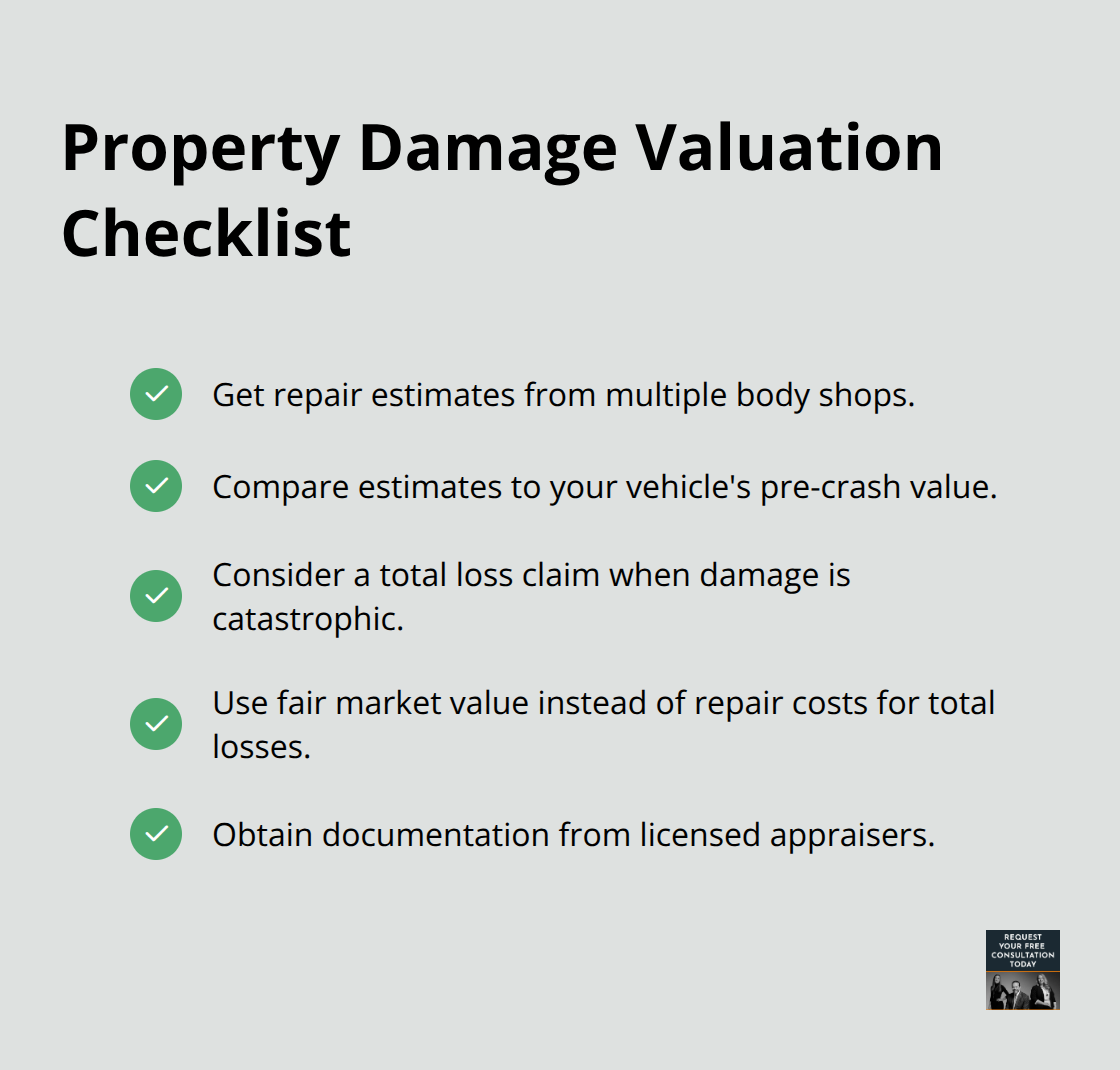
Property damage claims require you to obtain repair estimates from multiple body shops and compare them against your vehicle’s pre-crash value. If the truck caused catastrophic damage, you may qualify for a total loss claim based on fair market value rather than repair costs. Documentation from licensed appraisers strengthens your position when negotiating with insurance companies.
Pain and Suffering: The Often-Undervalued Claim
Pain and suffering damages represent where many victims leave money on the table because they underestimate the value of their injuries. California courts consider the severity of your injury, the length of recovery, any permanent disability, and the impact on daily activities when calculating these awards. A traumatic brain injury or spinal cord injury from a truck crash justifies substantially higher pain and suffering compensation than a minor fracture because the long-term consequences are severe. Courts also account for future medical care and rehabilitation costs in catastrophic injury cases, sometimes spanning decades of treatment. Document your pain levels daily using a pain journal, photograph visible injuries, and maintain records of activities you can no longer perform.
Punitive Damages for Gross Negligence
If the truck driver violated Hours-of-Service rules or the company ignored maintenance issues, that negligence strengthens your claim and may support punitive damages in cases involving gross negligence. These damages punish the defendant for reckless conduct and deter similar behavior in the future. The presence of logbook falsification or skipped safety inspections often tips the scales toward higher compensation. Understanding how violations translate into damages helps you prepare for negotiations with insurance companies and positions your case for maximum recovery.
The Truck Accident Claim Process
Act Immediately After the Crash
The first hours after a truck crash determine how strong your claim becomes. Call 911 immediately if anyone is injured, and once emergency responders arrive, request a police report number and the officer’s contact information. Take photographs of vehicle damage, road conditions, skid marks, and the truck’s position at the scene before moving vehicles if it’s safe to do so. Capture the truck’s license plate, company name, and any visible markings.
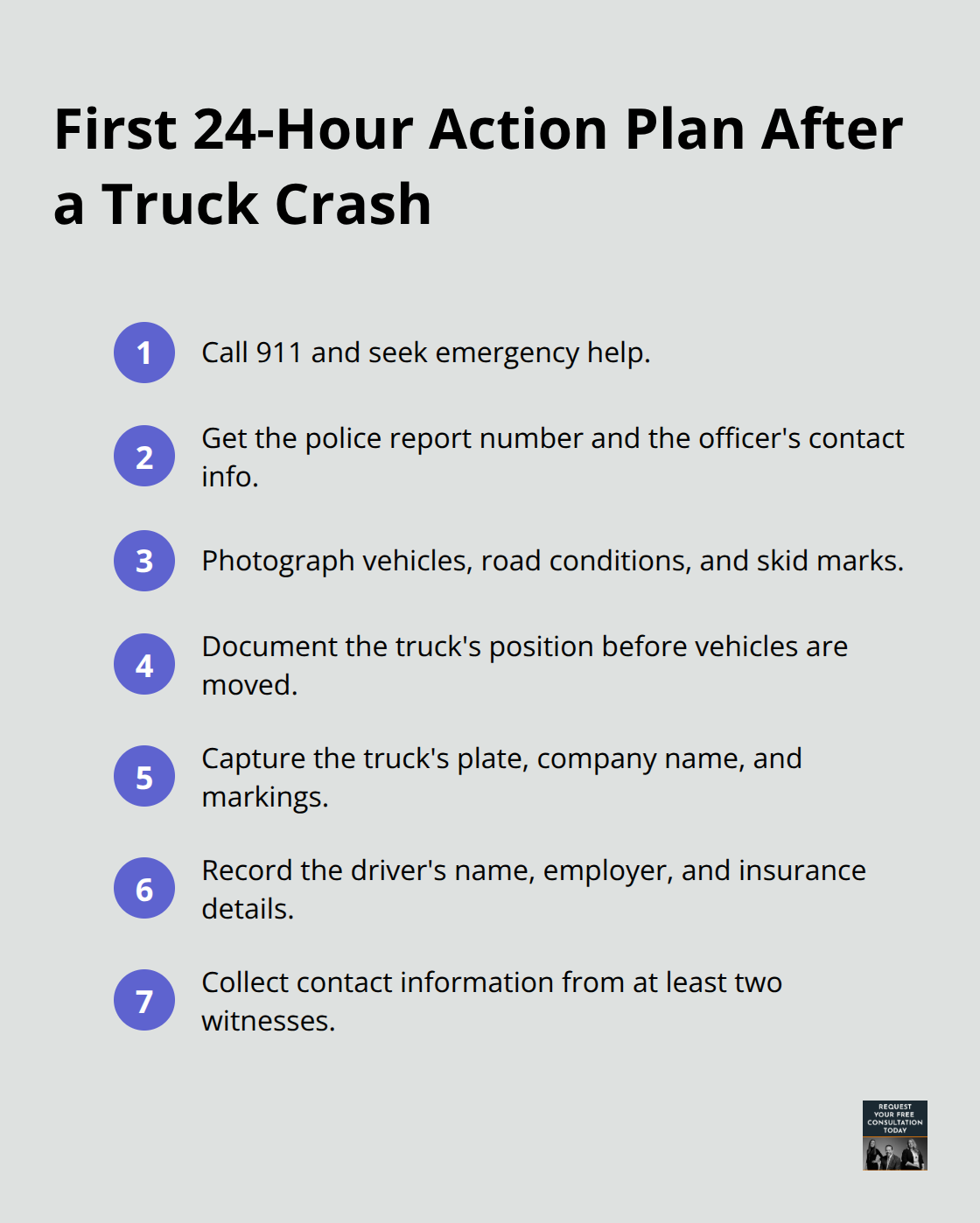
Record the driver’s name, phone number, employer, and insurance details directly from their documents rather than relying on memory. Write down the names and contact information of at least two witnesses who saw the crash happen, as witness statements often matter more than surveillance footage when proving liability. Do not admit fault or apologize for the crash, as insurance companies use your words against you in settlement negotiations. Seek medical attention within 24 hours even if you feel fine, since some injuries like traumatic brain injury develop gradually and early documentation creates a medical record linking your condition to the crash.
Preserve Evidence Before It Disappears
Insurance companies move fast, and they count on you to miss deadlines or fail to preserve evidence. California’s statute of limitations gives you two years to file a personal injury lawsuit for truck crashes and three years for property damage claims, but waiting until year two leaves no margin for error. Contact an attorney within days of the crash, not weeks or months later, because trucking companies immediately repair vehicles and delete black box data that proves negligence. Your attorney will send preservation letters to the trucking company, demanding they retain the truck’s electronic logging device records, GPS data, maintenance logs, and driver employment files. These records often reveal Hours-of-Service violations or skipped safety inspections that strengthen your claim significantly.
File Your Insurance Claim Strategically
When filing your insurance claim, provide a detailed written account of the crash and your injuries, then submit medical records and repair estimates as they arrive. Insurance adjusters typically respond within 30 days with an initial offer, which is almost always below what your case is worth. Do not accept the first offer. Instead, let your attorney counter with evidence of the defendant’s negligence and documentation of your full damages including future medical costs (medical expenses, lost wages, and pain and suffering). We at Schaar & Silva LLP can help in evaluating the extent of property damage and assist you in receiving a fair valuation for your loss. Our team also directs you to medical lien services that facilitate the payment of your bills until your case is resolved, allowing you to focus on recovery while we handle the legal intricacies of your situation.
Final Thoughts
Truck crashes in Santa Cruz County leave victims facing medical bills, lost income, and physical pain that can last months or years. The liability landscape is complex, involving driver negligence, Hours-of-Service violations, mechanical failures, and company-level decisions that prioritize speed over safety. California’s pure comparative negligence rule means you can recover even if partially at fault, but only if you gather strong evidence and act quickly before critical records disappear.
Truck crash litigation California requires more than a standard car accident approach because black box data, maintenance logs, and driver employment records tell the story of negligence-yet these documents vanish fast when trucking companies repair vehicles or delete electronic records. Your two-year window to file a personal injury lawsuit sounds long until you realize that preserving evidence cannot wait. Medical documentation linking your injuries to the crash, detailed records of lost wages, and pain journals demonstrating your suffering form the foundation of your claim.
Contact Schaar & Silva LLP within days of your crash, not weeks, and bring your police report, photos, medical records, and insurance information. We will review your case, identify liable parties, and preserve the evidence that proves negligence. You deserve full compensation for your medical expenses, lost wages, property damage, and pain and suffering.
