

After a car accident in Santa Cruz County, you might wonder if your auto accident settlement is taxable. The answer depends on what your settlement covers.
Most personal injury compensation remains tax-free under federal law. However, certain portions of your settlement could trigger tax obligations that catch many accident victims off guard.
We at Schaar & Silva LLP see clients face unexpected tax bills when they don’t understand these rules.
What Tax Rules Apply to Your Settlement?
Federal tax law under 26 U.S. Code § 104 treats most auto accident settlements as non-taxable income when they compensate for physical injuries. The IRS considers medical expenses, pain and suffering, and rehabilitation costs as tax-free compensation because these payments restore your health rather than generate income. This protection extends to emotional distress damages only when they directly result from physical injuries you sustained in your accident.
Punitive Damages Face Different Treatment
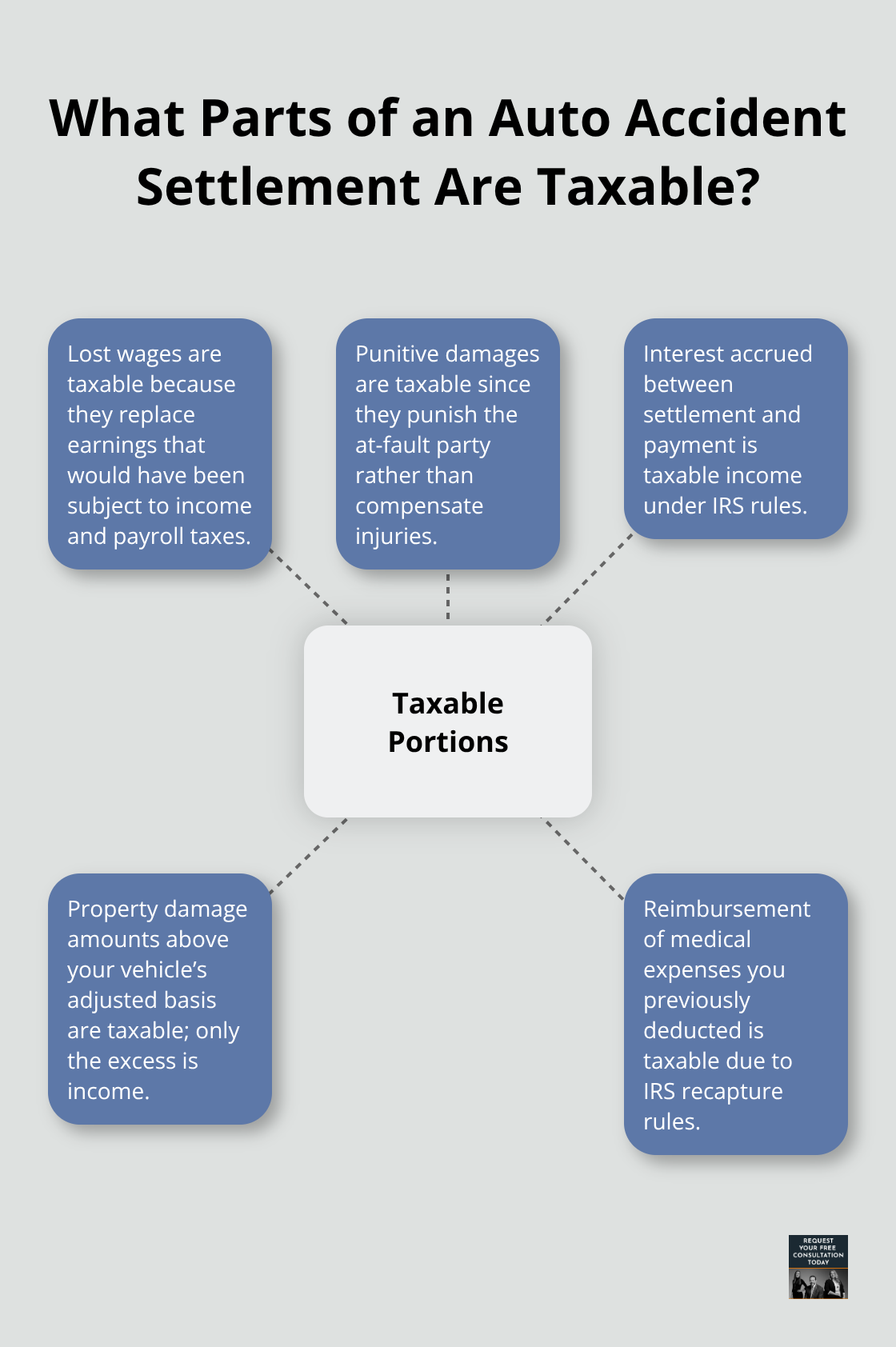
Punitive damages always create taxable income, even in auto accident cases. These payments punish the at-fault driver rather than compensate your injuries, which makes them taxable under federal law. The distinction matters significantly for your tax bill. If your settlement includes $50,000 in medical expenses and $20,000 in punitive damages, only the punitive portion generates tax liability.
Interest Creates Additional Tax Obligations
Interest earned on your settlement between case resolution and payment date counts as taxable income according to IRS guidelines. Settlement agreements often specify interest rates for delayed payments (typically 2-10% annually), which creates additional tax obligations you must report.
Lost Wages and Property Damage Rules
Lost wages compensation also triggers tax liability because this money replaces income that would have been taxed if earned normally. Self-employed individuals need tax returns and documentation to prove income loss patterns. Property damage payments become taxable when they exceed your vehicle’s adjusted basis, though most settlements stay within this limit. These tax implications become more complex when settlements include multiple compensation types, which leads us to examine specific situations where your settlement becomes taxable.
When Does Your Settlement Create Tax Problems?
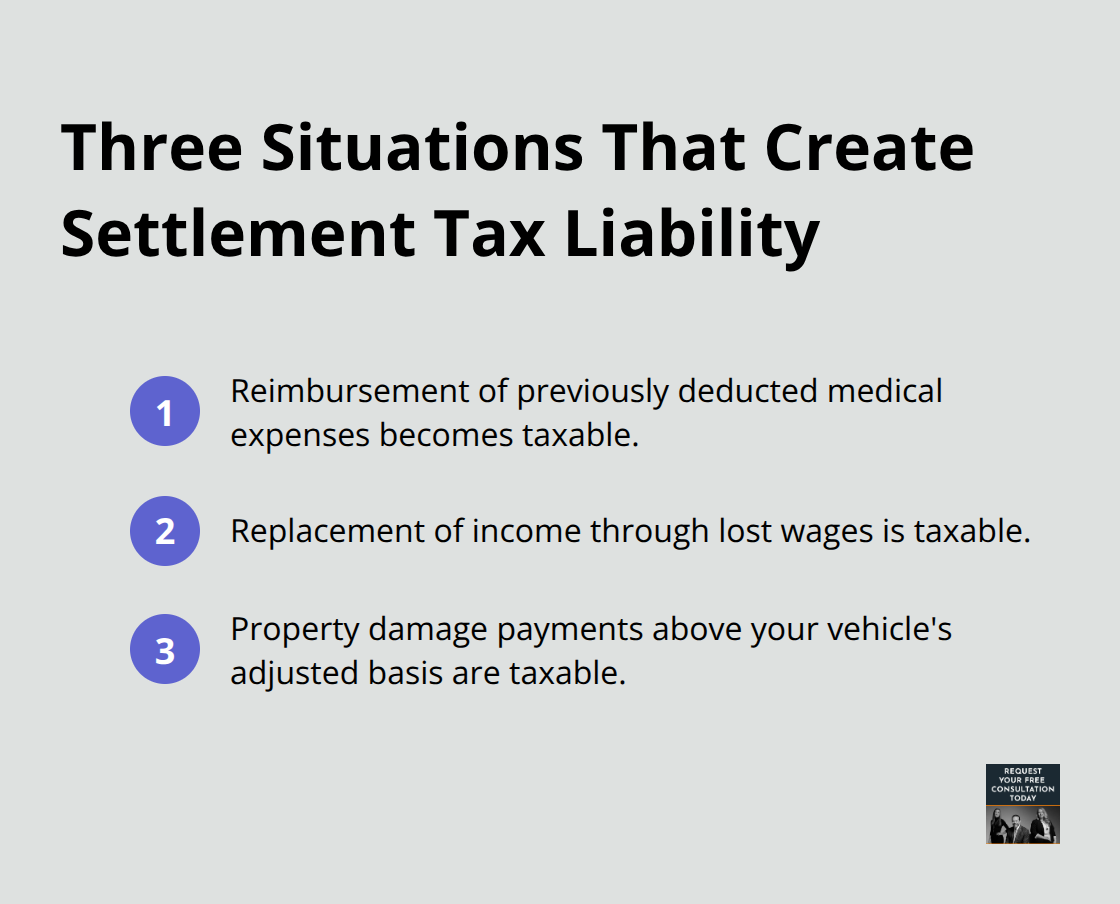
Three specific situations transform your otherwise tax-free auto accident settlement into taxable income that requires IRS reporting. The California Franchise Tax Board follows federal guidelines, meaning these same rules apply to your state taxes as well.
Medical Expenses You Already Deducted
Settlement money that reimburses medical expenses you previously deducted on tax returns becomes taxable income. The IRS requires you to report this recapture because you cannot benefit twice from the same expense. If you deducted $15,000 in medical bills on last year’s return and your settlement includes $15,000 for those same expenses, that portion becomes taxable.
Keep records of all medical deductions claimed in previous years to calculate this correctly. Self-employed accident victims often face larger recapture amounts because they typically deduct more medical expenses than W-2 employees.
Lost Income Creates Tax Liability
Lost wages compensation always creates taxable income because this money replaces earnings that would have been subject to payroll taxes. Your settlement agreement should specify the exact amount allocated to lost wages versus medical expenses or pain and suffering.
W-2 employees receive Form 1099-MISC for wage replacement that exceeds $600, while self-employed individuals must report all lost income amounts. Gather your last three pay stubs before the accident and your previous two years of tax returns to establish your baseline income when calculating lost wages. Santa Cruz County residents who work in tech or agriculture often receive substantial lost wage awards that significantly impact their tax obligations.
Property Damage Above Your Vehicle’s Basis
Property damage payments become taxable when they exceed your vehicle’s adjusted basis (which equals your original purchase price minus depreciation). Most settlements stay within this limit, but luxury vehicle owners sometimes receive payments above their basis. The taxable amount equals the settlement minus your adjusted basis, not the full payment amount.
These tax complications require careful documentation and proper reporting to avoid IRS penalties, which makes record-keeping an essential part of your settlement process.
How Should You Handle Settlement Taxes
Proper tax handling for your auto accident settlement requires three essential steps that protect you from IRS penalties and maximize your financial recovery. Start by organizing your settlement agreement into separate categories immediately after you sign. Create folders for medical expenses, lost wages, property damage, pain and suffering, and any punitive damages. The IRS Publication 4345 requires clear documentation of each component because different portions face different tax treatments.
Organize Your Settlement Documentation
Request an itemized settlement breakdown from your attorney that specifies dollar amounts for each category. This documentation becomes vital during tax season when you must differentiate between taxable lost wages and non-taxable medical compensation. Track all medical expenses from your accident date forward, including co-pays, prescription costs, and rehabilitation fees. Save receipts for mileage to medical appointments because these costs factor into your settlement calculation.
Gather Historical Tax Records
Compile records immediately if you previously deducted medical expenses on tax returns. The California Franchise Tax Board follows federal recapture rules, meaning you owe taxes on settlement money that reimburses previously deducted expenses. Gather your last three years of tax returns to identify any medical deductions you claimed related to your accident injuries. Self-employed individuals need additional business income documentation that shows their earnings patterns before the accident.
Consult Tax Professionals
Settlement agreements that involve multiple damage types require professional tax preparation because mistakes trigger IRS audits and penalties. Tax professionals charge $200-500 for settlement-related returns, but this investment prevents costly errors. Schedule your consultation before December 31st of your settlement year to plan for quarterly estimated tax payments on taxable portions (particularly important for large lost wage awards).
File Your Returns Correctly
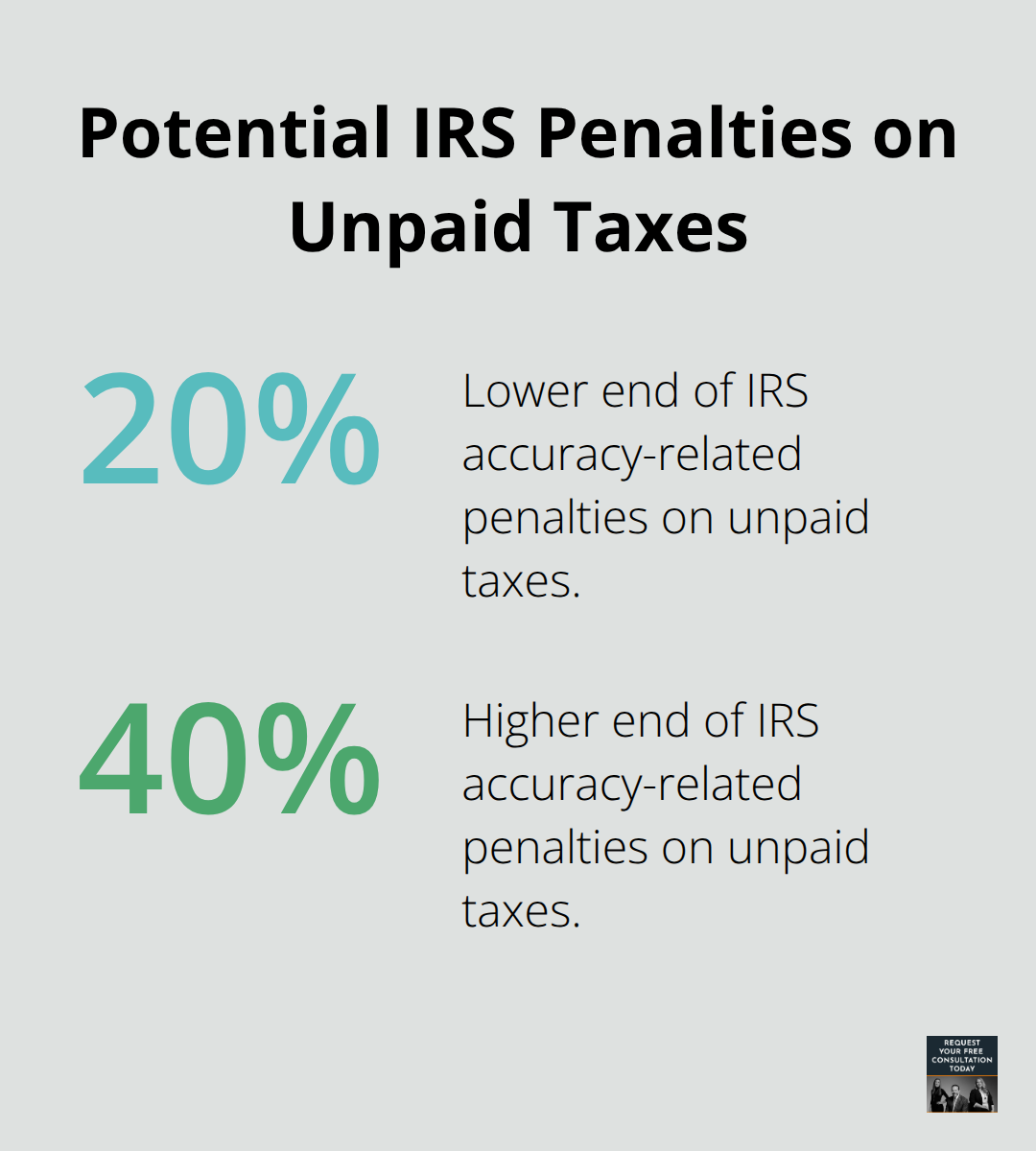
File Form 1040 and report taxable settlement portions on the appropriate lines. Lost wages go on line 1 as other income, while punitive damages appear on line 8b. Interest earned on delayed settlement payments requires Form 1099-INT documentation. The IRS matches settlement documentation against your filed returns, making accurate reporting essential for avoiding penalties that range from 20-40% of unpaid taxes.
Final Thoughts
Your auto accident settlement taxable status depends entirely on what components your settlement includes. Most personal injury compensation remains tax-free under federal law, which protects medical expenses, pain and suffering, and rehabilitation costs from IRS taxation. However, lost wages, punitive damages, and interest on delayed payments create tax obligations that many Santa Cruz County accident victims overlook.
The key lies in understanding these exceptions before you receive your settlement check. Previously deducted medical expenses trigger recapture rules, while property damage payments above your vehicle’s basis generate additional tax liability. These complications multiply when settlements include multiple damage types (making professional guidance essential for proper tax compliance).
We at Schaar & Silva LLP help clients navigate both the legal and financial aspects of their auto accident cases. Our team provides comprehensive support throughout Santa Cruz County, from medical bill assistance to property damage claims evaluation. Proper planning prevents tax surprises that can reduce your financial recovery by thousands of dollars.
