

Getting the maximum compensation from your not at fault auto accident settlement requires strategic action from day one. Most drivers leave thousands of dollars on the table by making preventable mistakes.
We at Schaar & Silva LLP have seen settlement amounts vary dramatically based on how victims handle their claims. The difference between a fair settlement and an inadequate one often comes down to documentation and timing.
What Should You Do at the Accident Scene?
Your first priority after a not at fault accident is to create an unshakeable foundation for your claim. The California Department of Motor Vehicles requires accident reports within 10 days if damage exceeds $750, but smart victims start to build their case immediately at the scene. Insurance companies receive over 6 million claims annually, and they routinely deny or undervalue cases with insufficient documentation.
Document Everything with Your Phone
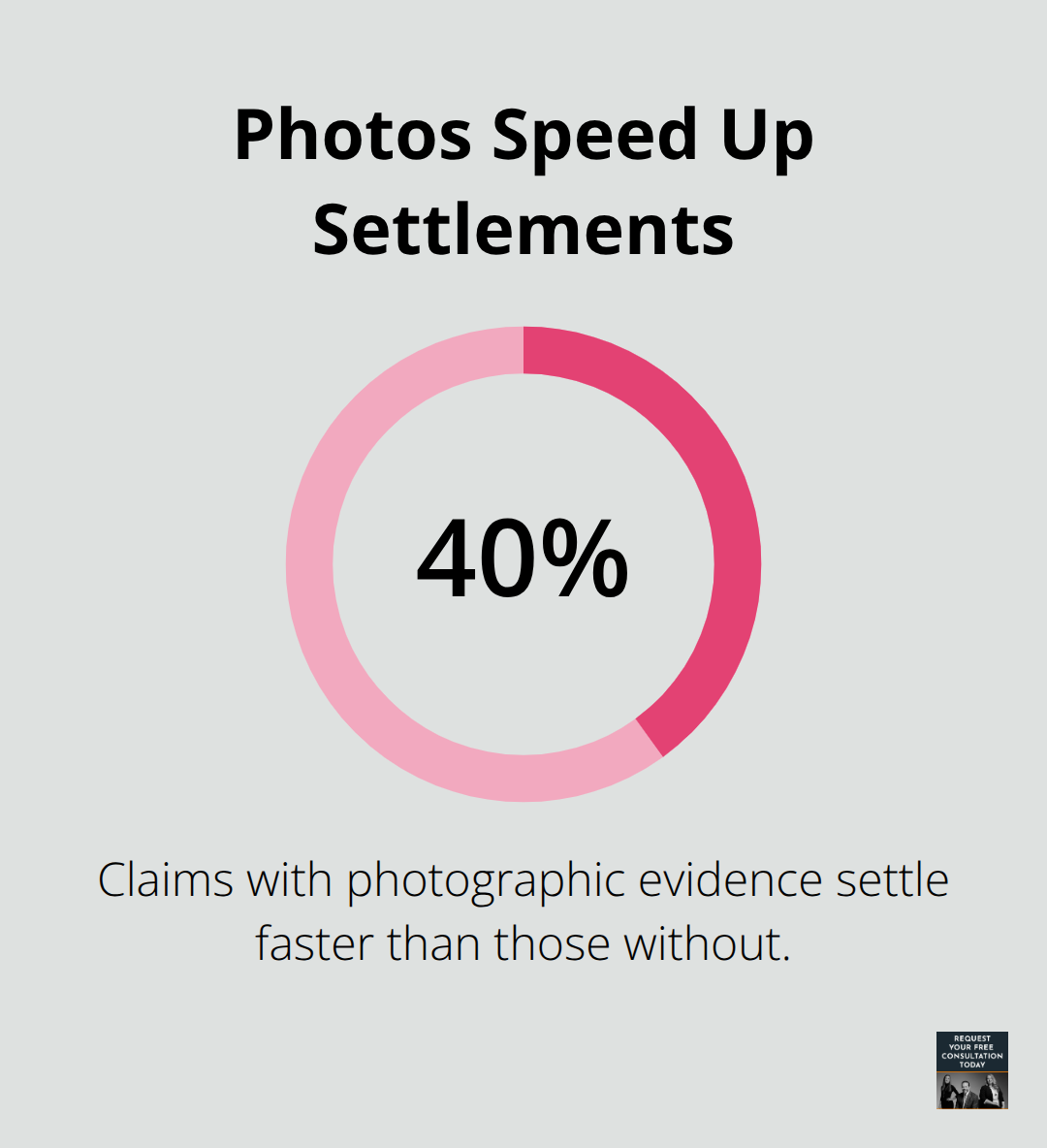
Take at least 20 photos from multiple angles that show vehicle damage, the accident scene, traffic signals, road conditions, and license plates. The Insurance Research Council found that claims with photographic evidence settle 40% faster than those without.
Record a brief video as you walk around the scene while you narrate what happened – this creates a timestamp and captures details you might forget later. Photograph any skid marks, debris, or property damage beyond the vehicles. Weather conditions matter too, so capture wet roads or poor visibility if relevant.
Collect Complete Contact Information
Get full names, phone numbers, insurance company names, policy numbers, and driver’s license numbers from everyone involved. Write down the make, model, year, and VIN of all vehicles. The National Highway Traffic Safety Administration reports that 25% of drivers carry insufficient insurance (which makes witness information vital for your claim). Approach bystanders who saw the accident and ask for their contact details – neutral witnesses often provide the most credible testimony. Store this information in your phone immediately and text it to yourself as backup.
Get Medical Care Within 24 Hours
Visit an emergency room or urgent care facility even if you feel fine. The American Medical Association states that adrenaline masks pain for up to 72 hours after trauma, and delayed medical treatment gives insurance companies ammunition to question your injuries. Request copies of all medical records and keep receipts for every medical expense, including prescription medications and physical therapy. Document how your injuries affect daily activities when you keep a pain journal – this becomes powerful evidence for non-economic damages like pain and suffering.
These immediate actions set the stage for what you can claim in your settlement, which extends far beyond basic vehicle repairs.
What Compensation Can You Actually Recover
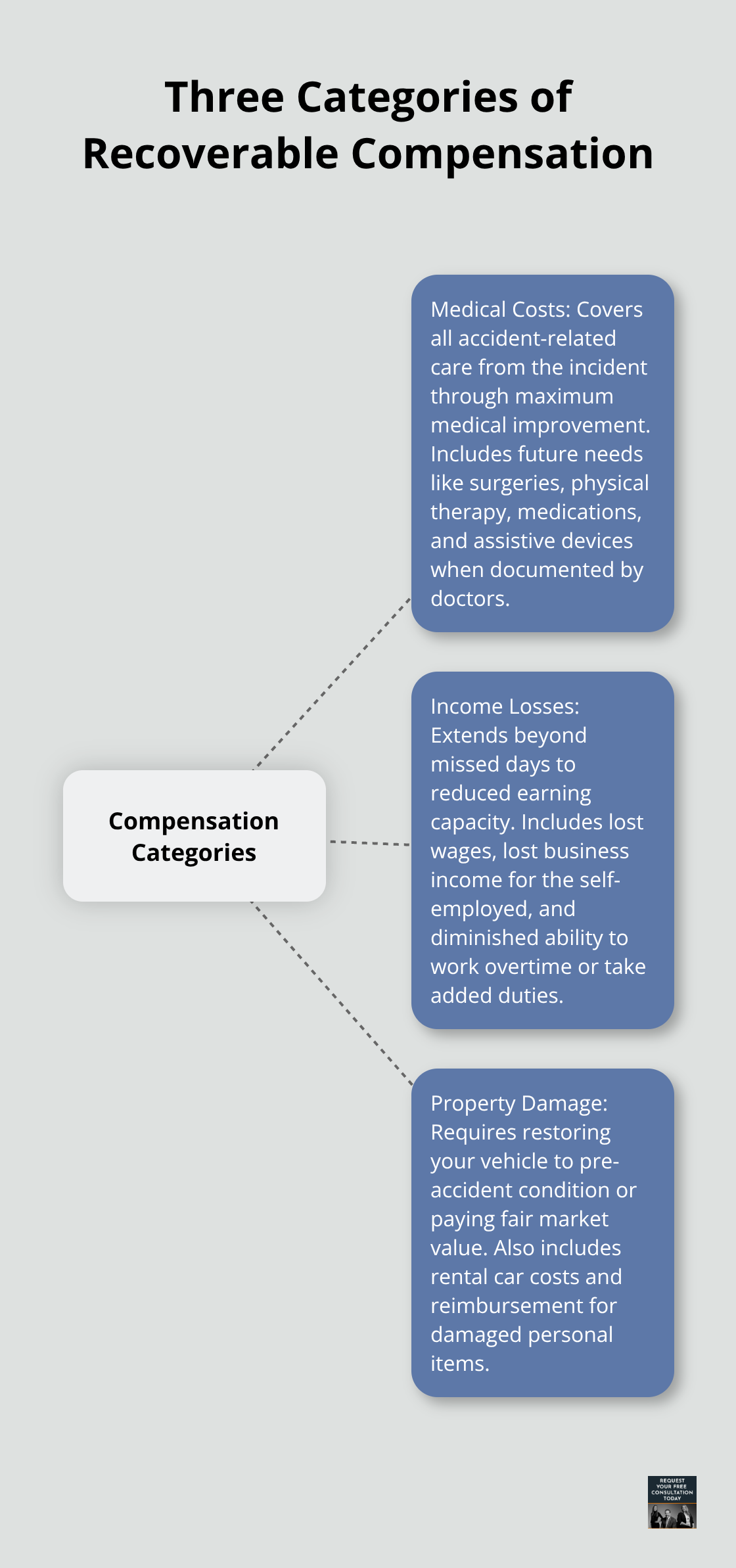
California law grants not at fault accident victims the right to recover three distinct categories of damages, but insurance companies actively work to minimize each category through delay tactics and lowball offers. The Bureau of Justice Statistics reports that victims who understand their full compensation rights receive settlements that average 3.5 times higher than those who accept initial offers without question.
Medical Costs Beyond Your Initial Treatment
Your settlement must cover every medical expense from the accident date through your maximum medical improvement. The National Safety Council found that average medical costs for injury claims reached $18,500 in 2023, but this figure excludes long-term care needs. Insurance adjusters routinely challenge future medical expenses, so you need documentation from doctors that outlines anticipated surgeries, physical therapy sessions, and ongoing medication needs.
Workers who suffer back injuries in vehicle accidents face average lifetime medical costs that exceed $75,000 (according to the Workers Compensation Research Institute). Pain management treatments, medical equipment like braces or wheelchairs, and home health care services all qualify for compensation. Mental health counseling for accident-related trauma also counts as recoverable medical expenses under California law.
Income Losses That Extend Beyond Missed Work Days
Lost wage calculations must account for your full income capacity, not just hourly wages or salary. The Department of Labor Statistics shows that accident victims lose an average of 11 work days, but severe injuries can permanently reduce income potential. Self-employed individuals can recover lost business income when they document contracts, invoices, and tax returns that demonstrate pre-accident income.
Commission-based workers need records that show average monthly commissions over the previous year to establish baseline income. Reduced work capacity matters too – if you return to work but cannot perform overtime or take on additional responsibilities due to injuries, that diminished capacity deserves compensation. Sick leave, vacation time, and personal days used for medical appointments also count as recoverable losses.
Property Damage and Vehicle Replacement Value
California requires at-fault drivers to restore your property to its pre-accident condition or pay fair market value for total losses. Insurance companies often use depreciation formulas that undervalue vehicles, particularly for cars over five years old. The Kelley Blue Book reports that insurance settlements for total loss vehicles average 15% below actual replacement costs in California markets.
You can demand compensation for rental car expenses while your vehicle undergoes repairs or until you receive your settlement check. Gap insurance becomes vital if you owe more on your car loan than the insurance payout covers. Personal items damaged in the crash also qualify for reimbursement, including electronics, clothing, and work equipment.
These compensation categories form the foundation of your claim, but many victims unknowingly sabotage their settlements through common mistakes that insurance companies exploit.
What Settlement Mistakes Cost You Money
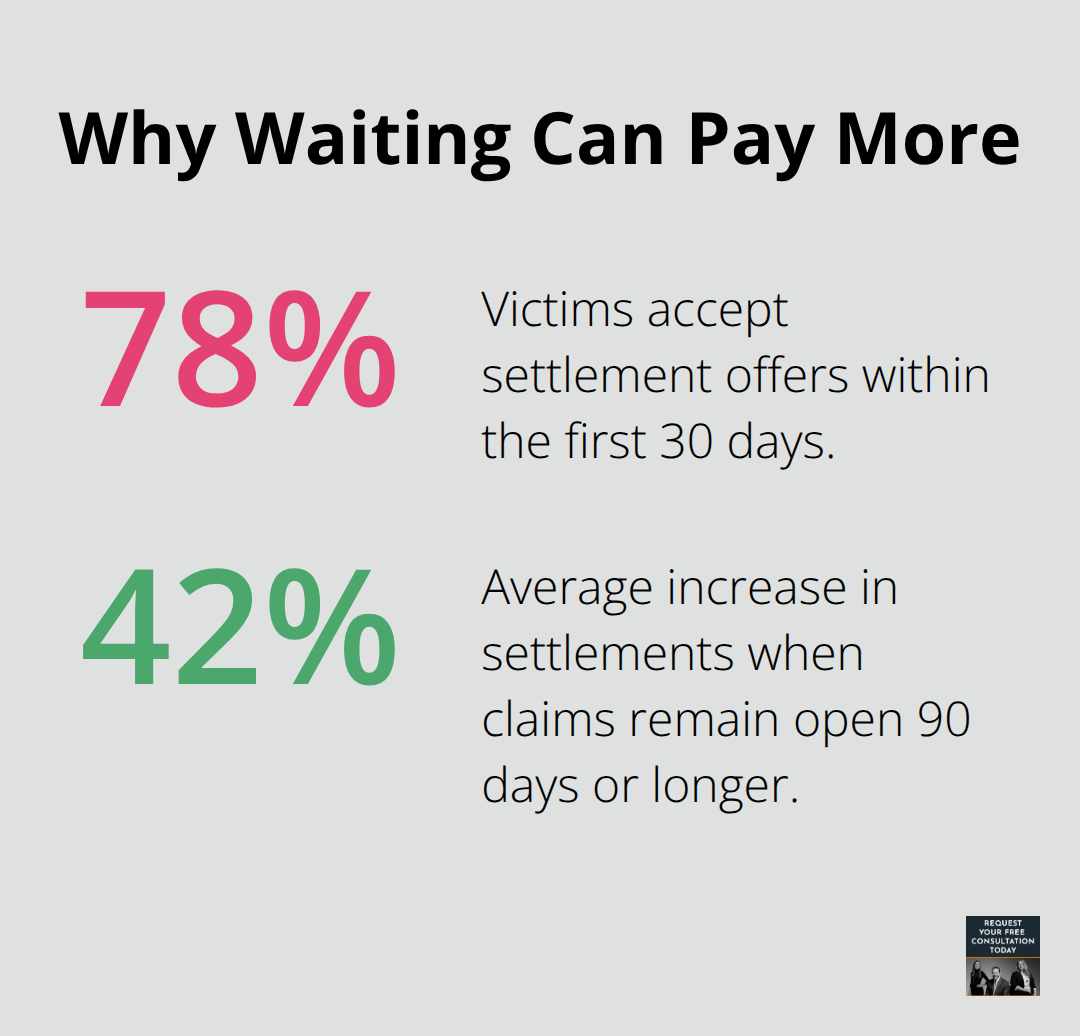
Insurance companies profit from victim mistakes, and their adjusters receive training on how to exploit common errors that reduce settlement values. The Insurance Information Institute reports that 78% of accident victims accept settlement offers within the first 30 days, but claims that remain open for 90 days or longer result in settlements that average 42% higher. Quick settlements benefit insurance companies, not accident victims.
Never Accept the First Offer Without Analysis
Insurance adjusters make initial offers that represent 15-25% of a claim’s actual value according to the National Association of Insurance Commissioners. These lowball offers target victims who need immediate cash for medical bills or vehicle repairs. State Farm, Allstate, and other major insurers train adjusters to emphasize time pressure and financial urgency during initial contact calls.
The adjuster might claim their first offer expires within 48 hours or suggest that waiting longer could result in claim denial. These tactics work because 60% of accident victims have never filed an insurance claim before and lack knowledge about fair settlement ranges. You should request all documentation that supports their offer calculations, including repair estimates, medical record reviews, and wage loss calculations.
Compare their figures against your actual expenses and get independent estimates for vehicle repairs. Most initial offers exclude future medical costs, long-term disability impacts, and pain and suffering damages (which can represent 40-60% of your total compensation).
Recorded Statements Can Destroy Your Case
Insurance adjusters request recorded statements within 24-48 hours after accidents when victims remain shaken and medically untreated. The Consumer Federation of America found that 89% of recorded statements contain admissions or inconsistencies that insurance companies later use to deny or reduce claims. Adjusters ask questions designed to minimize fault attribution and injury severity.
Common trap questions include asking victims to estimate vehicle speeds, describe weather conditions, or admit they felt fine immediately after the crash. Pain medication, shock, and adrenaline affect memory and judgment during the first week after accidents. California law does not require accident victims to provide recorded statements to opposing insurance companies, and you can decline these requests without penalty.
Any statement you make can be taken out of context during settlement negotiations or trial proceedings. Insurance companies use voice stress analysis software and trained investigators to identify perceived inconsistencies in recorded statements (even when victims tell the truth).
Track Every Expense From Day One
Victims who fail to document all accident-related expenses lose an average of $3,200 in potential compensation according to the National Safety Council. Insurance companies deny reimbursement for expenses without proper documentation, regardless of how reasonable or necessary those costs appear. Keep receipts for prescription medications, medical equipment, transportation to appointments, and childcare services needed during recovery.
Lost wages require detailed documentation that goes beyond simple pay stubs. Request letters from your employer that confirm missed work days, reduced hours, and any accommodations made for your injuries. Self-employed individuals need to gather contracts, invoices, and tax returns that demonstrate income loss patterns.
Final Thoughts
Time works against you after a not at fault auto accident settlement claim. California’s statute of limitations gives you two years to file a lawsuit, but insurance companies use delay tactics to pressure victims into accepting inadequate offers. The first 30 days after your accident represent the most critical period for building a strong case.
We at Schaar & Silva LLP have seen how professional legal representation changes settlement outcomes. Insurance companies assign teams of adjusters and lawyers to minimize payouts, while accident victims navigate this process alone and overwhelmed. Our legal team levels the playing field and handles negotiations while you focus on medical recovery.
Professional legal guidance becomes particularly valuable when dealing with severe injuries, disputed fault, or multiple insurance companies (especially in complex cases with commercial vehicles). Document everything, avoid recorded statements, and never accept the first settlement offer. Your financial future depends on decisions made during these first few weeks after your accident.
