

Getting a fair settlement for auto accident injury requires strategic planning and knowledge of your rights. Most accident victims in Santa Cruz County leave thousands of dollars on the table by accepting the first offer.
We at Schaar & Silva LLP see this happen repeatedly. Insurance companies count on your lack of preparation to minimize payouts and protect their bottom line.
Understanding Your Auto Accident Settlement Rights
California law provides specific protections for accident victims, but you must know these rights to secure fair compensation instead of accepting minimal payouts. Insurance adjusters prefer that you remain unaware of your full legal standing, particularly when it comes to economic and non-economic damages available to you.
Know What Damages You Can Claim
Medical expenses form the foundation of your claim and include current bills plus future treatment costs. Lost wages extend beyond immediate time off work to include reduced earning capacity when your injuries affect long-term employment prospects. Property damage covers vehicle repairs or replacement value, plus rental car expenses during repairs.
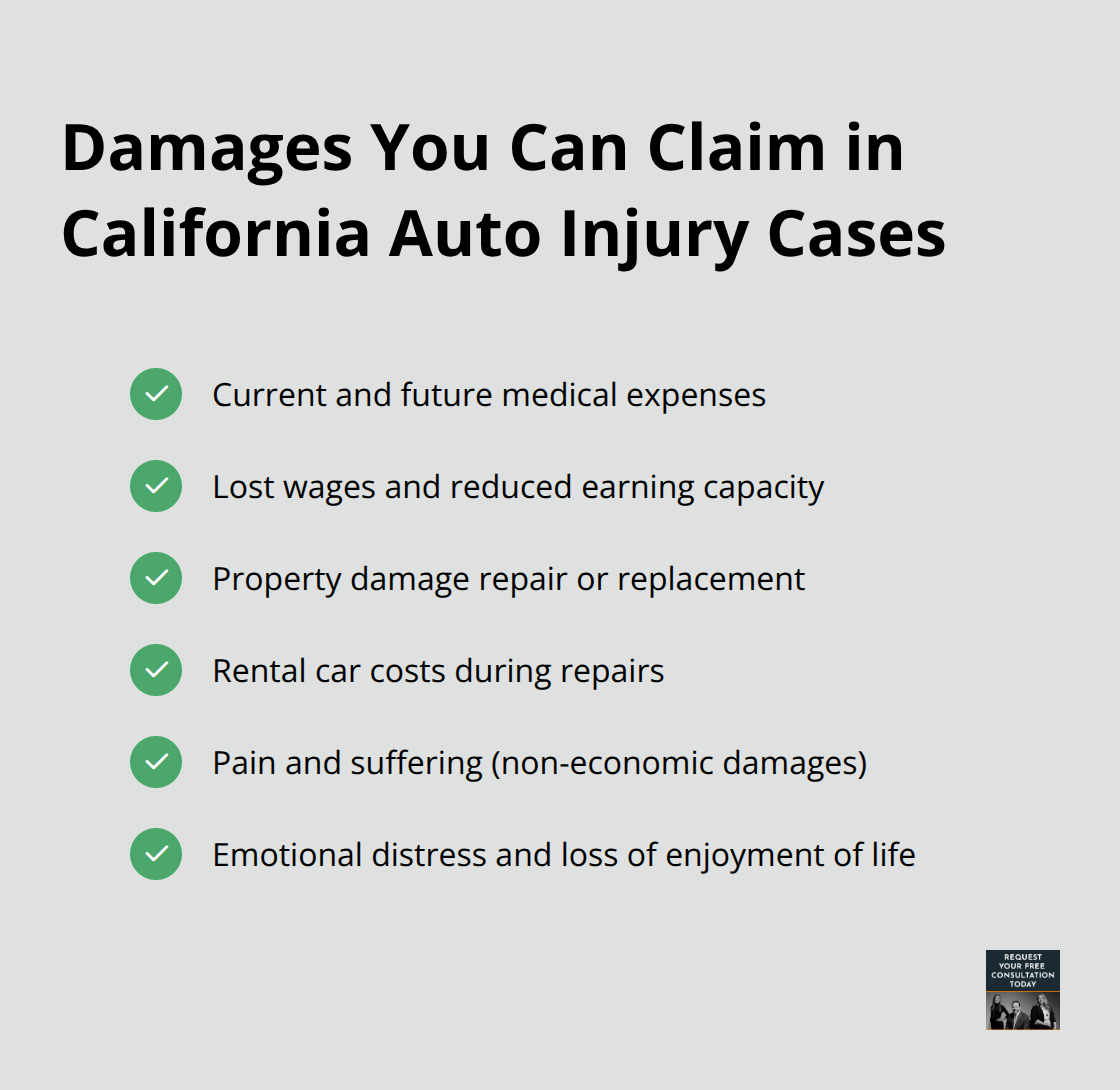
The California Department of Insurance reports that accident victims who document all economic losses receive settlements averaging 40% higher than those who only claim obvious expenses. Non-economic damages (pain and suffering, emotional distress, loss of enjoyment of life) often exceed medical bills in value for serious injuries.
Understand California’s Comparative Negligence Laws
California follows pure comparative negligence, which means you can recover damages even when you bear partial fault for the accident. Your settlement reduces by your percentage of responsibility. If you were 30% responsible for the accident, your settlement decreases by that same percentage.
Insurance companies often inflate your fault percentage to reduce their payout, which makes accurate fault determination vital. Adjusters frequently assign 50% or higher fault to victims who actually bear minimal responsibility for the collision.
Learn About Statute of Limitations for Filing Claims
California’s statute of limitations gives you two years from the accident date to file a personal injury lawsuit. Property damage claims have a three-year limit. Missing these deadlines eliminates your right to compensation entirely.
Filing early creates leverage with insurance companies who recognize your serious intent to pursue full compensation through legal action when necessary. This timeline pressure becomes your advantage in settlement negotiations, as insurers prefer to avoid costly litigation expenses.
Steps to Maximize Your Settlement Amount
The strength of your settlement case depends entirely on the evidence you collect and the actions you take immediately after your accident. Insurance companies pay higher settlements when they face overwhelming documentation that proves your damages and their insured driver’s liability. The Insurance Research Council found that accident victims who photograph the scene receive settlements 23% higher than those who rely solely on police reports.
Document Everything at the Accident Scene
Take photos of vehicle positions, skid marks, traffic signals, and street signs before anyone moves the vehicles. Capture damage from multiple angles and document any visible injuries immediately. Exchange contact information with all witnesses present at the scene, as their statements often become the deciding factor in disputed liability cases.
Request the responding officer’s name and report number, then obtain a copy of the police report within 72 hours. This official documentation provides an independent account of the accident that insurance companies cannot dispute easily.
Seek Immediate Medical Attention and Follow Treatment Plans
Medical treatment must begin within 24 hours of your accident, even when you feel fine initially. The National Highway Traffic Safety Administration reports that 15% of accident injuries manifest symptoms 24-48 hours after impact. Insurance companies use delayed medical care to argue that your injuries resulted from other causes.
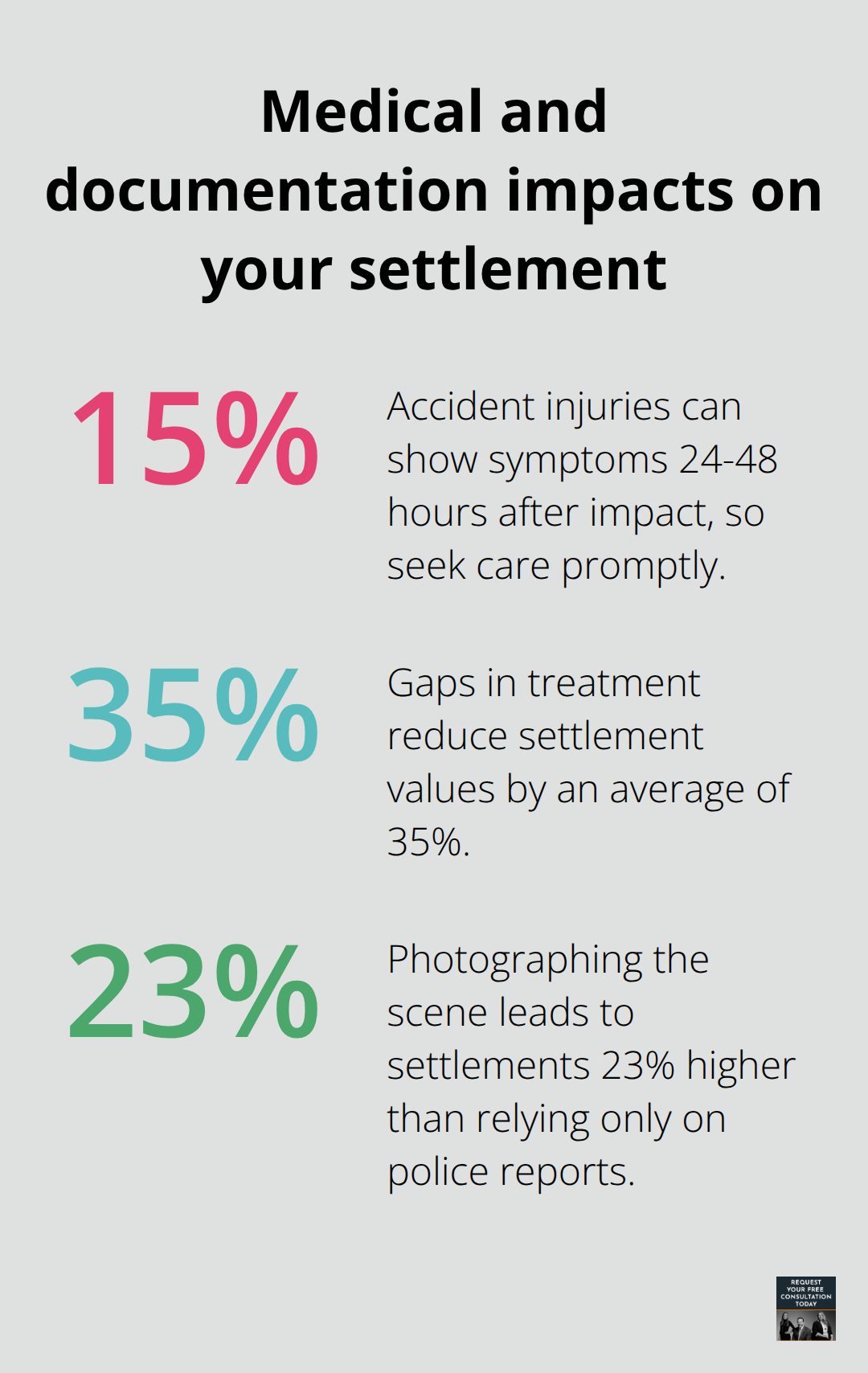
Follow all prescribed treatments completely and attend every appointment. Gaps in treatment reduce settlement values by an average of 35% according to data from the American Bar Association. Complete medical records demonstrate the severity and duration of your injuries.
Avoid Common Mistakes That Reduce Settlement Value
Never give recorded statements to the opposing insurance company or sign medical releases that grant access to your entire medical history. These tactics help insurers find pre-existing conditions to blame for your current injuries and reduce their liability payments substantially.
Avoid social media posts about your accident or activities during recovery (insurance companies monitor these accounts). Don’t accept quick settlement offers without understanding the full extent of your injuries and future medical needs. These early offers typically represent 10-20% of your claim’s actual value.
Understanding these evidence collection strategies prepares you for the next phase: navigating insurance company tactics and communication protocols that can make or break your settlement negotiations.
Working with Insurance Companies Effectively
Insurance adjusters receive extensive training in claim reduction tactics and use psychological manipulation to minimize settlements. The National Association of Insurance Commissioners reports that adjusters close 85% of claims within 30 days through pressure tactics and lowball offers. Your approach to these communications directly impacts your final settlement amount, often by tens of thousands of dollars.
Control Information Flow to Protect Your Claim
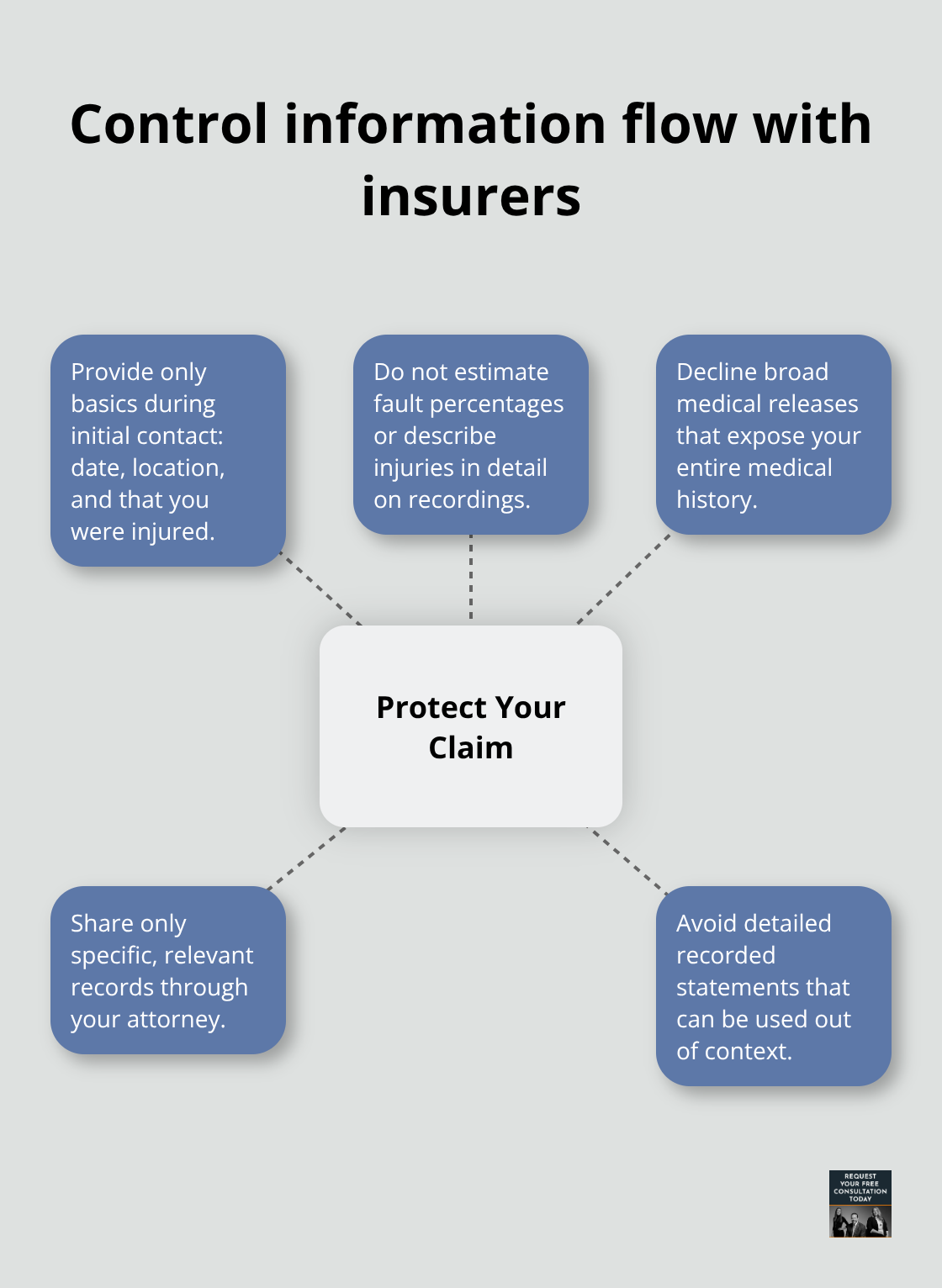
Provide only basic facts during initial contact: the accident date, location, and that you were injured. Never estimate fault percentages or describe your injuries in detail during recorded statements. Insurance companies use these recordings against you later, they take statements out of context to reduce liability.
The Coalition Against Insurance Fraud found that 67% of accident victims who gave detailed recorded statements received settlements below their claim’s actual value. Refuse to sign broad medical releases that grant access to your entire medical history. Instead, provide specific medical records related only to accident injuries through your attorney when settlement negotiations begin.
Recognize and Counter Standard Insurance Tactics
Adjusters often claim their initial offer represents full policy limits or suggest you don’t need an attorney for minor injuries. Both statements are false manipulation tactics. Most insurance companies deploy predictable tactics to reduce your settlement, and even minor soft tissue injuries can result in settlements that exceed $15,000 when properly documented.
Quick settlement pressure increases when adjusters know your claim has strong merit. The Insurance Research Council found that accident victims who waited at least 90 days before they accepted offers received settlements that averaged 40% higher than those who settled within the first month.
When to Accept or Reject Settlement Offers
Reject any settlement offer before you reach maximum medical improvement, as future treatment costs and permanent limitations cannot be accurately assessed during active recovery phases. Insurance companies prefer to settle before you understand the full scope of your injuries and their long-term impact on your life.
Accept offers only after your doctor releases you from care or declares your condition permanent and stationary. This medical milestone provides the foundation for accurate damage calculations including future medical expenses and lost earning capacity. Settlement negotiations become more productive when you possess complete medical documentation that supports your claim value.
Final Thoughts
Your settlement for auto accident injury depends on strategic preparation and understanding insurance company tactics. Document everything immediately, seek prompt medical care, and avoid recorded statements without legal guidance. California’s comparative negligence laws allow recovery even when you share fault, but insurance companies will inflate your responsibility to reduce payouts.
Professional legal help becomes necessary when injuries are severe, fault is disputed, or insurance companies refuse fair compensation. The average settlement in California reaches $23,900, but complex cases often exceed $1 million when properly handled. We at Schaar & Silva LLP help clients navigate the complex legal process (from initial consultation through final settlement) while they focus on recovery.
Take action now to protect your financial future. Insurance companies count on your inexperience to minimize settlements. Contact our legal team today to discuss your case and learn how our knowledge can maximize your compensation while you heal.
