
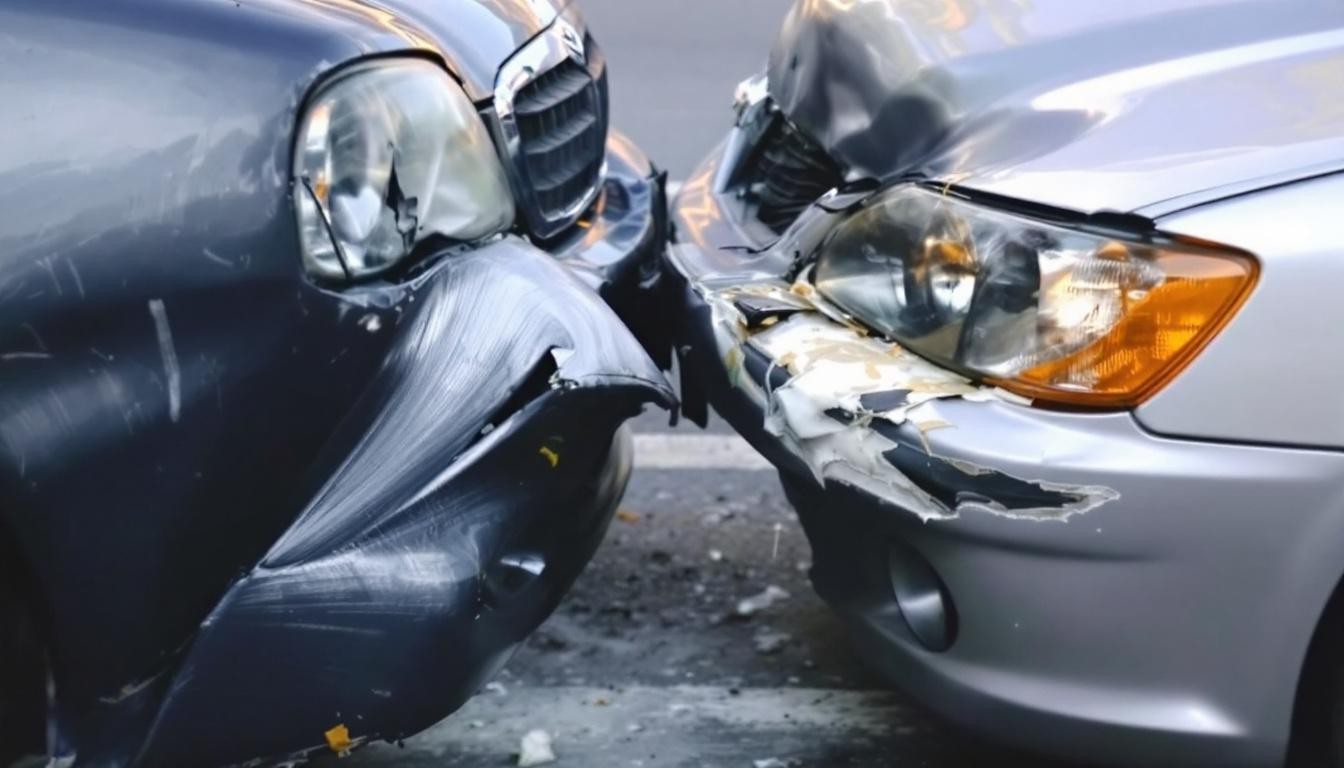
A collision with another vehicle can happen in seconds, but the decisions you make afterward affect you for months or years. Most drivers feel overwhelmed and make costly mistakes during those first critical minutes.
We at Schaar & Silva LLP have seen how proper post-accident actions protect Santa Cruz County residents from financial and legal complications. The right steps taken immediately can save you thousands of dollars and prevent future headaches.
What Should You Do in the First Minutes After Impact
Your immediate response after a collision determines whether you walk away with minor hassles or face months of complications. The National Highway Traffic Safety Administration reports that nearly 6 million motor vehicle accidents occur annually in the United States, and most drivers make preventable mistakes in those first critical minutes.
Check for Injuries and Get Help Fast
Stop your vehicle immediately and assess everyone’s condition. California law requires you to remain at the scene if anyone was injured, and you face hit-and-run charges with fines up to $10,000 and one year in jail if you leave. Call 911 immediately if you see blood, anyone complains of pain, or shows signs of confusion. Even minor injuries can develop into serious medical conditions hours later. The Centers for Disease Control and Prevention reports that approximately 50% of accidents involve personal injuries (many of which aren’t immediately apparent). Don’t let anyone convince you that medical attention isn’t necessary.
Move to Safety and Make Yourself Visible
Turn on your hazard lights immediately, even before you exit your vehicle. If your car runs and blocks traffic, move it to the shoulder or nearest safe location. However, never move vehicles if serious injuries occurred, as this could worsen someone’s condition. Set up flares or reflective triangles at least 100 feet behind your vehicle if you have them. Position yourself away from traffic flow while you wait for help.
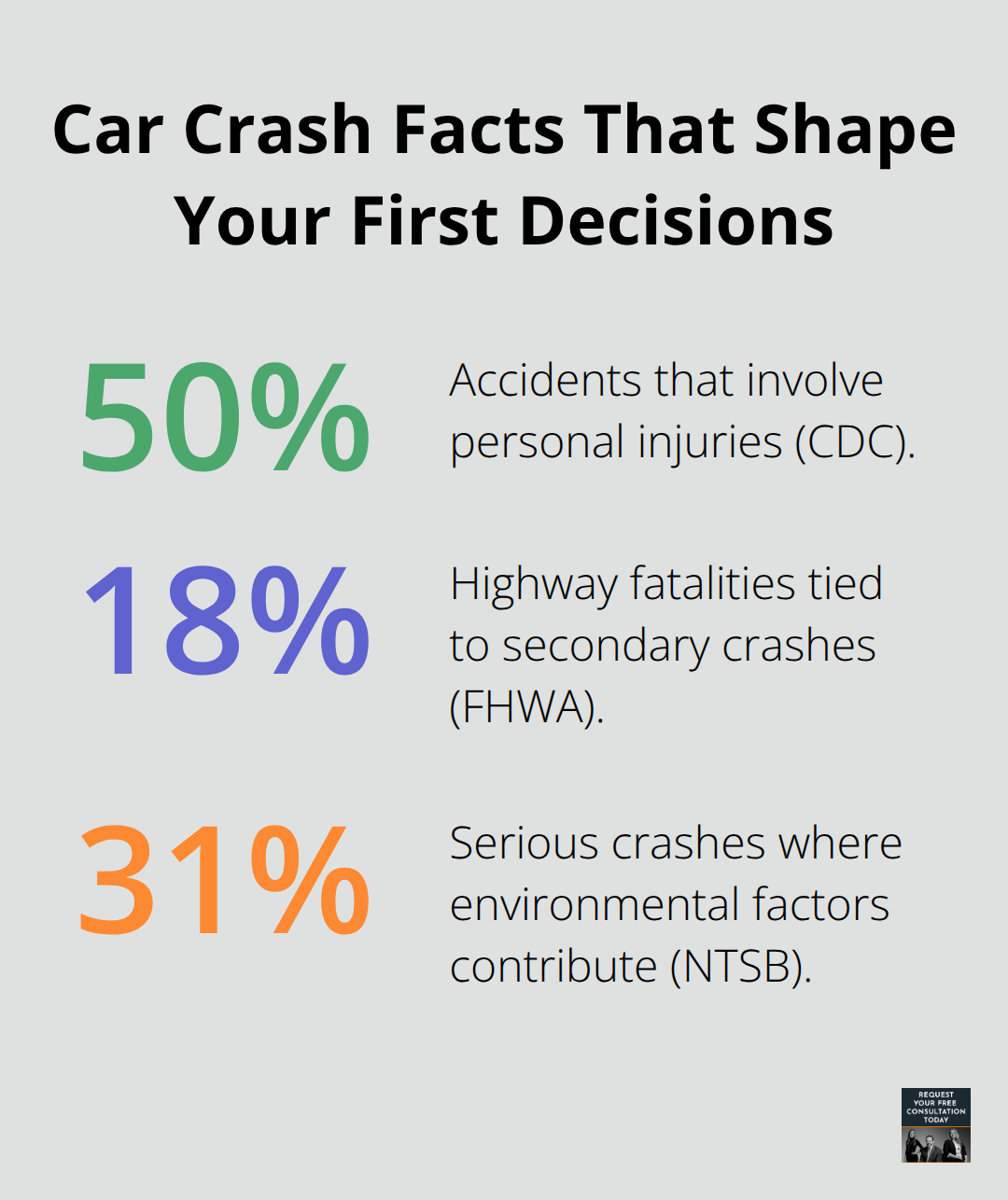
These simple visibility steps prevent secondary accidents, which account for nearly 18% of highway fatalities according to Federal Highway Administration data.
Document Everything While Memory Stays Fresh
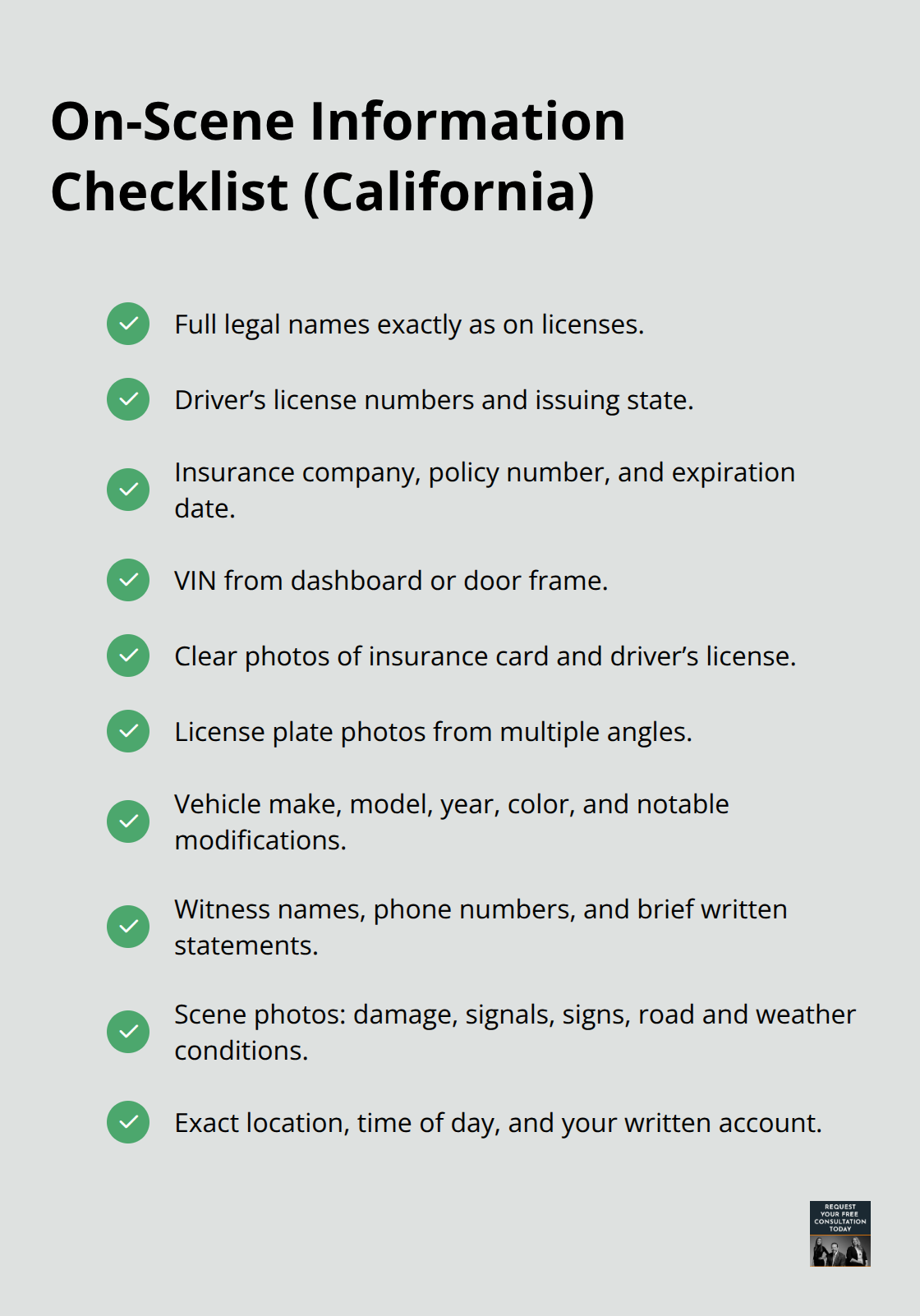
Take photos of all vehicle damage, the accident scene, road conditions, and any visible injuries before anyone moves or cleans up anything. Capture license plates, street signs, and traffic signals in your photos. Write down the exact time, weather conditions, and your version of what happened while details remain clear in your mind. The Insurance Institute for Highway Safety notes that proper documentation can save thousands in repair costs and legal fees (proper records often make the difference between fair compensation and costly disputes). Get the other driver’s full name, phone number, insurance company, policy number, and vehicle identification number. Don’t discuss fault or accept blame statements at this stage.
Once you complete these immediate steps, you need to focus on information collection that will protect your interests throughout the claims process.
What Information Must You Collect at the Scene
The minutes after impact are when most drivers lose thousands of dollars in potential compensation because they fail to gather the right information. California’s at-fault insurance system means the quality of evidence you collect determines whether you receive fair compensation or fight for months to recover damages. The Federal Highway Administration found that accidents with complete documentation result in settlements that are 40% higher than those with incomplete records.
Get Complete Driver Details Before Anyone Leaves
Write down the other driver’s full legal name exactly as it appears on their license, not just what they tell you verbally. Copy their driver’s license number, insurance company name, policy number, and the complete vehicle identification number from their dashboard or door frame. Many drivers provide fake insurance cards or expired policies, so photograph their insurance card with your phone to verify details later. Take a photo of their license plate from multiple angles (some drivers switch plates after accidents). California requires minimum coverage of $30,000 per person and $60,000 per accident, but you need their exact policy information to verify they carry adequate insurance. Record the make, model, year, and color of their vehicle, plus any visible modifications or damage that existed before your collision.
Document Witness Accounts and Environmental Factors
Independent witnesses provide the strongest evidence for fault determination, so collect contact information from all witnesses immediately at the scene. Get their full name, phone number, and a brief written statement about what they observed, which includes the direction they faced and how far away they stood. Ask them to write their account in their own words rather than answer your questions. Take photographs of the scene, including traffic signals, stop signs, speed limit signs, and any road construction or weather conditions that may have contributed to the accident. Note the exact location with street names or mile markers, and record the time of day since light conditions affect visibility. The National Transportation Safety Board reports that environmental factors contribute to 31% of serious accidents, making documentation vital for your claim.
Avoid Common Information Collection Mistakes
Never accept verbal promises from other drivers about payment or insurance coverage without written documentation. Don’t let anyone pressure you to handle the accident privately without police involvement, especially if damages exceed $1,000 or injuries occurred. California law requires DMV reporting within 10 days for accidents with injuries or damages over $1,000, and failure to report can result in license suspension. Avoid discussions about fault or blame at the scene, as these statements can hurt your case later even if you weren’t responsible for the collision.
Once you collect and organize all necessary information at the scene, your next priority involves contact with insurance companies and the start of your claims process.
How Do You Handle Insurance Companies After Your Accident
Contact your insurance company within hours of the crash, even if you weren’t at fault. California’s fault-based insurance system requires prompt notification, and delayed reports can void your coverage or reduce your settlement. The Insurance Research Council found that claims reported within the first day receive settlements that average 23% higher than those reported later. When you call, provide only basic facts about the accident location, time, and vehicles involved. Request a claim number immediately and write it down with the adjuster’s name and direct phone number.
Know Your Coverage Before You Need It
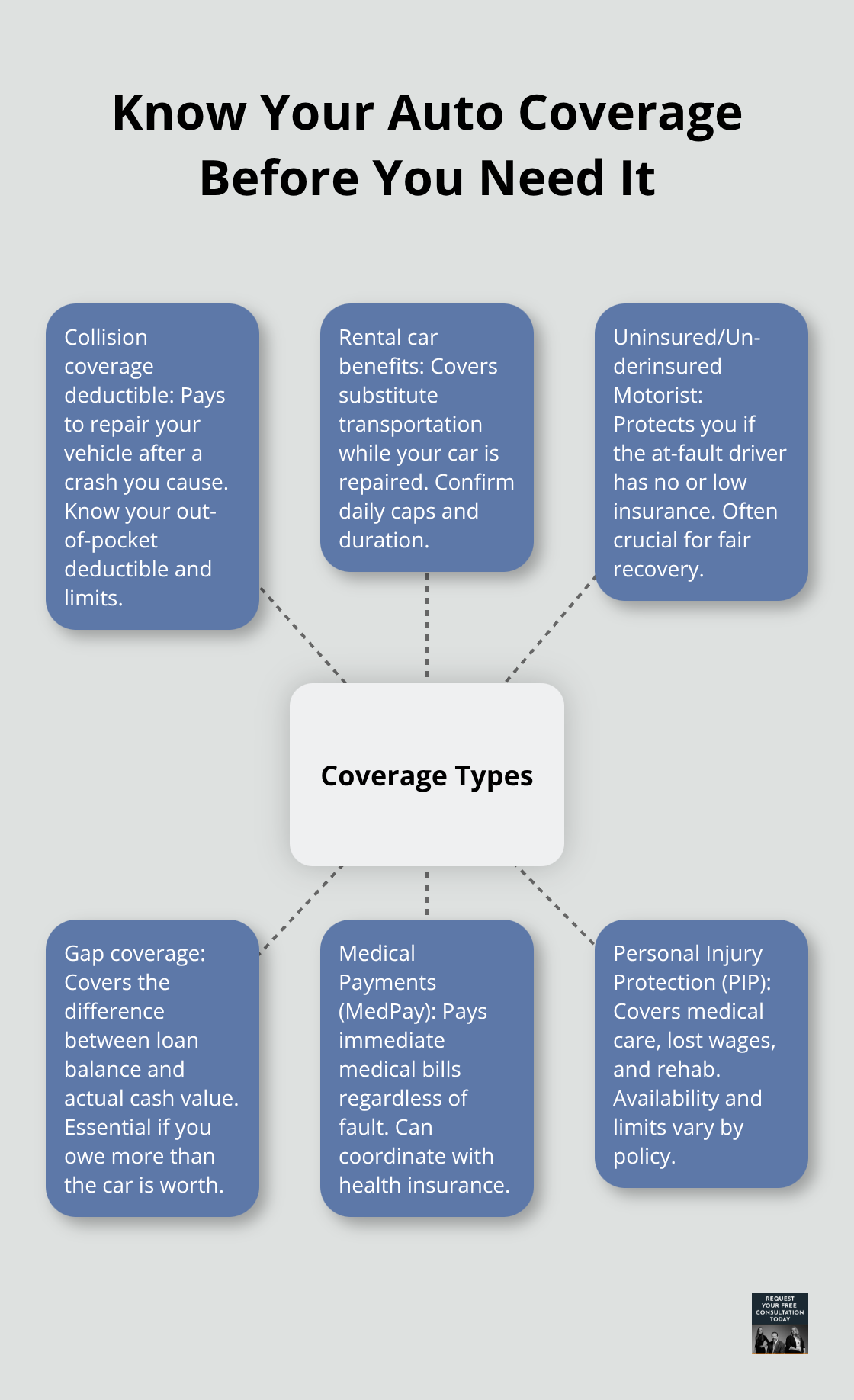
Most Santa Cruz County drivers carry only California’s minimum required coverage of $15,000 for property damage and $30,000 per person for injuries, which falls far short of actual accident costs. The National Safety Council reports that the average car accident costs $28,000 in damages (minimum coverage leaves you financially exposed). Review your policy now to understand your collision coverage deductible, rental car benefits, and whether you have uninsured motorist protection. Gap coverage becomes vital if you owe more on your car loan than the vehicle’s current value. Medical payments coverage pays your immediate medical bills regardless of fault, while personal injury protection covers lost wages and rehabilitation costs. Insurance companies profit when you don’t understand your benefits, so demand written explanations of all coverage types that apply to your claim.
Avoid Fault Admissions During Insurance Conversations
Insurance adjusters record every conversation and use your statements against you later, even casual comments about weather or road conditions. California’s comparative fault law allows partial compensation even if you share responsibility, but any fault admission reduces your settlement dollar for dollar. Stick to factual observations about what you saw and felt, and avoid speculation about causes or blame. Tell adjusters you need to review the police report and consult with legal counsel before you discuss fault determination. The Insurance Information Institute reports that recorded statements lead to claim denials in 34% of cases where drivers admit partial responsibility.
Schedule Conversations When You Feel Alert
Plan all adjuster conversations when you feel alert and focused, and keep detailed notes of every discussion. Record dates, times, and the adjuster’s specific questions and your responses (this documentation protects you if disputes arise later). Never accept pressure to provide immediate recorded statements or sign documents without legal review.
Final Thoughts
Your actions after a collision with another vehicle determine whether you face months of financial stress or resolve matters quickly. The steps we outlined protect Santa Cruz County drivers from costly mistakes that insurance companies exploit daily. Document everything immediately, collect complete information from all parties, and contact your insurance company within hours while you avoid fault admissions.
Professional legal guidance becomes vital when you deal with insurance adjusters who profit from reduced settlements. We at Schaar & Silva LLP help Santa Cruz County residents navigate these complex situations while you focus on recovery. Our team assists with medical bill management, property damage evaluations, and connects you with psychological support when emotional trauma affects your daily life (insurance companies often deny these legitimate costs).
Contact our legal team to protect your rights and maximize your compensation. The right legal support transforms a stressful accident into a manageable situation with fair financial recovery. We stand ready to help you through this difficult time.
