
Car accidents happen without warning, leaving victims confused about their next steps. The decisions you make in the hours and days following a crash can determine whether you receive fair compensation.
We at Schaar & Silva LLP have seen how proper preparation transforms car crash cases from weak claims into successful recoveries. This guide walks you through the essential steps that protect your rights and maximize your settlement.
What Should You Do Right After a Car Crash
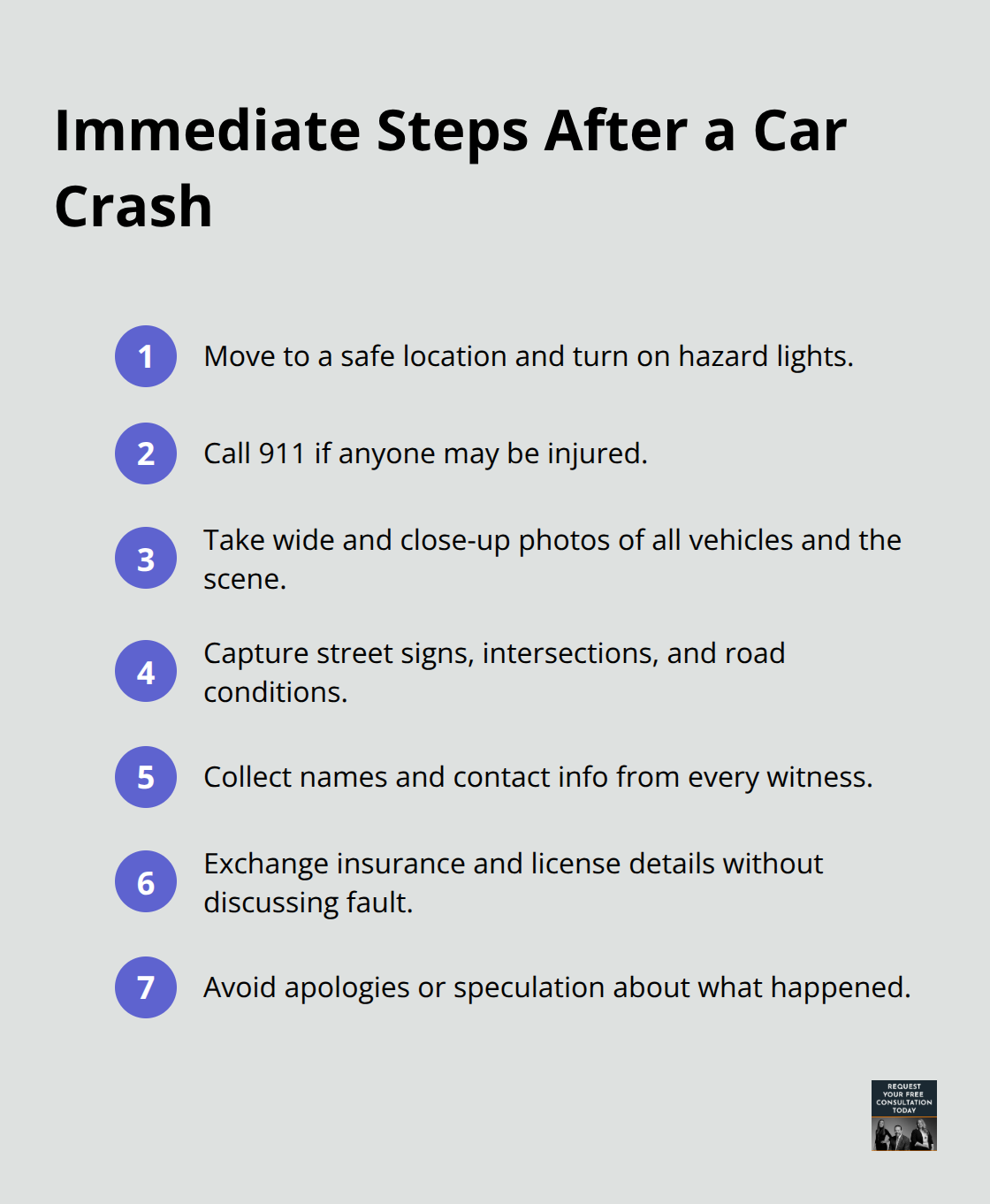
Your first 30 minutes after a car crash will shape your entire case. Move to a safe location if possible, then turn on your hazard lights. The California Highway Patrol reports that 40,990 people died in vehicle collisions nationwide in 2023, which makes safety your absolute priority.
Take photos of all vehicles from multiple angles, include license plates, damage, and the overall scene. Capture the intersection or road signs to establish location. Get contact information from every witness – their statements often prove decisive in fault determination. Exchange insurance information and driver’s license details with all parties, but never discuss fault or apologize at the scene.
Document Everything While Memory Stays Fresh
Write down exactly what happened while details remain clear. Note the time, weather conditions, traffic signals, and road conditions. The National Highway Traffic Safety Administration found that 2.4 million people suffered injuries in car accidents during 2022, yet many victims forget critical details within hours.
Record any statements made by other drivers. Take photos of any skid marks, debris, or road hazards that contributed to the crash. Your phone’s timestamp will provide valuable evidence later (this detail often proves decisive in court proceedings).
Get Medical Care Even for Minor Symptoms
Visit an emergency room or urgent care facility within 24 hours, even if you feel fine. Adrenaline masks pain and injury symptoms for hours or days after impact. Medical records created immediately after your accident carry more weight with insurance companies than delayed treatment.
California requires you to report accidents that cause injury or property damage over $1,000 to the DMV within 10 days with Form SR-1. Call 911 if anyone shows signs of injury, and request that police respond to create an official accident report.
Contact Your Insurance Company First
Call your insurance company within hours of the crash, not days later. Most policies require prompt notification, and delays can jeopardize your coverage. Provide only factual information about what happened – avoid speculation about fault (insurance adjusters will investigate fault separately).
Request a copy of the police report once it becomes available, typically within 10 days through the California Highway Patrol’s Online Crash Report System. Contact the other driver’s insurance company to start their claims process, but avoid recorded statements without legal guidance.
These immediate actions create the foundation for your case, but the real work begins when you start to build your legal strategy and gather comprehensive evidence.
How Do You Build an Unbeatable Case
Your case strength depends on the evidence you collect within the first 30 days after your crash. Start by organizing every document related to your accident into digital and physical files. Scan all paperwork immediately to prevent loss or damage. California’s comparative negligence laws reduce your compensation if you share fault, so thorough documentation becomes your strongest defense against insurance company tactics.
Gather Every Piece of Physical Evidence
Create a comprehensive file that contains your police report, insurance correspondence, and all accident-related receipts. The California Highway Patrol’s accident reports typically include officer observations, witness statements, and accident diagrams that insurance adjusters scrutinize heavily. Request your complete claims file from your insurance company after 30 days – this file contains adjuster notes and damage estimates that reveal their settlement strategy.
Take additional photos of your vehicle before repairs begin, and focus on angles that show impact severity. Keep repair estimates from multiple auto body shops, as discrepancies often indicate hidden damage that increases your claim value.
Document Medical Treatment Patterns
Schedule follow-up appointments with your primary care physician within one week of your accident, even if emergency room doctors cleared you initially. Medical gaps longer than 14 days give insurance companies ammunition to argue your injuries weren’t serious. Request copies of all medical records, including X-rays, MRI results, and physician notes that describe your pain levels and treatment plans.
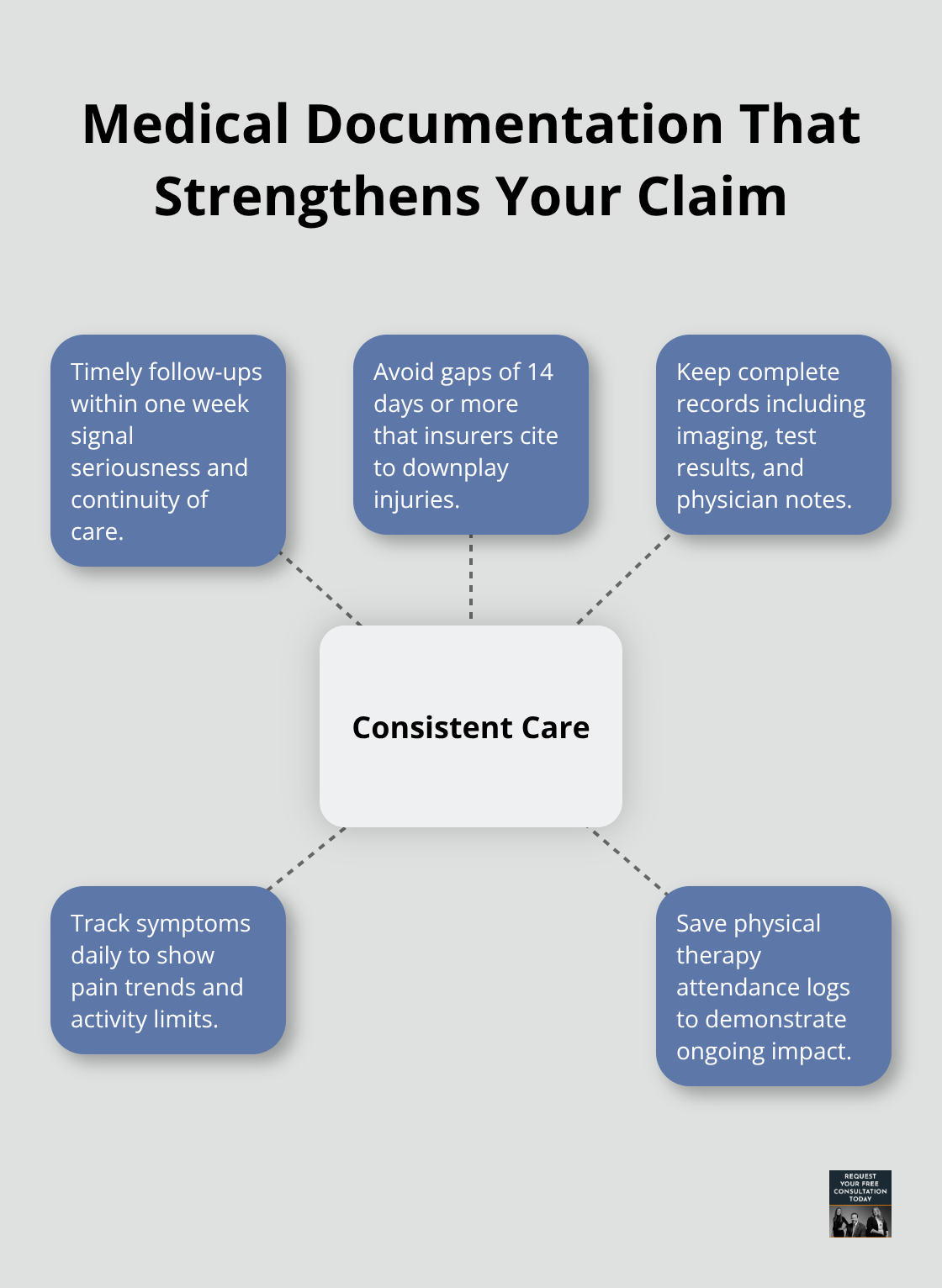
Track your daily symptoms in a written journal, and note pain intensity, sleep disruption, and activity limitations. Physical therapy attendance records prove ongoing injury impact and demonstrate your commitment to recovery (factors that significantly influence settlement negotiations).
Calculate Your Complete Financial Impact
Add up all accident-related expenses, including medical bills, prescription costs, and lost wages from missed work days. California allows recovery for future medical expenses when injuries require ongoing treatment, so obtain written estimates from your doctors about anticipated care needs. Include mileage to medical appointments, parking fees, and prescription copays in your damage calculation.
Document how your injuries affect household tasks you can no longer perform, as these daily life impacts translate to additional compensation. Your total damages should reflect both current expenses and reasonable future costs, which creates a comprehensive picture that justifies your settlement demand.
However, even the strongest evidence won’t protect you from common mistakes that can destroy an otherwise solid case.
What Mistakes Can Destroy Your Car Crash Case
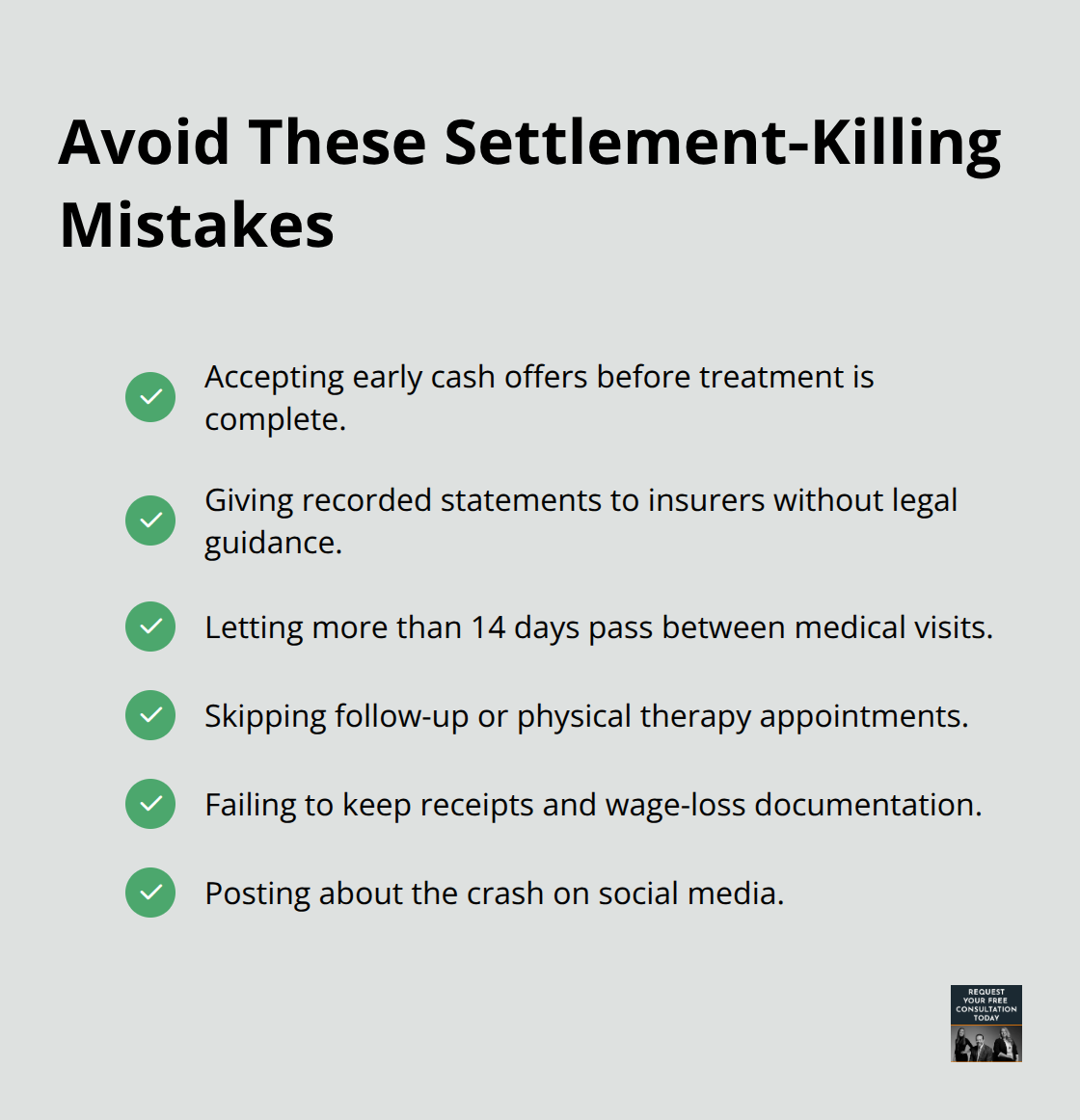
Insurance companies count on victims who make predictable errors that slash settlement values by thousands of dollars. The most devastating mistake happens when adjusters call within 48 hours and offer quick cash settlements that sound generous but represent a fraction of true case value. These early offers typically cover only immediate medical bills and ignore treatment costs, lost wages, and pain compensation. California law gives you two years to file personal injury lawsuits, so never accept first offers that arrive before you understand your full injury extent.
Settlement Traps That Cost You Money
Quick settlement pressure intensifies when medical bills pile up and paychecks stop. Adjusters exploit financial stress and present lowball offers as final opportunities, but California’s comparative negligence laws protect your right to fair compensation regardless of shared fault percentages. Insurance companies save millions annually through rushed settlements that close before victims realize injury severity.
Accept settlement offers only after you complete medical treatment and understand your total recovery costs. Insurance adjusters know that financial pressure makes victims accept inadequate compensation, which explains why they contact you immediately after accidents with urgent deadlines.
Documentation Failures That Weaken Evidence
Medical treatment gaps longer than 14 days give adjusters ammunition to argue injuries weren’t accident-related, which explains why immediate medical care creates unbreakable evidence chains. Missing medical appointments or delayed treatment creates permanent gaps in your injury timeline that insurance companies exploit during settlement talks.
Emergency room visits followed by weeks without follow-up care suggest minor injuries that don’t warrant significant compensation. Physical therapy attendance records prove ongoing injury impact and demonstrate recovery commitment that influences settlement negotiations favorably (attendance rates directly correlate with settlement amounts).
Record-Keeping Mistakes That Reduce Compensation
Detailed expense records transform vague pain claims into concrete financial demands that force realistic settlement negotiations rather than insurance company denials. Daily symptom journals document pain patterns and activity limitations that medical records alone cannot capture. These personal accounts provide injury evidence that resonates with insurance adjusters who review hundreds of similar claims monthly.
Keep receipts for all accident-related expenses, including prescription costs, medical equipment, and transportation to appointments. Missing documentation allows insurance companies to dispute legitimate expenses and reduce your final settlement amount. Remember that mistakes in any step can destroy your entire case, making thorough preparation essential for successful outcomes.
Final Thoughts
Successful car crash cases require immediate action, thorough documentation, and strategic patience. The first 30 minutes after your accident determine whether you collect strong evidence or lose critical details forever. Medical care within 24 hours creates unbreakable injury timelines that insurance companies cannot dispute. Complete documentation of expenses, symptoms, and treatment builds compelling cases that force fair settlements.
Quick settlement offers trap victims into accepting inadequate compensation before they understand their full injury extent. California’s two-year statute of limitations gives you time to build strong car crash cases rather than rush into unfavorable agreements. Insurance companies profit when victims make predictable mistakes that reduce claim values by thousands of dollars (which explains their aggressive early settlement tactics).
We at Schaar & Silva LLP handle the legal complexities that overwhelm accident victims during recovery. Our team manages insurance negotiations and guides clients through the claims process while you focus on healing. Contact our law firm to protect your rights and pursue the compensation you deserve.
