

Car accidents can leave you feeling fine initially, only for serious symptoms to appear days or weeks later. A delayed injury after car accident scenarios affects thousands of drivers across Santa Cruz County each year.
We at Schaar & Silva LLP see these cases regularly and know how dangerous it can be to ignore warning signs. Understanding what to watch for could save your health and protect your legal rights.
Common Types of Delayed Injuries After Car Accidents
The most dangerous injuries from car accidents often remain invisible for days or weeks after impact. These hidden injuries can threaten your health and complicate your recovery if you don’t recognize the warning signs early.
Whiplash and Neck Injuries
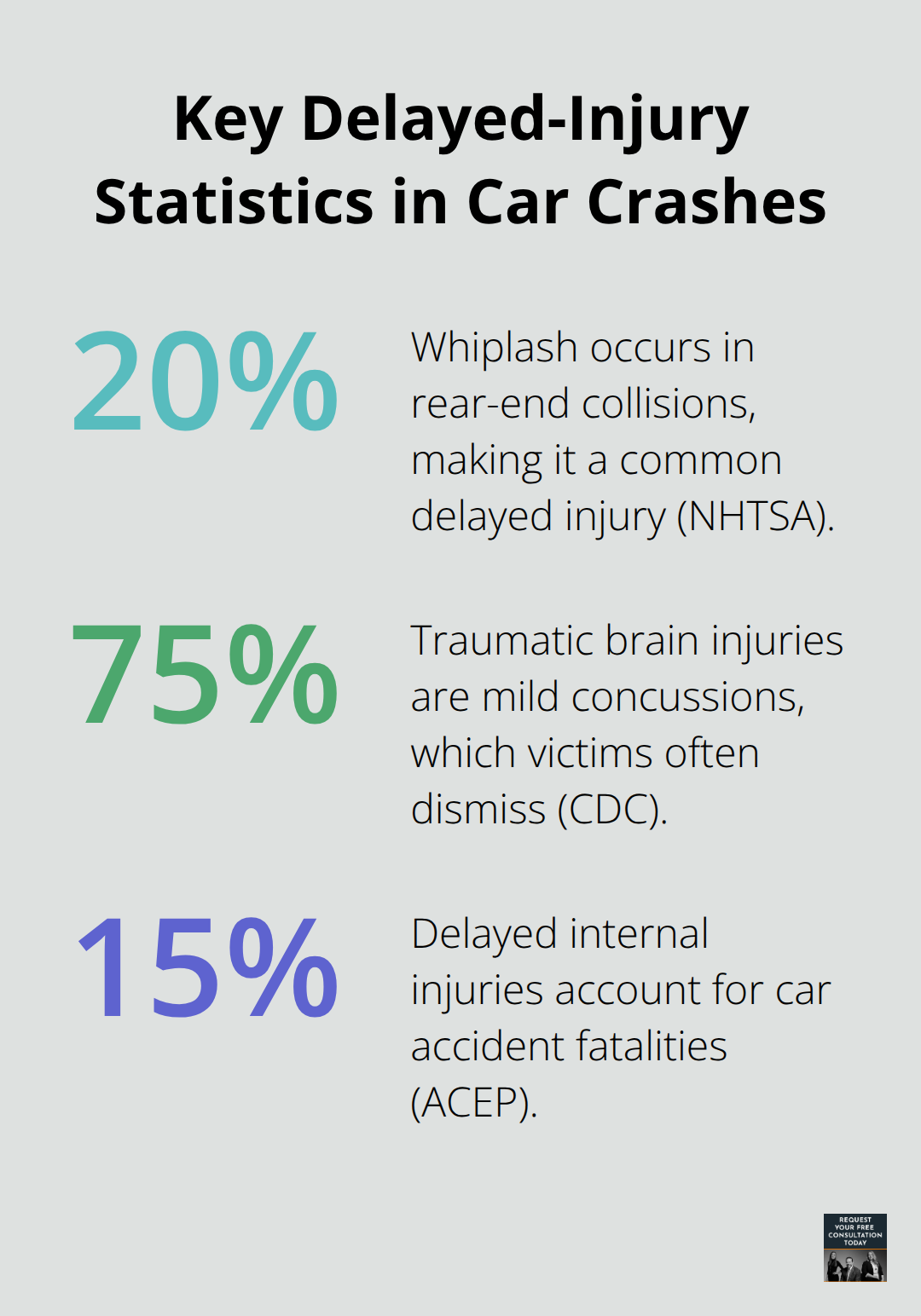
Whiplash strikes your neck muscles and ligaments when your head snaps forward and backward during collision, but pain typically doesn’t surface until 24-48 hours later. The National Highway Traffic Safety Administration reports that whiplash occurs in 20% of all rear-end collisions, making it the most common delayed injury in Santa Cruz County accidents.
Soft tissue damage in your neck can cause chronic pain that lasts months without proper treatment. Your muscles and ligaments stretch beyond their normal range, creating microscopic tears that trigger inflammation and stiffness. This injury affects your daily activities and can prevent you from working or sleeping comfortably.
Traumatic Brain Injuries and Concussions
Concussions represent the most serious delayed injury because symptoms can appear weeks after your accident. Your brain bounces inside your skull during impact, which causes microscopic damage that doesn’t immediately trigger pain. The force creates chemical changes in your brain tissue that develop gradually over time.
Watch for persistent headaches, memory problems, difficulty with concentration, or changes in sleep patterns. The Centers for Disease Control and Prevention found that 75% of traumatic brain injuries are mild concussions, yet many victims dismiss these symptoms as stress. Even minor head trauma can cause long-term cognitive issues if left untreated (including problems with decision-making and emotional regulation).
Internal Injuries and Organ Damage
Internal bleeding and organ damage pose life-threatening risks that may not cause immediate symptoms. Your adrenaline masks pain during the first hours after an accident, which prevents you from noticing abdominal tenderness or chest pain. This natural response helps you handle the emergency but hides serious internal damage.
Rib fractures can puncture lungs or damage your spleen days later, while internal bleeding gradually weakens your body. The American College of Emergency Physicians reports that delayed internal injuries account for 15% of car accident fatalities. Swelling in your abdomen, persistent nausea, or unexplained fatigue signals potential internal damage that requires immediate medical attention.
These physical symptoms often develop alongside emotional and psychological changes that can be just as debilitating (and equally important to address).
Warning Signs You Should Never Ignore
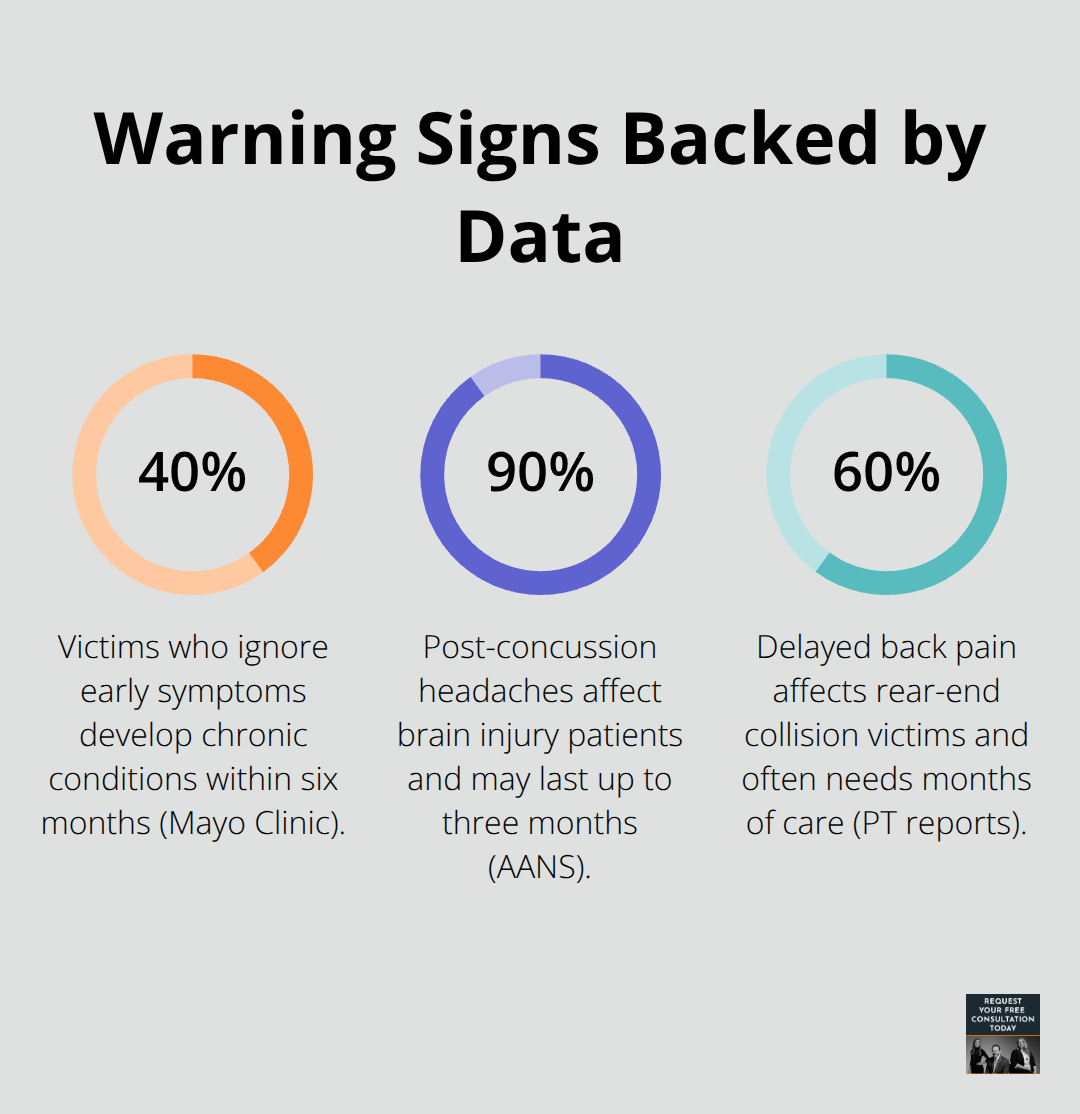
Your body sends clear distress signals after car accidents, but many Santa Cruz County drivers dismiss these warning signs as temporary discomfort. The Mayo Clinic found that 40% of accident victims who ignore early symptoms develop chronic conditions within six months. You must recognize these red flags immediately to prevent permanent damage and strengthen your legal case.
Neurological Symptoms That Demand Action
Persistent headaches after your accident indicate potential brain trauma that worsens without treatment. These headaches differ from normal tension headaches because they intensify over days and resist standard pain medication. Dizziness occurs when you change positions or turn your head, which signals inner ear damage or mild traumatic brain injury. The American Association of Neurological Surgeons reports that post-concussion headaches affect 90% of brain injury patients and can last up to three months without proper medical intervention.
Pain Patterns That Escalate Over Time
Back and shoulder pain that increases daily points to muscle strain, ligament damage, or spinal compression that develops over time. This pain typically starts as mild stiffness but escalates to sharp sensations that limit your movement. The force of collision compresses your spine and tears muscles that support it, which creates inflammation that builds over 72 hours. Physical therapists note that delayed back pain affects 60% of rear-end collision victims and often requires months of treatment to resolve completely.
Mental and Emotional Changes That Signal Brain Injury
Mood swings, memory lapses, and difficulty with concentration after your accident indicate brain chemistry disruption that requires immediate medical evaluation. You might notice increased irritability, confusion with simple tasks, or trouble when you follow conversations. These cognitive changes develop as brain swelling increases pressure on neural pathways (which affects your daily function). The Brain Injury Association reports that 80% of mild brain injuries cause personality changes that family members notice before victims recognize the problem themselves.
These warning signs point to injuries that need professional medical evaluation and proper documentation for your protection.
When to Seek Medical Attention
You must seek medical attention immediately after any car accident, even if you feel completely normal. The Emergency Medical Services Authority reports that 43% of accident victims who skip immediate medical care develop complications within 72 hours that require emergency treatment. Your adrenaline surge masks pain and injury symptoms for up to six hours after impact, which creates a false sense of wellness that endangers your health and legal case.
Visit a Doctor Within 24 Hours
Visit an emergency room or urgent care facility within 24 hours of your accident, regardless of how minor the collision seemed. Medical professionals can detect internal bleeding, brain swelling, and spinal damage that you cannot feel yet. The American College of Emergency Physicians found that delayed medical evaluation reduces successful treatment outcomes by 35% for traumatic injuries.
Schedule follow-up appointments with your primary care physician within one week to monitor symptoms that develop over time. This creates a medical timeline that insurance companies and courts recognize as legitimate evidence of your injuries.
Create Complete Medical Records
Photograph all visible injuries immediately after your accident and continue to take pictures as bruises and swelling develop over the weeks that follow. Keep detailed records of every medical appointment, prescription, and treatment recommendation in a dedicated accident file.
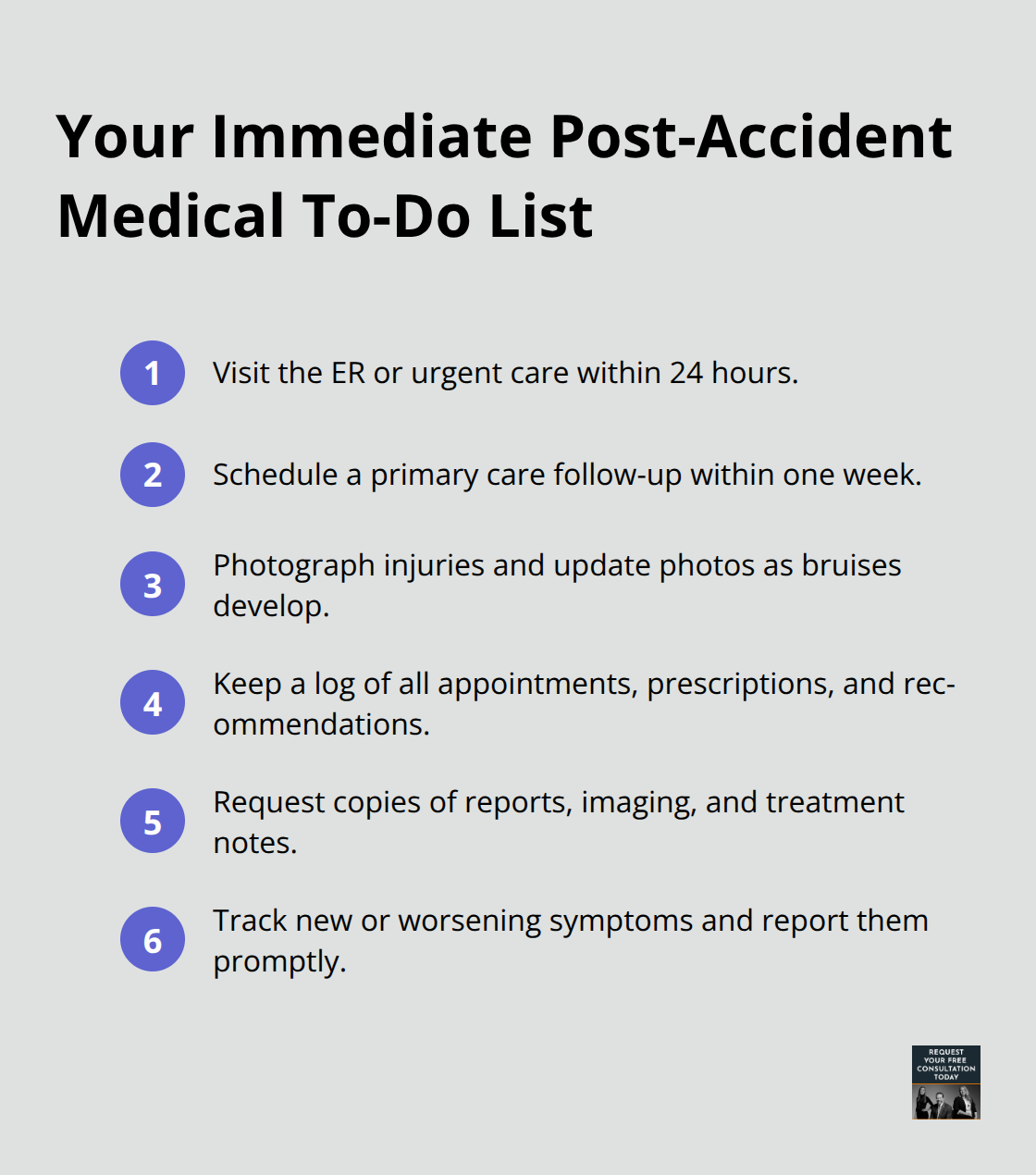
The Insurance Research Council reports that victims with complete medical documentation receive settlements 40% higher than those with gaps in their medical records. Request copies of all medical reports, imaging results, and treatment notes from every healthcare provider you visit.
Monitor Symptoms That Develop Later
Track any new symptoms that appear in the days and weeks after your accident (including headaches, pain, or changes in mood). Write down when symptoms start, how severe they become, and what makes them better or worse. This information helps doctors diagnose delayed injuries and provides evidence for your legal case.
Many delayed injuries worsen without proper medical intervention, so you should report new symptoms to your doctor immediately rather than wait for your next scheduled appointment.
Final Thoughts
Delayed injury after car accident cases demand immediate attention and professional legal guidance. Statistics show that victims who ignore early symptoms face significantly worse outcomes and reduced compensation opportunities. Your health and financial recovery depend on swift action when warning signs appear.
We at Schaar & Silva LLP understand the complexities of these cases throughout Santa Cruz County. Our legal team provides the support you need while you focus on recovery from your injuries. We handle the legal process and work to protect your interests during this difficult time.
The path to fair compensation starts with proper medical documentation and experienced legal representation (which can make the difference in your case outcome). Contact Schaar & Silva LLP today to discuss your case and protect your rights. Time limits apply to personal injury claims, so swift action strengthens your position and maximizes your potential settlement.
